Kostenlose Kunstberatung

x
Gemälde kaufen Gemälde kaufenBild kaufen Bild kaufen VersendenVersenden
DetailsDetails Zu Favoriten hinzufügen Zu Favoriten hinzufügen HerunterladenHerunterladen Ähnliche ObjekteÄhnliche Objekte RöntgenaufnahmeRöntgenaufnahme Diashow anzeigenDiashow anzeigen

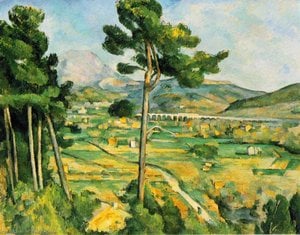
Landscape

Experience Paul Cézanne's 'Landscape' (1867) – a serene depiction of a rural road, capturing the artist’s revolutionary approach to form and color. A must-have for art lovers!

Erkunden Sie die revolutionäre Kunst von Paul Cézanne (1839–1906), einem Postimpressionisten, der Impressionismus und Kubismus miteinander verband. Entdecken Sie seine geometrischen Formen, seine einzigartigen Pinselstriche, Stilllebenmalereien und seinen bleibenden Einfluss auf die moderne Kunst. #Cézanne #PostImpressionismus

Giclée / Kunstdruck

Giclée- oder Leinwanddruck in Museumsqualität mit schneller Produktion und flexiblen Veredelungsoptionen.

P118B $10
P118H $10
P118W $10
P438Z $10
P508JH $12
P508YH $12
P805H $10
P805Z $10
P919BZ $10
P919G $10
P919XJ $10
P959ZH $10
P968JZ $12
W106C $8
W218G $10
W218JH $8
W218Y $10
W307PJ $10
W316G $10
W316PJ $8
W316Y $10
W398PJ $8
W4111J $10
W500HY $15
W500JH $15
W692G $12
W849H $8
W940BG $15
W953PJ $8

Standard
custom
CM
INCH

Wählen Sie aus unseren vordefinierten Größen, die den ursprünglichen Proportionen des Kunstwerks entsprechen.

Breite
Höhe

Sie können Ihre eigenen Maße eingeben, um ein bestimmtes Format oder einen speziellen Platz einzupassen. Wenn das von Ihnen gewählte Format nicht den Proportionen des Originalbildes entspricht, werden wir das Kunstwerk entweder beschneiden oder das Bild mit einem gespiegelten oder einfarbigen Rand erweitern. Ein digitaler Entwurf wird Ihnen zur Genehmigung zugesandt, bevor die Produktion beginnt.
Bitte beachten Sie, dass die Vorschau auf dem Bildschirm nicht den tatsächlichen Zuschnitt oder die Erweiterung widerspiegelt. Nur der Entwurf zeigt die endgültige Komposition präzise an.
Obwohl Sondermaße verfügbar sind, empfehlen wir die Auswahl eines Maßes aus der vordefinierten Liste, um die ursprünglichen Proportionen zu bewahren.

Weltweiter Versand () innerhalb von 2 Wochen statt der üblichen 4/5 Wochen. (2 Juli)

why_choose_icon
Kostenloser weltweiter Expressversand
why_choose_icon
Hochwertige Leinenleinwand
why_choose_icon
Umfassender Versicherungsschutz beim Versand
why_choose_icon
Zollsteuer-Rückerstattungsgarantie
why_choose_icon
Garantie für echte Farbtreue
why_choose_icon
60-Tage-Rückgaberecht (nur bei Mängeln)
why_choose_icon
100% Geld-zurück-Garantie
why_choose_icon
Mengenrabatt verfügbar

Gesamtpreis

-

reproduction

Landscape

Giclée / Kunstdruck

Größe der Reproduktion

-

Endpreis aller Optionen

-

Eckdaten auf einen Blick

  • Influences: Cézanne
  • Year: 1867
  • Subject or theme: Rural scene
  • Artistic style: Romanticism, Landscape
  • Location: Yale University Art Gallery
  • Notable elements or techniques: Loose brushwork
  • Title: Landscape

Kunst-Quiz

Jede Frage hat nur eine richtige Antwort.

Frage 1:
What artistic movement is Paul Cézanne most closely associated with?
Frage 2:
The painting 'Landscape' primarily focuses on:
Frage 3:
In 'Landscape', what is the significance of the figures walking along the road?
Frage 4:
What year was the painting 'Landscape' created?
Frage 5:
The brushstrokes in ‘Landscape’ are best described as:

Beschreibung des Sammlerstücks

Paul Cézanne’s “Landscape” – A Bridge Between Worlds

Painted in 1867 during a pivotal period of artistic transition, Paul Cézanne's "Landscape" isn’t merely a depiction of a rural scene; it’s a carefully constructed exploration of perception and the very nature of seeing. This work, housed within the Yale University Art Gallery, represents a crucial stepping stone in Cézanne’s evolution from the Impressionist palette to the nascent forms of Cubism, marking his deliberate departure from fleeting impressions towards a more structured, geometric representation of reality. The painting captures a dirt road winding through a verdant landscape – a familiar subject for Cézanne, who frequently returned to the views surrounding his home in Provence. However, it’s not the idyllic beauty of the scene that dominates; rather, it's the artist’s deliberate manipulation of space and color that commands attention.

Cézanne’s technique is immediately striking. He abandons the traditional Impressionist pursuit of capturing a momentary light effect, instead employing a more methodical approach. Thick, visible brushstrokes—a hallmark of his style—build up layers of paint to define form and volume. Notice how he doesn't simply *paint* the road; he sculpts it with color, creating an illusion of depth and solidity. The grass on either side isn’t rendered as a wash of green but rather as distinct planes of varying shades, suggesting texture and materiality. This deliberate layering is key to Cézanne’s revolutionary approach – he was less interested in replicating what the eye *sees* than in conveying how the mind *interprets* that visual information.

The Figures Within a Landscape

Scattered along the road are several figures, rendered with a remarkable degree of anonymity. They aren't portraits; they’re fragments of human presence within the broader landscape. Their placement is carefully considered – some closer to the viewer, others receding into the distance – creating a sense of spatial depth and inviting the observer to contemplate their relationship to the scene. The two dogs, one positioned centrally and another on the right, add an element of domesticity and perhaps even a hint of narrative, suggesting a quiet moment of rural life. The horse standing off to the left adds further context, hinting at agricultural activity or transport.

Interestingly, Cézanne’s use of perspective is deliberately ambiguous. He doesn't adhere strictly to linear perspective, creating an unsettling sense of spatial distortion. This wasn’t a conscious attempt to mislead the viewer but rather a reflection of his belief that reality itself is constructed within our minds. By fracturing traditional perspective, he forces us to actively engage with the painting and reconstruct its spatial relationships.

Symbolism and Emotional Resonance

While seemingly simple in composition, “Landscape” resonates with deeper symbolic meanings. The dirt road can be interpreted as a metaphor for life’s journey – a winding path through an uncertain future. The figures represent humanity's place within the natural world, highlighting our connection to both the tangible and the intangible. Cézanne himself described his work as "the thinking of things," suggesting that he sought to capture not just appearances but also the underlying essence of his subjects.

The painting’s overall mood is one of serene contemplation. Despite the somewhat unsettling spatial distortions, there's a palpable sense of peace and tranquility. Cézanne masterfully evokes a feeling of timelessness, inviting us to pause and reflect on the beauty and complexity of the natural world. It’s a testament to his ability to transform a commonplace landscape into a profound meditation on perception, form, and the human condition.

A Legacy of Innovation

“Landscape” is more than just a beautiful painting; it's a pivotal work in art history. Cézanne’s radical approach to representation paved the way for the development of Cubism and other avant-garde movements of the 20th century. His emphasis on structure, form, and color profoundly influenced generations of artists, shaping the course of modern art and leaving an enduring legacy that continues to inspire today.

Ähnliche Kunstwerke


Biografie des Künstlers

frühes Leben und Einflüsse

Paul Cézanne, ein französischer Post-Impressionist-Maler, wurde am 19. Januar 1839 in Aix-en-Provence, Frankreich, geboren. Sein frühes Leben war geprägt von einer starken Verbindung zu seiner Familie’s Bankgeschäft, das ihm finanzielle Sicherheit verschaffte. Dies ermöglichte es ihm, sich ohne finanziellen Druck auf seine künstlerischen Bestrebungen zu konzentrieren. Les Nabis, Neo-Impressionismus und Symbolismus beeinflussten Cézannes frühe Arbeit, die sich durch seinen Schwerpunkt auf geometrische Formen und eine reduzierte Farbpalette auszeichnete. Sein Interesse an den Werken von Paul Gauguin und Georges Seurat festigte seinen Post-Impressionismusstil.

Künstlerischer Stil und Techniken

Cézannes innovative Verwendung von Farbflächen und kleinen, sich wiederholenden Pinselstrichen schuf komplexe Felder, die seine intensive Beschäftigung mit den Motiven widerspiegelten. Sein oft explorativer Ansatz in der Kunst führte zur Entwicklung einer neuen bildlichen Sprache, die die zugrunde liegende Struktur von Objekten in einer Komposition betonte.

Vermächtnis und Einfluss

Cézannes bahnbrechende Arbeit im Post-Impressionismus ebnete den Weg für verschiedene Avantgarde-Bewegungen, darunter Kubismus, Fauvismus und Surrealismus. Sein Einfluss ist in den Werken von Pablo Picasso, Henri Matisse und Georges Braque zu sehen. Cézannes Vermächtnis inspiriert weiterhin Künstler und Kunstinteressierte gleichermaßen und festigt seinen Platz als eine zentrale Figur in der Geschichte der modernen Kunst.
Paul Cézanne

Paul Cézanne

1839 - 1906 , Frankreich

Kurzinfos

  • Beeinflusste Künstler:
    • Paul Gauguin
    • Georges Seurat
  • Bemerkenswerte Werke:
    • Der Teich in Jas de Bouffan
    • Porträt von Émile Zola
    • Wald
    • Mont Sainte-Victoire
  • Geburtsdatum: 19. Januar 1839
  • Geburtsort: Aix-en-Provence, Frankreich
  • Künstlerische Bewegung: Postimpressionismus
  • Nationalität: Französisch
  • Sterbedatum: 1906
  • Vollständiger Name: Paul Cézanne
  • Von Ihm Beeinflusste Künstler:
    • Pablo Picasso
    • Henri Matisse
    • Georges Braque
Entdecken Sie Kunstwerke, die nach Themen, Stilen und Merkmalen sortiert sind.