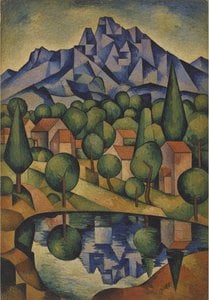
Die Abduction (1867) von Paul Cézanne, handgemaltes Ölgemälde-Replikat eines Meisterkünstlers
Vorschau anzeigen In AR ansehen Zum Druck wechseln Zum digitalen Bild wechseln Versenden
Details anzeigen Leitfaden Zu Favoriten hinzufügen Herunterladen Ähnliche Objekte Röntgenaufnahme Diashow Fragen & Antworten Statistiken

Die Abduction Handgemalte Ölmalerei-Reproduktion

Abmessungen
90.0 x 117.0 cm

Die Abduction von Paul Cézanne: Ein beeindruckendes Gemälde des Impressionismus und Vorläufer des Kubismus mit dramatischer Komposition und tiefgründiger Symbolik. Entdecken Sie Kunstgeschichte!

Erkunden Sie die revolutionäre Kunst von Paul Cézanne (1839–1906), einem Postimpressionisten, der Impressionismus und Kubismus miteinander verband. Entdecken Sie seine geometrischen Formen, seine einzigartigen Pinselstriche, Stilllebenmalereien und seinen bleibenden Einfluss auf die moderne Kunst. #Cézanne #PostImpressionismus

Handgefertigte Ölreproduktion

Handgemaltes Ölgemälde auf Leinwand in Ihrer Wunschgröße und mit Rahmen, auf Bestellung von unseren Künstlern angefertigt. ( Zum Druck wechseln Zum digitalen Bild wechseln)

Corner sample of the P118B picture frame: formgepresstes Polystyrol, 5 cm wide and 3 cm thick
P118B €10
Corner sample of the P118H picture frame: formgepresstes Polystyrol, 5 cm wide and 3 cm thick
P118H €10
Corner sample of the P118W picture frame: formgepresstes Polystyrol, 5 cm wide and 3 cm thick
P118W €10
Corner sample of the P438Z picture frame: formgepresstes Polystyrol, 5.5 cm wide and 3.5 cm thick
P438Z €10
Corner sample of the P508JH picture frame: formgepresstes Polystyrol, 7 cm wide and 3.5 cm thick
P508JH €12
Corner sample of the P508YH picture frame: formgepresstes Polystyrol, 7 cm wide and 3.5 cm thick
P508YH €12
Corner sample of the P805H picture frame: formgepresstes Polystyrol, 5 cm wide and 3.5 cm thick
P805H €10
Corner sample of the P805Z picture frame: formgepresstes Polystyrol, 5 cm wide and 3.5 cm thick
P805Z €10
Corner sample of the P919BZ picture frame: formgepresstes Polystyrol, 7 cm wide and 3.5 cm thick
P919BZ €10
Corner sample of the P919G picture frame: formgepresstes Polystyrol, 7 cm wide and 3.5 cm thick
P919G €10
Corner sample of the P919XJ picture frame: formgepresstes Polystyrol, 7 cm wide and 3.5 cm thick
P919XJ €10
Corner sample of the P959ZH picture frame: formgepresstes Polystyrol, 5 cm wide and 3 cm thick
P959ZH €10
Corner sample of the P968JZ picture frame: formgepresstes Polystyrol, 6 cm wide and 4 cm thick
P968JZ €12
Corner sample of the W106C picture frame: Massivholz, 5 cm wide and 3 cm thick
W106C €8
Corner sample of the W218G picture frame: Massivholz, 5 cm wide and 3 cm thick
W218G €10
Corner sample of the W218JH picture frame: Massivholz, 5 cm wide and 3 cm thick
W218JH €8
Corner sample of the W218Y picture frame: Massivholz, 5 cm wide and 3 cm thick
W218Y €10
Corner sample of the W307PJ picture frame: Massivholz, 6 cm wide and 3 cm thick
W307PJ €10
Corner sample of the W316G picture frame: Massivholz, 6 cm wide and 3 cm thick
W316G €10
Corner sample of the W316PJ picture frame: Massivholz, 6 cm wide and 3 cm thick
W316PJ €8
Corner sample of the W316Y picture frame: Massivholz, 6 cm wide and 3 cm thick
W316Y €10
Corner sample of the W398PJ picture frame: Massivholz, 5 cm wide and 3 cm thick
W398PJ €8
Corner sample of the W4111J picture frame: Massivholz, 6.5 cm wide and 3.5 cm thick
W4111J €10
Corner sample of the W500HY picture frame: Massivholz, 7 cm wide and 5 cm thick
W500HY €15
Corner sample of the W500JH picture frame: Massivholz, 7 cm wide and 5 cm thick
W500JH €15
Corner sample of the W692G picture frame: Massivholz, 8 cm wide and 4 cm thick
W692G €12
Corner sample of the W849H picture frame: Massivholz, 5 cm wide and 3 cm thick
W849H €8
Corner sample of the W940BG picture frame: Massivholz, 7.5 cm wide and 4.5 cm thick
W940BG €15
Corner sample of the W953PJ picture frame: Massivholz, 6 cm wide and 3.5 cm thick
W953PJ €8

Standardformat
individuell anpassbar
CM
INCH

Wählen Sie aus unseren vordefinierten Formaten, die den ursprünglichen Proportionen des Kunstwerks entsprechen.

Breite
Höhe

Geben Sie die Breite und die Höhe an, die Sie für Ihren Rahmen oder Ihre Wand benötigen. Da dieses Werk handgemalt ist, kann der Künstler bei einer anderen Form etwas mehr um das Bild herum malen oder etwas abschneiden – Sie entscheiden. Wir senden Ihnen ein digitales Mockup zur Freigabe, bevor mit dem Malen begonnen wird. Das auf dieser Seite gezeigte Bild stellt nicht das tatsächliche Ergebnis dar – dies tut nur das Mockup.

Beispiele für Anpassungsmöglichkeiten: Gesicht durch Kundenfoto ersetzen; Haustier hinzufügen (z. B. Katze durch Hund ersetzen); eine versteckte Nachricht im Hintergrund einfügen; Hintergrundlandschaft oder -elemente ändern.
Nach der Bestellung wird das WahooArt.com-Team dem Kunden Anweisungen per E-Mail zusenden und eine Mockup-Vorschau bereitstellen.

Weltweiter Versand () in nur 3 bis 4 Wochen statt der üblichen 5 Wochen. (3 November). Keine Kompromisse bei der Qualität.

Kostenloser weltweiter Expressversand
Hochwertige Leinenleinwand
Umfassender Versicherungsschutz beim Versand
Zollgebühren-Rückerstattungsgarantie
Garantie für exakte Farbtreue
100 Tage Rückgaberecht (nur bei Mängeln)
100% Geld-zurück-Garantie
Mengenrabatt verfügbar

Gesamtpreis

€ 243

Die Abduction

Art der Reproduktion

Format der Reproduktion

-

Endpreis

€ 243

Eckdaten

  • Notable elements or techniques: Gebrochene Perspektive, Farbflächen
  • Medium: Öl auf Leinwand
  • Movement: Postimpressionismus
  • Subject or theme: Mythologie
  • Artist: Paul Cézanne
  • Influences:
    • Romantik
    • Realismus

Kunst-Quiz

Jede Frage hat nur eine richtige Antwort.

Frage 1:
¿Quién pintó "La Abducción"?
Frage 2:
¿En qué año fue creada la obra "La Abducción"?
Frage 3:
¿Cuál es el tamaño aproximado de "La Abducción"
Frage 4:
¿Qué movimiento artístico influyó en Cézanne?
Frage 5:
¿Por qué Cézanne es considerado un artista importante?

The Abduction: A Romantic Vision Embodied in Oil

Paul Cézanne’s The Abduction stands as a cornerstone of Romanticism translated into the language of Impressionism—a daring experiment that foreshadowed the revolutionary movements of the 20th century. Created in 1867 and measuring 90 x 117 cm, this monumental canvas pulsates with an atmosphere thick with tension and drama, capturing the essence of a primal narrative rendered with unprecedented artistic innovation.

Composition and Symbolism: Bold Strokes and Hidden Layers

The painting’s central figures—two men engaged in a forceful embrace—immediately command attention. One man dominates the scene, holding the other aloft with considerable pressure, conveying an undeniable act of aggression or abduction. This dynamic pose is juxtaposed against a carefully constructed backdrop populated by three additional individuals: one positioned on the left edge of the canvas, another prominent on the right side, and a third subtly situated behind the central duo. Cézanne’s masterful use of perspective—a deliberate departure from traditional conventions—creates depth and illusionistic space, drawing viewers into the unsettling immediacy of the moment. The nude figure represents vulnerability and innocence against the backdrop of violence, prompting contemplation about themes of power, control, and subjugation. Furthermore, the muted color palette contributes to the painting’s melancholic mood, reinforcing its Romantic preoccupation with emotion and psychological complexity.

Artistic Influences: Bridging Romanticism and Impressionism

Cézanne's artistic journey began amidst the fervor of Romanticism, fueled by artists like Eugène Delacroix and Théodore Rousseau who championed expressive brushwork and emotional intensity. His early murals at Jas de Bouffan showcased this influence vividly—bold colors and dramatic lighting mirroring the grandeur of the Romantic landscape tradition. However, The Abduction marks a decisive step toward Cézanne’s groundbreaking stylistic evolution. He absorbed the Impressionist preoccupation with capturing fleeting moments of light and color—particularly evident in the subtle tonal variations—yet simultaneously rejected Impressionism's optical realism. Instead, Cézanne sought to represent underlying structural forms, anticipating the geometric abstraction that would characterize Cubism decades later.

Reception and Legacy: From Ridicule to Recognition

Initially, Cézanne’s work faced considerable criticism from Parisian art circles. Critics dismissed it as crude and lacking in finesse—a sentiment echoed by many contemporaries who struggled to grasp his innovative approach. Yet, Cézanne persevered, honing his technique and refining his vision. A pivotal moment arrived in 1895 when Ambroise Vollard organized a solo exhibition in Paris, attracting the attention of fellow artists like Camille Pissarro and Pablo Picasso—who recognized Cézanne’s genius and championed his artistic merit. This recognition solidified Cézanne's place as a pioneer of modern art, influencing generations of painters to come. Today, The Abduction is celebrated for its pioneering use of form and color—a testament to Cézanne’s enduring contribution to the history of art.

Reproductions at WahooArt: Bringing Cézanne's Vision Home

For discerning collectors and interior designers seeking to immerse themselves in the beauty of Romanticism, WahooArt offers exquisitely crafted oil painting reproductions of The Abduction. These reproductions meticulously capture Cézanne’s original artistic intent—preserving every nuance of color and texture—allowing admirers to experience the profound emotional impact of this iconic masterpiece within their own residences. Explore more about Paul Cézanne here.

Fragen & Antworten

Wie fügt sich „Die Abduction“ in die Themen und den Stil von Paul Cézanne ein?

Innerhalb des Gesamtwerks von Paul Cézanne steht „Die Abduction“ im Stil der Post-Impressionism und greift die Themen romanticism's dramatic impact, early exploration of form & color, influence of gauguin & seurat, symbolic depiction of violence, bridge to cubist revolution, monumental scale, formal innovation, central piece in cézanne’s oeuvre auf.

Welche Stimmung und welche Emotionen vereinen sich in "Die Abduction"?

Die festgehaltene Stimmung von "Die Abduction" von Paul Cézanne ist Dramatisch, und ihr emotionaler Tonfall ist Anspannungsvoll.

Was stellt "Die Abduction" dar?

"Die Abduction" von Paul Cézanne zeigt: romanticism, abduction, perspective, brushstrokes, color, composition, violence.


Künstlerbiografie

frühes Leben und Einflüsse

Paul Cézanne, ein französischer Post-Impressionist-Maler, wurde am 19. Januar 1839 in Aix-en-Provence, Frankreich, geboren. Sein frühes Leben war geprägt von einer starken Verbindung zu seiner Familie’s Bankgeschäft, das ihm finanzielle Sicherheit verschaffte. Dies ermöglichte es ihm, sich ohne finanziellen Druck auf seine künstlerischen Bestrebungen zu konzentrieren. Les Nabis, Neo-Impressionismus und Symbolismus beeinflussten Cézannes frühe Arbeit, die sich durch seinen Schwerpunkt auf geometrische Formen und eine reduzierte Farbpalette auszeichnete. Sein Interesse an den Werken von Paul Gauguin und Georges Seurat festigte seinen Post-Impressionismusstil.

Künstlerischer Stil und Techniken

Cézannes innovative Verwendung von Farbflächen und kleinen, sich wiederholenden Pinselstrichen schuf komplexe Felder, die seine intensive Beschäftigung mit den Motiven widerspiegelten. Sein oft explorativer Ansatz in der Kunst führte zur Entwicklung einer neuen bildlichen Sprache, die die zugrunde liegende Struktur von Objekten in einer Komposition betonte.

Vermächtnis und Einfluss

Cézannes bahnbrechende Arbeit im Post-Impressionismus ebnete den Weg für verschiedene Avantgarde-Bewegungen, darunter Kubismus, Fauvismus und Surrealismus. Sein Einfluss ist in den Werken von Pablo Picasso, Henri Matisse und Georges Braque zu sehen. Cézannes Vermächtnis inspiriert weiterhin Künstler und Kunstinteressierte gleichermaßen und festigt seinen Platz als eine zentrale Figur in der Geschichte der modernen Kunst.
Paul Cézanne

Paul Cézanne

1839 - 1906 , Frankreich

Kurzinfos

  • Beeinflusste Künstler:
    • Paul Gauguin
    • Georges Seurat
  • Bemerkenswerte Werke:
    • Der Teich in Jas de Bouffan
    • Porträt von Émile Zola
    • Wald
    • Mont Sainte-Victoire
  • Geburtsdatum: 19. Januar 1839
  • Geburtsort: Aix-en-Provence, Frankreich
  • Künstlerische Bewegung: Postimpressionismus
  • Nationalität: Französisch
  • Sterbedatum: 1906
  • Vollständiger Name: Paul Cézanne
  • Von Ihm Beeinflusste Künstler:
    • Pablo Picasso
    • Henri Matisse
    • Georges Braque
Entdecken Sie Kunstwerke, die nach Themen, Stilen und Merkmalen sortiert sind.