Introduction to Paul Cezanne and Post-Impressionism
Paul Cezanne, a French artist born in 1839, is widely regarded as the father of modern art. He played a crucial role in transitioning from 19th-century Impressionism to 20th-century Cubism. His unique style and innovative techniques laid the foundation for many modern art movements, including Fauvism and Cubism. Cezanne's work is primarily classified under the Post-Impressionist movement, which emerged as a reaction against Impressionists' concern for naturalistic depiction of light and color.
The Sailor: A Masterpiece of Post-Impressionism
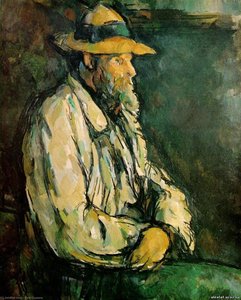
The Sailor, painted in 1890, is a remarkable example of Cezanne's mature style and his mastery over the Post-Impressionist movement. The painting features a sailor, dressed in traditional attire, with a thoughtful expression on his face. The background is blurred, drawing the viewer's attention to the central figure.
Color and Brushwork
Cezanne's use of color and brushwork in
The Sailor is characteristic of Post-Impressionism. The artist employs bold, vibrant colors to create a sense of depth and volume. The brushwork is loose and expressive, with visible brushstrokes that contribute to the painting's overall texture and structure.
Influence and Legacy
The Sailor has had a profound influence on modern art. The painting's innovative use of color, form, and brushwork has inspired countless artists, including Pablo Picasso and Henri Matisse. Cezanne's work, in general, has been instrumental in shaping the course of modern art, paving the way for movements such as Fauvism, Cubism, and Abstract Expressionism.
Conclusion
The Sailor by Paul Cezanne is a masterpiece of Post-Impressionism that showcases the artist's unique style and innovative techniques. The painting's influence on modern art cannot be overstated, making it a must-see for anyone interested in the evolution of Western art.
Where to Find Handmade Oil Paintings Reproductions of Cezanne's Works
If you are interested in owning a handmade oil painting reproduction of
The Sailor or any other work by Paul Cezanne, visit our collection at
https://WahooArt.com/@/PaulCezanne. Our skilled artists create each reproduction with meticulous attention to detail, ensuring that every brushstroke and color is true to the original work.
References
Post-Impressionism Art Movement Introduction Paul Cezanne | Paul Cézanne (1839-1906)
Fragen & Antworten
Welche Stellung nimmt „Der Seemann“ unter den wiederkehrenden Motiven von Paul Cézanne ein?
Unter den dokumentierten Themen von Paul Cézanne – cézanne's signature style, foundation of modern art, exploring spatial dimension, impressionism, geometric forms, color theory, human figure, quiet reflection – legt „Der Seemann“ einen ganz eigenen Fokus auf sailor, portrait, landscape, color palette, brushwork, composition, french art, cézanne style.
Welche Gemeinsamkeiten weist "Der Seemann" mit dem restlichen Werk von Paul Cézanne auf?
"Der Seemann" gehört zu Paul Cézannes Werk der Post-Impressionism-Epoche, dessen dokumentierte Themen unter anderem cézanne's signature style, foundation of modern art, exploring spatial dimension, impressionism, geometric forms, color theory, human figure, quiet reflection umfassen.
Welcher Kunstrichtung lässt sich "Der Seemann" von Paul Cézanne zuordnen?
„Der Seemann“ ist ein Werk der Post-Impressionism. Die Stilrichtung gibt die künstlerische Tradition an, der das Werk angehört.



 In echtem Maßstab anzeigen
 Zum Druck wechseln
 Versenden als Grußkarte
 Teilen
 Details anzeigen
 Leitfaden öffnen

 Herunterladen
 Ähnliche Objekte
 Röntgenaufnahme
 Diashow
 Besucherstatistiken
 Mehr anzeigen






































 Die Glasoption ist nur für Größen unter 110 cm verfügbar.