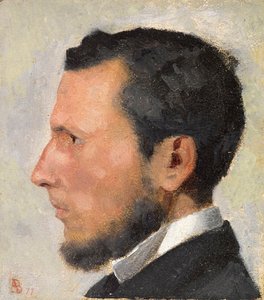
Das leuchtende Erbe von Paul Albert Besnard
Paul Albert Besnard (1849-1934) nimmt eine singuläre Stellung im Geflecht der französischen Kunst ein – ein Maler, der die wechselnden Gezeiten des späten neunzehnten und frühen zwanzigsten Jahrhunderts mit einer einzigartigen, unklassifizierbaren Anmut durchschritt. Geboren in Paris, begann seine künstlerische Reise innerhalb der strengen Grenzen der École des Beaux-Arts, wo er unter Jean Bremond studierte. Seine frühe Entwicklung wurde tiefgreifend vom akribischen Realismus Alexandre Cabanels geprägt, ein Einfluss, der Besnard ein diszipliniertes akademisches Fundament verlieh. Doch unter dieser klassischen Ausbildung schlug das Herz eines Modernisierers, eines Künstlers, der sich schließlich über die starren Grenzen der Tradition hinauswagen würde, um die vergängliche Schönheit von Licht und Atmosphäre zu umarmen.
Mit fortschreitender Reife seiner Karriere begann Besnard, die Kluft zwischen der strukturierten Welt der akademischen Malerei und den lebendigen, sinnlichen Erkundungen des Impressionismus zu überbrücken. Obwohl er die Form nicht zugunsten reiner Abstraktion gänzlich aufgab, wurde er zu einem Meister der Farbe und nutzte eine Palette, die sowohl leuchtend als auch tief emotional wirkte. Sein Werk zeichnet sich durch eine unerschütterliche Faszination dafür aus, wie das Licht mit Oberflächen interagiert – sei es die zarte Haut in einem Porträt oder die weiten architektonischen Ausmaße seiner größten Aufträge. Diese Fähigkeit, das Monumentale mit dem Intimen zu vereinen, erlaubte es ihm, die Etiketten seiner Ära zu transzendieren und einen Stil zu schaffen, der sich sowohl zeitlos als auch auffallend modern anfühlte.
Ein Meister von Maßstab und Geist
Besnards wahres Genie zeigte sich vielleicht am deutlichsten in seiner Fähigkeit, moderne Sensibilitäten auf eine großformatige, dekorative Ebene zu übertragen. Er malte nicht bloß Bilder; er transformierte Räume. Seine ehrgeizigen Fresken, die einige der prestigeträchtigsten Institutionen Frankreichs schmücken, dienen als Zeugnis seiner Vision von Kunst als einem öffentlichen, immersiven Erlebnis. Diese Werke finden sich an Orten wie:
- Der Sorbonne, wo seine Pinselführung akademische Pracht mit Leben füllt.
- , die seine Fähigkeit zeigt, Kunst in funktionale Architektur zu integrieren.
- , ein Triumph dekorativen Geschichtenerzählens.
- , das den bürgerlichen Stolz und die ästhetische Raffinesse von Paris widerspiegelt.
- , wo seine Stationen des Kreuzweges religiöse Ikonografie durch eine moderne, humanistische Linse neu interpretierten.
In diesen gewaltigen Unternehmungen verzichtete Besnard auf die übermäßig dramatische oder theatralische Ästhetik, wie sie viele seiner Zeitgenossen bevorzugten. Stattdessen nutzte er einen subtileren, atmosphärischen Ansatz, der das Licht das Auge des Betrachters leiten ließ und sicherstellte, dass selbst die massivsten Kompositionen ein Gefühl von poetischer Intimität und spiritueller Tiefe bewahrten.
Porträtkunst und die Intimität der Form
Jenseits der weiten Panoramen seiner Fresken war Besnard ein produktiver Schöpfer weitaus persönlicherer Werke. Er besaß die außergewöhnliche Fähigkeit, das psychologische Wesen seiner Motive durch Öl, Aquarell, Pastell und Radierung einzufangen. Seine Porträts werden nicht nur für ihre technische Präzision gefeiert, sondern auch für ihre tiefe emotionale Resonanz. In seiner Darstellung von Madame Georges Rodenbach findet man eine kühne Erkundung der Schönheit, die konventionelle Normen herausfordert und sein Geschick zeigt, Textur und Charakter mit gleicher Leidenschaft darzustellen.
Seine Vielseitigkeit als Grafiker und Zeichner erlaubte es ihm, mit dem Zusammenspiel von Schatten und Licht auf einer viel feineren Ebene zu experimentieren. Ob er die königliche Präsenz des Königspaares von Belgien oder die Stille einer Landschaft einfing – Besnards Werk bleibt in einem Einfluss verwurzelt, der an Thomas Gainsborough erinnert: eine gewisse Eleganz und ein rhythmischer Fluss, der das Sujet veredelt. Letztendlich liegt die Bedeutung Paul Albert Besnards genau in dieser Dualität: Er war ein Künstler, der die größten Hallen Frankreichs beherrschen konnte, während er gleichzeitig das flüchtigste, zarteste Flüstern des Lichts einfing.



 In echtem Maßstab anzeigen
 Handgemalte Reproduktion kaufen
 Versenden als Grußkarte
 Teilen
 Details anzeigen
 Leitfaden öffnen

 Herunterladen
 Ähnliche Objekte
 Röntgenaufnahme
 Diashow
 Besucherstatistiken

 Mehr anzeigen






































 Die Glasoption ist nur für Größen unter 110 cm verfügbar.