Kostenlose Kunstberatung

x
Druck bestellen Druck bestellenGemälde kaufen Gemälde kaufen VersendenVersenden
Details anzeigenDetails anzeigen Zu Favoriten hinzufügen Zu Favoriten hinzufügen HerunterladenHerunterladen Ähnliche ObjekteÄhnliche Objekte RöntgenaufnahmeRöntgenaufnahme Diashow anzeigenDiashow anzeigen

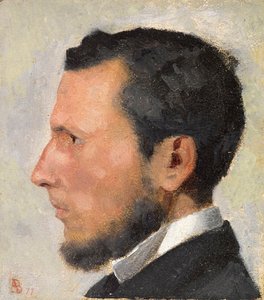
Morphine Addicts

The artwork is a monochrome etching depicting two women in what appears to be a somber or distressed state. The composition focuses on their faces and upper bodies, set against a backdrop of laboratory equipment suggesting a medical or scientific context. The image evokes a sense of melancholy and introspection.

Paul Albert Besnard (1849-1934) war ein französischer Maler und Grafiker bekannt für seine lebendige Farbgebung, dekorative Fresken und Porträts. Inspiriert von Gainsborough erforschte er Themen wie Licht und Moderne.

Erwerben Sie ein hochauflösendes, optimiertes digitales Bild, das der Online-Vorschau weit überlegen ist.

Jede Datei wird von unseren hauseigenen Spezialisten mit modernsten Werkzeugen und fachmännischer manueller Retusche sorgfältig vorbereitet. Wir stellen sicher, dass jedes Bild eine außergewöhnliche Klarheit, präzise Farbgenauigkeit und feinste Details aufweist.

Die endgültige Datei wird innerhalb von 72 Stunden per E-Mail zugestellt und ist für den sofortigen Einsatz in professionellen, redaktionellen und Druckumgebungen optimiert. Es handelt sich um dieselbe Qualität, der führende Designstudios, Verlage und Galerien vertrauen.

Digitales Kunstwerk

Laden Sie eine hochauflösende Datei für die persönliche Präsentation, den Druck und kreative Projekte herunter.

Endpreis

$9.99

In jeder Bestellung digitaler Bilder enthalten

Professionelle digitale Bereitstellung, garantiert

Wenn Sie sich für WahooArt.com entscheiden, erhalten Sie nicht nur ein Bild – Sie erhalten ein professionell aufbereitetes digitales Kunstwerk, das mit höchster Präzision erstellt und durch eine Zufriedenheitsgarantie abgesichert wird. Hier ist alles, was automatisch mit Ihrer Bestellung geliefert wird:

shipping_icon
Schnelle E-Mail-Zustellung

Ihre hochauflösende digitale Bilddatei wird Ihnen innerhalb von 72 Stunden nach der Bestellung per E-Mail zugestellt – bereit zur sofortigen Verwendung.

canvas_icon
KI-optimierte digitale Datei

Ihre Kunstwerke werden professionell mithilfe fortschrittlicher KI-Tools und manueller Bearbeitung optimiert, um maximale Detailtreue, Klarheit und Farbgenauigkeit zu gewährleisten.

insurance_icon
Kostenloser lebenslanger erneuter Versand

Datei versehentlich gelöscht oder verloren? Keine Sorge – wir senden sie Ihnen jederzeit kostenlos erneut zu.

tax_icon
Keine Einfuhrgebühren – jemals

Genießen Sie Ihr Kunstwerk sofort ohne Zollgebühren, Einfuhrabgaben oder Versandkosten – digitale Downloads sind immer steuerfrei.

color_icon
Garantierte Farbtreue

Wir garantieren, dass Ihr digitales Bild die Originalfarben mithilfe professioneller Werkzeuge und Farbmanagement so präzise wie möglich wiedergibt.

return_icon
60-Tage-Zufriedenheitsgarantie

Sollten Sie mit Ihrem digitalen Bild nicht zufrieden sein, werden wir es überarbeiten oder Ihnen innerhalb von 60 Tagen 100% erstatten – ohne Wenn und Aber.

guarantee_icon
100% Geld-zurück-Garantie

Nicht zufrieden? Erhalten Sie innerhalb von 60 Tagen nach Erhalt Ihrer digitalen Datei eine vollständige Rückerstattung – ohne Angabe von Gründen.

discount_icon
Rabatte bei Großbestellungen

3 Bilder kaufen, 10% sparen – 5 Bilder kaufen, 15% sparen – Ab 10 Bildern 20% sparen. Ideal für kreative Projekte, Galerien und Agenturen.

Eckdaten auf einen Blick

  • Movement: Impressionism
  • Artistic style: Realism
  • Artist: Paul Albert Besnard
  • Title: Morphine Addicts
  • Year: 1887
  • Influences: Alexandre Cabanel
  • Dimensions: 23.7 × 37 cm

Kunst-Quiz

Jede Frage hat nur eine richtige Antwort.

Frage 1:
What artistic movement is Paul Albert Besnard’s ‘Morphine Addicts’ primarily associated with?
Frage 2:
The etching technique employed by Besnard utilizes which prominent artistic method to build up tonal variations and create texture?
Frage 3:
What is the predominant color palette used in ‘Morphine Addicts’?
Frage 4:
Besnard’s depiction of the women's faces emphasizes which aspect of his artistic style?
Frage 5:
The composition of ‘Morphine Addicts’ features a tightly framed view, creating what kind of visual effect?

Details zum Sammlerstück

Paul Albert Besnard - Morphine Addicts

Paul Albert Besnard (1849-1934) stands as a singular figure in French art of the late nineteenth and early twentieth centuries—a painter who stubbornly resisted categorization while simultaneously achieving remarkable success across diverse artistic mediums. Born in Paris, he possessed an innate talent nurtured by formal training at the École des Beaux-Arts under Jean Bremond and profoundly shaped by the pioneering spirit of Alexandre Cabanel, whose meticulous realism served as a cornerstone for Besnard’s initial artistic explorations. His academic grounding provided a disciplined foundation upon which he would later forge his own distinctive path, one characterized by an unwavering fascination with color and light—concepts championed by the Impressionists. Despite eschewing the overtly dramatic aesthetic favored by his contemporaries, Besnard skillfully adapted Impressionistic techniques to monumental decorative pro Besnard’s oeuvre is marked by a profound sensitivity to human emotion and psychological nuance, particularly evident in his portraits of women – figures rendered with exquisite detail and imbued with an aura of melancholy. “Morphine Addicts,” completed in 1887, exemplifies this artistic approach, presenting two women presented in a starkly lit laboratory setting—a juxtaposition that immediately invites contemplation on themes of illness, addiction, and the complexities of human experience. The artist’s masterful command of etching technique contributes significantly to the artwork's expressive power, capturing subtle tonal variations and textural nuances with remarkable precision. The composition itself is deliberately restrained, focusing intently on the faces and upper bodies of the subjects—a stylistic choice that underscores Besnard’s commitment to realism while simultaneously conveying a sense of intimacy. The figures are positioned slightly off-center, creating visual balance and drawing the viewer's gaze towards their expressive eyes. A table laden with scientific glassware serves as a grounding element, anchoring the scene within its clinical context and subtly hinting at the underlying narrative. Besnard’s meticulous hatching and crosshatching techniques—inherited from Cabanel’s influence—are employed to build up areas of shadow, enhancing depth and creating an atmosphere of quiet contemplation. Color plays a crucial role in conveying emotion, though Besnard eschews vibrant hues characteristic of Impressionism, opting instead for a monochrome palette dominated by shades of grey and white. This tonal scheme amplifies the artwork’s melancholic mood, emphasizing the vulnerability of the subjects and fostering a connection with the viewer on an emotional level. The artist skillfully utilizes light and shadow to sculpt the forms of the women's faces, highlighting their expressions and conveying subtle nuances of emotion—a testament to Besnard’s artistic prowess. Ultimately, “Morphine Addicts” transcends mere visual representation; it functions as a poignant meditation on human suffering and resilience. Besnard’s stylistic blend of academic realism with Impressionistic sensibilities captures the essence of his era—a period marked by intellectual curiosity and an exploration of psychological states. The artwork's enduring appeal lies in its ability to provoke reflection on themes of addiction, vulnerability, and the profound beauty found within moments of quiet introspection. It remains a compelling example of Besnard’s artistic vision and a testament to the power of art to communicate complex emotions with grace and subtlety.

Biografie des Künstlers

Paul Albert Besnard: Bridging Impressionism and Decorative Grandeur

Paul Albert Besnard (1849-1934) stands as a singular figure in French art of the late nineteenth and early twentieth centuries—a painter who stubbornly resisted categorization while simultaneously achieving remarkable success across diverse artistic mediums. Born in Paris, he possessed an innate talent nurtured by formal training at the École des Beaux-Arts under Jean Bremond and profoundly shaped by the pioneering spirit of Alexandre Cabanel, whose meticulous realism served as a cornerstone for Besnard’s initial artistic explorations. His academic grounding provided a disciplined foundation upon which he would later forge his own distinctive path, one characterized by an unwavering fascination with color and light—concepts championed by the Impressionists. Despite eschewing the overtly dramatic aesthetic favored by his contemporaries, Besnard skillfully adapted Impressionistic techniques to monumental decorative projects. This decision cemented his reputation as a master craftsman and visionary artist. His frescoes adorning prestigious locations like the Sorbonne, École de Pharmacie, Comédie Française’s Salle des Sciences, Hôtel de Ville, and Berck Hospital's chapel exemplify this ambition—each station of the cross meticulously rendered in an entirely modern idiom that departed dramatically from traditional religious iconography. These ambitious undertakings underscore Besnard’s belief that art could serve as a vehicle for conveying profound ideas while simultaneously captivating the senses. Besnard’s artistic journey wasn’t solely defined by grand commissions; he cultivated a prodigious talent across watercolor, pastel, oil, and etching. His portraits captivated audiences with their psychological depth and expressive subtlety—particularly his depiction of Madame Georges Rodenbach, a daring exploration of unconventional beauty and stylistic innovation. Similarly, “The King and Queen of Belgium” showcased Besnard’s ability to capture regal dignity alongside nuanced emotional resonance. Influenced by Gainsborough and Reynolds during his formative years in England, he honed his observational skills and incorporated elements of landscape painting into his oeuvre. Furthermore, Besnard's meticulous study of light—evident in works like “La Femme qui se chauffe” at the Luxembourg Museum—demonstrated a commitment to scientific rigor alongside artistic intuition. His exploration of India in 1911 yielded striking nude studies that captured the ethereal beauty of the subcontinent and solidified his reputation as one of France’s foremost artists. He bravely confronted the looming shadow of impending war with “Peace by Arbitration,” completing it just days before hostilities erupted, reflecting a humanist sensibility deeply rooted in the artistic traditions of his time. Besnard's legacy extends beyond individual masterpieces; he established himself as a pivotal figure in shaping the visual culture of the Belle Époque and beyond. His unwavering dedication to mastering technique combined with an imaginative spirit ensured that his work continues to inspire admiration and scholarly inquiry—a testament to his enduring contribution to French art history.
  • Early Life & Training: Besnard’s formative years were marked by a rigorous academic education at the École des Beaux-Arts, where he studied under Jean Bremond and Alexandre Cabanel. Cabanel's influence instilled in him a profound respect for realism and meticulous detail, shaping his initial artistic explorations.
  • Impressionistic Influences: Despite rejecting the theatrical grandeur of Romanticism, Besnard embraced Impressionist principles—particularly color and light—drawing inspiration from artists like Claude Monet and Pierre-Auguste Renoir. This stylistic fusion would become a hallmark of his oeuvre.
  • Decorative Frescoes & Monumental Projects: Besnard’s ambition extended beyond easel painting; he achieved considerable renown as a fresco artist, undertaking ambitious commissions for institutions such as the Sorbonne, École de Pharmacie, Comédie Française’s Salle des Sciences and Hôtel de Ville. These projects demanded technical virtuosity and demonstrated his ability to convey complex ideas through visual imagery.
  • Portraiture & Psychological Depth: Besnard excelled in portraiture, capturing not merely likeness but also psychological nuance—as exemplified by his portrayal of Madame Georges Rodenbach, a daring stylistic innovation that challenged conventional notions of beauty.
  • Etching & Watercolor Techniques: Beyond monumental commissions, Besnard cultivated a diverse artistic practice encompassing etching and watercolor. His prints showcased his mastery of tonal gradation and expressive composition, while his watercolors conveyed delicate atmospheric effects.
Paul Albert Besnard

Paul Albert Besnard

1849 - 1934 , Frankreich

Kurzinfos

  • Artistic Movement Or Style: Impressionismus
  • Artists Who Influenced This Artist:
    • Alexandre Cabanel
    • Thomas Gainsborough
  • Date Of Birth: Paris, Frankreich (1849)
  • Date Of Death: 1934
  • Full Name: Paul Albert Besnard
  • Nationality: Französisch
  • Notable Artworks:
    • Death of Timophanes
    • Peace by arbitration
    • Portrait de Madame Georges Rodenbach
  • Place Of Birth: Paris