Kostenlose Kunstberatung

x
Gemälde kaufen Gemälde kaufenBild kaufen Bild kaufen VersendenVersenden
DetailsDetails Zu Favoriten hinzufügen Zu Favoriten hinzufügen HerunterladenHerunterladen Ähnliche ObjekteÄhnliche Objekte RöntgenaufnahmeRöntgenaufnahme Diashow anzeigenDiashow anzeigen

Dining Recess

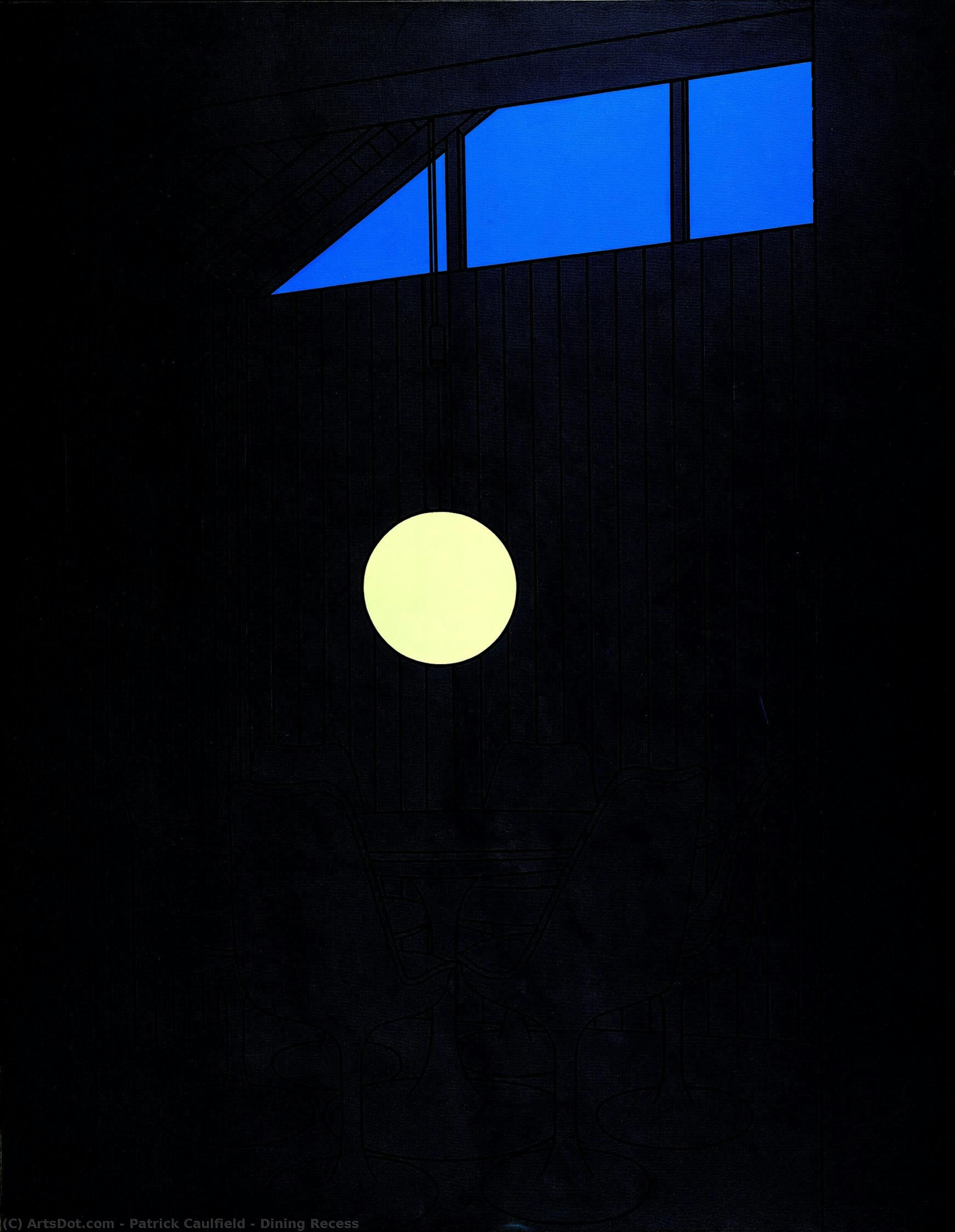
Patrick Caulfield’s ‘Dining Recess,’ a stark black-and-white masterpiece from 1972, presents an eerie, minimalist dining scene with a dominant globe lamp and molded tulip chairs, capturing the loneliness of observation within British Pop Art.

Patrick Caulfield (1936–2005): Ein britischer Minimalist und Pop Art Pionier mit ikonischen Gemälden und einem Fokus auf einfache Formen und Farbe. Seine Kunst wird weltweit gefeiert und in renommierten Sammlungen gezeigt.

Giclée / Kunstdruck

Giclée- oder Leinwanddruck in Museumsqualität mit schneller Produktion und flexiblen Veredelungsoptionen.

P118B $10
P118H $10
P118W $10
P438Z $10
P508JH $12
P508YH $12
P805H $10
P805Z $10
P919BZ $10
P919G $10
P919XJ $10
P959ZH $10
P968JZ $12
W106C $8
W218G $10
W218JH $8
W218Y $10
W307PJ $10
W316G $10
W316PJ $8
W316Y $10
W398PJ $8
W4111J $10
W500HY $15
W500JH $15
W692G $12
W849H $8
W940BG $15
W953PJ $8

Standard
custom
CM
INCH

Wählen Sie aus unseren vordefinierten Größen, die den ursprünglichen Proportionen des Kunstwerks entsprechen.

Breite
Höhe

Sie können Ihre eigenen Maße eingeben, um ein bestimmtes Format oder einen speziellen Platz einzupassen. Wenn das von Ihnen gewählte Format nicht den Proportionen des Originalbildes entspricht, werden wir das Kunstwerk entweder beschneiden oder das Bild mit einem gespiegelten oder einfarbigen Rand erweitern. Ein digitaler Entwurf wird Ihnen zur Genehmigung zugesandt, bevor die Produktion beginnt.
Bitte beachten Sie, dass die Vorschau auf dem Bildschirm nicht den tatsächlichen Zuschnitt oder die Erweiterung widerspiegelt. Nur der Entwurf zeigt die endgültige Komposition präzise an.
Obwohl Sondermaße verfügbar sind, empfehlen wir die Auswahl eines Maßes aus der vordefinierten Liste, um die ursprünglichen Proportionen zu bewahren.

Weltweiter Versand () innerhalb von 2 Wochen statt der üblichen 4/5 Wochen. (4 Juli)

why_choose_icon
Kostenloser weltweiter Expressversand
why_choose_icon
Hochwertige Leinenleinwand
why_choose_icon
Umfassender Versicherungsschutz beim Versand
why_choose_icon
Zollsteuer-Rückerstattungsgarantie
why_choose_icon
Garantie für echte Farbtreue
why_choose_icon
60-Tage-Rückgaberecht (nur bei Mängeln)
why_choose_icon
100% Geld-zurück-Garantie
why_choose_icon
Mengenrabatt verfügbar

Gesamtpreis

-

reproduction

Dining Recess

Giclée / Kunstdruck

Größe der Reproduktion

-

Endpreis aller Optionen

-

Eckdaten auf einen Blick

  • Medium: Painting
  • Title: Dining Recess
  • Influences:
    • Magritte
    • Duchamp
  • Subject or theme: Dining, Loneliness
  • Artist: Patrick Caulfield
  • Notable elements: Circular lamp, tulip chairs
  • Year: 1972

Beschreibung des Sammlerstücks

Patrick Caulfield’s ‘Dining Recess’: A Study in Isolation and Design

Patrick Caulfield's “Dining Recess,” completed in 1972, is more than just a depiction of a dining room; it’s a meticulously crafted meditation on loneliness, observation, and the subtle power of design. Measuring an imposing 274 x 213 cm, this large-scale work immediately commands attention with its stark simplicity – a brilliant white globe lamp dominating the center, juxtaposed against the muted grey tones of the interior space. This deliberate contrast isn’t merely aesthetic; it actively heightens the sense of mystery and unease that permeates the entire composition.

  • The Iconography of Absence: Caulfield famously stated his intention to present “something that’s either happened or is about to happen,” creating a palpable feeling of anticipation and, crucially, isolation. The absence of human figures amplifies this effect, forcing the viewer into an uncomfortable role as detached observer.
  • A Dialogue with Design History: The inclusion of Eero Saarinen's iconic ‘tulip’ chairs – frequently featured in design books of the era – isn’t accidental. Caulfield was deeply interested in the social implications of interior design, using these familiar objects to ground the scene in a specific historical context while simultaneously questioning their function and purpose within this unsettling tableau.
  • Technique and Impact: Caulfield's signature style—characterized by flat areas of color and bold black outlines—is employed with masterful precision here. The meticulous rendering of the lamp, the chairs, and even the wall texture creates a deceptively realistic effect, further emphasizing the strangeness of the scene.

Exploring the Roots of Minimalism

Caulfield’s artistic journey was profoundly shaped by his early exposure to Surrealism and Dada movements, particularly the work of René Magritte and Marcel Duchamp. This influence is evident in “Dining Recess” through its conceptual approach – a deliberate rejection of traditional representational art in favor of exploring ideas and emotions through simplified forms and carefully considered compositions. The minimalist aesthetic, so central to Caulfield’s work, was a direct response to the burgeoning Pop Art movement of the 1960s, which sought to challenge established artistic conventions by embracing popular culture imagery.

Symbolism and Emotional Resonance

The dominant image of the lamp within “Dining Recess” is particularly evocative. It functions as a visual metaphor for illumination – both literal and metaphorical – yet its inability to dispel the gloom of the room suggests a deeper, perhaps unresolvable, sense of darkness. The empty dining table itself becomes a symbol of missed connections, lost opportunities, or simply the quiet contemplation of solitude. The clock on the wall adds another layer of complexity, hinting at the passage of time and the inevitability of change – themes frequently explored in Caulfield’s work.

Historical Context and Significance

Created in 1972, “Dining Recess” reflects a pivotal moment in British art history. Caulfield was part of a generation of artists who were pushing the boundaries of traditional painting while simultaneously engaging with the social and cultural shifts of the time. His work is now recognized as a key example of minimalist Pop Art, demonstrating a unique ability to combine conceptual rigor with striking visual impact. This piece represents a significant contribution to Caulfield’s oeuvre and offers a compelling insight into his artistic vision.


Biografie des Künstlers

Patrick Caulfield: The Minimalist Maestro of Bold Color

Patrick Joseph Caulfield (1936–2005) stands as a pivotal figure in British Pop Art, recognized for his distinctive aesthetic – deceptively simple compositions dominated by flat areas of color and punctuated by stark black outlines. Born in Acton, London, Caulfield’s artistic journey began with an early fascination for graphic design and sculpture, shaping the trajectory of his groundbreaking visual language. He honed his skills at Chelsea School of Art before graduating from Wimbledon College of Arts in 1960, establishing himself as a freelance illustrator and designer. Early Influences: Caulfield’s formative years were imbued with the spirit of Surrealism and Dada movements, particularly the visionary works of René Magritte and Marcel Duchamp. These artists challenged conventional artistic norms, prompting Caulfield to embrace a rebellious stance and cultivating an appreciation for conceptual art—a cornerstone of his artistic worldview. The deliberate juxtaposition of incongruous elements and questioning established perceptions became central to his creative process. The Rise of Pop Art: Embracing the burgeoning Pop Art movement in the mid-1960s, Caulfield swiftly adopted its core principles – referencing popular culture and utilizing bold visual elements to convey meaning. His seminal painting ‘Cross,’ a masterful distillation of complex ideas into a minimalist graphic form, exemplifies this approach perfectly. It’s considered an emblem of Pop Art's rejection of academic tradition and its embrace of vernacular imagery, demonstrating Caulfield’s ability to communicate profound concepts through deceptively uncomplicated visual representations. Signature Style: Caulfield’s signature style quickly became instantly recognizable: geometric shapes rendered in flat hues against black backgrounds. This technique prioritized clarity of form and color over meticulous detail, reflecting his conviction that “the simplest thing is often the most powerful.” He deliberately eschewed elaborate ornamentation, favoring instead a reductive aesthetic that emphasized fundamental visual elements—a deliberate choice intended to maximize impact and provoke contemplation. This stylistic hallmark distinguishes Caulfield’s oeuvre from many other artists of his time. Notable Works & Achievements: Caulfield's artistic output extended far beyond painting, showcasing his versatility as an artist across diverse mediums. He conceived striking stained glass windows for Ivy Restaurant, harmoniously blending color and light to create immersive architectural experiences. Furthermore, he contributed significantly to the design of carpets for British Council headquarters, demonstrating his ability to integrate art into public spaces and communicate cultural values through visual narratives. His involvement in theatrical productions like ‘Party Game’ and ‘Rhapsody’ at the Royal Opera House underscored his collaborative spirit and solidified his reputation as a multidisciplinary creative force. Caulfield's unwavering dedication to artistic innovation earned him recognition from prestigious institutions such as Yale Center for British Art, where his work was featured prominently in ‘The Independent Eye,’ cementing his place within the annals of 20th-century art history. He was also nominated for the Turner Prize in 1987, acknowledging his contribution to contemporary art discourse and furthering his legacy as a visionary artist. Caulfield received Commander of the Order of the British Empire (CBE) in 1996, recognizing his distinguished service to the arts and culture—a testament to his enduring influence on British artistic expression. Legacy & Influence: Patrick Caulfield’s artistic legacy transcends his individual creations; he profoundly impacted subsequent generations of artists with his unwavering commitment to simplicity and bold visual expression. His reductive style served as inspiration for countless designers and illustrators, establishing a lasting aesthetic tradition rooted in clarity and impactful color palettes. Caulfield's work continues to be exhibited internationally and held in private collections, ensuring that his distinctive vision persists as a testament to the power of understated artistry—a singular contribution to British art history. He passed away peacefully in London in 2005, leaving behind an indelible mark on the artistic landscape of his time.
Patrick Caulfield

Patrick Caulfield

1936 - 2005 , Vereinigtes Königreich

Kurzinfos

  • Artistic Movement Or Style: Pop Art
  • Artists Who Influenced This Artist:
    • Andy Warhol
    • Jasper Johns
  • Date Of Birth: 29. Januar 1936
  • Date Of Death: 29. September 2005
  • Full Name: Patrick Joseph Caulfield
  • Nationality: Englisch
  • Notable Artworks:
    • Cross
    • Greece expiring…
    • Les demoiselles d’Avignon vues de derrière
  • Place Of Birth: Acton, Vereinigtes Königreich
Entdecken Sie Kunstwerke, die nach Themen, Stilen und Merkmalen sortiert sind.