Pantokrator – A Vision of Divine Majesty
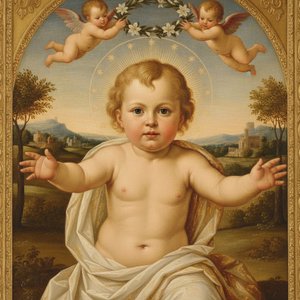
Nicholas Roerich’s “Pantokrator,” completed in 1909 during his formative years as an artist, stands as a testament to the burgeoning Symbolist movement and Roerich's profound engagement with Eastern mysticism. More than just a depiction of Jesus Christ seated upon a throne – though that is undeniably central to its composition – it’s an immersive experience designed to transport the viewer into a realm of spiritual contemplation.
Style and Technique: Art Nouveau Influence
The painting embodies the aesthetic principles of Art Nouveau, characterized by flowing lines, organic forms, and a harmonious blend of decorative elements. Roerich skillfully employs curvilinear contours to convey movement and grace, mirroring the undulating landscapes of Tibet – a region that would profoundly influence his artistic vision throughout his life. The muted palette—primarily golds, browns, and blues—creates an atmosphere of serenity and luminosity, reflecting the ethereal quality of divine presence.
Historical Context: Spiritual Renewal in Early 20th Century Russia
Painted against the backdrop of a period marked by intellectual ferment and spiritual yearning within Russia, “Pantokrator” reflects the broader cultural currents of its time. The Symbolist movement sought to transcend rational thought and explore the realm of subconscious experience, aiming to capture intangible truths through artistic expression. Roerich’s work aligns with this ethos, representing an attempt to communicate a deeper understanding of faith and humanity's relationship with the cosmos.
Symbolism: Light, Throne, and Divine Reflection
The radiant sun dominating the upper portion of the canvas serves as a potent symbol of divine illumination – illuminating Christ’s throne and casting its glow upon the figures below. The throne itself represents authority and majesty, yet it is positioned in an unassuming posture, suggesting humility alongside grandeur. Roerich's meticulous attention to detail—particularly in portraying the drapery and facial expressions—aims to convey not merely visual accuracy but also emotional resonance.
Emotional Impact: Invocation of Inner Peace
"Pantokrator" transcends mere representation; it aspires to evoke a feeling of profound peace and contemplation. Roerich’s masterful use of color and composition invites the viewer into a meditative state, encouraging introspection and fostering an appreciation for the sublime beauty of spiritual truth. It remains a captivating artwork that continues to inspire awe and wonder in those who encounter its timeless vision.



 Vorschau anzeigen
 Zu Druck wechseln
 Versenden
 Teilen
 Details anzeigen

 Herunterladen
 Ähnliche Objekte
 Röntgenaufnahme
 Diashow
 Statistiken

 Weiterlesen






































 Die Glasoption ist nur für Größen unter 110 cm verfügbar.