In echtem Maßstab anzeigen In AR an der Wand sehen Handgemalte Reproduktion kaufen Zum digitalen Bild wechseln Versenden als Grußkarte
Details anzeigen Leitfaden öffnen Zu Favoriten hinzufügen Herunterladen Ähnliche Objekte Röntgenaufnahme Diashow Besucherstatistiken

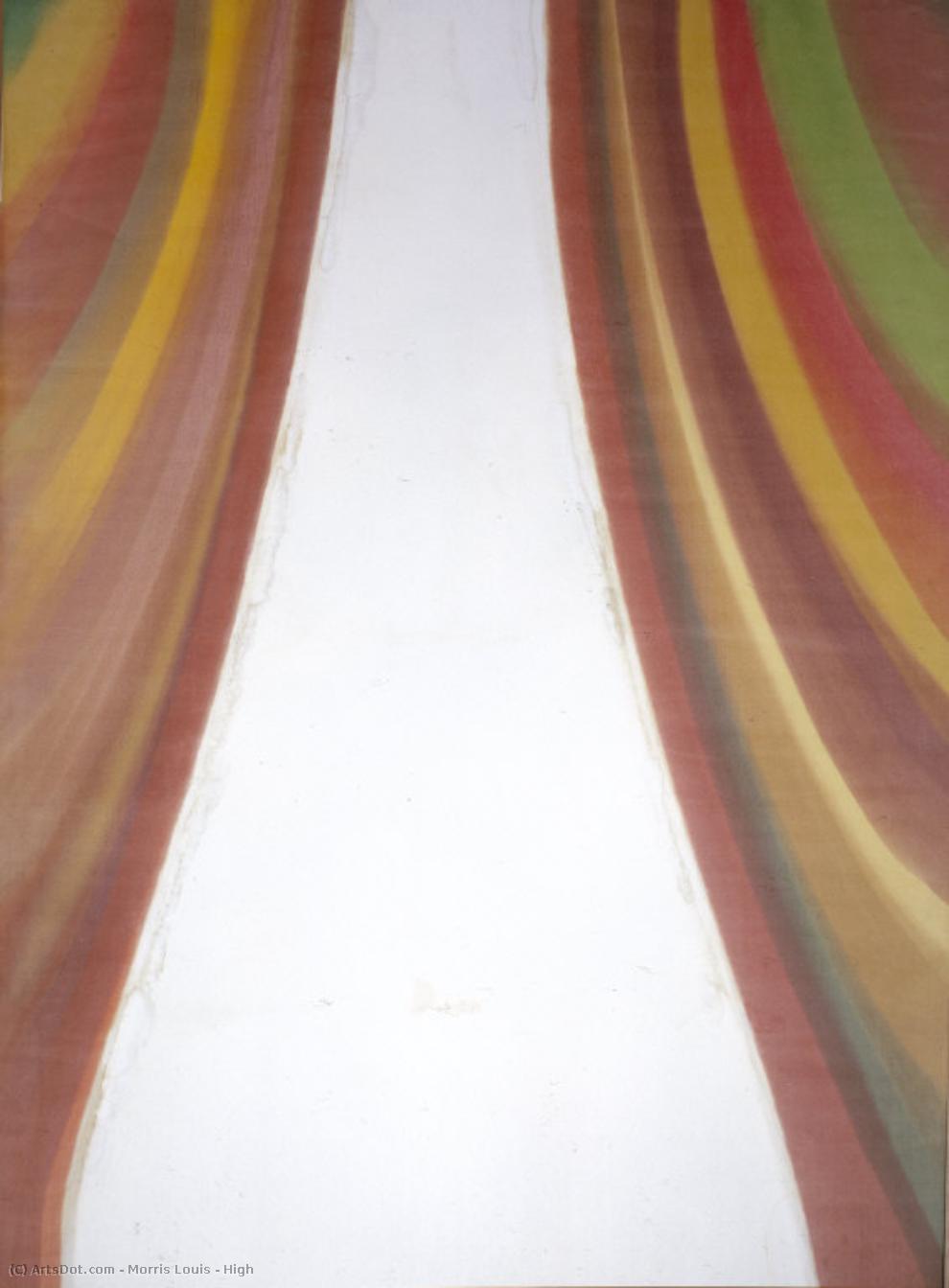
High

Own a stunning High by Morris Louis! This iconic 1959 Color Field painting offers vibrant hues & flowing lines. Hand-painted reproduction – elevate your art collection today.

Entdecken Sie Morris Louis (1912-1962), Pionier der Color Field Malerei! Innovative Schleierbilder, leuchtende Farben & bleibender Einfluss auf die abstrakte Kunst.

Die auf dieser Seite dargestellten Kunstwerke sind urheberrechtlich geschützt, was bedeutet, dass wir keine identische Reproduktion rechtmäßig erstellen oder verkaufen dürfen. Dieser Schutz wird durch internationale Abkommen wie die Berner Übereinkunft und durch nationale Gesetze, einschließlich derer, die von den ... festgelegt wurden US-Urheberrecht – Titel 17.

Diese Methode entspricht vollumfänglich den Urheberrechtsbestimmungen, da sie keine Kopie oder Vervielfältigung des geschützten Kunstwerks darstellt. Stattdessen handelt es sich um eine kreative Neuinterpretation – ein neues Gemälde, das vom Original inspiriert, aber nicht identisch mit ihm ist.

Giclée / Kunstdruck

Giclée- oder Leinwanddruck in Museumsqualität mit schneller Produktion und flexiblen Veredelungsoptionen. ( Handgemalte Reproduktion kaufen Zum digitalen Bild wechseln)

Corner sample of the P118B picture frame: moulded polystyrene, 5 cm wide and 3 cm thick
P118B €10
Corner sample of the P118H picture frame: moulded polystyrene, 5 cm wide and 3 cm thick
P118H €10
Corner sample of the P118W picture frame: moulded polystyrene, 5 cm wide and 3 cm thick
P118W €10
Corner sample of the P438Z picture frame: moulded polystyrene, 5.5 cm wide and 3.5 cm thick
P438Z €10
Corner sample of the P508JH picture frame: moulded polystyrene, 7 cm wide and 3.5 cm thick
P508JH €12
Corner sample of the P508YH picture frame: moulded polystyrene, 7 cm wide and 3.5 cm thick
P508YH €12
Corner sample of the P805H picture frame: moulded polystyrene, 5 cm wide and 3.5 cm thick
P805H €10
Corner sample of the P805Z picture frame: moulded polystyrene, 5 cm wide and 3.5 cm thick
P805Z €10
Corner sample of the P919BZ picture frame: moulded polystyrene, 7 cm wide and 3.5 cm thick
P919BZ €10
Corner sample of the P919G picture frame: moulded polystyrene, 7 cm wide and 3.5 cm thick
P919G €10
Corner sample of the P919XJ picture frame: moulded polystyrene, 7 cm wide and 3.5 cm thick
P919XJ €10
Corner sample of the P959ZH picture frame: moulded polystyrene, 5 cm wide and 3 cm thick
P959ZH €10
Corner sample of the P968JZ picture frame: moulded polystyrene, 6 cm wide and 4 cm thick
P968JZ €12
Corner sample of the W106C picture frame: solid wood, 5 cm wide and 3 cm thick
W106C €8
Corner sample of the W218G picture frame: solid wood, 5 cm wide and 3 cm thick
W218G €10
Corner sample of the W218JH picture frame: solid wood, 5 cm wide and 3 cm thick
W218JH €8
Corner sample of the W218Y picture frame: solid wood, 5 cm wide and 3 cm thick
W218Y €10
Corner sample of the W307PJ picture frame: solid wood, 6 cm wide and 3 cm thick
W307PJ €10
Corner sample of the W316G picture frame: solid wood, 6 cm wide and 3 cm thick
W316G €10
Corner sample of the W316PJ picture frame: solid wood, 6 cm wide and 3 cm thick
W316PJ €8
Corner sample of the W316Y picture frame: solid wood, 6 cm wide and 3 cm thick
W316Y €10
Corner sample of the W398PJ picture frame: solid wood, 5 cm wide and 3 cm thick
W398PJ €8
Corner sample of the W4111J picture frame: solid wood, 6.5 cm wide and 3.5 cm thick
W4111J €10
Corner sample of the W500HY picture frame: solid wood, 7 cm wide and 5 cm thick
W500HY €15
Corner sample of the W500JH picture frame: solid wood, 7 cm wide and 5 cm thick
W500JH €15
Corner sample of the W692G picture frame: solid wood, 8 cm wide and 4 cm thick
W692G €12
Corner sample of the W849H picture frame: solid wood, 5 cm wide and 3 cm thick
W849H €8
Corner sample of the W940BG picture frame: solid wood, 7.5 cm wide and 4.5 cm thick
W940BG €15
Corner sample of the W953PJ picture frame: solid wood, 6 cm wide and 3.5 cm thick
W953PJ €8

Standardformat
individuell anpassbar
CM
INCH

Wählen Sie aus unseren vordefinierten Formaten, die den ursprünglichen Proportionen des Kunstwerks entsprechen.

Breite
Höhe

Sie können Ihre eigenen Maße eingeben, um ein bestimmtes Format oder einen speziellen Platz einzupassen. Wenn das von Ihnen gewählte Format nicht den Proportionen des Originalbildes entspricht, werden wir das Kunstwerk entweder beschneiden oder das Bild mit einem gespiegelten oder einfarbigen Rand erweitern. Ein digitaler Entwurf wird Ihnen zur Genehmigung zugesandt, bevor die Produktion beginnt.
Bitte beachten Sie, dass die Vorschau auf dem Bildschirm nicht den tatsächlichen Zuschnitt oder die Erweiterung widerspiegelt. Nur der Entwurf zeigt die endgültige Komposition präzise an.
Obwohl Sondermaße verfügbar sind, empfehlen wir die Auswahl eines Maßes aus der vordefinierten Liste, um die ursprünglichen Proportionen zu bewahren.

Weltweiter Versand () innerhalb von 2 Wochen statt der üblichen 4/5 Wochen. (10 Oktober)

Kostenloser weltweiter Expressversand
Hochwertige Leinenleinwand
Vollständiger Versicherungsschutz beim Versand
Zollgebühren-Rückerstattungsgarantie
Garantie für exakte Farbtreue
100-tägiges Rückgaberecht (nur bei Mängeln)
100% Geld-zurück-Garantie
Angebot für Mengenrabatt

Gesamtpreis

€ 59

High

Giclée / Kunstdruck

Format der Reproduktion

-

Gesamtpreis

€ 59

Kurzübersicht

  • Medium: Acrylic on canvas
  • Location: Dallas Museum of Art
  • Influences:
    • Cézanne
    • Speicher
  • Artistic style: Abstract Expressionism
  • Title: High
  • Notable elements: Staining technique
  • Artist: Morris Louis

Kunst-Quiz

Jede Frage hat nur eine richtige Antwort.

Frage 1:
What is the primary style of painting exemplified by ‘High’ by Morris Louis?
Frage 2:
The white space in 'High' is most likely intended to:
Frage 3:
What technique did Morris Louis primarily use to create his paintings, as described in the text?
Frage 4:
In what year was ‘High’ created by Morris Louis?
Frage 5:
Morris Louis's work is often associated with which broader artistic movement?

Morris Louis’s “High”: A Cascade of Color and Quiet Intensity

Morris Louis’s “High,” painted in 1959, isn't merely a canvas splashed with color; it’s an invitation to contemplate the very nature of perception and emotion. This pivotal work from the Washington Color School movement embodies Louis’s groundbreaking approach to Abstract Expressionism, moving beyond traditional brushstrokes and sculptural forms to create a dynamic field of layered hues that seem to both dissolve and intensify before your eyes. The painting immediately draws you in with its verticality – two distinct channels of white space act as anchors, framing washes of vibrant yellow, green, pink, and brown that bleed into one another with an almost liquid grace.

Louis’s technique was revolutionary for its time. He eschewed the conventional methods of painting, opting instead to pour diluted acrylic paint directly onto unprimed canvas. This “staining” process allowed the colors to permeate the fabric itself, creating a sense of depth and luminosity that is rarely achieved with traditional layering techniques. The resulting surface isn’t smooth or polished; it possesses a subtle texture – a testament to the way the pigment soaked into the raw linen, lending an organic quality to the composition. This deliberate roughness contrasts beautifully with the fluidity of the color fields, generating a captivating tension between solidity and transparency.

Decoding the Language of Color

The palette of “High” is deceptively simple yet profoundly rich. Louis wasn’t interested in creating representational images; instead, he sought to evoke feelings through pure color relationships. The yellows are not bright or assertive but rather muted, almost melancholic, while the greens possess a subtle depth and complexity. The pinks range from delicate blush tones to warmer, more saturated hues, contributing to an overall sense of harmony and movement. Importantly, Louis avoided sharp edges or defined shapes, allowing the colors to flow into one another seamlessly. This deliberate ambiguity invites viewers to project their own emotions and interpretations onto the canvas.

The central white space within “High” is particularly significant. It’s not merely a void but rather an active element—a pathway, a breath of air, or perhaps even a reflection of the viewer's own inner landscape. The surrounding colors seem to radiate outwards from this core, creating a sense of expansion and release. This interplay between color and space is central to Louis’s artistic vision, suggesting that art can be experienced not just as an object but as a dynamic process of perception.

A Reflection of the Era

“High” was created during a period of profound social and cultural change in America. The post-war era witnessed a growing interest in psychology, spirituality, and alternative ways of experiencing reality. Abstract Expressionism, with its emphasis on subjective experience and emotional expression, provided a powerful outlet for these emerging sensibilities. Louis’s Color Field paintings—characterized by their large scale and focus on color alone—were particularly attuned to this cultural shift, offering viewers a chance to engage in a meditative and deeply personal encounter with art.

The painting's creation coincided with Louis's discovery of Magna paint, a revolutionary acrylic medium developed for him by Leo Sebak. This new material allowed for unprecedented control over color saturation and transparency, enabling Louis to achieve the delicate layering and luminous effects that define his work. The use of Magna paint was crucial to his ability to create the fluid, staining textures that characterize “High” and other paintings from this period.

Beyond Representation: An Invitation to Feeling

Ultimately, "High" is a testament to Louis’s belief that color could speak directly to the soul. It's not about depicting a specific scene or object; it’s about conveying an emotional state—a sense of openness, release, and quiet intensity. The painting invites viewers to step into its world of pure color and experience art as a source of profound personal resonance. It remains a powerful example of how abstraction can transcend representation and tap directly into the human heart.

Fragen & Antworten

In welchem Jahr wurde "High" von Morris Louis geschaffen?

"High" stammt aus dem Jahr 1959. Dieses Datum ordnet das Werk in die Schaffensperiode von Morris Louis sowie in dessen Epoche ein.

Wer hat "High" geschaffen und in welchem Stil ist es gehalten?

Morris Louis schuf „High“ im Rahmen der Color Field Painting-Bewegung.

Wie alt war Morris Louis, als „High“ im Jahr 1959 geschaffen wurde?

Morris Louis war 47 Jahre alt, als High im Jahr 1959 geschaffen wurde. Das Alter berechnet sich aus dem Geburtsjahr des Künstlers, 1912.

Sind die Farben von "High" von Morris Louis gesättigt oder gedämpft?

"High" von Morris Louis ist mit einer Subtle Color Sättigung festgehalten.

Welche Art von Farben verwendet "High"?

"High" von Morris Louis verwendet eine Neutrals-Farbpalette. Die Palette fasst den gesamten farblichen Charakter des Werkes zusammen.

Befindet sich "High" von Morris Louis im Heimatland des Künstlers?

Ja – das Kunstwerk befindet sich im Heimatland der Künstlerin / des Künstlers. Der Künstler wurde in Vereinigte Staaten von Amerika geboren; das Originalwerk befindet sich in Vereinigte Staaten von Amerika.

Wer ist der Künstler hinter "High"?

"High" wird Morris Louis zugeschrieben.


Biografie des Künstlers

Frühes Leben und Ausbildung

  • Geboren: Morris Louis Bernstein, 28. November 1912, Baltimore, Maryland
  • Eltern: Louis Bernstein (Möbelhändler) und Cecelia Luckman Bernstein.
  • Ausbildung: Besuchte öffentliche Schulen in Baltimore; Maryland Institute of Fine and Applied Arts (heute MICA), 1929-1932. Erlangte keinen Abschluss.
  • Frühe Einflüsse waren Eugene Speicher und Paul Cézanne.
  • Zeigte früh Interesse an Kunst, ermutigt von seiner Familie trotz begrenzter Möglichkeiten in Baltimore.

Entwicklung als Künstler & Schlüsselinfluenzen

  • 1930er Jahre: Arbeitete verschiedene Gelegenheitsjobs, um sich selbst zu unterstützen und gleichzeitig zu malen (Gemüseputzen, Wäschearbeit, Gallup Poll Forschung).
  • 1934-1936: Beteiligte sich am Public Works of Art Project Wandgemälde-Projekt unter Sam Swerdloff.
  • 1936-1937: Umzug nach New York City; Experimente mit Techniken im Siqueiros Workshop.
  • Magna Paint Entdeckung (1948): Ein entscheidender Moment – Louis war Pionier bei der Verwendung von Magna Farbe, einer neu entwickelten ölbasierenden Acrylfarbe, die für ihn von Leonard Bocour und Sam Golden hergestellt wurde. Dies ermöglichte größere Flüssigkeit und Transparenz in seiner Arbeit.
  • Einfluss von Helen Frankenthaler: 1953 besuchten Louis und Kenneth Noland Frankenthalers Atelier und waren tief beeindruckt von ihren Stain-Gemälden (insbesondere "Mountains and Sea"). Dies inspirierte ihre Experimente mit Pouring- und Staining-Techniken.

Die Veil Gemälde & Farbflächen Innovationen

  • Reife Veil Gemälde (1954): Charakterisiert durch überlappende, übereinanderliegende Farbschichten, die auf und in eine verspannte oder ungespannte Leinwand gegossen und gefärbt werden.
  • Technik: Extrem verdünnte Farbe wurde auf eine unbehandelte, ungespannte Leinwand aufgetragen, so dass sie über die geneigte Oberfläche fließen konnte und transparente Farbschleier erzeugte. Dies eliminierte Pinselstriche und betonte die Flachheit.
  • Farbflächenmalerei: Louis wurde zu einer zentralen Figur der Farbflächenmalerei, neben Künstlern wie Kenneth Noland und Helen Frankenthaler. Er vereinfachte den räumlichen Bildraum und betonte flache Farbebene. Er war Teil der Washington Color School Bewegung.
  • Serien & Stile: Abgesehen von den Veil Gemälden erforschte er Serien wie Florale, Säulen (1960), Unfurleds (1960-61) – mit Rinnsalen opaker Farbe – und Streifenmalereien (1961-62).

Wichtige Errungenschaften & Historische Bedeutung

  • Pionierarbeit der Farbflächenmalerei: Louis gilt als wichtiger Innovator in der Farbflächenmalerei, neben Künstlern wie Kenneth Noland und Helen Frankenthaler.
  • Einfluss auf den abstrakten Expressionismus: Seine Arbeit erweiterte die Grenzen des abstrakten Expressionismus, indem sie sich auf Farbe und Flachheit statt Geste oder Komposition konzentrierte.
  • Washington Color School: Ein bedeutender Beitrag zu dieser einflussreichen Bewegung, die einen reduktionistischen Ansatz in der Malerei betonte.
  • Zerstörung von Werken: Bemerkenswert ist, dass Louis zwischen 1955 und 1957 viele seiner Gemälde zerstörte, was eine kritische Selbstbeurteilung seiner Arbeit widerspiegelt.
  • Vermächtnis: Sein Fokus auf Farbe, Flachheit und die Materialität der Farbe beeinflusst zeitgenössische Künstler weiterhin.

Spätere Jahre & Tod

  • Louis malte bis zu seinem Tod produktiv weiter.
  • Tod: Starb am 7. September 1962 in Washington, D.C., im Alter von 49 Jahren.
  • Gedenkausstellung (1963): Eine bedeutende Ausstellung fand kurz nach seinem Tod im Solomon R. Guggenheim Museum statt.
  • Retrospektive Ausstellungen: Folgten wichtige Retrospektiven im Museum of Fine Arts, Boston (1967), und der National Gallery of Art, Washington, D.C. (1976).
Morris Louis

Morris Louis

1912 - 1962 , Vereinigte Staaten von Amerika

Eckdaten zum Künstler

  • Beeinflusste Künstler: ['Kenneth Noland']
  • Bemerkenswerte Werke:
    • High
    • Number 1-36
    • Wo
    • Number 1-68
    • Gamma Tau
    • Delta Theta
  • Einflussreiche Künstler: ['Helen Frankenthaler']
  • Geburtsdatum: 28. November 1912
  • Geburtsort: Baltimore, USA
  • Künstlerische Bewegung: Farbflächenmalerei
  • Nationalität: Amerikanisch
  • Todatum: 7. September 1962
  • Vollständiger Name: Morris Louis
Entdecken Sie Kunstwerke, die nach Themen, Stilen und Merkmalen sortiert sind.