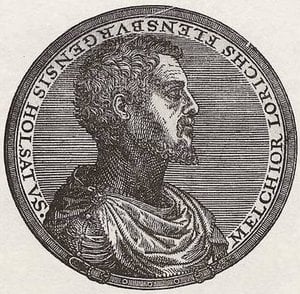
Turk Playing a Harp (1576) von Melchior Lorck, handgemaltes Ölgemälde-Replikat eines Meisterkünstlers
Vorschau anzeigen In AR ansehen Zum Druck wechseln Zum digitalen Bild wechseln Versenden
Details anzeigen Leitfaden Zu Favoriten hinzufügen Herunterladen Ähnliche Objekte Röntgenaufnahme Diashow Fragen & Antworten Präsentation Statistiken

Turk Playing a Harp Handgemalte Ölmalerei-Reproduktion

Abmessungen
245.0 x 163.0 cm

Explore Melchior Lorck’s ‘Turk Playing a Harp’ (1576). A stunning Mannerist engraving showcasing intricate detail, dramatic foreshortening & Eastern influence. Discover Renaissance art.

Melchior Lorck (1526/27-1583): Renaissance-Künstler & Grafiker, berühmt für seine detaillierten Aufzeichnungen über das türkische Leben im 16. Jhdt. Pionier der Reiseberichterstattung!

Handgefertigte Ölreproduktion

Handgemaltes Ölgemälde auf Leinwand in Ihrer Wunschgröße und mit Rahmen, auf Bestellung von unseren Künstlern angefertigt. ( Zum Druck wechseln Zum digitalen Bild wechseln)

Corner sample of the P118B picture frame: formgepresstes Polystyrol, 5 cm wide and 3 cm thick
P118B €10
Corner sample of the P118H picture frame: formgepresstes Polystyrol, 5 cm wide and 3 cm thick
P118H €10
Corner sample of the P118W picture frame: formgepresstes Polystyrol, 5 cm wide and 3 cm thick
P118W €10
Corner sample of the P438Z picture frame: formgepresstes Polystyrol, 5.5 cm wide and 3.5 cm thick
P438Z €10
Corner sample of the P508JH picture frame: formgepresstes Polystyrol, 7 cm wide and 3.5 cm thick
P508JH €12
Corner sample of the P508YH picture frame: formgepresstes Polystyrol, 7 cm wide and 3.5 cm thick
P508YH €12
Corner sample of the P805H picture frame: formgepresstes Polystyrol, 5 cm wide and 3.5 cm thick
P805H €10
Corner sample of the P805Z picture frame: formgepresstes Polystyrol, 5 cm wide and 3.5 cm thick
P805Z €10
Corner sample of the P919BZ picture frame: formgepresstes Polystyrol, 7 cm wide and 3.5 cm thick
P919BZ €10
Corner sample of the P919G picture frame: formgepresstes Polystyrol, 7 cm wide and 3.5 cm thick
P919G €10
Corner sample of the P919XJ picture frame: formgepresstes Polystyrol, 7 cm wide and 3.5 cm thick
P919XJ €10
Corner sample of the P959ZH picture frame: formgepresstes Polystyrol, 5 cm wide and 3 cm thick
P959ZH €10
Corner sample of the P968JZ picture frame: formgepresstes Polystyrol, 6 cm wide and 4 cm thick
P968JZ €12
Corner sample of the W106C picture frame: Massivholz, 5 cm wide and 3 cm thick
W106C €8
Corner sample of the W218G picture frame: Massivholz, 5 cm wide and 3 cm thick
W218G €10
Corner sample of the W218JH picture frame: Massivholz, 5 cm wide and 3 cm thick
W218JH €8
Corner sample of the W218Y picture frame: Massivholz, 5 cm wide and 3 cm thick
W218Y €10
Corner sample of the W307PJ picture frame: Massivholz, 6 cm wide and 3 cm thick
W307PJ €10
Corner sample of the W316G picture frame: Massivholz, 6 cm wide and 3 cm thick
W316G €10
Corner sample of the W316PJ picture frame: Massivholz, 6 cm wide and 3 cm thick
W316PJ €8
Corner sample of the W316Y picture frame: Massivholz, 6 cm wide and 3 cm thick
W316Y €10
Corner sample of the W398PJ picture frame: Massivholz, 5 cm wide and 3 cm thick
W398PJ €8
Corner sample of the W4111J picture frame: Massivholz, 6.5 cm wide and 3.5 cm thick
W4111J €10
Corner sample of the W500HY picture frame: Massivholz, 7 cm wide and 5 cm thick
W500HY €15
Corner sample of the W500JH picture frame: Massivholz, 7 cm wide and 5 cm thick
W500JH €15
Corner sample of the W692G picture frame: Massivholz, 8 cm wide and 4 cm thick
W692G €12
Corner sample of the W849H picture frame: Massivholz, 5 cm wide and 3 cm thick
W849H €8
Corner sample of the W940BG picture frame: Massivholz, 7.5 cm wide and 4.5 cm thick
W940BG €15
Corner sample of the W953PJ picture frame: Massivholz, 6 cm wide and 3.5 cm thick
W953PJ €8

Standardformat
individuell anpassbar
CM
INCH

Wählen Sie aus unseren vordefinierten Formaten, die den ursprünglichen Proportionen des Kunstwerks entsprechen.

Breite
Höhe

Geben Sie die Breite und die Höhe an, die Sie für Ihren Rahmen oder Ihre Wand benötigen. Da dieses Werk handgemalt ist, kann der Künstler bei einer anderen Form etwas mehr um das Bild herum malen oder etwas abschneiden – Sie entscheiden. Wir senden Ihnen ein digitales Mockup zur Freigabe, bevor mit dem Malen begonnen wird. Das auf dieser Seite gezeigte Bild stellt nicht das tatsächliche Ergebnis dar – dies tut nur das Mockup.

Beispiele für Anpassungsmöglichkeiten: Gesicht durch Kundenfoto ersetzen; Haustier hinzufügen (z. B. Katze durch Hund ersetzen); eine versteckte Nachricht im Hintergrund einfügen; Hintergrundlandschaft oder -elemente ändern.
Nach der Bestellung wird das WahooArt.com-Team dem Kunden Anweisungen per E-Mail zusenden und eine Mockup-Vorschau bereitstellen.

Weltweiter Versand () in nur 3 bis 4 Wochen statt der üblichen 5 Wochen. (8 November). Keine Kompromisse bei der Qualität.

Kostenloser weltweiter Expressversand
Hochwertige Leinenleinwand
Umfassender Versicherungsschutz beim Versand
Zollgebühren-Rückerstattungsgarantie
Garantie für exakte Farbtreue
100 Tage Rückgaberecht (nur bei Mängeln)
100% Geld-zurück-Garantie
Mengenrabatt verfügbar

Gesamtpreis

€ 243

Turk Playing a Harp

Art der Reproduktion

Format der Reproduktion

-

Endpreis

€ 243

Eckdaten

  • Artist: Melchior Lorck
  • Influences:
    • Heinrich Aldegrever
    • Albrecht Dürer
  • Artistic style: Dramatic
  • Subject or theme: Music
  • Medium: Engraving
  • Movement: Mannerism

Kunst-Quiz

Jede Frage hat nur eine richtige Antwort.

Frage 1:
What artistic style is predominantly evident in Melchior Lorck’s ‘Turk Playing a Harp’?
Frage 2:
The engraving utilizes a technique known for creating tonal variations and depth. What is this technique?
Frage 3:
What symbolic significance does the harp hold within the artwork?
Frage 4:
Lorck’s journey to Constantinople was part of an embassy aimed at furthering diplomatic relations between Denmark and the Ottoman Empire. What was a primary goal of this mission?
Frage 5:
Lorck’s engravings are notable for their meticulous detail. Which artistic medium is particularly suited to achieving this level of realism?

A Window into Ottoman Splendor: Melchior Lorck’s ‘Turk Playing a Harp’

Melchior Lorck's “Turk Playing a Harp” (1576) stands as an exceptional testament to Renaissance artistic innovation intertwined with the burgeoning fascination for the Ottoman Empire. More than just a depiction of musical performance, this Mannerist engraving offers a meticulously crafted visual narrative that captures the spirit of its time—a period marked by diplomatic missions and scholarly exploration into distant cultures. Produced during Lorck’s formative years as a Danish artist venturing beyond Northern Europe, it exemplifies his mastery of printmaking technique and his unwavering commitment to capturing detail with remarkable accuracy.

Style and Technique: Mannerist Drama

Lorck's stylistic choices firmly situate “Turk Playing a Harp” within the Mannerist movement—a reaction against the idealized beauty of High Renaissance art. Characterized by elongated figures, exaggerated poses, and dramatic foreshortening, the engraving prioritizes expressive gesture over anatomical precision. The artist employs a masterful use of hatching and crosshatching to achieve tonal variations that imbue the image with depth and luminosity despite its monochrome palette. These techniques skillfully convey texture—the velvety drape of the curtain, the intricate surface of the harp’s ornamentation, and the polished sheen of the vase—creating an illusion of realism that transcends the limitations of engraving. The artist's meticulous attention to perspective subtly enhances the dramatic impact of the scene.

Historical Context: Embassies and Eastern Observation

The engraving emerged from a pivotal moment in European history: the Imperial embassy led by Ogier Gheselin Busbecq to Constantinople (modern Istanbul) under Sultan Suleiman the Magnificent. This diplomatic expedition aimed to foster relations between Christendom and Islam, yet it also fueled an unprecedented influx of knowledge about Ottoman culture and customs into Europe. Lorck’s artistic endeavors were profoundly influenced by this context; he sought to document the grandeur and complexity of the Ottoman court with unflinching realism. The harp itself serves as a potent symbol—representing music, artistry, and perhaps a longing for exotic lands—reflecting the broader intellectual currents of the era.

Symbolism: Harmony and Contemplation

Beyond its technical brilliance and historical significance, “Turk Playing a Harp” resonates with deeper symbolic meanings. The solitary figure of the Turk embodies contemplation and dedication to his craft, mirroring the humanist ideals prevalent during Lorck’s time. The harp's intricate design speaks to the pursuit of beauty and artistic excellence—a core concern of Mannerist artists who rejected simplistic representations in favor of emotionally charged compositions. Furthermore, the dark curtain serves as a visual barrier, emphasizing the subject’s isolation and inviting viewers to contemplate the profound stillness of the scene.

Emotional Impact: A Moment Frozen in Time

Lorck's engraving transcends mere representation; it evokes a palpable sense of solemnity and wonder. The artist skillfully captures the psychological state of his subject—a man absorbed in his musical performance—creating an image that invites viewers to pause and consider the beauty of artistic expression amidst the grandeur of Ottoman culture. “Turk Playing a Harp” remains a captivating masterpiece, offering a glimpse into a bygone era and demonstrating Lorck’s unparalleled ability to translate observation into enduring visual art.

Fragen & Antworten

Ist ein hochauflösender Download von "Turk Playing a Harp" verfügbar?

"Turk Playing a Harp" ist als hochauflösender digitaler Bild-Download direkt über die Seite Digitales Kunstwerk erhältlich.

Wann und mit welchen Materialien wurde "Turk Playing a Harp" geschaffen?

"Turk Playing a Harp" entstand im Jahr 1576 in Acrylic On Canvas.

Wer hat "Turk Playing a Harp" geschaffen und in welchem Stil ist es gehalten?

Melchior Lorck schuf „Turk Playing a Harp“ im Rahmen der Mannerism-Bewegung.


Künstlerbiografie

Melchior Lorck: Ein Leben zwischen Renaissancekunst und osmanischen Begegnungen

  • Geboren: Flensburg, Deutschland (1526/27)
  • Gestorben: Kopenhagen, Dänemark (1583)
  • Nationalität: Deutsch-Dänisch
  • Bekannt für: Renaissancemaler, Zeichner und Grafiker; detaillierte visuelle Aufzeichnung des osmanischen Reiches im 16. Jahrhundert.

Frühes Leben und Ausbildung

  • Melchior Lorck wurde in Flensburg, Schleswig (heute Deutschland), geboren und entstammte einer Familie mit Verbindungen zur Reformation.
  • Um 1549 erhielt er ein viereinhalbjähriges Reisestipendium von König Christian III. von Dänemark, das es ihm ermöglichte, Kunst in ganz Europa zu studieren.
  • Seine frühe Ausbildung umfasste wahrscheinlich eine Lehrzeit bei einem Goldschmied in Lübeck.
  • Während seiner Reisen zeigte Lorck frühzeitig künstlerisches Talent und schuf Stiche, die von Künstlern wie Heinrich Aldegrever beeinflusst waren und Albrecht Dürer huldigten.

Die osmanische Erfahrung: Einzigartige visuelle Aufzeichnung

  • 1555 trat Lorck der kaiserlichen Gesandtschaft unter der Leitung von Ogier Gheselin Busbecq an, die zum Hofe Sultan Süleymans des Prächtigen nach Konstantinopel (Istanbul) reiste.
  • Diese entscheidende Erfahrung prägte seine Karriere und sein Vermächtnis. Er verbrachte etwa anderthalb Jahre in der osmanischen Hauptstadt.
  • Lorck dokumentierte akribisch das türkische Leben, die Bräuche, die Architektur, die militärischen Praktiken und Porträts wichtiger Persönlichkeiten wie Sultan Süleyman und Isma'il, den persischen Gesandten.
  • Seine Zeichnungen und Stiche bieten eine beispiellose visuelle Aufzeichnung der osmanischen Gesellschaft im 16. Jahrhundert, eine einzigartige Quelle für Historiker und Kunstgelehrte.
  • Bemerkenswerte Werke aus dieser Zeit sind das monumentale "Prospekt von Konstantinopel", eine detaillierte Panoramaansicht der Stadt, und die Serie von Stichen, bekannt als „Das Türkische Werk“.

Künstlerischer Stil und Einflüsse

  • Lorcks Stil spiegelt den Einfluss der nördlichen Renaissance wider, insbesondere deutscher Meister wie Dürer.
  • Seine Arbeit zeigt eine scharfe Beobachtungsgabe und Liebe zum Detail, die sich in seinen präzisen Darstellungen von Architektur, Kostümen und Porträts zeigt.
  • Er setzte gekonnt Radiertechniken ein und schuf kunstvolle und ausdrucksstarke Stiche.
  • Lorcks topographische Zeichnungen, wie das "Prospekt von Konstantinopel", kündeten von späteren Entwicklungen in der Landschaftskunst und Kartografie an.

Spätere Karriere und Vermächtnis

  • Nach seiner Rückkehr nach Europa arbeitete Lorck 1559 in Wien und schuf Stiche antiker Denkmäler und Porträts.
  • Er diente kurzzeitig als Kartograph für den Hamburger Rat und erstellte eine großflächige Karte der Elbe.
  • Lorcks "Türkisches Werk" wurde, obwohl es zu seinen Lebzeiten nicht veröffentlicht wurde, erst 1626 herausgegeben und zeigte seine umfangreiche Dokumentation des osmanischen Lebens.
  • Er gilt als der erste dänische Künstler mit einer substanziellen Biografie und einem ihm zuzuordnenden Werk.
  • Seine detaillierte visuelle Aufzeichnung der Türkei bleibt von unschätzbarem Wert für das Verständnis der osmanischen Kultur im 16. Jahrhundert und stellt einen bedeutenden Beitrag zur Renaissancekunst und Kartografie dar. Er gilt als Wegbereiter für spätere reisende Künstler und visuelle Reporter.
Melchior Lorck

Melchior Lorck

1527 - 1564 , Deutschland

Kurzinfos

  • Beeinflusste Künstler:
    • Heinrich Aldegrever
    • Albrecht Dürer
  • Bemerkenswerte Werke:
    • Constantinopel-Panorama
    • Türkische Veröffentlichung
  • Geburtsdatum: 1526/27
  • Geburtsort: Flensburg, Deutschland
  • Künstlerische Richtung: Renaissance
  • Nationalität: Dänisch-Deutscher
  • Todestag: 1583
  • Vollständiger Name: Melchior Lorck
  • Von Künstlern Beeinflusst:
    • Wenzel Hollar
    • Cornelis de Bruijn