Vorschau anzeigen In AR ansehen Handgemalte Reproduktion bestellen Zum digitalen Bild wechseln Versenden
Details anzeigen Leitfaden Zu Favoriten hinzufügen Herunterladen Ähnliche Objekte Röntgenaufnahme Diashow Q&A Statistiken

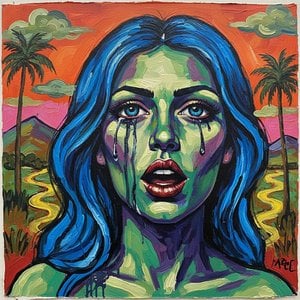
Cocktail Party- Three

Explore Maxwell Bates’ ‘Cocktail Party-Three’! A vibrant 1967 oil painting showcasing prairie life & modernism. Bold colors, dynamic figures & unique perspective – a captivating piece.

Ein einflussreicher kanadischer expressionistischer Maler, bekannt für Werke wie Cocktail Party- Three, verband Maxwell Bennett Bates modernistische Energie mit kräftigen Texturen, die zu seinem lebendigen Erbe einladen.

Die auf dieser Seite dargestellten Kunstwerke sind urheberrechtlich geschützt, was bedeutet, dass wir keine identische Reproduktion rechtmäßig erstellen oder verkaufen dürfen. Dieser Schutz wird durch internationale Abkommen wie die Berner Übereinkunft und durch nationale Gesetze, einschließlich derer, die von den US-Urheberrecht – Titel 17.

Diese Methode entspricht vollumfänglich den Urheberrechtsbestimmungen, da sie keine Kopie oder Vervielfältigung des geschützten Kunstwerks darstellt. Stattdessen handelt es sich um eine kreative Neuinterpretation – ein neues Gemälde, das vom Original inspiriert, aber nicht identisch mit ihm ist.

Giclée / Kunstdruck

Giclée- oder Leinwanddruck in Museumsqualität mit schneller Produktion und flexiblen Veredelungsoptionen. ( Handgemalte Reproduktion bestellen Zum digitalen Bild wechseln)

Corner sample of the P118B picture frame: formgepresstes Polystyrol, 5 cm wide and 3 cm thick
P118B €10
Corner sample of the P118H picture frame: formgepresstes Polystyrol, 5 cm wide and 3 cm thick
P118H €10
Corner sample of the P118W picture frame: formgepresstes Polystyrol, 5 cm wide and 3 cm thick
P118W €10
Corner sample of the P438Z picture frame: formgepresstes Polystyrol, 5.5 cm wide and 3.5 cm thick
P438Z €10
Corner sample of the P508JH picture frame: formgepresstes Polystyrol, 7 cm wide and 3.5 cm thick
P508JH €12
Corner sample of the P508YH picture frame: formgepresstes Polystyrol, 7 cm wide and 3.5 cm thick
P508YH €12
Corner sample of the P805H picture frame: formgepresstes Polystyrol, 5 cm wide and 3.5 cm thick
P805H €10
Corner sample of the P805Z picture frame: formgepresstes Polystyrol, 5 cm wide and 3.5 cm thick
P805Z €10
Corner sample of the P919BZ picture frame: formgepresstes Polystyrol, 7 cm wide and 3.5 cm thick
P919BZ €10
Corner sample of the P919G picture frame: formgepresstes Polystyrol, 7 cm wide and 3.5 cm thick
P919G €10
Corner sample of the P919XJ picture frame: formgepresstes Polystyrol, 7 cm wide and 3.5 cm thick
P919XJ €10
Corner sample of the P959ZH picture frame: formgepresstes Polystyrol, 5 cm wide and 3 cm thick
P959ZH €10
Corner sample of the P968JZ picture frame: formgepresstes Polystyrol, 6 cm wide and 4 cm thick
P968JZ €12
Corner sample of the W106C picture frame: Massivholz, 5 cm wide and 3 cm thick
W106C €8
Corner sample of the W218G picture frame: Massivholz, 5 cm wide and 3 cm thick
W218G €10
Corner sample of the W218JH picture frame: Massivholz, 5 cm wide and 3 cm thick
W218JH €8
Corner sample of the W218Y picture frame: Massivholz, 5 cm wide and 3 cm thick
W218Y €10
Corner sample of the W307PJ picture frame: Massivholz, 6 cm wide and 3 cm thick
W307PJ €10
Corner sample of the W316G picture frame: Massivholz, 6 cm wide and 3 cm thick
W316G €10
Corner sample of the W316PJ picture frame: Massivholz, 6 cm wide and 3 cm thick
W316PJ €8
Corner sample of the W316Y picture frame: Massivholz, 6 cm wide and 3 cm thick
W316Y €10
Corner sample of the W398PJ picture frame: Massivholz, 5 cm wide and 3 cm thick
W398PJ €8
Corner sample of the W4111J picture frame: Massivholz, 6.5 cm wide and 3.5 cm thick
W4111J €10
Corner sample of the W500HY picture frame: Massivholz, 7 cm wide and 5 cm thick
W500HY €15
Corner sample of the W500JH picture frame: Massivholz, 7 cm wide and 5 cm thick
W500JH €15
Corner sample of the W692G picture frame: Massivholz, 8 cm wide and 4 cm thick
W692G €12
Corner sample of the W849H picture frame: Massivholz, 5 cm wide and 3 cm thick
W849H €8
Corner sample of the W940BG picture frame: Massivholz, 7.5 cm wide and 4.5 cm thick
W940BG €15
Corner sample of the W953PJ picture frame: Massivholz, 6 cm wide and 3.5 cm thick
W953PJ €8

Standardformat
individuell anpassbar
CM
INCH

Wählen Sie aus unseren vordefinierten Formaten, die den ursprünglichen Proportionen des Kunstwerks entsprechen.

Breite
Höhe

Geben Sie die benötigte Breite und Höhe an, damit der Druck perfekt in Ihren Rahmen oder an Ihre Wand passt. Ein Druck kann nur beschnitten, aber niemals größer als das Originalbild angefertigt werden; daher verliert ein Format mit anderen Proportionen einen Teil des Bildes. Wir senden Ihnen ein digitales Mockup zur Freigabe, bevor wir den Druck ausführen. Das auf dieser Seite gezeigte Bild zeigt nicht den tatsächlichen Beschnitt – dies ist nur im Mockup ersichtlich.

Weltweiter Versand () innerhalb von 2 Wochen statt der üblichen 4/5 Wochen. (30 Oktober)

Kostenloser weltweiter Expressversand
Hochwertige Leinenleinwand
Umfassender Versicherungsschutz beim Versand
Zollgebühren-Rückerstattungsgarantie
Garantie für exakte Farbtreue
100 Tage Rückgaberecht (nur bei Mängeln)
100% Geld-zurück-Garantie
Mengenrabatt verfügbar

Gesamtpreis

€ 60

Cocktail Party- Three

Giclée / Kunstdruck

Format der Reproduktion

-

Endpreis

€ 60

Eckdaten

  • Medium: Oil on canvas
  • Notable elements or techniques: Flattened perspective, thick brushstrokes
  • Title: Cocktail Party- Three
  • Artistic style: Fauvism, Figurative Expressionism
  • Influences: Max Beckmann, Art Nouveau

Kunst-Quiz

Jede Frage hat nur eine richtige Antwort.

Frage 1:
What artistic style is most evident in the painting 'Cocktail Party- Three'?
Frage 2:
Which characteristic describes the use of color in this artwork?
Frage 3:
How does the artist approach perspective in this piece?
Frage 4:
What medium was used to create 'Cocktail Party- Three'?
Frage 5:
What is the primary subject matter of the painting?

A Symphony of Modernist Chaos: Exploring Cocktail Party- Three

In the vibrant, swirling energy of Cocktail Party- Three, created in 1967, we encounter the masterful hand of Maxwell Bennett Bates at the height of his expressive powers. This oil on canvas is not merely a depiction of a social gathering; it is a profound exploration of human interaction through the lens of Canadian modernism. The scene unfolds as a crowded, dynamic assembly where figures overlap and intertwine, creating a sense of movement that feels almost breathless. As one gazes upon the composition, there is an immediate sensation of being swept into the thick of a social event—an art gallery opening or a lively soirée where the air is heavy with conversation, observation, and the subtle tension of shared space.

Bates, a pivotal figure who brought European modernist sensibilities to the Canadian prairies, utilizes a style that leans heavily toward figurative expressionism. The painting eschews the polite boundaries of realism in favor of a bold, Fauvist-inspired palette. Intense, saturated colors collide across the canvas, driving the viewer's eye through a labyrinth of simplified forms and flattened perspectives. There is no singular light source to guide us; instead, a generalized, atmospheric glow illuminates the subjects, casting shadows that serve more to define emotional weight than physical depth. This deliberate distortion of space creates an immersive, almost dreamlike quality, where the boundaries between individuals and their environment begin to blur.

The Texture of Human Connection

Technically, the work is a triumph of texture and tactile energy. Bates employs thick, visible brushstrokes that build up layers of pigment, lending a sculptural quality to the figures. This impasto-like application does more than just create depth; it mirrors the psychological complexity of the subject matter. The heavy application of paint captures the "broken up" forms and shifting planes that became Bates's signature, allowing the viewer to feel the physical presence of the crowd. Every stroke contributes to a sense of dynamism, suggesting that the figures are caught in a fleeting moment of transition—a snapshot of life that is simultaneously chaotic and deeply structured.

Beyond the surface beauty lies a deeper layer of symbolic resonance. Within this crowded social landscape, one can detect themes of alienation and the complexities of human relationships. While the characters are physically close, many appear lost in their own private thoughts, observing others or retreating into internal monologues. This creates a poignant contrast between the outward vibrancy of the "cocktail party" and the inward solitude of the individual. For the collector or interior designer, this piece offers more than just a splash of color; it provides a sophisticated narrative anchor for a room, inviting contemplation on the nature of community and the beautiful, messy reality of social existence.

Whether displayed in a contemporary gallery setting or as a centerpiece in a curated residential collection, Cocktail Party- Three serves as a testament to Bates's ability to distill the essence of an era. It is a work that demands attention, rewarding the observer with every subsequent viewing through its intricate interplay of color, form, and emotion.

Fragen & Antworten

Welche Druckgröße wird für "Cocktail Party- Three" von Maxwell Bennett Bates empfohlen?

Die empfohlene Druckgröße für "Cocktail Party- Three" von Maxwell Bennett Bates ist Large.

Wie intensiv sind die Farben in "Cocktail Party- Three" von Maxwell Bennett Bates?

Die Farben in "Cocktail Party- Three" von Maxwell Bennett Bates besitzen eine Balanced Intensität.

Welche Größe sollte ich für den Druck von "Cocktail Party- Three" für mein Zimmer wählen?

Für einen Restaurant wird für „Cocktail Party- Three“ ein Druckformat von Large empfohlen.


Künstlerbiografie

Ein Leben voller Form und Ausdruck

Maxwell Bennett Bates war ein Mann zweier Disziplinen, der sich mit gleicher Meisterschaft durch die strukturierte Welt der Architektur wie durch die emotionalen, wirbelnden Reiche der expressionistischen Malerei bewegte. Geboren in Calgary, Alberta, begann seine künstlerische Reise weit vor seiner professionellen Karriere als Architekt; bereits im Alter von nur fünfzehn Jahren und wenigen Monaten entstanden Werke wie In the Kitchen. Als Sohn von William Stanley Bates, einem bedeutenden Architekten, der für Wahrzeichen wie das Burns Building verantwortlich war, war Maxwell von klein auf in die Prinzipien des Designs eingetaucht. Schließlich schlug er diesen Weg ein, arbeitete im Architekturbüro seines Vaters und trug zu bedeutenden Bauwerken wie der St. Mary's Cathedral bei.

Doch erst auf der Leinwand fand Bates wahrhaftig seine Stimme und brachte eine tiefgreifende europäische modernistische Sensibilität in die kanadischen Prärien. Seine Ausbildung am Provincial Institute of Technology and Art in Calgary verlieh ihm ein fundiertes technisches Können, doch sein Geist suchte nach weiteren Horizonten. Im Jahr 1931 zog er nach England – eine Zeit immensen persönlichen und künstlerischen Wachstums, geprägt von einem Leben voller Entbehrungen und Entdeckungen. Er finanzierte sich zeitweise als Staubsaugerverkäufer, während er gleichzeitig seine Arbeiten in der Wertheim Gallery ausstellte. In dieser Ära knüpfte er Kontakte zu einflussreichen Persönlichkeiten wie Barbara Hepworth und Victor Pasmore und sog die aufkeimenden modernistischen Strömungen auf, die später seine malerische Sprache definieren sollten.

Die Sprache des modernistischen Chaos

Bates' künstlerische Entwicklung war durch eine Abkehr von den höflichen Grenzen des Realismus gekennzeichnet. Sein Werk zeichnet sich oft durch eine lebendige, wirbelnde Energie aus, die menschliche Interaktion durch das Prisma des kanadischen Modernismus und des figurativen Expressionismus erforscht. In Meisterwerken wie Cocktail Party- Three kann man den Höhepunkt seiner Ausdruckskraft miterleben. Die Komposition stellt nicht bloß eine soziale Zusammenkunft dar; sie erschafft eine Sinfonie der Bewegung, in der sich Figuren in einem atemlosen Tanz überschneiden und verflechten. Inspiriert von den Paletten des Fauvismus, nutzte er intensive, gesättigte Farben, die auf der Leinwand aufeinanderprallen und das Auge des Betrachters durch ein Labyrinth vereinfachter Formen führen.

Die von Bates angewandte Technik war zutiefst haptisch. Er bevorzugte dicke, sichtbare Pinselstriche und einen impasto-ähnlichen Farbauftrag, der seinen Motiven eine skulpturale Qualität verlieh. Diese schwere Textur diente als Spiegel der psychologischen Komplexität seiner Themen, wobei flache Perspektiven und das Fehlen einer einzigen Lichtquelle eine immersive, traumähnliche Atmosphäre schufen. In seinen Händen begannen die Grenzen zwischen dem Individuum und seiner Umgebung zu verschwimmen, wodurch die Essenz menschlicher Verbindung und die subtilen Spannungen eines gemeinsamen Raumes eingefangen wurden.

Vermächtnis und Anerkennung

Zeit seines Lebens hallte Bates' Werk weit über die Grenzen von Alberta hinaus nach. Seine Erfahrungen als Kriegsgefangener in Thüringen während des Zweiten Weltkriegs verliehen seiner Perspektive eine Ebene tiefgründiger Tiefe – eine Zeit, die er später auch in seinen Schriften festhielt. Im Laufe seiner Karriere fanden seine Kunstwerke ihren Platz in angesehenen Institutionen in ganz Kanada und darüber hinaus, darunter:

  • The Mackenzie Art Gallery
  • The Winnipeg Art Gallery
  • The Vancouver Art Gallery
  • The Art Gallery of Greater Victoria

Seine Beiträge zur kanadischen Kunstlandschaft wurden durch Ehrungen wie den Order of Canada und seine Mitgliedschaft in der Royal Canadian Academy of Arts formell anerkannt. Ob durch die architektonische Präzision einer Kathedrale oder die emotionalen, aufgebrochenen Formen eines expressionistischen Ölgemäldes – Maxwell Bennett Bates bleibt eine zentrale Figur, die die Lücke zwischen struktureller Disziplin und der rohen, ungezügelten Energie der modernen Kunst überbrückte.

Maxwell Bennett Bates

Maxwell Bennett Bates

1906 - 1980 , Kanada

Kurzinfos

  • Artistic Movement Or Style: Expressionistischer Maler
  • Artists Who Influenced This Artist:
    • Max Beckmann
    • Lars Jonson Haukaness
    • Abraham Rattner
  • Date Of Birth: 1906
  • Date Of Death: 1980
  • Full Name: Maxwell Bennett Bates
  • Nationality: Kanadier
  • Notable Artworks:
    • Cocktail Party- Three
    • In the Kitchen
    • Cock and Hen
    • Autumn in Saanich
    • Garden Party
  • Place Of Birth: Calgary, Kanada