In echtem Maßstab anzeigen In AR an der Wand sehen Handgemalte Reproduktion kaufen Zum digitalen Bild wechseln Versenden als Grußkarte
Details anzeigen Leitfaden öffnen Zu Favoriten hinzufügen Herunterladen Ähnliche Objekte Röntgenaufnahme Diashow Besucherstatistiken

untitled (2316)

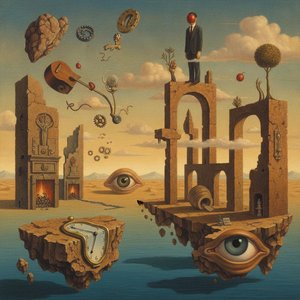
A hauntingly beautiful descent into a dreamscape featuring a plunging figure by Surrealist master Max Ernst captures the profound anxieties of the WWII era and invites you to explore this enigmatic psychological masterpiece.

Erkunden Sie die surreale Welt von Max Ernst (1891-1976), einem Pionier des Dadaismus und Surrealismus! Entdecken Sie seine innovativen Frottagen, Collagen und traumhaften Gemälde mit Vögeln, Landschaften und psychologischen Themen. #MaxErnst #Surrealismus #Dada

Die auf dieser Seite dargestellten Kunstwerke sind urheberrechtlich geschützt, was bedeutet, dass wir keine identische Reproduktion rechtmäßig erstellen oder verkaufen dürfen. Dieser Schutz wird durch internationale Abkommen wie die Berner Übereinkunft und durch nationale Gesetze, einschließlich derer, die von den ... festgelegt wurden US-Urheberrecht – Titel 17.

Diese Methode entspricht vollumfänglich den Urheberrechtsbestimmungen, da sie keine Kopie oder Vervielfältigung des geschützten Kunstwerks darstellt. Stattdessen handelt es sich um eine kreative Neuinterpretation – ein neues Gemälde, das vom Original inspiriert, aber nicht identisch mit ihm ist.

Giclée / Kunstdruck

Giclée- oder Leinwanddruck in Museumsqualität mit schneller Produktion und flexiblen Veredelungsoptionen. ( Handgemalte Reproduktion kaufen Zum digitalen Bild wechseln)

Corner sample of the P118B picture frame: formgepresstes Polystyrol, 5 cm wide and 3 cm thick
P118B €10
Corner sample of the P118H picture frame: formgepresstes Polystyrol, 5 cm wide and 3 cm thick
P118H €10
Corner sample of the P118W picture frame: formgepresstes Polystyrol, 5 cm wide and 3 cm thick
P118W €10
Corner sample of the P438Z picture frame: formgepresstes Polystyrol, 5.5 cm wide and 3.5 cm thick
P438Z €10
Corner sample of the P508JH picture frame: formgepresstes Polystyrol, 7 cm wide and 3.5 cm thick
P508JH €12
Corner sample of the P508YH picture frame: formgepresstes Polystyrol, 7 cm wide and 3.5 cm thick
P508YH €12
Corner sample of the P805H picture frame: formgepresstes Polystyrol, 5 cm wide and 3.5 cm thick
P805H €10
Corner sample of the P805Z picture frame: formgepresstes Polystyrol, 5 cm wide and 3.5 cm thick
P805Z €10
Corner sample of the P919BZ picture frame: formgepresstes Polystyrol, 7 cm wide and 3.5 cm thick
P919BZ €10
Corner sample of the P919G picture frame: formgepresstes Polystyrol, 7 cm wide and 3.5 cm thick
P919G €10
Corner sample of the P919XJ picture frame: formgepresstes Polystyrol, 7 cm wide and 3.5 cm thick
P919XJ €10
Corner sample of the P959ZH picture frame: formgepresstes Polystyrol, 5 cm wide and 3 cm thick
P959ZH €10
Corner sample of the P968JZ picture frame: formgepresstes Polystyrol, 6 cm wide and 4 cm thick
P968JZ €12
Corner sample of the W106C picture frame: Massivholz, 5 cm wide and 3 cm thick
W106C €8
Corner sample of the W218G picture frame: Massivholz, 5 cm wide and 3 cm thick
W218G €10
Corner sample of the W218JH picture frame: Massivholz, 5 cm wide and 3 cm thick
W218JH €8
Corner sample of the W218Y picture frame: Massivholz, 5 cm wide and 3 cm thick
W218Y €10
Corner sample of the W307PJ picture frame: Massivholz, 6 cm wide and 3 cm thick
W307PJ €10
Corner sample of the W316G picture frame: Massivholz, 6 cm wide and 3 cm thick
W316G €10
Corner sample of the W316PJ picture frame: Massivholz, 6 cm wide and 3 cm thick
W316PJ €8
Corner sample of the W316Y picture frame: Massivholz, 6 cm wide and 3 cm thick
W316Y €10
Corner sample of the W398PJ picture frame: Massivholz, 5 cm wide and 3 cm thick
W398PJ €8
Corner sample of the W4111J picture frame: Massivholz, 6.5 cm wide and 3.5 cm thick
W4111J €10
Corner sample of the W500HY picture frame: Massivholz, 7 cm wide and 5 cm thick
W500HY €15
Corner sample of the W500JH picture frame: Massivholz, 7 cm wide and 5 cm thick
W500JH €15
Corner sample of the W692G picture frame: Massivholz, 8 cm wide and 4 cm thick
W692G €12
Corner sample of the W849H picture frame: Massivholz, 5 cm wide and 3 cm thick
W849H €8
Corner sample of the W940BG picture frame: Massivholz, 7.5 cm wide and 4.5 cm thick
W940BG €15
Corner sample of the W953PJ picture frame: Massivholz, 6 cm wide and 3.5 cm thick
W953PJ €8

Standardformat
individuell anpassbar
CM
INCH

Wählen Sie aus unseren vordefinierten Formaten, die den ursprünglichen Proportionen des Kunstwerks entsprechen.

Breite
Höhe

Sie können Ihre eigenen Maße eingeben, um ein bestimmtes Format oder einen speziellen Platz einzupassen. Wenn das von Ihnen gewählte Format nicht den Proportionen des Originalbildes entspricht, werden wir das Kunstwerk entweder beschneiden oder das Bild mit einem gespiegelten oder einfarbigen Rand erweitern. Ein digitaler Entwurf wird Ihnen zur Genehmigung zugesandt, bevor die Produktion beginnt.
Bitte beachten Sie, dass die Vorschau auf dem Bildschirm nicht den tatsächlichen Zuschnitt oder die Erweiterung widerspiegelt. Nur der Entwurf zeigt die endgültige Komposition präzise an.
Obwohl Sondermaße verfügbar sind, empfehlen wir die Auswahl eines Maßes aus der vordefinierten Liste, um die ursprünglichen Proportionen zu bewahren.

Weltweiter Versand () innerhalb von 2 Wochen statt der üblichen 4/5 Wochen. (13 Oktober)

Kostenloser weltweiter Expressversand
Hochwertige Leinenleinwand
Vollständiger Versicherungsschutz beim Versand
Zollgebühren-Rückerstattungsgarantie
Garantie für exakte Farbtreue
100-tägiges Rückgaberecht (nur bei Mängeln)
100% Geld-zurück-Garantie
Angebot für Mengenrabatt

Gesamtpreis

€ 59

untitled (2316)

Giclée / Kunstdruck

Format der Reproduktion

-

Gesamtpreis

€ 59

Kurzübersicht

  • Notable elements or techniques: Frottage, Grattage
  • Movement: Surrealism
  • Artistic style: Dreamlike
  • Medium: Painting
  • Location: Private Collection

Kunst-Quiz

Jede Frage hat nur eine richtige Antwort.

Frage 1:
Which artistic techniques did Max Ernst employ to achieve his distinctive aesthetic in this work?
Frage 2:
During which historical period was 'untitled (2316)' painted?
Frage 3:
What does the painting depict regarding the solitary figure?
Frage 4:
Where was Max Ernst born?
Frage 5:
What is the subject of the two shadowy figures located at the cliff edge?

A Descent into the Subconscious: The Enigma of Max Ernst’s Untitled (2316)

In the hauntingly beautiful tableau of Max Ernst’s “untitled (2316),” viewers are invited to step through a portal into a realm where logic dissolves and the boundaries of the psyche blur. Painted during the tumultuous years between 1940 and 1945, this Surrealist masterpiece serves as a profound exploration of the subconscious mind. The painting captures a dramatic, singular moment: a solitary figure plunging downwards into deep, dark water. This descent is immediately evocative of vulnerability and surrender, a visceral image that strikes at the heart of human anxiety. Above this falling form, two shadowy figures cling precariously to a rocky cliff edge, their presence suggesting a desperate, perhaps futile, attempt at resistance against an overwhelming and inevitable force.

The emotional weight of the piece is inextricably linked to its historical moment. Created amidst the global upheaval of World War II, the artwork reflects the pervasive fears of destruction and mortality that defined the era. Yet, beyond the historical tension, Ernst utilizes the language of Surrealism to delve into deeper psychological truths. Influenced by the psychoanalytic theories of Sigmund Freud, Ernst crafts a scene that functions as a dreamscape, where the water represents not just a physical element, but the fluid, mysterious depths of the human experience and the transformative power of confronting one's own fears.

Mastery of Texture and Technique

What distinguishes “untitled (2316)” is Ernst’s rejection of traditional, smooth painting methods in favor of a tactile, experimental approach. He employs a masterful blend of frottage and grattage to achieve an aesthetic that feels both ethereal and grounded in physical reality. Through frottage—the process of rubbing textures onto a surface—Ernst generates random, organic patterns that provide the compositional inspiration for his dreamlike landscapes. This is complemented by grattage, where paint is scraped across the canvas to expose underlying layers and create evocative, weathered effects.

This deliberate manipulation of texture adds a layer of physical depth to the surreal imagery, making the rocky landscape and the churning water feel tangibly present. For the discerning collector or interior designer, a high-quality reproduction of this work offers more than just visual interest; it provides a sophisticated conversation piece. The interplay of light, shadow, and complex textures brings an arresting energy to any contemporary space, serving as an enduring emblem of artistic innovation and a window into the profound mysteries of the human soul.

Fragen & Antworten

Wirken die Farben von "untitled (2316)" eher kräftig oder sanft?

Die Farbsättigung von „untitled (2316)“ ist Balanced. Die Intensität beschreibt, wie kräftig die Farben wirken.

Aus welchen Materialien besteht "untitled (2316)" und in welchem Stil ist es gehalten?

In "untitled (2316)" trifft die Oil On Canvas-Technik auf die Surrealist Movement-Strömung.

Wer hat "untitled (2316)" geschaffen und in welchem Stil ist es gehalten?

Max Ernst schuf „untitled (2316)“ im Rahmen der Surrealist Movement-Bewegung.

Ist "untitled (2316)" von Max Ernst ein bekanntes Kunstwerk?

Der Beliebtheitsgrad für "untitled (2316)" von Max Ernst liegt bei Iconic.

Um welche Art von Kunstwerk handelt es sich bei "untitled (2316)" von Max Ernst?

"untitled (2316)" von Max Ernst wird als WallArt klassifiziert. Die Kategorie beschreibt die Art des Kunstwerks, um das es sich beim Original handelt.

Wie ist "untitled (2316)" historisch einzuordnen?

Historisch gesehen ist „untitled (2316)“ ein Werk der Surrealist Movement-Strömung aus der umfassenderen Ära der Modern.

Welche Stimmung und welche Emotion vermittelt "untitled (2316)" von Max Ernst?

Die festgehaltene Stimmung von "untitled (2316)" von Max Ernst ist Dramatic, und ihr emotionaler Tonfall ist Dramatic.

Kann ich eine Ölreproduktion von "untitled (2316)" bestellen?

Handgemalte Repliken von "untitled (2316)" von Max Ernst sind auf diese Website erhältlich: eine handgemalte Ölreproduktion auf Leinenleinwand, bestellbar über diese Seite.


Biografie des Künstlers

Max Ernst: Ein Leben im Surrealismus

Frühes Leben und Ausbildung

  • Geboren: 1. April 1891 in Brühl, Deutschland.
  • Ernsts Vater, Philipp Ernst, war Lehrer für Gehörlose und Amateurmaler, der Maxes frühes Interesse an Kunst förderte.
  • Von 1909 studierte er Philosophie, Kunstgeschichte, Literatur, Psychologie und Psychiatrie an der Universität Bonn.
  • Dieser vielfältige akademische Hintergrund beeinflusste seine späteren künstlerischen Erkundungen maßgeblich.

Künstlerische Entwicklung & Einflüsse

  • Ein einschneidendes Ereignis war die Sonderbund-Ausstellung in Köln (1912), wo er Werke von Pablo Picasso, Vincent van Gogh, und Paul Gauguin entdeckte.
  • Im Jahr 1914 lernte er Hans Arp kennen, der eine lebenslange Freundschaft schloss, die seine künstlerische Reise maßgeblich prägte.
  • Der Erste Weltkrieg hatte einen tiefgreifenden Einfluss auf Ernst; seine Erfahrungen als Soldat führten zu Enttäuschung und einer kritischen Sicht auf die Gesellschaft.
  • Er ließ sich von den Schriften Sigmund Freuds beeinflussen und erkundete Themen des Unterbewusstseins in seiner Kunst.

Dada & Surrealismus

  • Nach dem Ersten Weltkrieg wurde Ernst eine Schlüsselfigur der Kölner Dada-Gruppe, die sich gegen traditionelle künstlerische Konventionen aussprach.
  • Er entwickelte innovative Techniken wie Frottage (Erhitzen von Bleistift auf texturierte Oberflächen) und Grattage (Abkratzen von Farbe, um darunterliegende Schichten freizulegen).
  • In den 1920er Jahren trat er der Surrealistischen Bewegung in Paris bei und arbeitete mit Künstlern wie Paul Éluard zusammen.
  • Seine Werke dieser Zeit erforschten traumhafte Bilder und psychologische Themen.

Wichtige Werke & Techniken

  • Frottage: Eine Technik zur Erzeugung von Texturen und unerwarteten Bildern, die in vielen seiner Werke zu sehen ist.
  • Collage: Ernst verwendete häufig Collage, um disparate Elemente zu kombinieren und surreale Kompositionen zu schaffen.
  • Bekannte Werke:
    • Die gesamte Stadt
    • Euclides
    • Von diesem sollen nichts wissen
    • Wald und Taube
  • Seine Gemälde zeigen oft symbolische Bilder, darunter Vögel (insbesondere seinen Pseudonym Loplop), Landschaften und verstörende Gegenüberstellungen.

Spätes Leben & Vermächtnis

  • Ernst zog während des Zweiten Weltkriegs in die Vereinigten Staaten, wo er weiter malte und mit neuen Techniken experimentierte.
  • Nach dem Krieg kehrte er nach Frankreich zurück und blieb bis zu seinem Tod am 1. April 1976 in Paris aktiv.
  • Historische Bedeutung: Max Ernsts Beiträge zu Dada und Surrealismus waren bahnbrechend. Er stellte künstlerische Normen in Frage, erforschte das Unterbewusstsein und entwickelte innovative Techniken, die Künstler bis heute inspirieren.
  • Er gilt als eine der wichtigsten und einflussreichsten Figuren der Kunst des 20. Jahrhunderts.
Max Ernst

Max Ernst

1891 - 1976 , Deutschland

Eckdaten zum Künstler

  • Artistic Movement Or Style: Dadaismus & Surrealismus
  • Artists Who Influenced This Artist:
    • Pablo Picasso
    • Vincent van Gogh
    • Paul Gauguin
    • Sigmund Freud
  • Date Of Birth: 1. April 1891
  • Date Of Death: 1. April 1976
  • Full Name: Max Ernst
  • Nationality: Deutsch
  • Notable Artworks:
    • Die gesamte Stadt
    • Euclides
    • Wald und Taube
    • Der Elefant Celebes
  • Place Of Birth (City And Country): Brühl, Deutschland
Entdecken Sie Kunstwerke, die nach Themen, Stilen und Merkmalen sortiert sind.