Kostenlose Kunstberatung

x
Druck bestellen Druck bestellenGemälde kaufen Gemälde kaufen VersendenVersenden
DetailsDetails Zu Favoriten hinzufügen Zu Favoriten hinzufügen HerunterladenHerunterladen Ähnliche ObjekteÄhnliche Objekte RöntgenaufnahmeRöntgenaufnahme Diashow anzeigenDiashow anzeigen

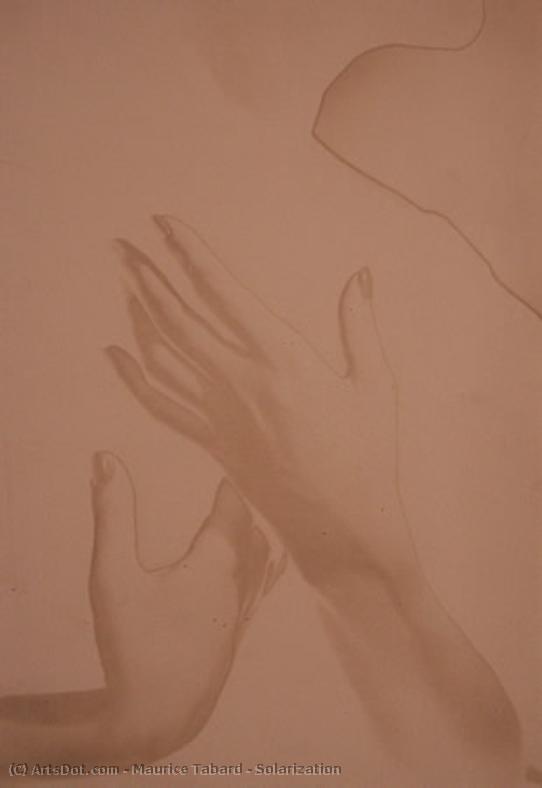
Solarization

Explore the surrealist photography of Maurice Tabard! Known for solarization & photomontage, his Lyon-born work captures modern life & artistic innovation.

Erwerben Sie ein hochauflösendes, optimiertes digitales Bild, das der Online-Vorschau weit überlegen ist.

Jede Datei wird von unseren hauseigenen Spezialisten mit modernsten Werkzeugen und fachmännischer manueller Retusche sorgfältig vorbereitet. Wir stellen sicher, dass jedes Bild eine außergewöhnliche Klarheit, präzise Farbgenauigkeit und feinste Details aufweist.

Die endgültige Datei wird innerhalb von 72 Stunden per E-Mail zugestellt und ist für den sofortigen Einsatz in professionellen, redaktionellen und Druckumgebungen optimiert. Es handelt sich um dieselbe Qualität, der führende Designstudios, Verlage und Galerien vertrauen.

Digitales Kunstwerk

Laden Sie eine hochauflösende Datei für die persönliche Präsentation, den Druck und kreative Projekte herunter.

Endpreis

$9.99

In jeder Bestellung digitaler Bilder enthalten

Professionelle digitale Bereitstellung, garantiert

Wenn Sie sich für WahooArt.com entscheiden, erhalten Sie nicht nur ein Bild – Sie erhalten ein professionell aufbereitetes digitales Kunstwerk, das mit höchster Präzision erstellt und durch eine Zufriedenheitsgarantie abgesichert wird. Hier ist alles, was automatisch mit Ihrer Bestellung geliefert wird:

shipping_icon
Schnelle E-Mail-Zustellung

Ihre hochauflösende digitale Bilddatei wird Ihnen innerhalb von 72 Stunden nach der Bestellung per E-Mail zugestellt – bereit zur sofortigen Verwendung.

canvas_icon
KI-optimierte digitale Datei

Ihre Kunstwerke werden professionell mithilfe fortschrittlicher KI-Tools und manueller Bearbeitung optimiert, um maximale Detailtreue, Klarheit und Farbgenauigkeit zu gewährleisten.

insurance_icon
Kostenloser lebenslanger erneuter Versand

Datei versehentlich gelöscht oder verloren? Keine Sorge – wir senden sie Ihnen jederzeit kostenlos erneut zu.

tax_icon
Keine Einfuhrgebühren – jemals

Genießen Sie Ihr Kunstwerk sofort ohne Zollgebühren, Einfuhrabgaben oder Versandkosten – digitale Downloads sind immer steuerfrei.

color_icon
Garantierte Farbtreue

Wir garantieren, dass Ihr digitales Bild die Originalfarben mithilfe professioneller Werkzeuge und Farbmanagement so präzise wie möglich wiedergibt.

return_icon
60-Tage-Zufriedenheitsgarantie

Sollten Sie mit Ihrem digitalen Bild nicht zufrieden sein, werden wir es überarbeiten oder Ihnen innerhalb von 60 Tagen 100% erstatten – ohne Wenn und Aber.

guarantee_icon
100% Geld-zurück-Garantie

Nicht zufrieden? Erhalten Sie innerhalb von 60 Tagen nach Erhalt Ihrer digitalen Datei eine vollständige Rückerstattung – ohne Angabe von Gründen.

discount_icon
Rabatte bei Großbestellungen

3 Bilder kaufen, 10% sparen – 5 Bilder kaufen, 15% sparen – Ab 10 Bildern 20% sparen. Ideal für kreative Projekte, Galerien und Agenturen.

Ähnliche Kunstwerke


Biografie des Künstlers

A Pioneer of Surrealist Vision: The Life and Art of Maurice Tabard

Maurice Tabard, born in Lyon, France on July 12, 1897, emerged as a significant figure within the burgeoning Surrealist movement, though his path to artistic recognition was uniquely shaped by a blend of familial influence and transatlantic experience. Initially destined for a musical career – his mother an amateur musician – Tabard’s early creative inclinations found expression in the intricate patterns of silk design at his father's factory. This foundational exposure to form and texture would subtly inform his later photographic explorations. A pivotal moment arrived in 1914 when his father’s business necessitated a relocation to New York City, an event that irrevocably altered Tabard’s artistic trajectory. He enrolled at the New York Institute of Photography, immersing himself in the technical aspects of the medium and laying the groundwork for a future defined by innovative visual language. This period wasn't merely about acquiring skills; it was a crucial immersion into a different aesthetic sensibility, one that would later fuse with his European roots.

From Portraiture to Poetic Experimentation

Upon returning to France in 1928, Tabard initially established himself as a fashion photographer, contributing to various magazines and fulfilling commercial commissions. However, this pragmatic pursuit soon gave way to a deeper artistic inquiry. He began dissecting the very elements of photography – objects, their shapes, materials, lighting, and formal relationships – prioritizing these over mere representational accuracy. This shift marked a turning point, leading him towards a more conceptual approach. A key encounter with Surrealist writer Philippe Soupault proved instrumental, introducing Tabard to influential editors like Lucien Vogel and Alexey Brodovitch, and ultimately connecting him with the core figures of the Surrealist movement: Man Ray and René Magritte. The influence of these artists ignited a passion for exploring the subconscious, dreams, and the irrational through photographic means. He moved away from straightforward documentation, embracing techniques such as solarization – a process that partially reverses tones to create an ethereal, dreamlike quality – superimposition, and photomontage.

The Language of Dreams: Technique and Themes

Tabard’s work is immediately recognizable for its distinctive aesthetic—a delicate balance between precision and ambiguity. Solarization became his signature technique, lending a haunting, otherworldly quality to his images. He wasn't simply applying a stylistic effect; he was actively seeking to disrupt conventional perception, revealing hidden layers of reality and evoking a sense of unease or wonder. Superimposition allowed him to layer multiple realities within a single frame, creating complex visual narratives that challenged the viewer’s understanding of space and time. Photomontage further expanded his expressive possibilities, enabling him to construct entirely new worlds from fragmented elements. His subject matter ranged from still lifes imbued with symbolic resonance to portraits that captured not just physical likeness but also psychological states. He often depicted everyday objects—guitars, musical instruments, furniture—transforming them into enigmatic symbols within a surreal landscape.

A Legacy of Innovation and Influence

While Tabard’s career wasn't solely defined by Surrealism – he also worked as a set photographer and documentary filmmaker in the 1940s, and spent time teaching in the United States – his contributions to the movement remain significant. He exhibited alongside prominent Surrealists and published his work in influential journals like *Bifur* and *Vu*. His photographs weren’t merely aesthetically striking; they were intellectual explorations of perception, memory, and the subconscious mind. In 1951 Francis Quirk curated an exhibit of his work at Lehigh University along with photographs by Ansel Adams, demonstrating a recognition of Tabard's place within a broader artistic context. Though perhaps less widely celebrated than some of his contemporaries, Maurice Tabard’s pioneering use of photographic techniques and his commitment to exploring the boundaries of reality have cemented his position as an important figure in 20th-century art history. His work continues to inspire artists and photographers today, serving as a testament to the power of visual experimentation and the enduring allure of the surreal.

Historical Significance and Continued Relevance

Maurice Tabard’s legacy extends beyond his technical innovations; he represents a crucial bridge between early modernist photography and the full flowering of Surrealism. He demonstrated how seemingly mundane subjects could be transformed into potent symbols through manipulation and artistic vision. His exploration of solarization, in particular, anticipated later experiments with alternative photographic processes and digital image-making. Tabard’s work challenges us to question the nature of representation itself, reminding us that photography is not simply a mirror reflecting reality but an active process of interpretation and construction. His images resonate today because they tap into universal themes of memory, desire, and the elusive nature of truth. As contemporary artists continue to explore the boundaries of image-making, Tabard’s pioneering spirit serves as a powerful reminder of the medium's boundless potential for poetic expression and intellectual inquiry.
Maurice Tabard

Maurice Tabard

1897 - 1984