In echtem Maßstab anzeigen In AR an der Wand sehen Handgemalte Reproduktion kaufen Zum digitalen Bild wechseln Versenden als Grußkarte
Details anzeigen Leitfaden öffnen Zu Favoriten hinzufügen Herunterladen Ähnliche Objekte Röntgenaufnahme Diashow Besucherstatistiken

Untitled

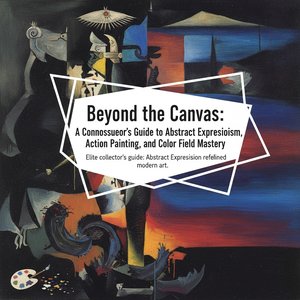
Mark Rothko’s ‘Untitled,’ painted in 1941, showcases two faces juxtaposed with birds scattered across the canvas—a poignant exploration of existential themes and a testament to Rothko's distinctive style.

Erkunden Sie das Leben und Werk von Mark Rothko (1903-1970), einem prägenden abstrakten Expressionisten. Entdecken Sie seine ikonischen Farbflächenmalereien, emotionale Tiefe und bleibenden Einfluss auf die moderne Kunst. #AbstrakterExpressionismus #Farbflächenmalerei #Rothko #Kunstgeschichte

Die auf dieser Seite dargestellten Kunstwerke sind urheberrechtlich geschützt, was bedeutet, dass wir keine identische Reproduktion rechtmäßig erstellen oder verkaufen dürfen. Dieser Schutz wird durch internationale Abkommen wie die Berner Übereinkunft und durch nationale Gesetze, einschließlich derer, die von den ... festgelegt wurden US-Urheberrecht – Titel 17.

Diese Methode entspricht vollumfänglich den Urheberrechtsbestimmungen, da sie keine Kopie oder Vervielfältigung des geschützten Kunstwerks darstellt. Stattdessen handelt es sich um eine kreative Neuinterpretation – ein neues Gemälde, das vom Original inspiriert, aber nicht identisch mit ihm ist.

Giclée / Kunstdruck

Giclée- oder Leinwanddruck in Museumsqualität mit schneller Produktion und flexiblen Veredelungsoptionen. ( Handgemalte Reproduktion kaufen Zum digitalen Bild wechseln)

Corner sample of the P118B picture frame: formgepresstes Polystyrol, 5 cm wide and 3 cm thick
P118B €10
Corner sample of the P118H picture frame: formgepresstes Polystyrol, 5 cm wide and 3 cm thick
P118H €10
Corner sample of the P118W picture frame: formgepresstes Polystyrol, 5 cm wide and 3 cm thick
P118W €10
Corner sample of the P438Z picture frame: formgepresstes Polystyrol, 5.5 cm wide and 3.5 cm thick
P438Z €10
Corner sample of the P508JH picture frame: formgepresstes Polystyrol, 7 cm wide and 3.5 cm thick
P508JH €12
Corner sample of the P508YH picture frame: formgepresstes Polystyrol, 7 cm wide and 3.5 cm thick
P508YH €12
Corner sample of the P805H picture frame: formgepresstes Polystyrol, 5 cm wide and 3.5 cm thick
P805H €10
Corner sample of the P805Z picture frame: formgepresstes Polystyrol, 5 cm wide and 3.5 cm thick
P805Z €10
Corner sample of the P919BZ picture frame: formgepresstes Polystyrol, 7 cm wide and 3.5 cm thick
P919BZ €10
Corner sample of the P919G picture frame: formgepresstes Polystyrol, 7 cm wide and 3.5 cm thick
P919G €10
Corner sample of the P919XJ picture frame: formgepresstes Polystyrol, 7 cm wide and 3.5 cm thick
P919XJ €10
Corner sample of the P959ZH picture frame: formgepresstes Polystyrol, 5 cm wide and 3 cm thick
P959ZH €10
Corner sample of the P968JZ picture frame: formgepresstes Polystyrol, 6 cm wide and 4 cm thick
P968JZ €12
Corner sample of the W106C picture frame: Massivholz, 5 cm wide and 3 cm thick
W106C €8
Corner sample of the W218G picture frame: Massivholz, 5 cm wide and 3 cm thick
W218G €10
Corner sample of the W218JH picture frame: Massivholz, 5 cm wide and 3 cm thick
W218JH €8
Corner sample of the W218Y picture frame: Massivholz, 5 cm wide and 3 cm thick
W218Y €10
Corner sample of the W307PJ picture frame: Massivholz, 6 cm wide and 3 cm thick
W307PJ €10
Corner sample of the W316G picture frame: Massivholz, 6 cm wide and 3 cm thick
W316G €10
Corner sample of the W316PJ picture frame: Massivholz, 6 cm wide and 3 cm thick
W316PJ €8
Corner sample of the W316Y picture frame: Massivholz, 6 cm wide and 3 cm thick
W316Y €10
Corner sample of the W398PJ picture frame: Massivholz, 5 cm wide and 3 cm thick
W398PJ €8
Corner sample of the W4111J picture frame: Massivholz, 6.5 cm wide and 3.5 cm thick
W4111J €10
Corner sample of the W500HY picture frame: Massivholz, 7 cm wide and 5 cm thick
W500HY €15
Corner sample of the W500JH picture frame: Massivholz, 7 cm wide and 5 cm thick
W500JH €15
Corner sample of the W692G picture frame: Massivholz, 8 cm wide and 4 cm thick
W692G €12
Corner sample of the W849H picture frame: Massivholz, 5 cm wide and 3 cm thick
W849H €8
Corner sample of the W940BG picture frame: Massivholz, 7.5 cm wide and 4.5 cm thick
W940BG €15
Corner sample of the W953PJ picture frame: Massivholz, 6 cm wide and 3.5 cm thick
W953PJ €8

Standardformat
individuell anpassbar
CM
INCH

Wählen Sie aus unseren vordefinierten Formaten, die den ursprünglichen Proportionen des Kunstwerks entsprechen.

Breite
Höhe

Sie können Ihre eigenen Maße eingeben, um ein bestimmtes Format oder einen speziellen Platz einzupassen. Wenn das von Ihnen gewählte Format nicht den Proportionen des Originalbildes entspricht, werden wir das Kunstwerk entweder beschneiden oder das Bild mit einem gespiegelten oder einfarbigen Rand erweitern. Ein digitaler Entwurf wird Ihnen zur Genehmigung zugesandt, bevor die Produktion beginnt.
Bitte beachten Sie, dass die Vorschau auf dem Bildschirm nicht den tatsächlichen Zuschnitt oder die Erweiterung widerspiegelt. Nur der Entwurf zeigt die endgültige Komposition präzise an.
Obwohl Sondermaße verfügbar sind, empfehlen wir die Auswahl eines Maßes aus der vordefinierten Liste, um die ursprünglichen Proportionen zu bewahren.

Weltweiter Versand () innerhalb von 2 Wochen statt der üblichen 4/5 Wochen. (13 Oktober)

Kostenloser weltweiter Expressversand
Hochwertige Leinenleinwand
Vollständiger Versicherungsschutz beim Versand
Zollgebühren-Rückerstattungsgarantie
Garantie für exakte Farbtreue
100-tägiges Rückgaberecht (nur bei Mängeln)
100% Geld-zurück-Garantie
Angebot für Mengenrabatt

Gesamtpreis

€ 59

Untitled

Giclée / Kunstdruck

Format der Reproduktion

-

Gesamtpreis

€ 59

Kurzübersicht

  • Artist: Mark Rothko
  • Dimensions: 60 x 80 cm
  • Year: 1941
  • Influences: Gestalt Psychology
  • Notable elements or techniques: Color Field Painting
  • Artistic style: Meditative

Kunst-Quiz

Jede Frage hat nur eine richtige Antwort.

Frage 1:
What is the primary artistic style of Mark Rothko's painting “Two Faces”?
Frage 2:
The painting features birds scattered throughout. What effect do these birds contribute to the overall composition?
Frage 3:
In what year was “Two Faces” created?
Frage 4:
What is the dominant color palette used in Rothko's painting?
Frage 5:
The Rothko Chapel was founded by John and Dominique de Menil. What is the chapel primarily intended for?

A Symphony of Crimson and Light

To stand before Mark Rothko’s “Untitled” (1941) is to enter a realm where the boundaries between the physical canvas and the human soul begin to dissolve. This evocative work, measuring 60 x 80 cm, serves as a profound meditation on the duality of existence—the heavy weight of grief intertwined with the luminous promise of transcendence. Unlike his later, more famous monochromatic color fields, this earlier piece captures a pivotal moment in Rothko’s evolution, where the artist began to strip away the distractions of the material world to uncover the raw, pulsing essence of emotion through the sheer power of pigment.

The composition is a masterclass in atmospheric depth. Rothko employs his signature technique of layering thin, translucent washes of color, allowing hues of deep crimson and vibrant orange to bleed into one another. These warm, energetic tones suggest a heartbeat, a flicker of vitality that refuses to be extinguished. Yet, this warmth is tempered by subtle, darker gradations that creep into the edges of the forms, creating a palpable sense of melancholy. The way the light seems to emanately from within the layers of paint creates an illusion of luminosity, as if the canvas itself were breathing, inviting the viewer to lose themselves in its rhythmic, chromatic pulse.

The Shadow of History and the Language of Color

The historical context of 1941 casts a long, somber shadow over this masterpiece. Created during the tumultuous onset of World War II, the painting vibrates with the collective anxieties of an era defined by displacement and global upheaval. For Rothko, this period was deeply personal; his life was marked by the profound loss of his father and the challenges of navigating a new identity in America. This sense of existential vulnerability is woven into the very fabric of the work. By eschewing recognizable imagery and traditional figures, Rothko bypasses the intellect to speak directly to the primal emotions of the viewer.

In this piece, color functions as the primary protagonist. The reds and oranges are not merely decorative; they are symbols of passion, blood, and life, while the darker, receding tones represent the encroaching void of loss. For the discerning collector or interior designer, "Untitled" offers more than just a visual focal point; it provides an emotional anchor. It is a piece that demands presence, making it an ideal centerpiece for spaces dedicated to contemplation, such as a private study, a quiet library, or a sophisticated gallery setting where art is intended to provoke thought and inspire a sense of profound peace.

An Invitation to Transcendence

For those seeking to bring the transformative power of Abstract Expressionism into their homes, a high-quality reproduction of this Rothko masterpiece offers a gateway to a different state of being. The painting does not merely decorate a wall; it alters the atmosphere of a room, infusing it with a sense of quiet drama and intellectual depth. It serves as a reminder that even within the darkest shades of mourning, there exists a radiant, indestructible light.

Whether you are an art enthusiast drawn to the technical brilliance of the Color Field movement or a designer looking to evoke a mood of sophisticated introspection, this work stands as a testament to the enduring relevance of Rothko’s vision. It is an invitation to look past the surface and encounter the infinite within the finite.

Fragen & Antworten

Für welchen Raum wird "Untitled" von Mark Rothko empfohlen?

"Untitled" von Mark Rothko wird für ein Living Room empfohlen. Dieser Vorschlag basiert auf dem Motiv, den Farben und der Stimmung des Werkes.

Ist "Untitled" ein berühmtes Kunstwerk der Abstract Expressionism-Epoche?

"Untitled" von Mark Rothko wird als Iconic klassifiziert und gehört zur Abstract Expressionism-Strömung.

Ist "Untitled" eines der beliebtesten Werke von Mark Rothko?

"Untitled" wird als Iconic eingestuft.

Unter welchen Pseudonymen oder Alternativnamen ist Mark Rothko bekannt?

Mark Rothko erscheint unter den Alternativnamen Marcus Rothkowitz.

Wer verkauft handgemalte Kopien von "Untitled" von Mark Rothko?

Eine handgemalte Reproduktion von "Untitled" von Mark Rothko können Sie direkt auf diese Seite bestellen: eine handgemalte Ölreproduktion auf Leinenleinwand, auf Bestellung gefertigt.

Kann ich "Untitled" von Mark Rothko unter verschiedenen Lichtverhältnissen sehen?

Die Röntgenaufnahme-Seite von "Untitled" von Mark Rothko ist ein interaktiver Viewer, der es Ihnen ermöglicht, durch elf optische Schichten des Kunstwerks zu gleiten, einschließlich einer Ansicht im Röntgenstil.

Was sind die Technik und das Entstehungsdatum von "Untitled" von Mark Rothko?

Das Medium von "Untitled" von Mark Rothko ist Oil On Canvas, und das Werk wird auf 1941 datiert.

Ist "Untitled" von Mark Rothko eine Porträt-, Landschafts- oder Quadratkomposition?

"Untitled" von Mark Rothko ist eine Komposition im Landscape-Format. Die Proportionen sollten vor der Wahl der Druckgröße überprüft werden.


Biografie des Künstlers

frühes Leben und Einflüsse

Mark Rothko (Marcus Rothkowitz), ein renommierter amerikanischer Künstler, wurde am 25. September 1903 in Dwinisk, Lettland, geboren. Seine Familie immigrierte als Kind, gerade zehn Jahre alt, in die Vereinigten Staaten. Diese kulturelle Veränderung beeinflusste später seinen künstlerischen Stil.

künstlerische Entwicklung

Rothkos frühe Werke waren durch den **abstrakten Expressionismus** geprägt, einen Stil, der die Prozesshaftigkeit der Kunstschaffung betonte und nicht das Endprodukt. Seine Gemälde, wie No. 18 (1948) und Untitled (1948), zeigten seinen einzigartigen Ansatz für Farbe und Form.

  • **Farbfeld:** Rothkos Verwendung von kräftigen, rechteckigen Farbflächen, oft in scharfem Kontrast zueinander, erzeugte ein Gefühl von Tiefe und Emotion.
  • **Organische Struktur:** Seine Gemälde wirkten lebendig, als wären die Farben lebendige Wesen.

Bemerkenswerte Werke und Ausstellungen

  • No. 10 (1950), ein Gemälde, das einen bedeutenden Wandel in Rothkos Stil markierte, befindet sich heute im Besitz der Museum of Modern Arts.
  • Die Seagram-Muralen, eine Reihe von Gemälden, die für das Restaurant Four Seasons angefertigt wurden, zeigten Rothkos Fähigkeit, seinen Stil an verschiedene Umgebungen anzupassen.
  • No. 3 (1950), ein Gemälde, das Rothkos Verwendung von kräftigen, rechteckigen Farbflächen veranschaulicht.

Spätes Leben und Vermächtnis

Rothkos Leben war von Kämpfen mit psychischen Problemen und einer turbulenten Ehe geprägt. Er starb am 25. Februar 1970 im Alter von 66 Jahren. Trotz seiner Herausforderungen hinterließ Rothko einen unauslöschlichen Eindruck in der Kunstwelt. Ochre and Red on Red (Farbfeld), ein Gemälde, das Rothkos einzigartigen Ansatz für Farbe zeigt, befindet sich in der Sammlung von WahooArt.com. Mark Rothkos Wikipedia-Seite bietet weitere Einblicke in sein Leben und seinen künstlerischen Stil.
Mark Rothko

Mark Rothko

1903 - 1970 , Lettland

Eckdaten zum Künstler

  • Beeinflusste Künstler: ['Minimalistische Kunst']
  • Bemerkenswerte Werke:
    • Nr. 18 (1948)
    • Nr. 10 (1950)
    • Seagram-Wandbilder
    • Nr. 3 (1950)
  • Einflüsse:
    • Surrealismus
    • Marxistische Philosophie
  • Geburtsdatum: 25. September 1903
  • Geburtsort: Daugavpils, Lettland
  • Künstlerische Bewegung: Abstrakter Expressionismus
  • Nationalität: Amerikanisch
  • Todatum: 25. Februar 1970
  • Vollständiger Name: Mark Rothko / Marcus Rothkowitz
Entdecken Sie Kunstwerke, die nach Themen, Stilen und Merkmalen sortiert sind.