Kostenlose Kunstberatung

x
Druck bestellen Druck bestellenBild kaufen Bild kaufen VersendenVersenden
DetailsDetails Zu Favoriten hinzufügen Zu Favoriten hinzufügen HerunterladenHerunterladen Ähnliche ObjekteÄhnliche Objekte X-RayX-Ray Diashow anzeigenDiashow anzeigen

Portrait

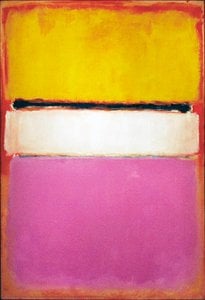
Mark Rothko’s 1936 ‘Portrait’ captures a woman in blue against vibrant red walls, embodying the artist's signature color field style and exploring themes of isolation. Discover this evocative piece and bring its powerful emotion into your space.

Erkunden Sie das Leben und Werk von Mark Rothko (1903-1970), einem prägenden abstrakten Expressionisten. Entdecken Sie seine ikonischen Farbflächenmalereien, emotionale Tiefe und bleibenden Einfluss auf die moderne Kunst. #AbstrakterExpressionismus #Farbflächenmalerei #Rothko #Kunstgeschichte

Handgefertigte Öl-Reproduktion

Handgemaltes Ölgemälde auf Leinwand in Ihrer Wunschgröße und mit Rahmen, auf Bestellung von unseren Künstlern angefertigt.

P118B $10
P118H $10
P118W $10
P438Z $10
P508JH $12
P508YH $12
P805H $10
P805Z $10
P919BZ $10
P919G $10
P919XJ $10
P959ZH $10
P968JZ $12
W106C $8
W218G $10
W218JH $8
W218Y $10
W307PJ $10
W316G $10
W316PJ $8
W316Y $10
W398PJ $8
W4111J $10
W500HY $15
W500JH $15
W692G $12
W849H $8
W940BG $15
W953PJ $8

Standard
custom
CM
INCH

Wählen Sie aus unseren vordefinierten Größen, die den ursprünglichen Proportionen des Kunstwerks entsprechen.

Breite
Höhe

Sie können Ihre eigenen Maße eingeben, um einen bestimmten Rahmen oder Platz auszufüllen. Wenn die gewählte Größe nicht den Proportionen des Originalbildes entspricht, werden wir das Kunstwerk entweder beschneiden oder das Gemälde durch zusätzliche, handgemalte Elemente erweitern. Ein digitales Mockup wird Ihnen zur Genehmigung zugesandt, bevor die Produktion beginnt.
Bitte beachten Sie, dass die Bildschirmvorschau nicht die tatsächliche Beschneidung oder Erweiterung widerspiegelt. Nur das Mockup zeigt die endgültige Komposition exakt an.
Obwohl Sondermaße verfügbar sind, empfehlen wir, eine Größe aus der vordefinierten Liste zu wählen, um die ursprünglichen Proportionen beizubehalten.

Beispiele für Anpassungsmöglichkeiten: Gesicht durch Kundenfoto ersetzen; Haustier hinzufügen (z. B. Katze durch Hund ersetzen); eine versteckte Nachricht im Hintergrund einfügen; Hintergrundlandschaft oder -elemente ändern.
Nach der Bestellung wird das WahooArt.com-Team dem Kunden Anweisungen per E-Mail zusenden und eine Mockup-Vorschau bereitstellen.

Weltweiter Versand () in nur 3 bis 4 Wochen statt der üblichen 5 Wochen. (2 Juli). Keine Kompromisse bei der Qualität.

why_choose_icon
Kostenloser weltweiter Expressversand
why_choose_icon
Hochwertige Leinenleinwand
why_choose_icon
Umfassender Versicherungsschutz beim Versand
why_choose_icon
Zollsteuer-Rückerstattungsgarantie
why_choose_icon
Garantie für echte Farbtreue
why_choose_icon
60-Tage-Rückgaberecht (nur bei Mängeln)
why_choose_icon
100% Geld-zurück-Garantie
why_choose_icon
Mengenrabatt verfügbar

Gesamtpreis

-

reproduction

Portrait

Art der Reproduktion

Größe der Reproduktion

-

Endpreis aller Optionen

-

Eckdaten auf einen Blick

  • Movement: Abstract Expressionism
  • Year: 1936
  • Title: Portrait
  • Notable elements or techniques: Color Field Painting
  • Influences: Cubism
  • Artist: Mark Rothko
  • Subject or theme: Female Figure

Kunst-Quiz

Jede Frage hat nur eine richtige Antwort.

Frage 1:
What artistic movement is Mark Rothko’s ‘Portrait’ primarily associated with?
Frage 2:
The painting utilizes a technique known as Color Field Painting. Describe briefly what characterizes this style.
Frage 3:
What is the dominant color palette employed in ‘Portrait’?
Frage 4:
The background wall color contrasts sharply with the dress. Why might this compositional choice be significant?
Frage 5:
Considering Rothko's biographical context – his early life in Latvia marked by displacement and loss – how might these experiences inform our understanding of the painting’s emotional impact?

Beschreibung des Kunstwerks

A Study in Blue and Red: Mark Rothko’s ‘Portrait’ (1936)

Mark Rothko's 1936 “Portrait” is not merely a depiction of a woman brushing her hair; it’s a deeply resonant meditation on the human condition, rendered with the artist’s signature layering technique and imbued with the anxieties of his formative years. Painted during a period of intense personal upheaval – marked by his family's immigration from Latvia to Portland and the early loss of his father – the work speaks volumes about themes of displacement, grief, and the search for solace within the face of existential questions. The painting’s quiet intimacy is immediately arresting; the woman, seated in a simple chair, becomes an emblem of vulnerability and introspection.

  • Subject Matter: A solitary female figure engaged in a commonplace activity – grooming her hair – transforms into a powerful symbol of personal reflection and perhaps, a poignant representation of Rothko’s own feelings of isolation.
  • Color Palette: The dominant use of blue, contrasted sharply with the red walls behind her, creates a visual tension that mirrors the emotional complexity at the heart of the work. Blue often represents melancholy, spirituality, or introspection, while red can symbolize passion, danger, or even loss – elements deeply intertwined within Rothko’s artistic vocabulary.

Technique and Style: The Birth of Color Field Painting

Rothko's masterful application of paint is central to the impact of “Portrait.” He employs a technique he would later refine into his signature ‘color field’ style – broad, luminous blocks of color layered upon each other to create an almost three-dimensional effect. Notice how the blue isn’t a flat hue but rather built up from countless thin washes, creating subtle variations in tone and texture. This layering generates a sense of depth and movement, drawing the viewer into the painting's emotional space. The brushstrokes are deliberately obscured, contributing to the overall feeling of quiet contemplation. This approach was revolutionary for its time, anticipating the development of Color Field painting that would dominate the art scene in the 1940s and beyond.

  • Layering Technique: Rothko’s meticulous layering creates a shimmering effect, enhancing the sense of depth and inviting prolonged observation.
  • Abstracted Form: While recognizable as a portrait, the figure is rendered with an almost abstracted quality, prioritizing color and emotional resonance over precise representation.

Symbolism and Historical Context

Born in Daugavpils, Latvia (then part of the Russian Empire) in 1903, Rothko’s early life was shaped by a profound sense of displacement – a consequence of his family's Jewish heritage and the turbulent political climate of Eastern Europe. This experience profoundly influenced his artistic vision. “Portrait” can be interpreted as an exploration of this personal history, reflecting the anxieties and uncertainties he carried with him throughout his life. The red walls, reminiscent of the brick buildings in Portland, Oregon, where the family settled, subtly connect the painting to Rothko’s American experience while simultaneously alluding to the fiery passions and potential dangers that fueled his artistic concerns. The year 1936 was a pivotal moment for European artists, grappling with the rise of fascism and the looming threat of war – themes that would continue to inform Rothko's work.

Emotional Impact and Artistic Legacy

"Portrait" is more than just a beautiful painting; it’s an emotionally charged encounter. The muted colors, combined with the subject’s contemplative pose, evoke a sense of quiet sadness and profound introspection. It invites viewers to confront their own anxieties about mortality, loss, and the search for meaning in a chaotic world. Rothko's influence on subsequent generations of artists is undeniable, and “Portrait” stands as a testament to his pioneering approach to color and form – a work that continues to resonate with audiences today. This hand-painted reproduction captures not only the visual beauty of the original but also the powerful emotional core that defines Rothko’s enduring legacy.


Biografie des Künstlers

frühes Leben und Einflüsse

Mark Rothko (Marcus Rothkowitz), ein renommierter amerikanischer Künstler, wurde am 25. September 1903 in Dwinisk, Lettland, geboren. Seine Familie immigrierte als Kind, gerade zehn Jahre alt, in die Vereinigten Staaten. Diese kulturelle Veränderung beeinflusste später seinen künstlerischen Stil.

künstlerische Entwicklung

Rothkos frühe Werke waren durch den **abstrakten Expressionismus** geprägt, einen Stil, der die Prozesshaftigkeit der Kunstschaffung betonte und nicht das Endprodukt. Seine Gemälde, wie No. 18 (1948) und Untitled (1948), zeigten seinen einzigartigen Ansatz für Farbe und Form.
  • **Farbfeld:** Rothkos Verwendung von kräftigen, rechteckigen Farbflächen, oft in scharfem Kontrast zueinander, erzeugte ein Gefühl von Tiefe und Emotion.
  • **Organische Struktur:** Seine Gemälde wirkten lebendig, als wären die Farben lebendige Wesen.

Bemerkenswerte Werke und Ausstellungen

  • No. 10 (1950), ein Gemälde, das einen bedeutenden Wandel in Rothkos Stil markierte, befindet sich heute im Besitz der Museum of Modern Arts.
  • Die Seagram-Muralen, eine Reihe von Gemälden, die für das Restaurant Four Seasons angefertigt wurden, zeigten Rothkos Fähigkeit, seinen Stil an verschiedene Umgebungen anzupassen.
  • No. 3 (1950), ein Gemälde, das Rothkos Verwendung von kräftigen, rechteckigen Farbflächen veranschaulicht.

Spätes Leben und Vermächtnis

Rothkos Leben war von Kämpfen mit psychischen Problemen und einer turbulenten Ehe geprägt. Er starb am 25. Februar 1970 im Alter von 66 Jahren. Trotz seiner Herausforderungen hinterließ Rothko einen unauslöschlichen Eindruck in der Kunstwelt. Ochre and Red on Red (Farbfeld), ein Gemälde, das Rothkos einzigartigen Ansatz für Farbe zeigt, befindet sich in der Sammlung von WahooArt.com. Mark Rothkos Wikipedia-Seite bietet weitere Einblicke in sein Leben und seinen künstlerischen Stil.
Mark Rothko

Mark Rothko

1903 - 1970 , Lettland

Kurzinfos

  • Beeinflusste Künstler: ['Minimalistische Kunst']
  • Bemerkenswerte Werke:
    • Nr. 18 (1948)
    • Nr. 10 (1950)
    • Seagram-Wandbilder
    • Nr. 3 (1950)
  • Einflüsse:
    • Surrealismus
    • Marxistische Philosophie
  • Geburtsdatum: 25. September 1903
  • Geburtsort: Daugavpils, Lettland
  • Künstlerische Bewegung: Abstrakter Expressionismus
  • Nationalität: Amerikanisch
  • Todatum: 25. Februar 1970
  • Vollständiger Name: Mark Rothko / Marcus Rothkowitz
Entdecken Sie Kunstwerke, die nach Themen, Stilen und Merkmalen sortiert sind.