In echtem Maßstab anzeigen In AR an der Wand sehen Handgemalte Reproduktion kaufen Zum digitalen Bild wechseln Versenden als Grußkarte

Details anzeigen Leitfaden Zu Favoriten hinzufügen Herunterladen Ähnliche Objekte Röntgenaufnahme Diashow Besucherstatistiken

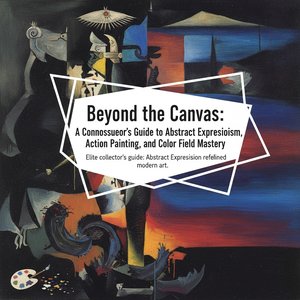
Fantasy at Dawn [obverse]

Born Markus Yakovlevich Rothkowitz in Dvinsk (now Riga), Latvia, in 1903, Mark Rothko’s artistic vision was shaped by early experiences of displacement and loss—his family's emigration to Portland, Oregon, after Jacob Rothkowitz’s death—and a lifelong preoccupation with existential questions. He championed Color Field painting as a means of conveying profound emotional states.

Erkunden Sie das Leben und Werk von Mark Rothko (1903-1970), einem prägenden abstrakten Expressionisten. Entdecken Sie seine ikonischen Farbflächenmalereien, emotionale Tiefe und bleibenden Einfluss auf die moderne Kunst. #AbstrakterExpressionismus #Farbflächenmalerei #Rothko #Kunstgeschichte

Giclée / Kunstdruck

Giclée- oder Leinwanddruck in Museumsqualität mit schneller Produktion und flexiblen Veredelungsoptionen. ( Handgemalte Reproduktion kaufen Zum digitalen Bild wechseln)

P118B $10
P118H $10
P118W $10
P438Z $10
P508JH $12
P508YH $12
P805H $10
P805Z $10
P919BZ $10
P919G $10
P919XJ $10
P959ZH $10
P968JZ $12
W106C $8
W218G $10
W218JH $8
W218Y $10
W307PJ $10
W316G $10
W316PJ $8
W316Y $10
W398PJ $8
W4111J $10
W500HY $15
W500JH $15
W692G $12
W849H $8
W940BG $15
W953PJ $8

Standardformat
individuell anpassbar
CM
INCH

Wählen Sie aus unseren vordefinierten Formaten, die den ursprünglichen Proportionen des Kunstwerks entsprechen.

Breite
Höhe

Sie können Ihre eigenen Maße eingeben, um ein bestimmtes Format oder einen speziellen Platz einzupassen. Wenn das von Ihnen gewählte Format nicht den Proportionen des Originalbildes entspricht, werden wir das Kunstwerk entweder beschneiden oder das Bild mit einem gespiegelten oder einfarbigen Rand erweitern. Ein digitaler Entwurf wird Ihnen zur Genehmigung zugesandt, bevor die Produktion beginnt.

Bitte beachten Sie, dass die Vorschau auf dem Bildschirm nicht den tatsächlichen Zuschnitt oder die Erweiterung widerspiegelt. Nur der Entwurf zeigt die endgültige Komposition präzise an.
Obwohl Sondermaße verfügbar sind, empfehlen wir die Auswahl eines Maßes aus der vordefinierten Liste, um die ursprünglichen Proportionen zu bewahren.

Weltweiter Versand () innerhalb von 2 Wochen statt der üblichen 4/5 Wochen. (20 September)

why_choose_icon
Kostenloser weltweiter Expressversand
why_choose_icon
Hochwertige Leinenleinwand
why_choose_icon
Vollständiger Versicherungsschutz beim Versand
why_choose_icon
Zollgebühren-Rückerstattungsgarantie
why_choose_icon
Garantie für exakte Farbtreue
why_choose_icon
100-tägiges Rückgaberecht (nur bei Mängeln)
why_choose_icon
100% Geld-zurück-Garantie
why_choose_icon
Angebot für Mengenrabatt

Gesamtpreis

$ 68

reproduction

Fantasy at Dawn [obverse]

Giclée / Kunstdruck

Format der Reproduktion

-

Gesamtpreis

$ 68

Kurzübersicht

  • Medium: Oil on canvas
  • Notable elements or techniques: Color Field painting
  • Movement: Abstract Expressionism
  • Influences: Existentialism
  • Subject or theme: Ethereal Landscape
  • Year: 1946
  • Location: National Gallery of Art

Kunst-Quiz

Jede Frage hat nur eine richtige Antwort.

Frage 1:
What artistic movement is Mark Rothko’s "Fantasy at Dawn \[obverse]" primarily associated with?
Frage 2:
According to the description, what is the dominant color scheme of the painting?
Frage 3:
What does the image description suggest about the chairs in the scene?
Frage 4:
In what year was "Fantasy at Dawn \[obverse]" created?
Frage 5:
The biographical information mentions that Mark Rothko experienced significant loss early in his life due to the death of his father. How did this experience influence his artistic vision?

A Fragmented Dawn: Exploring Mark Rothko’s ‘Fantasy at Dawn’

The painting “Fantasy at Dawn” by Mark Rothko stands as a testament to the artist's masterful manipulation of color and form, encapsulating the profound anxieties and spiritual yearning characteristic of his era. Executed in 1946, this monumental canvas – measuring 130 x 82 cm – immediately commands attention with its deceptively simple composition: two rectangular blocks of crimson and white pigment stacked vertically against a backdrop of muted hues. Yet, within this apparent austerity lies an intricate tapestry of emotional resonance and artistic innovation.
  • Subject Matter & Composition: Rothko deliberately eschewed representational imagery, opting instead for abstract forms that prioritize feeling over depiction. The central figure’s decapitated head—a jarring visual element—serves not as a literal portrait but as a symbol of vulnerability and loss, mirroring the artist's own experiences of familial bereavement and displacement. The positioning of the chairs reinforces this sense of emptiness and solitude, suggesting an introspective gaze directed inward rather than outward.
  • Style & Technique: Rothko’s signature technique—known as “color field painting”—involved applying thin layers of pigment to canvas in a manner that creates hazy, luminous surfaces. This process relies heavily on optical blending and subtle gradations of color, resulting in an ethereal quality that transcends mere visual perception. The deliberate avoidance of brushstrokes contributes to the artwork’s meditative atmosphere, inviting contemplation and fostering a connection with the viewer's subconscious.

Historical Context: The Shadow of War and Existential Uncertainty

“Fantasy at Dawn” emerged during the tumultuous years immediately following World War II. The devastation wrought by the conflict instilled a pervasive sense of disillusionment and questioned established moral frameworks. Rothko’s artistic explorations responded directly to this intellectual climate, delving into themes of trauma, mortality, and the elusive quest for spiritual solace. His work aligns with broader movements in postwar art—such as Surrealism and Expressionism—that sought to grapple with the psychological impact of historical upheaval.
  • Symbolism & Color Palette: The crimson hue dominates the left block, representing passion, vitality, and perhaps even primal instinct. Simultaneously, it evokes associations with blood – a potent symbol of sacrifice and suffering—reflecting Rothko’s preoccupation with themes of loss and vulnerability. The white pigment on the right contrasts sharply with the crimson, symbolizing purity, transcendence, and spiritual illumination. However, its luminosity is subdued, hinting at an unattainable ideal and underscoring the inherent difficulties in confronting existential anxieties.

Emotional Impact & Artistic Legacy

Ultimately, “Fantasy at Dawn” succeeds in conveying a profound emotional depth that transcends stylistic conventions. The artwork’s hypnotic color scheme induces a state of contemplative stillness, prompting viewers to confront their own inner landscapes and grapple with fundamental questions about human existence. Rothko's influence extends far beyond the canvas itself, shaping subsequent generations of artists who embraced abstraction as a vehicle for expressing emotion and exploring psychological complexities. It remains an enduring emblem of postwar art’s commitment to confronting difficult truths and fostering a deeper understanding of the human condition.

Biografie des Künstlers

frühes Leben und Einflüsse

Mark Rothko (Marcus Rothkowitz), ein renommierter amerikanischer Künstler, wurde am 25. September 1903 in Dwinisk, Lettland, geboren. Seine Familie immigrierte als Kind, gerade zehn Jahre alt, in die Vereinigten Staaten. Diese kulturelle Veränderung beeinflusste später seinen künstlerischen Stil.

künstlerische Entwicklung

Rothkos frühe Werke waren durch den **abstrakten Expressionismus** geprägt, einen Stil, der die Prozesshaftigkeit der Kunstschaffung betonte und nicht das Endprodukt. Seine Gemälde, wie No. 18 (1948) und Untitled (1948), zeigten seinen einzigartigen Ansatz für Farbe und Form.
  • **Farbfeld:** Rothkos Verwendung von kräftigen, rechteckigen Farbflächen, oft in scharfem Kontrast zueinander, erzeugte ein Gefühl von Tiefe und Emotion.
  • **Organische Struktur:** Seine Gemälde wirkten lebendig, als wären die Farben lebendige Wesen.

Bemerkenswerte Werke und Ausstellungen

  • No. 10 (1950), ein Gemälde, das einen bedeutenden Wandel in Rothkos Stil markierte, befindet sich heute im Besitz der Museum of Modern Arts.
  • Die Seagram-Muralen, eine Reihe von Gemälden, die für das Restaurant Four Seasons angefertigt wurden, zeigten Rothkos Fähigkeit, seinen Stil an verschiedene Umgebungen anzupassen.
  • No. 3 (1950), ein Gemälde, das Rothkos Verwendung von kräftigen, rechteckigen Farbflächen veranschaulicht.

Spätes Leben und Vermächtnis

Rothkos Leben war von Kämpfen mit psychischen Problemen und einer turbulenten Ehe geprägt. Er starb am 25. Februar 1970 im Alter von 66 Jahren. Trotz seiner Herausforderungen hinterließ Rothko einen unauslöschlichen Eindruck in der Kunstwelt. Ochre and Red on Red (Farbfeld), ein Gemälde, das Rothkos einzigartigen Ansatz für Farbe zeigt, befindet sich in der Sammlung von WahooArt.com. Mark Rothkos Wikipedia-Seite bietet weitere Einblicke in sein Leben und seinen künstlerischen Stil.
Mark Rothko

Mark Rothko

1903 - 1970 , Lettland

Eckdaten zum Künstler

  • Beeinflusste Künstler: ['Minimalistische Kunst']
  • Bemerkenswerte Werke:
    • Nr. 18 (1948)
    • Nr. 10 (1950)
    • Seagram-Wandbilder
    • Nr. 3 (1950)
  • Einflüsse:
    • Surrealismus
    • Marxistische Philosophie
  • Geburtsdatum: 25. September 1903
  • Geburtsort: Daugavpils, Lettland
  • Künstlerische Bewegung: Abstrakter Expressionismus
  • Nationalität: Amerikanisch
  • Todatum: 25. Februar 1970
  • Vollständiger Name: Mark Rothko / Marcus Rothkowitz
Entdecken Sie Kunstwerke, die nach Themen, Stilen und Merkmalen sortiert sind.