


Giclée- oder Leinwanddruck in Museumsqualität mit schneller Produktion und flexiblen Veredelungsoptionen. ( Handgemalte Reproduktion bestellen Bild kaufen)





























Wählen Sie aus unseren vordefinierten Formaten, die den ursprünglichen Proportionen des Kunstwerks entsprechen.

Sie können Ihre eigenen Maße eingeben, um ein bestimmtes Format oder einen speziellen Platz einzupassen. Wenn das von Ihnen gewählte Format nicht den Proportionen des Originalbildes entspricht, werden wir das Kunstwerk entweder beschneiden oder das Bild mit einem gespiegelten oder einfarbigen Rand erweitern. Ein digitaler Entwurf wird Ihnen zur Genehmigung zugesandt, bevor die Produktion beginnt.
Bitte beachten Sie, dass die Vorschau auf dem Bildschirm nicht den tatsächlichen Zuschnitt oder die Erweiterung widerspiegelt. Nur der Entwurf zeigt die endgültige Komposition präzise an.
Obwohl Sondermaße verfügbar sind, empfehlen wir die Auswahl eines Maßes aus der vordefinierten Liste, um die ursprünglichen Proportionen zu bewahren.
Weltweiter Versand () innerhalb von 2 Wochen statt der üblichen 4/5 Wochen. (6 September)


Conversation
Format der Reproduktion
In the quietude of Mark Rothko’s “Conversation,” we find ourselves drawn into a tableau that feels both profoundly intimate and hauntingly distant. At first glance, the painting presents a seemingly simple scene: a man and a woman seated at a table, their focus anchored by the silent movement of a game board, perhaps chess. There is a palpable sense of shared concentration, a moment where the outside world recedes, leaving only the rhythmic pulse of their interaction. Yet, Rothko subtly complicates this domestic stillness with the presence of a third figure lurking in the background—a spectral observer whose role remains ambiguous, suggesting the unseen layers of communication and the complexities that exist within every human relationship.
The atmosphere is heavy with a sense of contemplation. As one gazes upon the figures, the painting transcends its literal subject matter to become an exploration of the unspoken. The clock hanging on the wall serves as a poignant reminder of the passage of time, anchoring this fleeting interaction within the broader, inexorable flow of existence. For the collector or the designer, this piece offers more than mere decoration; it provides a window into a psychological landscape where every shadow and every stillness tells a story of connection and solitude.
While many associate Rothko with his later, monumental color field works, “Conversation” showcases a masterful command of a more restrained, monochromatic palette. The composition is rendered in evocative shades of black, white, and gray, creating a silvered, cinematic quality that strips away the distractions of vibrant color to reveal the raw emotional bones of the scene. This reductive approach is a hallmark of his ability to prioritize emotional resonance over representational accuracy.
The technique employed here is nothing short of meticulous. Rothko utilized a layering process of thin, translucent washes of pigment, building depth through successive applications. This method allows light to appear as if it is emanating from within the canvas itself, creating a shimmering, ethereal luminosity. The edges where tones meet are not sharp but bleed into one another with a soft, atmospheric blur, mirroring the way memories or emotions often lack clear boundaries. For those seeking to integrate fine art into a sophisticated interior, this interplay of light and shadow offers a versatile elegance that complements both modern minimalist spaces and more traditional, moody environments.
Created during the mid-1960s, “Conversation” emerged from a period of profound global tension. As the world grappled with the anxieties of the Cold War era, Rothko’s work provided a sanctuary for introspection. He rejected the loud, commercial energy of Pop Art and the dreamlike distortions of Surrealism, choosing instead to confront the fundamental truths of the human condition: tragedy, ecstasy, and doom. The chessboard in this piece acts as a powerful visual metaphor—a stage for strategic decision-making and the quiet battles of the mind that we all face.
To possess a reproduction of such a work is to invite a sense of profound peace and intellectual depth into a room. It is an invitation to pause, to reflect, and to engage in one's own silent dialogue with the art. Whether viewed as a study in mid-century modernism or as a deeply spiritual encounter, “Conversation” remains a timeless testament to the power of simplicity to convey the infinite complexities of the human soul.


1903 - 1970 , Lettland

Entdecken Sie die 25 Meisterwerke von Mark Rothko! Tauchen Sie ein in die Welt der abstrakten Kunst, des Expressionismus und der Farbfeldmalerei. Hochwertige Kunstdrucke & Reproduktionen auf WahooArt.com – für Ihre Wohnräume.
Entdecken Sie die Top 10 berühmter Gemälde, dominiert von Weiß! Von Malewitsch bis Rothko – erfahren Sie Geschichten hinter ikonischen Kunstwerke und lassen Sie sich für Ihre Wohnraumgestaltung inspirieren. Kunstreproduktionen in Museumsqualiät auf

Entdecken Sie die 10 Meisterwerke des Abstrakten Expressionismus! Von Jackson Pollock bis Mark Rothko – erfahren Sie die Geschichten hinter ikonischen Gemälde und finden Sie hochwertige Reproduktionen für Ihr Zuhause. Jetzt bei entdecken!

Entdecken Sie die 25 bedeutendsten Gemälde von Wassily Kandinsky! Tauchen Sie ein in die Welt der abstrakten Kunst, des Expressionismus und der Farbkomposition. Hochwertige Kunstdrucke & Inspiration für Ihr Zuhause auf WahooArt.com.
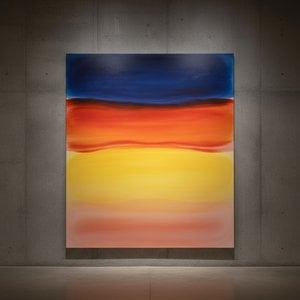
Entdecken Sie die tiefgründige Welt von Mark Rothko und dem Abstrakten Expressionismus. Expertenanalyse der Farbfeldmalerei, ihre emotionale Tiefe & bleibenden Einfluss. Jetzt lesen!

 Vorschau anzeigen
 Versenden
 Teilen
 Details anzeigen

 Herunterladen
 Ähnliche Objekte
 Röntgenaufnahme
 Diashow

 Weiterlesen







 Die Glasoption ist nur für Größen unter 110 cm verfügbar.


