Marcel Duchamp’s “Man Ray” – A Portrait of Intellectual Intensity
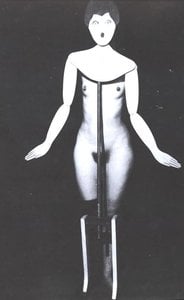
The photograph by Man Ray of Marcel Duchamp, captured in 1920-21, isn't merely a portrait; it’s a carefully constructed tableau of intellectualism and quiet contemplation. More than just a likeness, it embodies the spirit of the era – the burgeoning avant-garde, the questioning of artistic conventions, and the embrace of new perspectives. Duchamp himself, already a pivotal figure in challenging established norms, is presented here with an arresting formality that belies his revolutionary ideas. The image immediately draws the viewer into a space of considered observation, inviting us to decipher the subtle cues within its composition.
Composition and Visual Elements
The photograph’s strength lies in its deliberate asymmetry. Duchamp is positioned slightly off-center, anchoring the frame while simultaneously creating a sense of dynamic movement. The chair he occupies—a sturdy, almost austere piece of furniture—becomes a crucial element, grounding the image and providing a visual counterpoint to Duchamp's more fluid form. Behind him, a glimpse of a couch and another chair adds depth, suggesting a space both familiar and subtly unsettling. Man Ray’s masterful use of lines further enhances this effect; vertical lines are established by Duchamp’s posture and the chair, while diagonal lines trace his gaze and the angle of his body, creating a subtle tension within the image.
Technical Details and Artistic Style
Rendered in stark black and white, the photograph utilizes a grayscale palette that emphasizes form and texture. The diffused lighting, likely achieved through studio techniques, casts soft shadows that define Duchamp’s features without resorting to harsh contrasts. This deliberate choice contributes to the image's overall atmosphere of quiet seriousness. Man Ray’s signature style is evident in his experimental approach to photography – a blend of portraiture with elements of surrealism and artistic exploration. The photograph feels like a carefully considered study, reflecting Duchamp’s own meticulous approach to art.
Symbolic Resonance and Historical Context
Duchamp's expression—serious and contemplative—immediately speaks to his intellectual rigor and his willingness to challenge conventional notions of beauty. The photograph captures a moment of profound introspection, hinting at the complex ideas swirling within his mind. Considering Duchamp’s broader artistic trajectory – his embrace of “readymades” like the flatiron with tacks – this portrait feels particularly significant. It's a visual representation of an artist who was actively dismantling traditional definitions of art and redefining its possibilities. The photograph, alongside other works from that period, offers a window into the intellectual climate of Paris in the early 20th century, a time of radical experimentation and profound artistic shifts.
A Legacy of Innovation
Man Ray’s portrait of Marcel Duchamp is more than just a photograph; it's a document of an era. It captures not only the likeness of a groundbreaking artist but also the spirit of innovation and intellectual daring that defined his work. The image continues to resonate today, serving as a reminder of Duchamp’s profound impact on the history of art and his enduring legacy as a revolutionary thinker.
Fragen & Antworten
Welche Farbharmonie weist "Marcel Duchamp" von Man Ray auf?
"Marcel Duchamp" von Man Ray zeigt eine Unified Palette Farbharmonie.
Welche Farbsättigung weist "Marcel Duchamp" von Man Ray auf?
Die Farben von "Marcel Duchamp" von Man Ray weisen eine Muted Sättigung auf. Die Sättigung beschreibt, wie lebhaft oder gedämpft die Farben sind.
Kann ich "Marcel Duchamp" als Vollbild-Diashow ansehen?
Eine Diashow ist verfügbar: die Seite Diashow von "Marcel Duchamp" von Man Ray.
Wer hat "Marcel Duchamp" erschaffen?
Der Künstler hinter „Marcel Duchamp“ ist Man Ray. Das Werk ist unter dem Namen von Man Ray katalogisiert.
Für welche Verwendung wird "Marcel Duchamp" von Man Ray empfohlen?
Eine Reproduktion von "Marcel Duchamp" von Man Ray wird für Reflective empfohlen. Dieser Vorschlag ergibt sich aus dem Motiv, der Stimmung und den Farben des Werkes.
Darf "Marcel Duchamp" von Man Ray, das sich im Oscar Niemeyer Museum befindet, rechtmäßig reproduziert werden?
Der Urheberrechtsstatus von "Marcel Duchamp" von Man Ray ist eindeutig: Das Werk ist noch urheberrechtlich geschützt. Seine Präsenz in der Oscar Niemeyer Museum ändert nichts an diesem Status.
Um welche Art von Kunstwerk handelt es sich bei "Marcel Duchamp" von Man Ray?
"Marcel Duchamp" von Man Ray wird als WallArt klassifiziert. Die Kategorie beschreibt die Art des Kunstwerks, um das es sich beim Original handelt.
Wie treffen Bewegung und Epoche in "Marcel Duchamp" von Man Ray aufeinander?
"Marcel Duchamp" gehört der Dada Surrealism-Strömung an, und sein Schöpfer war in der Ära der Moderne tätig.



 In echtem Maßstab anzeigen
 Zum Druck wechseln
 Versenden als Grußkarte
 Teilen
 Details anzeigen
 Leitfaden öffnen

 Herunterladen
 Ähnliche Objekte
 Röntgenaufnahme
 Diashow
 Besucherstatistiken

 Mehr anzeigen






































 Die Glasoption ist nur für Größen unter 110 cm verfügbar.