Vorschau anzeigenVorschau anzeigen In AR erlebenIn AR erleben Druck bestellen Druck bestellenHandgemalte Reproduktion bestellen Handgemalte Reproduktion bestellen VersendenVersenden
Details anzeigenDetails anzeigen Zu Favoriten hinzufügen Zu Favoriten hinzufügen HerunterladenHerunterladen Ähnliche ObjekteÄhnliche Objekte RöntgenaufnahmeRöntgenaufnahme DiashowDiashow

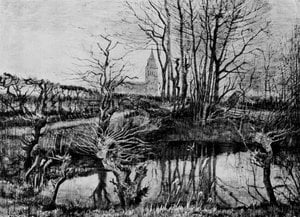
Cain Killing Abel

Experience the dramatic biblical intensity of Cain Killing Abel by Lucas van Leyden's masterful 1520 etching; discover this early Renaissance masterpiece reproduction today.

Entdecken Sie Lucas van Leyden: Ein Meister des niederländischen Malerei und Kupferstichs! Seine ikonischen Landschaftsbilder und innovativer Druckstil prägten die Kunstgeschichte.

Erwerben Sie ein hochauflösendes, optimiertes digitales Bild, das der Online-Vorschau weit überlegen ist.

Jede Datei wird von unseren hauseigenen Spezialisten mit modernsten Werkzeugen und fachmännischer manueller Retusche sorgfältig vorbereitet. Wir stellen sicher, dass jedes Bild eine außergewöhnliche Klarheit, präzise Farbgenauigkeit und feinste Details aufweist.

Die endgültige Datei wird innerhalb von 72 Stunden per E-Mail zugestellt und ist für den sofortigen Einsatz in professionellen, redaktionellen und Druckumgebungen optimiert. Es handelt sich um dieselbe Qualität, der führende Designstudios, Verlage und Galerien vertrauen.

Digitales Bild

Laden Sie eine hochauflösende Datei für die persönliche Präsentation, den Druck und kreative Projekte herunter. (Druck bestellen Druck bestellenHandgemalte Reproduktion bestellen Handgemalte Reproduktion bestellen)

Endpreis

$ 24,90

In jeder Bestellung digitaler Bilder enthalten

Professionelle digitale Bereitstellung, garantiert

Wenn Sie sich für WahooArt.com entscheiden, erhalten Sie nicht nur ein Bild – Sie erhalten ein professionell aufbereitetes digitales Kunstwerk, das mit höchster Präzision erstellt und durch eine Zufriedenheitsgarantie abgesichert wird. Hier ist alles, was automatisch mit Ihrer Bestellung geliefert wird:

shipping_icon
Schnelle E-Mail-Zustellung

Ihre hochauflösende digitale Bilddatei wird Ihnen innerhalb von 72 Stunden nach der Bestellung per E-Mail zugestellt – bereit zur sofortigen Verwendung.

canvas_icon
KI-optimierte digitale Datei

Ihre Kunstwerke werden professionell mithilfe fortschrittlicher KI-Tools und manueller Bearbeitung optimiert, um maximale Detailtreue, Klarheit und Farbgenauigkeit zu gewährleisten.

insurance_icon
Lebenslanger kostenloser Neudruckservice

Datei versehentlich gelöscht oder verloren? Keine Sorge – wir senden sie Ihnen jederzeit kostenlos erneut zu.

tax_icon
Keine Einfuhrgebühren – jemals

Genießen Sie Ihr Kunstwerk sofort ohne Zollgebühren, Einfuhrabgaben oder Versandkosten – digitale Downloads sind immer steuerfrei.

color_icon
Garantierte Farbtreue

Wir garantieren, dass Ihr digitales Bild mithilfe professioneller Werkzeuge und Farbmanagement die Originalfarben so präzise wie möglich wiedergibt.

return_icon
100-Tage-Zufriedenheitsgarantie

Sollten Sie mit Ihrem digitalen Bild nicht zufrieden sein, werden wir es überarbeiten oder Ihnen innerhalb von 100 Tagen 100% erstatten – ohne Wenn und Aber.

guarantee_icon
100% Geld-zurück-Garantie

Nicht zufrieden? Erhalten Sie innerhalb von 100 Tagen nach Erhalt Ihrer digitalen Datei eine vollständige Rückerstattung – ohne Angabe von Gründen.

discount_icon
Rabatte bei Großbestellungen

3 Bilder kaufen, 10% sparen – 5 Bilder kaufen, 15% sparen – Ab 10 Bildern 20% sparen. Ideal für kreative Projekte, Galerien und Agenturen.

Eckdaten

  • Artistic style: Early Renaissance printmaking
  • Location: Rijksmuseum, Amsterdam
  • Notable elements or techniques: Fine lines and cross-hatching
  • Year: 1520
  • Medium: Etching
  • Artist: Lucas van Leyden
  • Title: Cain Killing Abel

Kunst-Quiz

Jede Frage hat nur eine richtige Antwort.

Frage 1:
What is the title of the artwork being described?
Frage 2:
In what year was Lucas Van Leyden's etching 'Cain Killing Abel' created?
Frage 3:
What artistic technique is most evident in the fine lines and cross-hatching of this piece?
Frage 4:
The scene depicted in the artwork is based on which biblical story?
Frage 5:
Who is the artist credited with creating this renowned etching?

The Weight of Sin: An Encounter with Cain Killing Abel

To stand before an image like Lucas van Leyden's Cain Killing Abel is to confront a moment of primal human failure, rendered with the meticulous grace of the early Renaissance. This etching, dating from 1520, transcends mere depiction; it captures the visceral echo of fratricide—a foundational tragedy woven into the tapestry of biblical narrative. The scene unfolds in a stark natural landscape, where the lushness of the foliage and trees serves only to heighten the drama unfolding in the foreground. It is a tableau vivant of irreversible action, forcing the viewer to bear witness to the instant when jealousy curdles into deadly force.

Mastery in Line: Technique and Detail

Van Leyden’s command over the etching medium is nothing short of breathtaking. The piece is a profound study in line work; observe how the artist utilizes fine lines and intricate cross-hatching not merely to shade, but to build palpable texture—the rough grain of the earth beneath Abel, the taut musculature of Cain, the very air thick with impending violence. This technical virtuosity, characteristic of early Dutch printmaking, lends an almost unsettling realism to the composition. The interplay of light and shadow is handled with such care that it sculpts the figures out of the monochrome depth, giving weight and gravity to every outstretched arm and fallen body.

Symbolism in Stone: Interpreting the Narrative

The narrative itself—the confrontation between Cain and Abel—is steeped in potent symbolism. The contrast between the two figures is immediate and devastating. Cain, poised with an object of potential destruction, embodies unchecked rage and consequence. Conversely, Abel lies victim to this sudden brutality, his prone form speaking volumes about innocence violated. The surrounding natural world acts as a silent, indifferent witness; it frames the human drama without offering solace or judgment. This juxtaposition—the vibrant life suggested by the background against the stark finality of the foreground action—is what gives the work its enduring emotional resonance.

Bringing History Home: Reproduction for the Modern Collector

For those who wish to integrate such a powerful piece of art into their contemporary living space, acquiring a high-quality reproduction of this etching offers an unparalleled connection to artistic history. Our hand-painted reproductions are crafted with exceptional attention to detail, striving to mirror the depth and nuance of Van Leyden’s original 1520 work. Owning this piece allows one not only to decorate a room but to curate a dialogue with the masters of the Renaissance. It is an investment in narrative power, technical brilliance, and timeless human emotion.


Biografie des Künstlers

early life and training

Lucas van Leyden (real name Lucas Hugensz or Jacobsz.), Netherlandish engraver and painter, born and mainly active in Leiden, who was among the first Dutch exponents of genre painting and is generally regarded as one of the finest engravers in the history of art. He was the pupil of his father, Huygh Jacobszoon; later, he entered the workshop of Cornelis Engelbrechtsz(oon), a painter of Leiden. His paintings, as well as his prints, reveal his unique approach to subject matter and style, though Lucas is more highly regarded today as a printmaker than as a painter. He was extraordinarily precocious. Even such early prints as *Muhammed and the Murdered Monk* (1508) are compositionally clear and direct and show great technical skill. Such engravings as *Susanna and the Elders* (1508), *St. George Liberating the Princess* (*c.* 1508–09), and his famous series *The Circular Passion* (1510) are notable for their accurate rendering of space and subtly composed landscapes. In 1514 he became a member of the Leiden painters' guild. He seems to have travelled a certain amount, and on a visit to Antwerp in 1521 he met Dürer, who drew his portrait (Mus.\n\nB.-A., Lille). An unbroken series of dated engravings makes it possible to follow his career as a printmaker and to date many of his paintings, but no clear pattern of stylistic development emerges. Dürer was the single greatest influence on him, but Lucas was less intellectual in his approach, tending to concentrate on the anecdotal features of the subject and to take delight in caricatures and genre motifs. Van Mander characterizes him as a pleasure-loving dilettante, who sometimes worked in bed, but he left a large œuvre, in spite of his fairly short life, and must have been a prodigious worker. Lucas had a great reputation in his day (Vasari even rated him above Dürer in certain respects) and he is universally regarded as one of the greatest figures in the history of graphic art (he made etchings and woodcuts as well as engravings and was a superb draughtsman). His status as a painter is less elevated, but he was nevertheless one of the outstanding Netherlandish painters of his period. He was a pioneer of the Netherlandish genre tradition, as witness his *Chess Players* (c.1508, Gemäldegalerie, Berlin)—which actually represents a variant game called ‘courier’—and his *Card Players* (c.1517, Wilton House, Wiltshire), while his celebrated *Last Judgement triptych* (1526–7, Lakenhal Mus., Leiden) shows the heights to which he could rise as a religious painter. It eloquently displays his vivid imaginative powers, his superb skill as a colourist, and his deft and fluid brushwork. Lucas left no pupils or direct followers, but his work was a stimulus to an even greater Leiden-born artist, Rembrandt.

artistic development

Lucas van Leyden was among the first Dutch exponents of genre painting and a highly accomplished engraver. His early work, characterized by half-length figures (c. 1506-1512), showcases his precocious originality. As he matured, his landscapes developed, and he became skilled in engraving at a remarkably young age. The earliest known print by him, *Mohammed and the Murdered Monk* (1508), demonstrates his mastery of the medium. It reveals no trace of immaturity in inspiration or technique. Dürer was the single greatest influence on him, but Lucas was less intellectual in his approach, tending to concentrate on the anecdotal features of the subject and to take delight in caricatures and genre motifs.

notable works and style

Seventeen paintings surely attributed to lucas van leyden survive, including: His style is characterized by fresh colors and a sense of aérienne perspective, already appreciated by Albrecht Dürer.

museum collections and online presence

Lucas van Leyden's works can be found in various museums, including the Van Gogh Museum (Netherlands), which houses an extensive collection of his engravings and paintings. Online platforms like WahooArt.com offer a comprehensive selection of his works, allowing art enthusiasts to explore his oeuvre in detail.
Lucas van Leyden

Lucas van Leyden

1494 - 1533 , Niederlande

Kurzinfos

  • Artistic Movement Or Style: Frühniederländische Renaissance
  • Artists Or Movements Influenced By This Artist: ['Deutsche Renaissance']
  • Artists Who Influenced This Artist: ['Albrecht Dürer']
  • Date Of Birth: Leiden, Niederlande (1494)
  • Date Of Death: Vor August 8, 1533
  • Full Name: Lucas Hugensz van Leyden
  • Nationality: Niederländisch
  • Notable Artworks:
    • Die Heilung des blinden Mannes von Jericho
    • St. Paulus
  • Place Of Birth: Leiden