Erhalten Sie eine druckfertige Datei, die weit über die Web-Vorschau hinausgeht. Jedes von uns verkaufte digitale Bild basiert auf einem hochauflösenden Master aus unserer Datenbank – in der Regel 5.000 bis 15.000 Pixel breit –, sodass Sie mit Vertrauen großformatig drucken, eng ausschneiden oder feinste Details reproduzieren können.
Keine Datei verlässt unser Studio unberührt. Ein Digitalexperte gleicht die Farben mit dem Originalgemälde ab und korrigiert sie bei Bedarf, um anschließend Klarheit und Details mit professionellen Retuschewerkzeugen zu optimieren – dabei stets der Pinselführung und dem Stil des Künstlers treu bleibend. Das Ergebnis ist ein Bild, das wie das Gemälde selbst wirkt und nicht wie ein gefilterter Scan.
Sie entscheiden über das Endergebnis: Unser Experte sendet Ihnen das Bild innerhalb von 72 Stunden zur Ansicht per E-Mail zu. Nicht zufrieden? Fordern Sie Verbesserungen oder Korrekturen an oder verlangen Sie eine Rückerstattung, falls die Qualität nicht Ihren Erwartungen entspricht.
Dies ist die Qualität, auf die sich Verlage, Designstudios, Galerien und Druckereien verlassen.
Laden Sie eine hochauflösende Datei für die persönliche Präsentation, den Druck und kreative Projekte herunter. ( Zum Druck wechseln Handgemalte Reproduktion bestellen)
Wenn Sie sich für WahooArt.com entscheiden, erhalten Sie nicht nur ein Bild – Sie erhalten ein professionell aufbereitetes digitales Kunstwerk, das mit höchster Präzision erstellt und durch eine Zufriedenheitsgarantie abgesichert wird. Hier ist alles, was automatisch mit Ihrer Bestellung geliefert wird:
Ihre hochauflösende digitale Bilddatei wird Ihnen innerhalb von 72 Stunden nach der Bestellung per E-Mail zugestellt – bereit zur sofortigen Verwendung.
Ihre Kunstwerke werden professionell mithilfe fortschrittlicher KI-Tools und manueller Bearbeitung optimiert, um maximale Detailtreue, Klarheit und Farbgenauigkeit zu gewährleisten.
Datei versehentlich gelöscht oder verloren? Keine Sorge – wir senden sie Ihnen jederzeit kostenlos erneut zu.
Genießen Sie Ihr Kunstwerk sofort ohne Zollgebühren, Einfuhrabgaben oder Versandkosten – digitale Downloads sind immer steuerfrei.
Wir garantieren, dass Ihr digitales Bild mithilfe professioneller Werkzeuge und Farbmanagement die Originalfarben so präzise wie möglich wiedergibt.
Sollten Sie mit Ihrem digitalen Bild nicht zufrieden sein, werden wir es überarbeiten oder 100% innerhalb von 100 Tagen erstatten – ohne Wenn und Aber.
Nicht zufrieden? Erhalten Sie innerhalb von 100 Tagen nach Erhalt Ihrer digitalen Datei eine vollständige Rückerstattung – ohne Wenn und Aber.
3 Bilder kaufen, 10% sparen – 5 Bilder kaufen, 15% sparen – Ab 10 Bildern 20% sparen. Ideal für kreative Projekte, Galerien und Agenturen.
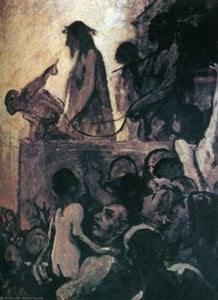
In the profound depths of 1925, a year that marked both a creative zenith and the final chapter for the German master Lovis Corinth, there emerged a work of staggering emotional intensity: Ecce Homo. This oil on canvas masterpiece, currently housed within the prestigious Kunstmuseum Basel, serves as a visceral window into one of history's most poignant moments. The painting captures the biblical moment of "Behold the Man," presenting a scene that transcends mere religious iconography to touch upon the universal essence of human vulnerability and resilience. Through his masterful command of the medium, Corinth invites the viewer into a space where the divine and the mortal collide under a heavy, atmospheric sky.
The composition is a masterclass in dramatic tension, centered around the figure of Jesus Christ, whose presence dominates the canvas with a quiet yet overwhelming gravity. Adorned with the crown of thorns, he stands flanked by two other figures, creating a triangular stability that is paradoxically disrupted by the raw, expressive energy of the brushwork. Corinth utilizes chiaroscuro—the dramatic interplay of light and shadow—to sculpt the forms of the men, lending them a sculptural weight that feels almost tangible. This technique does more than create depth; it directs the eye through a landscape of sorrow, where the stark highlights on the central figure’s face contrast sharply with the encroaching darkness, mirroring the spiritual struggle at the heart of the narrative.
Beyond the human drama, Corinth weaves subtle layers of symbolism into the periphery of the scene to enhance its dynamic movement. In the background, the presence of two horses and the delicate silhouettes of three birds drifting in the sky introduce a sense of life continuing amidst the tragedy. These elements provide a breath of naturalism that prevents the painting from becoming purely a study of grief, instead grounding the crucifixion in a living, breathing world. The artist’s ability to synthesize the structured traditions of Impressionism with the raw, emotive power of Expressionism allows the background to pulse with an almost restless energy, ensuring that every inch of the 190 x 150 cm canvas vibrates with life.
For the discerning collector or interior designer, a reproduction of Ecce Homo offers more than just a decorative element; it provides a profound focal point for any curated space. The painting’s rich textures and somber palette make it an ideal centerpiece for rooms designed to evoke contemplation, sophistication, and depth. Whether placed in a quiet study or a grand gallery-style living area, the work commands attention through its historical significance and its ability to stir the soul. Owning a high-quality hand-painted reproduction allows one to bring the heavy, transformative atmosphere of Corinth’s late period into the modern home, serving as a timeless reminder of the beauty found within the most profound human struggles.
"Ecce Homo" stellt crucifixion, jesus christ, crown of thorns, religious art, biblical scene, chiaroscuro dar, während die dokumentierten Themen von Lovis Corinth impressionism and expressionism, crucifixion of jesus christ, religious themes, late expressive style, synthesis of styles sind. Ein Vergleich der beiden zeigt, wie das Werk mit den üblichen Sujets des Künstlers in Verbindung steht.
"Ecce Homo", entstanden im Jahr 1925, stammt aus der Late Period von Lovis Corinth.
"Ecce Homo" verbindet die Expressionism-Bewegung durch den Geburtsort ihres Schöpfers mit Niederlande.


1858 - 1925 , Niederlande
 Vorschau anzeigen
 Versenden
 Teilen
 Details anzeigen
 Leitfaden

 Herunterladen
 Ähnliche Objekte
 Röntgenaufnahme
 Diashow
 Fragen & Antworten
 Statistiken

 Weiterlesen