In echtem Maßstab anzeigen In AR an der Wand sehen Zum Druck wechseln Zum digitalen Bild wechseln Versenden als Grußkarte
Details anzeigen Leitfaden Zu Favoriten hinzufügen Herunterladen Ähnliche Objekte Röntgenaufnahme Diashow Besucherstatistiken

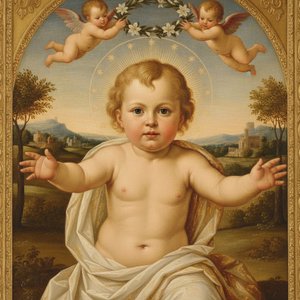
Pietà

Experience the poignant beauty of Lorenzo Lotto's 'Pietà'! This masterpiece captures Mary’s grief and devotion, showcasing his unique Venetian style & masterful detail. Explore Lotto’s legacy today!

Lorenzo Lotto (1480-1556): Entdecken Sie den einzigartigen Renaissance-Stil des venezianischen Meisters! Ergreifende Porträts, religiöse Altarbilder & Hochrenaissance trifft auf Manierismus. Sein Wiederentdecktes Vermächtnis bei WahooArt.

Handgefertigte Ölreproduktion

Handgemaltes Ölgemälde auf Leinwand in Ihrer Wunschgröße und mit Rahmen, auf Bestellung von unseren Künstlern angefertigt. ( Zum Druck wechseln Zum digitalen Bild wechseln)

P118B $10
P118H $10
P118W $10
P438Z $10
P508JH $12
P508YH $12
P805H $10
P805Z $10
P919BZ $10
P919G $10
P919XJ $10
P959ZH $10
P968JZ $12
W106C $8
W218G $10
W218JH $8
W218Y $10
W307PJ $10
W316G $10
W316PJ $8
W316Y $10
W398PJ $8
W4111J $10
W500HY $15
W500JH $15
W692G $12
W849H $8
W940BG $15
W953PJ $8

Standardformat
individuell anpassbar
CM
INCH

Wählen Sie aus unseren vordefinierten Formaten, die den ursprünglichen Proportionen des Kunstwerks entsprechen.

Breite
Höhe

Sie können Ihre eigenen Maße eingeben, um einen bestimmten Rahmen oder Platz auszufüllen. Wenn die gewählte Größe nicht den Proportionen des Originalbildes entspricht, werden wir das Kunstwerk entweder beschneiden oder das Gemälde durch zusätzliche, handgemalte Elemente erweitern. Ein digitales Mockup wird Ihnen zur Genehmigung zugesandt, bevor die Produktion beginnt.
Bitte beachten Sie, dass die Bildschirmvorschau nicht die tatsächliche Beschneidung oder Erweiterung widerspiegelt. Nur das Mockup zeigt die endgültige Komposition exakt an.
Obwohl Sondermaße verfügbar sind, empfehlen wir, eine Größe aus der vordefinierten Liste zu wählen, um die ursprünglichen Proportionen beizubehalten.

Beispiele für Anpassungsmöglichkeiten: Gesicht durch Kundenfoto ersetzen; Haustier hinzufügen (z. B. Katze durch Hund ersetzen); eine versteckte Nachricht im Hintergrund einfügen; Hintergrundlandschaft oder -elemente ändern.
Nach der Bestellung wird das WahooArt.com-Team dem Kunden Anweisungen per E-Mail zusenden und eine Mockup-Vorschau bereitstellen.

Weltweiter Versand () in nur 3 bis 4 Wochen statt der üblichen 5 Wochen. (22 September). Keine Kompromisse bei der Qualität.

why_choose_icon
Kostenloser weltweiter Expressversand
why_choose_icon
Hochwertige Leinenleinwand
why_choose_icon
Vollständiger Versicherungsschutz beim Versand
why_choose_icon
Zollgebühren-Rückerstattungsgarantie
why_choose_icon
Garantie für exakte Farbtreue
why_choose_icon
100-tägiges Rückgaberecht (nur bei Mängeln)
why_choose_icon
100% Geld-zurück-Garantie
why_choose_icon
Angebot für Mengenrabatt

Gesamtpreis

$ 272

reproduction

Pietà

Reproduktionsmedium

Format der Reproduktion

-

Gesamtpreis

$ 272

Kurzübersicht

  • Influences:
    • Botticelli
    • Bellini
  • Medium: Oil on canvas
  • Location: Pinacoteca di Brera, Milan
  • Movement: High Renaissance
  • Dimensions: 185 x 150 cm
  • Notable elements: Dramatic composition
  • Subject or theme: Religious lamentation

Kunst-Quiz

Jede Frage hat nur eine richtige Antwort.

Frage 1:
What is the title of the painting?
Frage 2:
Who painted the Pietà?
Frage 3:
In what year was the Pietà painted?
Frage 4:
What is depicted in the painting?
Frage 5:
According to the provided research, what was Lorenzo Lotto's artistic style characterized by?

The Pietà: A Venetian Masterpiece of Sorrow

Lorenzo Lotto’s 1545 rendition of the Pietà stands as a profoundly moving testament to human suffering and divine grace, a cornerstone of his distinctive artistic vision. Far removed from the idealized beauty often associated with Renaissance sculpture, Lotto's interpretation plunges directly into the heart of grief, offering a raw and intensely personal portrayal of Mary cradling the lifeless body of Christ. This isn’t merely a depiction of a religious scene; it’s an exploration of sorrow, loss, and the enduring power of maternal love—a characteristic that cemented Lotto’s reputation as one of Venice's most psychologically astute painters.

The painting immediately commands attention with its dramatic use of light and shadow. A deep, enveloping darkness dominates the background, creating a sense of claustrophobia and emphasizing the vulnerability of the figures within. Lotto masterfully employs chiaroscuro – the stark contrast between light and dark – to draw our focus to Mary’s face, etched with an anguish that is both palpable and heartbreaking. Her expression isn't one of serene acceptance, but rather a visceral reaction to unimaginable loss; her eyes are closed, suggesting a profound stillness born not of peace, but of overwhelming grief. The folds of her garments cascade around Christ’s body, mirroring the weight of his suffering and her own sorrow.

A Venetian Soul: Lotto's Unique Style

Lotto’s artistic journey was anything but conventional. Unlike many of his contemporaries who established themselves within specific schools or courts, he embraced a nomadic existence, moving between Venice, Treviso, Rome, Bergamo, and Loreto. This constant movement profoundly shaped his style, exposing him to diverse influences while fostering an independent spirit that set him apart. While early training undoubtedly involved the lessons of Giovanni Bellini – evident in the rich colors and atmospheric perspective – Lotto quickly transcended simple imitation, forging a style uniquely his own—a blend of High Renaissance grace and nascent Mannerist sensibiliti. His work is characterized by a nervous energy, an almost palpable sense of unease that reflects the emotional depth he sought to convey.

The painting’s composition itself is notable for its unconventionality. Lotto deliberately avoids the idealized beauty often associated with depictions of Mary and Christ. Instead, he presents them as ordinary people overwhelmed by tragedy. The figures are rendered with a remarkable degree of realism, their faces bearing the marks of age and hardship. This departure from traditional iconography reflects Lotto’s commitment to portraying human emotion with honesty and sincerity. The subtle details – the delicate veins visible beneath Christ's skin, the slight tremor in Mary’s hand – contribute to the painting’s overwhelming sense of immediacy.

Symbolism and Context

The Pietà transcends a simple narrative; it is laden with symbolic meaning. The pyramidal composition, reminiscent of works by Botticelli, anchors the scene while simultaneously directing our gaze towards the central figures. The dark background symbolizes death and despair, while the light that illuminates Mary’s face represents hope and redemption. Crucially, Lotto's choice to depict Mary not as a passive recipient of grief, but as an active participant in Christ’s suffering underscores her role as co-redeemer—a concept central to Christian theology. The inclusion of John the Baptist, standing to the left of Mary, further emphasizes this theme, linking the sorrowful scene with the anticipation of salvation.

The painting was commissioned for a Dominican nunnery in Treviso, and its creation coincided with a period of intense religious fervor in Italy. Lotto’s Pietà reflects this atmosphere of piety and devotion, while also offering a deeply personal meditation on mortality and faith. The fact that the church itself was later destroyed adds another layer of poignancy to the work—a reminder of the fragility of human endeavors and the enduring power of art.

A Timeless Masterpiece

Lorenzo Lotto’s Pietà is more than just a beautiful painting; it's a profound exploration of the human condition. Its raw emotion, masterful technique, and rich symbolism continue to resonate with viewers centuries after its creation. Whether viewed as a devotional object or a work of art for its own sake, this masterpiece offers a glimpse into the soul of a remarkable artist and a timeless meditation on sorrow, loss, and the enduring power of love.


Biografie des Künstlers

Frühes Leben und Ausbildung

Lorenzo Lotto, ein bedeutender italienischer Maler, Zeichner und Illustrator, wurde um 1480 in Venedig geboren. Sein frühes Leben und seine Ausbildung sind nicht gut dokumentiert, aber es wird angenommen, dass er von Giovanni Bellini beeinflusst war, einer führenden Figur der venezianischen Schule.

Künstlerischer Stil und Einflüsse

Lottos Werk zeichnet sich durch eine einzigartige Mischung aus Hochrenaissance und Mannerismus aus. Seine Gemälde zeigen oft Altäre, religiöse Themen und Porträts, die seine technische Fertigkeit und emotionale Tiefe demonstrieren. Der Einfluss von Giorgio Vasaris Freund, Palma der Ältere, ist in Lottos frühen Werken erkennbar.

Bemerkenswerte Werke und Standorte

Karriere und Vermächtnis

Lottos Karriere erstreckte sich über mehrere Standorte, darunter Treviso, Rom und Bergamo. Er war ein respektierter Maler in Norditalien, aber seine Arbeit wurde in Venedig weitgehend übersehen. Lottos einzigartiger Stil, der giorgioneske Klassizismus mit Correggios dramatischen Setpieces vermischt, wurde in den letzten Jahren wiederentdeckt.

Wichtige Kunstbewegungen und Einflüsse

Schlussfolgerung

Lorenzo Lottos bemerkenswerte Karriere, die durch seinen einzigartigen künstlerischen Stil und einflussreiche Werke gekennzeichnet ist, hat ihre bleibende Spur in der Welt der italienischen Renaissancekunst hinterlassen. Sein Vermächtnis inspiriert weiterhin Künstler und Kunstliebhaber gleichermaßen, wobei viele seiner Werke auf WahooArt.com zu sehen sind.

Lorenzo Lotto

Lorenzo Lotto

1480 - 1556 , Italien

Eckdaten zum Künstler

  • Bemerkenswerte Kunstwerke:
    • Jungfrau mit Kind und St. Hieronymus
    • Allegorie von Tugend und Laster
    • St. Hieronymus in der Wüste
  • Geburtsdatum: 1480
  • Geburtsort: Venedig, Italien
  • Künstler, Die Diesen Künstler Beeinflussten:
    • Giovanni Bellini
    • Palma der Ältere
  • Künstlerische Bewegung Oder Stil:
    • Hochrenaissance
    • Manierismus
  • Nationalität: Italienisch
  • Todatum: 1556
  • Vollständiger Name: Lorenzo Lotto
  • Von Diesem Künstler Beeinflusste Künstler Oder Bewegungen:
    • Giorgionesque-Klassizismus
    • Correggios dramatische Setzstücke
Entdecken Sie Kunstwerke, die nach Themen, Stilen und Merkmalen sortiert sind.