In echtem Maßstab anzeigen In AR an der Wand sehen Handgemalte Reproduktion kaufen Zum digitalen Bild wechseln Versenden als Grußkarte
Details anzeigen Leitfaden öffnen Zu Favoriten hinzufügen Herunterladen Ähnliche Objekte Röntgenaufnahme Diashow Besucherstatistiken

Icons

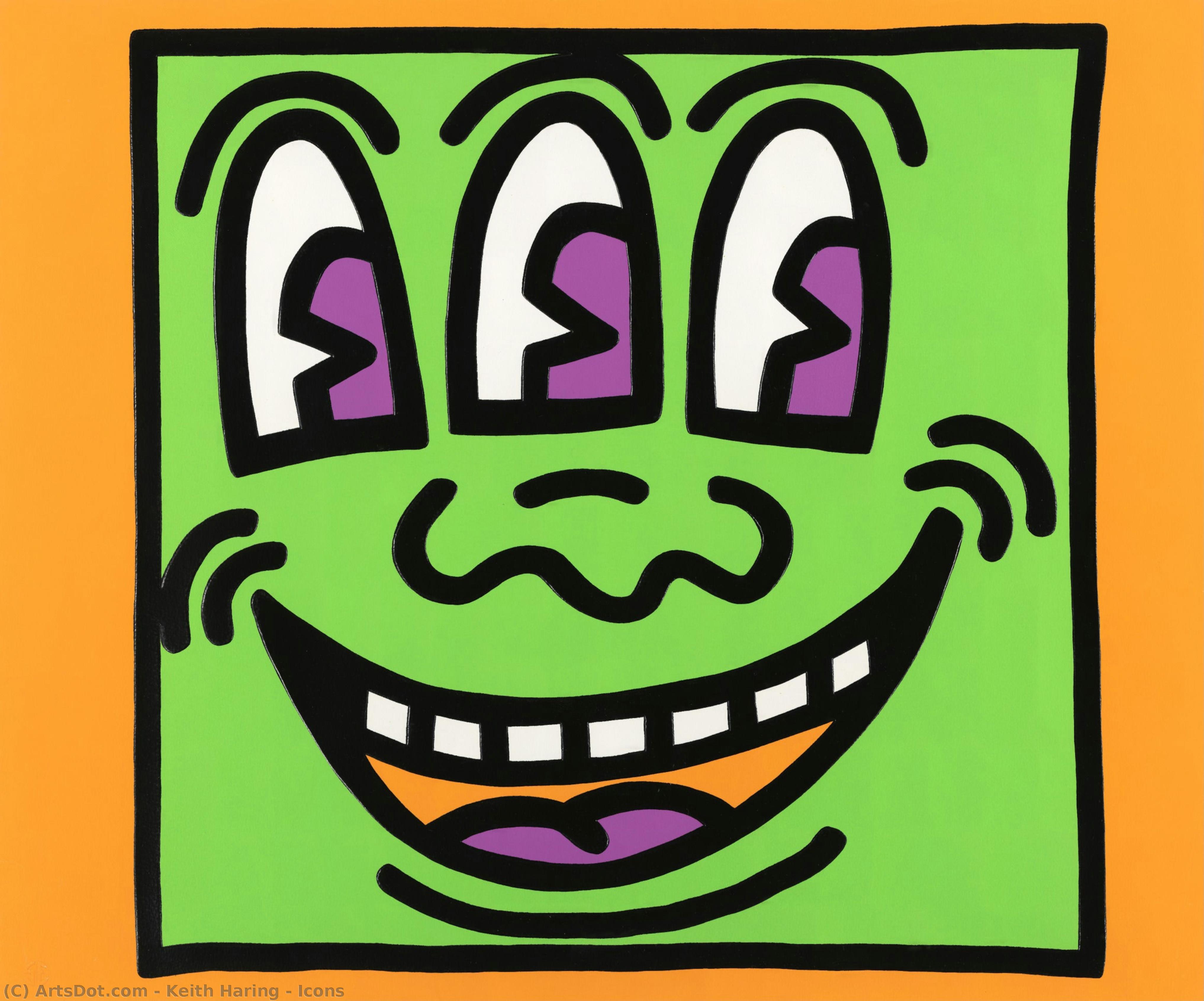
Explore Keith Haring’s iconic ‘Icons’ series, featuring the enigmatic smiling face and other signature figures from 1990. This vibrant painting captures Haring's playful style and profound themes of innocence and mystery – discover this unique artwork.

Entdecken Sie Keith Harings (1958-1990) pulsierende Pop Art! Mutige Linien, Radiant Babies & soziales Engagement prägen seinen Neo-Expressionismus. Jetzt bei WahooArt!

Die auf dieser Seite dargestellten Kunstwerke sind urheberrechtlich geschützt, was bedeutet, dass wir keine identische Reproduktion rechtmäßig erstellen oder verkaufen dürfen. Dieser Schutz wird durch internationale Abkommen wie die Berner Übereinkunft und durch nationale Gesetze, einschließlich derer, die von den ... festgelegt wurden US-Urheberrecht – Titel 17.

Diese Methode entspricht vollumfänglich den Urheberrechtsbestimmungen, da sie keine Kopie oder Vervielfältigung des geschützten Kunstwerks darstellt. Stattdessen handelt es sich um eine kreative Neuinterpretation – ein neues Gemälde, das vom Original inspiriert, aber nicht identisch mit ihm ist.

Giclée / Kunstdruck

Giclée- oder Leinwanddruck in Museumsqualität mit schneller Produktion und flexiblen Veredelungsoptionen. ( Handgemalte Reproduktion kaufen Zum digitalen Bild wechseln)

Corner sample of the P118B picture frame: moulded polystyrene, 5 cm wide and 3 cm thick
P118B €10
Corner sample of the P118H picture frame: moulded polystyrene, 5 cm wide and 3 cm thick
P118H €10
Corner sample of the P118W picture frame: moulded polystyrene, 5 cm wide and 3 cm thick
P118W €10
Corner sample of the P438Z picture frame: moulded polystyrene, 5.5 cm wide and 3.5 cm thick
P438Z €10
Corner sample of the P508JH picture frame: moulded polystyrene, 7 cm wide and 3.5 cm thick
P508JH €12
Corner sample of the P508YH picture frame: moulded polystyrene, 7 cm wide and 3.5 cm thick
P508YH €12
Corner sample of the P805H picture frame: moulded polystyrene, 5 cm wide and 3.5 cm thick
P805H €10
Corner sample of the P805Z picture frame: moulded polystyrene, 5 cm wide and 3.5 cm thick
P805Z €10
Corner sample of the P919BZ picture frame: moulded polystyrene, 7 cm wide and 3.5 cm thick
P919BZ €10
Corner sample of the P919G picture frame: moulded polystyrene, 7 cm wide and 3.5 cm thick
P919G €10
Corner sample of the P919XJ picture frame: moulded polystyrene, 7 cm wide and 3.5 cm thick
P919XJ €10
Corner sample of the P959ZH picture frame: moulded polystyrene, 5 cm wide and 3 cm thick
P959ZH €10
Corner sample of the P968JZ picture frame: moulded polystyrene, 6 cm wide and 4 cm thick
P968JZ €12
Corner sample of the W106C picture frame: solid wood, 5 cm wide and 3 cm thick
W106C €8
Corner sample of the W218G picture frame: solid wood, 5 cm wide and 3 cm thick
W218G €10
Corner sample of the W218JH picture frame: solid wood, 5 cm wide and 3 cm thick
W218JH €8
Corner sample of the W218Y picture frame: solid wood, 5 cm wide and 3 cm thick
W218Y €10
Corner sample of the W307PJ picture frame: solid wood, 6 cm wide and 3 cm thick
W307PJ €10
Corner sample of the W316G picture frame: solid wood, 6 cm wide and 3 cm thick
W316G €10
Corner sample of the W316PJ picture frame: solid wood, 6 cm wide and 3 cm thick
W316PJ €8
Corner sample of the W316Y picture frame: solid wood, 6 cm wide and 3 cm thick
W316Y €10
Corner sample of the W398PJ picture frame: solid wood, 5 cm wide and 3 cm thick
W398PJ €8
Corner sample of the W4111J picture frame: solid wood, 6.5 cm wide and 3.5 cm thick
W4111J €10
Corner sample of the W500HY picture frame: solid wood, 7 cm wide and 5 cm thick
W500HY €15
Corner sample of the W500JH picture frame: solid wood, 7 cm wide and 5 cm thick
W500JH €15
Corner sample of the W692G picture frame: solid wood, 8 cm wide and 4 cm thick
W692G €12
Corner sample of the W849H picture frame: solid wood, 5 cm wide and 3 cm thick
W849H €8
Corner sample of the W940BG picture frame: solid wood, 7.5 cm wide and 4.5 cm thick
W940BG €15
Corner sample of the W953PJ picture frame: solid wood, 6 cm wide and 3.5 cm thick
W953PJ €8

Standardformat
individuell anpassbar
CM
INCH

Wählen Sie aus unseren vordefinierten Formaten, die den ursprünglichen Proportionen des Kunstwerks entsprechen.

Breite
Höhe

Sie können Ihre eigenen Maße eingeben, um ein bestimmtes Format oder einen speziellen Platz einzupassen. Wenn das von Ihnen gewählte Format nicht den Proportionen des Originalbildes entspricht, werden wir das Kunstwerk entweder beschneiden oder das Bild mit einem gespiegelten oder einfarbigen Rand erweitern. Ein digitaler Entwurf wird Ihnen zur Genehmigung zugesandt, bevor die Produktion beginnt.
Bitte beachten Sie, dass die Vorschau auf dem Bildschirm nicht den tatsächlichen Zuschnitt oder die Erweiterung widerspiegelt. Nur der Entwurf zeigt die endgültige Komposition präzise an.
Obwohl Sondermaße verfügbar sind, empfehlen wir die Auswahl eines Maßes aus der vordefinierten Liste, um die ursprünglichen Proportionen zu bewahren.

Weltweiter Versand () innerhalb von 2 Wochen statt der üblichen 4/5 Wochen. (10 Oktober)

Kostenloser weltweiter Expressversand
Hochwertige Leinenleinwand
Vollständiger Versicherungsschutz beim Versand
Zollgebühren-Rückerstattungsgarantie
Garantie für exakte Farbtreue
100-tägiges Rückgaberecht (nur bei Mängeln)
100% Geld-zurück-Garantie
Angebot für Mengenrabatt

Gesamtpreis

€ 59

Icons

Giclée / Kunstdruck

Format der Reproduktion

-

Gesamtpreis

€ 59

Kurzübersicht

  • Subject or theme: Innocence, Chaos
  • Movement: Street Art
  • Year: 1990
  • Notable elements: Smiling face, 'x'
  • Influences:
    • Disney
    • Seuss
  • Location: Nakamura Collection
  • Medium: Lithograph

A Chronicle of Innocence and Mystery: Unpacking Keith Haring’s “Icons”

Keith Haring's "Icons," created in 1990 during the final year of his tragically short life, stands as a potent distillation of his revolutionary artistic vision. Published alongside the artist’s passing, this lithograph series – featuring his signature TAG characters – immediately resonates with an urgency born from its historical context: the vibrant, chaotic energy of 1980s New York City and Haring's own fervent engagement with social issues. The image itself, a close-up rendering of the “Radiant Baby,” is deceptively simple yet profoundly layered with meaning, inviting endless interpretation and reflecting the artist’s deeply personal reflections on life, death, and the human condition.

  • The Radiant Baby: Haring's most iconic figure, the crawling baby, embodies youthful innocence, purity, and potential. Initially conceived as a symbol of hope amidst the AIDS crisis, its open-mouthed expression – rendered in unsettling shades of purple and teeth – subtly shifts this interpretation. The wide eyes suggest not just naiveté but also a disconcerting awareness, perhaps even a premonition of the complexities and dangers that lie ahead.
  • Symbolic Gestures: Beyond the immediate visual impact, "Icons" is replete with symbolic gestures. The ‘x’ on the “Winged Man”’s chest, a recurring motif, represents both death and mystery, acting as a marker of transition or a signpost to the unknown.
  • The Smiley Face: Haring's enigmatic "Smiley Face," often depicted with an unsettlingly wide grin, presents a fascinating paradox. Initially intended as a symbol of joy and connection, it quickly became associated with greed, excess, and the darker aspects of consumer culture – a reflection of the anxieties prevalent in late 20th-century society.

Technique and Style: A Bold Fusion

Created as a lithograph, “Icons” showcases Haring’s masterful manipulation of printmaking techniques. His signature black outlines are rendered with remarkable precision, creating a graphic intensity that is both immediate and enduring. The use of flat color fields – particularly the vibrant yellow of the smiling face – contributes to the work's iconic status, echoing the bold, almost cartoonish aesthetic he developed throughout his career. Haring’s technique was deliberately accessible, rejecting traditional academic approaches in favor of direct communication with a broad audience, reflecting his desire to engage with social and political issues through art.

Historical Context and Legacy

"Icons" was produced during a pivotal moment in Haring's artistic trajectory. His work, initially created as spontaneous chalk drawings on the sidewalks of New York City, quickly gained recognition for its raw energy and direct engagement with urban life. The series reflects his growing interest in spirituality and his exploration of themes related to identity, power, and social justice. The fact that it was completed in the same year as Haring’s death adds a poignant layer to the work, transforming it into a memorial to a brilliant and tragically short-lived talent.

Emotional Impact and Collectible Value

More than just a visually striking image, “Icons” evokes a powerful emotional response. The unsettling juxtaposition of innocence and menace within the "Radiant Baby" forces viewers to confront uncomfortable truths about human nature and societal values. As a key work from Keith Haring’s oeuvre, this lithograph holds significant historical and artistic value, making it a compelling addition to any collection. Its vibrant colors, bold lines, and layered symbolism ensure its continued relevance and appeal for art lovers, collectors, and interior designers alike.

Fragen & Antworten

Wer ist der Urheber von "Icons" und welcher Stilrichtung ist das Werk zuzuordnen?

Keith Haring schuf „Icons“ im Rahmen der Pop Art-Bewegung.

Welchem Künstler wird "Icons" zugeschrieben?

"Icons" wird Keith Haring zugeschrieben.

In welchem Jahr wurde "Icons" geschaffen?

"Icons" stammt aus dem Jahr 1990. Dieses Datum ordnet das Werk in die Schaffensperiode von Keith Haring sowie in dessen Epoche ein.

Gibt es Werke, die "Icons" ähneln?

Kunstwerke, die "Icons" von Keith Haring ähneln, sind auf der Ähnliche Werke-Seite des Kunstwerks zusammengefasst.

Welcher Kunstrichtung lässt sich "Icons" von Keith Haring zuordnen?

Die mit "Icons" von Keith Haring verbundene Stilrichtung ist Pop Art. Diese Klassifizierung ordnet das Werk in den Kontext verwandter Künstler und Kunstwerke ein.

In welchem Alter schuf Keith Haring „Icons"?

Keith Haring schuf „Icons“ im Alter von 32. Der Künstler wurde 1958 geboren, und das Werk datiert auf 1990.

Welche Verwendung und welcher Raum werden für "Icons" von Keith Haring empfohlen?

"Icons" wird für Statement-Piece empfohlen; der ideale Ort dafür ist ein Wohnbereich.


Biografie des Künstlers

Frühe Jahre und Einflüsse

Keith Allen Haring, ein amerikanischer Künstler und sozialer Aktivist, wurde am 4. Mai 1958 in Reading, Pennsylvania, geboren. Seine frühen Jahre waren geprägt von einem ausgeprägten Interesse an der Kunst, beeinflusst von seinem Vater, Allan Haring, einem Ingenieur und Amateurzeichner. Der junge Harings Faszination für die Kunst wurde durch Walt Disney-Cartoons, Dr. Seuss, Charles Schulz und Looney Tunes-Figuren weiter gefördert.

Der künstlerische Werdegang

Nach einer kurzen Zeit am Ivy School of Professional Art in Pittsburgh (1976–1978), wo er kommerzielle Kunst studierte, wurde Haring von dem konventionellen Ansatz der Kunst desillusioniert. Inspiriert von Robert Henris "The Art Spirit" (1923) entschied er sich, sich auf seinen eigenen, einzigartigen Stil zu konzentrieren, der schließlich eine visuelle Sprache des 20. Jahrhunderts werden sollte.

New York und der Aufstieg zum Ruhm

Ende der 1970er Jahre zog Haring nach New York City, wo er zu einer zentralen Figur in der Downtown-Kunstszene wurde. Seine Arbeit, die durch kräftige Linien, lebendige Farben und aktive Figuren gekennzeichnet ist, begann, starke Botschaften von Leben und Einheit zu vermitteln. In dieser Zeit entstand sein ikonisches Symbol, "das strahlende Baby", das mit Harings Stil untrennbar verbunden wurde.
  • Untitled (235), ein Paradebeispiel für seinen Pop-Art-Stil, ist auf WahooArt zu finden.
  • Harings Beteiligung an der New Yorker Straßenkultur der 1980er Jahre führte zu zahlreichen öffentlichen Werken, darunter "Crack is Wack" (1986), das vom FDR Drive aus sichtbar ist.
  • Seine Verbindung zu Andy Warhol, wie in "Andy Mouse" dargestellt, markierte einen bedeutenden Aspekt seines späteren Erfolgs.

Internationale Anerkennung und Aktivismus

In den 1980er Jahren hatte Haring internationale Anerkennung erlangt, mit Werken wie The Story of Red and Blue (Nakamura Keith Haring Collection, Hokuto, Japan), das auf WahooArt betrachtet werden kann. Sein Aktivismus umfasste das Design eines Posters für ein freies Südafrika im Jahr 1985 und die Gestaltung eines Abschnitts der Berliner Mauer im Jahr 1986.

Vermächtnis

Keith Harings Vermächtnis beschränkt sich nicht nur auf seine Kunst; es erstreckt sich auch auf seinen Einfluss auf den sozialen Aktivismus und die visuelle Sprache des 20. Jahrhunderts. Seine Arbeit inspiriert weiterhin, wobei die Blueprint-Zeichnungen (Nakamura Keith Haring Collection, Hokuto, Japan) ein Beweis für seine bleibende Wirkung sind.

Schlussfolgerung

Keith Harings Leben war ein Beweis für die Kraft der Kunst als Medium für sozialen Wandel. Sein Vermächtnis, geprägt von seiner ikonischen visuellen Sprache und seinem unerschütterlichen Aktivismus, inspiriert weiterhin Künstler und Aktivisten gleichermaßen.
Keith Haring

Keith Haring

1958 - 1990 , Vereinigte Staaten von Amerika

Eckdaten zum Künstler

  • Beeinflusste Künstler: ['Jean-Michel Basquiat']
  • Bemerkenswerte Werke:
    • Untitled (235)
    • Crack Is Wack
    • The Story of Red and Blue
  • Einflüsse:
    • Walt Disney
    • Dr. Seuss
    • Charles Schulz
    • Robert Henri
  • Geburtsdatum: 4. Mai 1958
  • Geburtsort: Reading, USA
  • Künstlerische Richtung: Pop Art, Neo-Expressionismus
  • Nationalität: Amerikanisch
  • Todatum: 16. Februar 1990
  • Vollständiger Name: Keith Allen Haring
Entdecken Sie Kunstwerke, die nach Themen, Stilen und Merkmalen sortiert sind.