


x

 Druck bestellen Bild kaufen
 Versenden
 Details
 Zu Favoriten hinzufügen
 Herunterladen
 Ähnliche Objekte
 X-Ray
X-Ray
 Diashow anzeigen
 Öl auf LeinwandWandkunstItalian Renaissance
 1560Renaissance
 116.0 x 191.0 cm
 Museo del Prado
Handgemaltes Ölgemälde auf Leinwand in Ihrer Wunschgröße und mit Rahmen, auf Bestellung von unseren Künstlern angefertigt.





























Wählen Sie aus unseren vordefinierten Größen, die den ursprünglichen Proportionen des Kunstwerks entsprechen.

Sie können Ihre eigenen Maße eingeben, um einen bestimmten Rahmen oder Platz auszufüllen. Wenn die gewählte Größe nicht den Proportionen des Originalbildes entspricht, werden wir das Kunstwerk entweder beschneiden oder das Gemälde durch zusätzliche, handgemalte Elemente erweitern. Ein digitales Mockup wird Ihnen zur Genehmigung zugesandt, bevor die Produktion beginnt.
Bitte beachten Sie, dass die Bildschirmvorschau nicht die tatsächliche Beschneidung oder Erweiterung widerspiegelt. Nur das Mockup zeigt die endgültige Komposition exakt an.
Obwohl Sondermaße verfügbar sind, empfehlen wir, eine Größe aus der vordefinierten Liste zu wählen, um die ursprünglichen Proportionen beizubehalten.
Weltweiter Versand () in nur 3 bis 4 Wochen statt der üblichen 5 Wochen. (1 Juli). Keine Kompromisse bei der Qualität.


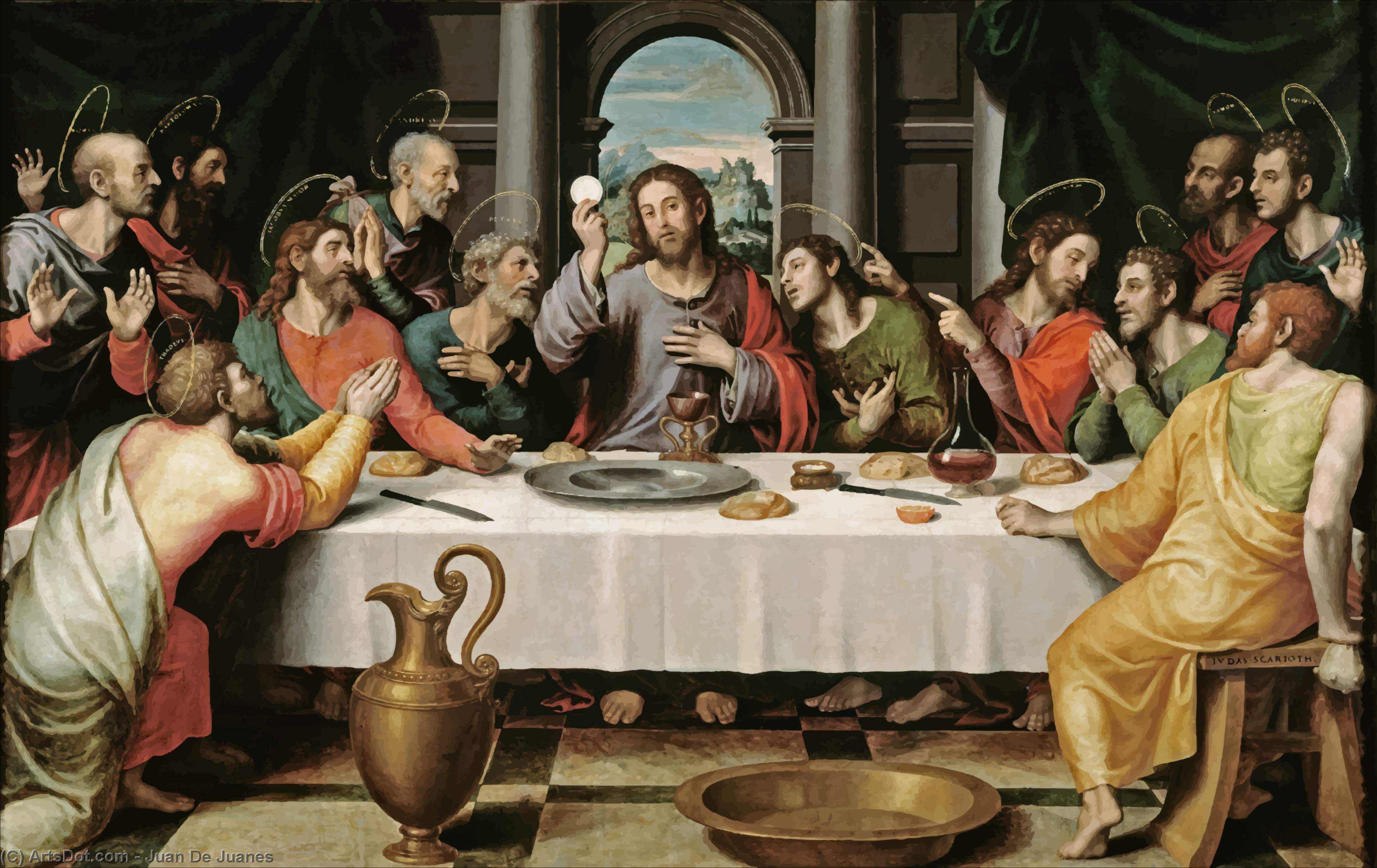
The Last Supper
Größe der Reproduktion
“The Last Supper,” painted by Valencian Renaissance artist Juan de Juanes in 1560, stands as a testament to the artistic fervor of its era and offers a profound glimpse into the spiritual heart of the Catholic faith. More than just a depiction of biblical narrative, it’s a meticulously crafted composition imbued with symbolism that continues to resonate centuries later.
Historical Context: Valencia during Juanes's lifetime was a vibrant center for artistic patronage under Cardinal Rodrigo Borgia – a papal emissary tasked with bolstering the Church’s influence in Spain. This sponsorship fueled ambitious projects like “The Last Supper,” demonstrating the importance of religious art within the broader cultural landscape.
Style and Technique: Juanes skillfully blended Flemish realism with Italian High Renaissance ideals, primarily influenced by Raphael and Sebastiano del Piombo. The painting utilizes oil paint on canvas—a technique favored for its luminosity and ability to capture subtle tonal variations—resulting in a remarkably detailed portrayal of the scene.
Composition and Symbolism: The central figure of Jesus Christ dominates the composition, positioned at the apex of the dining table. His gaze directs towards the viewer, establishing an intimate connection between the depicted moment and the observer. Surrounding him are his twelve apostles, arranged in a pyramidal structure that conveys stability and solemnity. Each apostle is rendered with meticulous attention to anatomical accuracy—a hallmark of Flemish art—reflecting the humanist ideals prevalent during the Renaissance.
Notable Details: Beyond the figures themselves, subtle symbolic elements enrich the artwork’s narrative depth. The inclusion of a dog near the bottom right corner has been interpreted as representing loyalty and faithfulness – virtues central to Christian belief. Furthermore, the arrangement of the tableware—the bowls and cups—suggests contemplation and reverence for the Eucharist.
Emotional Impact: “The Last Supper” transcends mere visual representation; it evokes a palpable sense of solemnity and spiritual contemplation. The artist’s masterful use of light and shadow creates an atmosphere of profound emotion, inviting viewers to immerse themselves in the biblical story and contemplate its enduring significance.
Today, reproductions of “The Last Supper” grace the walls of museums and private collections worldwide. Its enduring appeal lies not only in its artistic merit but also in its ability to communicate timeless themes of faith, compassion, and human dignity—a legacy that continues to inspire artists and collectors alike.


1510 - 1579 , Spanien

Entdecken Sie die 25 Meisterwerke von Michelangelo Buonarroti! Von David bis zur Sixtinischen Kapelle – erleben Sie Renaissance Kunst in ihrer ganzen Pracht. Hochwertige Kunstdrucke & Inspiration für Ihr Zuhause auf WahooArt.com.

Explore the dramatic world of Baroque art! Discover iconic artists like Caravaggio & Rubens, defining techniques, and its lasting impact on art history. Expert insights for collectors & enthusiasts at WahooArt.
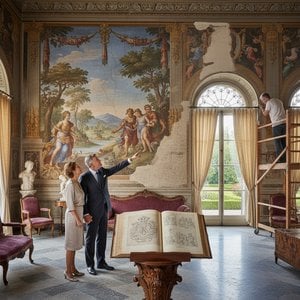
Verwandeln Sie Ihre Familiengeschichte in ein beeindruckendes Wandgemälde! Expertenrat & hochwertige Handwerkskunst für einzigartige Kunstwerke, die Generationen verbinden. Entdecken Sie jetzt!

Explore the fascinating history of art collectors in Western painting, from Renaissance patrons to modern museum founders. Discover how portraits revealed status, shaped artistic movements & built lasting legacies. Expert insights at WahooArt.
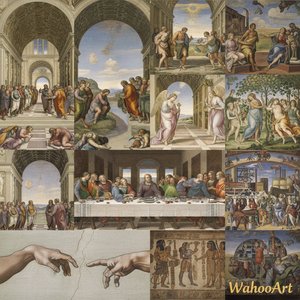
Entdecken Sie die 10 legendärsten Fresken der Kunstgeschichte! Von Michelangelo bis Raffael – erfahren Sie die Geschichten hinter den Meisterwerken, Techniken & Farben. Hochwertige Kunstreproduktionen für Ihr Zuhause finden Sie auf WahooArt.com.


Bleiben Sie über die neuesten Kunstnachrichten, exklusive Angebote und Dekorationsideen auf dem Laufenden.
Erzählen Sie uns von Ihrem Projekt und unsere Kunstexperten erstellen für Sie 3 personalisierte Kunstvorschläge.
Wir kuratieren 3 Optionen exklusiv für Sie – kostenlos!
 Teilen








 Weiterlesen
 Die Glasoption ist nur in Größen unter 110 cm verfügbar.


