In echtem Maßstab anzeigen In AR an der Wand sehen Zum Druck wechseln Zum digitalen Bild wechseln Versenden als Grußkarte
Details anzeigen Leitfaden öffnen Zu Favoriten hinzufügen Herunterladen Ähnliche Objekte Röntgenaufnahme Diashow Besucherstatistiken

Actresses

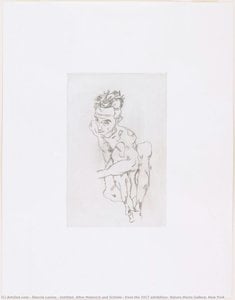
Explore Joseph Beuys' 'Actresses,' a poignant graphite drawing capturing two figures in movement. This preparatory sketch reveals his expressive style and explores themes of performance & humanity.

Joseph Beuys (1921-1986): Visionärer Künstler & Fluxus-Pionier! Entdecken Sie seine 'Soziale Plastik' – aus Filz, Fett & revolutionären Ideen. Kunst als gesellschaftlicher Wandel!

Die auf dieser Seite dargestellten Kunstwerke sind urheberrechtlich geschützt, was bedeutet, dass wir keine identische Reproduktion rechtmäßig erstellen oder verkaufen dürfen. Dieser Schutz wird durch internationale Abkommen wie die Berner Übereinkunft und durch nationale Gesetze, einschließlich derer, die von den ... festgelegt wurden US-Urheberrecht – Titel 17.

Als respektvolle und rechtlich einwandfreie Alternative bieten wir individuelle, handgemalte Kunstwerke an, die vom Original inspiriert sind. Unsere geschickten und professionellen Künstler studieren sorgfältig den Stil, die Stimmung und das künstlerische Wesen des Originals, um ein neues, einzigartiges Werk zu schaffen, das dasselbe Gefühl hervorruft – während es zugleich eine eigenständige Originalschöpfung bleibt.

Diese Methode entspricht vollumfänglich den Urheberrechtsbestimmungen, da sie keine Kopie oder Vervielfältigung des geschützten Kunstwerks darstellt. Stattdessen handelt es sich um eine kreative Neuinterpretation – ein neues Gemälde, das vom Original inspiriert, aber nicht identisch mit ihm ist.

Handgefertigte Ölreproduktion

Handgemaltes Ölgemälde auf Leinwand in Ihrer Wunschgröße und mit Rahmen, auf Bestellung von unseren Künstlern angefertigt. ( Zum Druck wechseln Zum digitalen Bild wechseln)

Corner sample of the P118B picture frame: moulded polystyrene, 5 cm wide and 3 cm thick
P118B 10
Corner sample of the P118H picture frame: moulded polystyrene, 5 cm wide and 3 cm thick
P118H 10
Corner sample of the P118W picture frame: moulded polystyrene, 5 cm wide and 3 cm thick
P118W 10
Corner sample of the P438Z picture frame: moulded polystyrene, 5.5 cm wide and 3.5 cm thick
P438Z 10
Corner sample of the P508JH picture frame: moulded polystyrene, 7 cm wide and 3.5 cm thick
P508JH 12
Corner sample of the P508YH picture frame: moulded polystyrene, 7 cm wide and 3.5 cm thick
P508YH 12
Corner sample of the P805H picture frame: moulded polystyrene, 5 cm wide and 3.5 cm thick
P805H 10
Corner sample of the P805Z picture frame: moulded polystyrene, 5 cm wide and 3.5 cm thick
P805Z 10
Corner sample of the P919BZ picture frame: moulded polystyrene, 7 cm wide and 3.5 cm thick
P919BZ 10
Corner sample of the P919G picture frame: moulded polystyrene, 7 cm wide and 3.5 cm thick
P919G 10
Corner sample of the P919XJ picture frame: moulded polystyrene, 7 cm wide and 3.5 cm thick
P919XJ 10
Corner sample of the P959ZH picture frame: moulded polystyrene, 5 cm wide and 3 cm thick
P959ZH 10
Corner sample of the P968JZ picture frame: moulded polystyrene, 6 cm wide and 4 cm thick
P968JZ 12
Corner sample of the W106C picture frame: solid wood, 5 cm wide and 3 cm thick
W106C 8
Corner sample of the W218G picture frame: solid wood, 5 cm wide and 3 cm thick
W218G 10
Corner sample of the W218JH picture frame: solid wood, 5 cm wide and 3 cm thick
W218JH 8
Corner sample of the W218Y picture frame: solid wood, 5 cm wide and 3 cm thick
W218Y 10
Corner sample of the W307PJ picture frame: solid wood, 6 cm wide and 3 cm thick
W307PJ 10
Corner sample of the W316G picture frame: solid wood, 6 cm wide and 3 cm thick
W316G 10
Corner sample of the W316PJ picture frame: solid wood, 6 cm wide and 3 cm thick
W316PJ 8
Corner sample of the W316Y picture frame: solid wood, 6 cm wide and 3 cm thick
W316Y 10
Corner sample of the W398PJ picture frame: solid wood, 5 cm wide and 3 cm thick
W398PJ 8
Corner sample of the W4111J picture frame: solid wood, 6.5 cm wide and 3.5 cm thick
W4111J 10
Corner sample of the W500HY picture frame: solid wood, 7 cm wide and 5 cm thick
W500HY 15
Corner sample of the W500JH picture frame: solid wood, 7 cm wide and 5 cm thick
W500JH 15
Corner sample of the W692G picture frame: solid wood, 8 cm wide and 4 cm thick
W692G 12
Corner sample of the W849H picture frame: solid wood, 5 cm wide and 3 cm thick
W849H 8
Corner sample of the W940BG picture frame: solid wood, 7.5 cm wide and 4.5 cm thick
W940BG 15
Corner sample of the W953PJ picture frame: solid wood, 6 cm wide and 3.5 cm thick
W953PJ 8

Standardformat
individuell anpassbar
CM
INCH

Wählen Sie aus unseren vordefinierten Formaten, die den ursprünglichen Proportionen des Kunstwerks entsprechen.

Breite
Höhe

Sie können Ihre eigenen Maße eingeben, um einen bestimmten Rahmen oder Platz auszufüllen. Wenn die gewählte Größe nicht den Proportionen des Originalbildes entspricht, werden wir das Kunstwerk entweder beschneiden oder das Gemälde durch zusätzliche, handgemalte Elemente erweitern. Ein digitales Mockup wird Ihnen zur Genehmigung zugesandt, bevor die Produktion beginnt.
Bitte beachten Sie, dass die Bildschirmvorschau nicht die tatsächliche Beschneidung oder Erweiterung widerspiegelt. Nur das Mockup zeigt die endgültige Komposition exakt an.
Obwohl Sondermaße verfügbar sind, empfehlen wir, eine Größe aus der vordefinierten Liste zu wählen, um die ursprünglichen Proportionen beizubehalten.

Beispiele für Anpassungsmöglichkeiten: Gesicht durch Kundenfoto ersetzen; Haustier hinzufügen (z. B. Katze durch Hund ersetzen); eine versteckte Nachricht im Hintergrund einfügen; Hintergrundlandschaft oder -elemente ändern.
Nach der Bestellung wird das WahooArt.com-Team dem Kunden Anweisungen per E-Mail zusenden und eine Mockup-Vorschau bereitstellen.

Weltweiter Versand () in nur 3 bis 4 Wochen statt der üblichen 5 Wochen. (10 Oktober). Keine Kompromisse bei der Qualität.

Kostenloser weltweiter Expressversand
Hochwertige Leinenleinwand
Vollständiger Versicherungsschutz beim Versand
Zollgebühren-Rückerstattungsgarantie
Garantie für exakte Farbtreue
100-tägiges Rückgaberecht (nur bei Mängeln)
100% Geld-zurück-Garantie
Angebot für Mengenrabatt

Gesamtpreis

€ 234

Actresses

Reproduktionsmedium

Format der Reproduktion

-

Gesamtpreis

€ 234

Kurzübersicht

  • Artist: Joseph Beuys
  • Year: 1958
  • Dimensions: 21 x 29 cm
  • Movement: Neo-Dada
  • Medium: Graphite/Charcoal
  • Notable elements: Loose lines, gestural
  • Title: Actresses

Kunst-Quiz

Jede Frage hat nur eine richtige Antwort.

Frage 1:
What artistic movement is most closely associated with Joseph Beuys’s work ‘Actresses’?
Frage 2:
The drawing utilizes loose, sketchy lines. What does this technique primarily convey about the artwork?
Frage 3:
What is the predominant color palette used in ‘Actresses’?
Frage 4:
According to the description, what is a notable feature of the background in ‘Actresses’?
Frage 5:
In what year was ‘Actresses’ created by Joseph Beuys?

The Weight of Performance: Joseph Beuys’s “Actresses”

Joseph Beuys's "Actresses," rendered in 1958 on a deceptively simple pale beige background, isn’t merely a sketch; it’s a distilled essence of performance, vulnerability, and the potent symbolism inherent within the human form. This preparatory drawing, a glimpse into the mind of one of the 20th century's most radical artists, immediately draws the viewer in with its loose, gestural lines – a deliberate rejection of rigid representation in favor of capturing a fleeting moment of embodied expression. The two figures, presented in profile and seemingly caught mid-movement, possess an immediate theatricality, hinting at dancers, performers, or perhaps even the silent drama of everyday life. Beuys wasn’t interested in replicating reality; he sought to translate feeling onto paper, imbuing his subjects with a palpable sense of energy and contained emotion.

Composition and Technique: A Study in Movement

The composition is strikingly asymmetrical, defying traditional notions of balance. The figures aren’t centered within the frame, instead occupying distinct points that create a dynamic imbalance—a visual representation of movement itself. Vertical lines, subtly introduced from the top edge, provide an anchor and structure to this otherwise fluid arrangement, preventing the drawing from dissolving into pure abstraction. Beuys's technique is characterized by a masterful use of hatching and cross-hatching, skillfully employed to build volume and shadow without resorting to precise shading. The loose, sketchy lines, rendered with charcoal or graphite, contribute significantly to the overall sense of spontaneity and immediacy—as if the artist were capturing a fleeting impression rather than meticulously crafting a finished image. Notice how he uses varying line weights to emphasize certain areas, drawing attention to the contours of the figures’ limbs and torsos.

Color Palette and Symbolism: Earthy Echoes

The muted color palette—dominated by earthy browns, ochres, and subtle touches of purple—reinforces the drawing's emotional depth. The beige background acts as a neutral canvas, allowing the figures to command attention without distraction. The small area of mauve on one figure introduces an element of mystery or perhaps even melancholy, hinting at hidden emotions beneath the surface. Beyond mere color choices, Beuys’s use of earth tones speaks to a deep connection with nature and the primal roots of human experience. Considering his later work focused heavily on social sculpture and the integration of art into everyday life, this grounding in natural materials and forms is profoundly significant. The elongated figures themselves can be interpreted as symbols of theatricality—a deliberate exaggeration that highlights the performative aspect of existence.

Historical Context and Artistic Influence

“Actresses” was created during a period of immense social and political upheaval in post-war Germany, a time when artists were grappling with questions of identity, purpose, and the role of art in society. Beuys’s work reflects this broader context, aligning with the burgeoning Expressionist movement and foreshadowing the rise of Fluxus and other avant-garde artistic practices. The drawing's emphasis on gesture and emotion anticipates the performance art that would become increasingly prominent in the latter half of the 20th century. Furthermore, it shares affinities with Surrealism, particularly in its exploration of the subconscious and its use of symbolic imagery. It’s worth noting that Beuys himself was deeply influenced by Carl Linnaeus's *Systema Naturae*, a book he rescued from a Nazi book burning—an event that profoundly shaped his artistic philosophy and his belief in art as a tool for social transformation. The drawing, therefore, can be seen as a meditation on the fragility of existence and the enduring power of human connection.

This preparatory sketch offers a rare glimpse into the creative process of one of the 20th century’s most visionary artists. “Actresses” is more than just a drawing; it's a testament to Beuys’s profound understanding of the human condition and his unwavering commitment to exploring the transformative potential of art.

Fragen & Antworten

Wie alt war Boyss, als „Actresses“ im Jahr 1958 geschaffen wurde?

Als "Actresses" im Jahr 1958 entstand, war Boyss – geboren 1921 – 37 Jahre alt.

Welcher Strömung und welcher Epoche ist "Actresses" von Boyss zuzuordnen?

"Actresses" gehört der Neo-Dada-Strömung an, und sein Schöpfer war in der Ära der Moderne tätig.

Was ist das Entstehungsdatum von "Actresses" von Boyss?

"Actresses" stammt aus dem Jahr 1958. Dieses Datum ordnet das Werk in die Schaffensperiode von Boyss sowie in dessen Epoche ein.

Wie kann ich "Actresses" von Boyss als Diashow ansehen?

Das Diaporama zu „Actresses“ kann auf der Diashow-Seite des Kunstwerks angesehen werden.

Wie harmonisch sind die Farben von "Actresses" von Boyss?

Die Farbharmonie von „Actresses“ wird als Unified Palette beschrieben.

Wer hat "Actresses" erschaffen?

"Actresses" wurde von Boyss geschaffen. Die Informationen auf dieser Seite beschreiben das Originalwerk von Boyss.

Sind die Farben von "Actresses" von Boyss leuchtend oder gedämpft?

"Actresses" von Boyss ist mit einer Sättigung von Balanced Soft und einer Intensität von Vivid festgehalten.


Biografie des Künstlers

Joseph Beuys: Ein Leben für die Soziale Plastik

  • Geboren: Krefeld, Deutschland (1921)
  • Gestorben: 1986

Joseph Beuys war ein tiefgreifend einflussreicher deutscher Künstler, der traditionelle künstlerische Grenzen überschritt. Er gilt als eine Schlüsselfigur in Fluxus, Happenings und Performance Art, aber sein Einfluss reicht weit über diese Bewegungen hinaus. Beuys’ Werk umfasste Skulptur, Installation, Grafik, Theorie und Pädagogik, allesamt miteinander verwoben mit Konzepten des Humanismus, der Sozialphilosophie und der Anthroposophie. Sein bedeutendster Beitrag war wohl das Konzept der „Sozialen Plastik“, eine ganzheitliche Vision, in der Kreativität eine entscheidende Rolle bei der Gestaltung der Gesellschaft und Politik spielt – ein Gesamtkunstwerk, das die partizipatorische Einbindung beinhaltet.

Frühes Leben und Einflüsse

Beuys wurde in einer Kaufmannsfamilie geboren und erlebte eine Umsiedlung von Krefeld nach Kleve. Seine Ausbildung offenbarte ein Talent zum Zeichnen und ein breites Spektrum an Interessen, darunter Musik (Klavier und Cello), nordische Geschichte, Mythologie und die Naturwissenschaften. Ein entscheidender Moment ereignete sich 1933, als er als junger Junge Carl Linnaeus’ Systema Naturae aus einem Nazi-Buchverbot rettete – ein Ereignis, das später in seiner künstlerischen Praxis widerhallen sollte.

  • Frühkindliche Ausbildung: Besuchte die Grund- und Realschule in Kleve.
  • Künstlerische Anfänge: Studierte unter dem flämischen Maler Achilles Moortgat.
  • Wehrdienst: Meldete sich 1941 der Luftwaffe an und erlebte 1944 einen Flugzeugabsturz in der Krim. Der anschließende Mythos von seiner Rettung durch tatarische Stämme, mit Filz und Fett, wurde zu einer zentralen Säule seiner künstlerischen Identität und Materialwahl. Obwohl die Aufzeichnungen diese Darstellung bestreiten, nahm Beuys sie als grundlegende Erzählung an.

Die Entwicklung der Sozialen Plastik

Nach dem Zweiten Weltkrieg studierte Beuys an der Kunstakademie Düsseldorf unter Joseph Enseling und später Ewald Mataré. Sein Engagement mit der Anthroposophie, insbesondere der Philosophie Rudolf Steiners, prägte tiefgreifend seine Weltsicht und seinen künstlerischen Ansatz. Er wandte sich von traditioneller gegenstandsbezogener Kunst ab hin zu einer konzeptionellen und prozessorientierten Praxis.

  • Formale Ausbildung: Studierte Bildhauerei an der Kunstakademie Düsseldorf.
  • Philosophische Einflüsse: Tief beeinflusst von Rudolf Steiners Anthroposophie, die den direkten Umgang mit der Realität und praktische Anwendung betonte.
  • Das Konzept der Sozialen Plastik: Beuys sah Kunst als eine transformative Kraft an, die in der Lage ist, die Gesellschaft umzugestalten. Er glaubte, dass jeder Mensch kreatives Potenzial besitzt und an diesem Prozess teilnehmen kann, wodurch die Grenzen zwischen Künstler, Kunstwerk und Publikum verschwimmen. Dieses Konzept bildete die Grundlage für seine zahlreichen Aktionen, Installationen und pädagogischen Initiativen.

Wichtige Werke und künstlerische Praxis

Beuys’ künstlerische Praxis war äußerst vielfältig und umfasste Performance Art, Installationen, Zeichnungen, Skulpturen und politische Aktivität. Er verwendete häufig unkonventionelle Materialien wie Filz, Fett, Honig, Ton, Asphalt und Steine und investierte sie mit symbolischer Bedeutung. Seine Performances beinhalteten oft ritualistische Handlungen und den direkten Kontakt mit der Öffentlichkeit.

  • Filzkostüme: Ikonische Werke, bei denen Beuys ein Filzanzug trug, der Wärme, Schutz und Verbindung zur Natur symbolisierte.
  • Fettinstallationen: Verwendete Fett als Symbol für Energie, Heilung und Transformation.
  • "Ich mag lernen": Eine Performance von 1965, bei der Beuys mit Steinen und Honig vor einem Schaufenster saß und die Zuschauer einlud, ihr Wissen zu teilen.
  • "Blitz mit Hirsch im Scheinwerfer": Eine Bronzeskulptur, die die ursprünglichen Kräfte der Natur und des menschlichen Bewusstseins darstellt.
  • Politische Aktivität: Er beteiligte sich aktiv an politischen Debatten und gründete die Freie Internationale Zone (FIZ) bei documenta 7, einen Raum für künstlerisches Experimentieren und sozialen Dialog.

Vermächtnis und historische Bedeutung

Joseph Beuys gilt weithin als einer der wichtigsten Künstler des 20. Jahrhunderts. Sein radikaler Ansatz in der Kunst stellte herkömmliche Vorstellungen von Kreativität und Urheberschaft in Frage und betonte die Rolle der Teilnahme und sozialen Einbindung. Er erweiterte die Definition von Kunst über ästhetische Anliegen hinaus, um politische, ökologische und spirituelle Dimensionen einzubeziehen. Sein Konzept der Sozialen Plastik inspiriert weiterhin Künstler, Aktivisten und Denker und festigt sein Vermächtnis als Visionär, der sowohl Kunst als auch Gesellschaft verändern wollte.

Boyss

Boyss

1921 - 1986 , Deutschland

Eckdaten zum Künstler

  • Artistic Movement Or Style:
    • Fluxus
    • Happening
    • Performance Art
  • Artists Or Movements Influenced By This Artist: ['Neo-Expressionismus']
  • Artists Who Influenced This Artist:
    • Achilles Moortgat
    • Wilhelm Lehmbruck
    • Rudolf Steiner
  • Date Of Birth: 12. Mai 1921
  • Date Of Death: 23. Januar 1986
  • Full Name: Joseph Beuys
  • Nationality: Deutsch
  • Notable Artworks:
    • Seminar mit Joseph Beuys
    • I Like to Learn
    • Blitz mit Hirsch im Schein
    • Fett Ecke
    • Königstochter sieht Island
  • Place Of Birth: Krefeld, Deutschland