Vorschau anzeigenVorschau anzeigen In AR erlebenIn AR erleben Handgemalte Reproduktion bestellen Handgemalte Reproduktion bestellenZum digitalen Bild wechseln Zum digitalen Bild wechseln VersendenVersenden
Details anzeigenDetails anzeigen Zu Favoriten hinzufügen Zu Favoriten hinzufügen HerunterladenHerunterladen Ähnliche ObjekteÄhnliche Objekte RöntgenaufnahmeRöntgenaufnahme DiashowDiashow StatistikenStatistiken

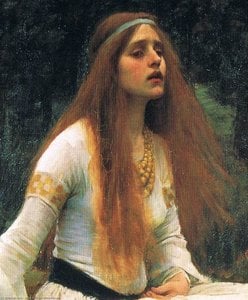
Boreas

Captured in breathtaking Pre-Raphaelite style, John William Waterhouse’s ‘Boreas’ portrays a young woman battling the wind amidst lush greenery—a mesmerizing depiction of Romanticism's emotive power. Explore this iconic masterpiece and bring timeless beauty into your home.

Entdecken Sie die faszinierenden präraphaelitischen & viktorianischen Gemälde von John William Waterhouse (1849-1917). Berühmt für Darstellungen aus Mythologie, Artussagen u. tragische Heldinnen wie Ophelia & Die Dame vom Schalott! Seine romantischen Meisterwerke erwarten Sie!

Giclée / Kunstdruck

Giclée- oder Leinwanddruck in Museumsqualität mit schneller Produktion und flexiblen Veredelungsoptionen. (Handgemalte Reproduktion bestellen Handgemalte Reproduktion bestellenZum digitalen Bild wechseln Zum digitalen Bild wechseln)

P118B $10
P118H $10
P118W $10
P438Z $10
P508JH $12
P508YH $12
P805H $10
P805Z $10
P919BZ $10
P919G $10
P919XJ $10
P959ZH $10
P968JZ $12
W106C $8
W218G $10
W218JH $8
W218Y $10
W307PJ $10
W316G $10
W316PJ $8
W316Y $10
W398PJ $8
W4111J $10
W500HY $15
W500JH $15
W692G $12
W849H $8
W940BG $15
W953PJ $8

Standardformat
individuell anpassbar
CM
INCH

Wählen Sie aus unseren vordefinierten Formaten, die den ursprünglichen Proportionen des Kunstwerks entsprechen.

Breite
Höhe

Sie können Ihre eigenen Maße eingeben, um ein bestimmtes Format oder einen speziellen Platz einzupassen. Wenn das von Ihnen gewählte Format nicht den Proportionen des Originalbildes entspricht, werden wir das Kunstwerk entweder beschneiden oder das Bild mit einem gespiegelten oder einfarbigen Rand erweitern. Ein digitaler Entwurf wird Ihnen zur Genehmigung zugesandt, bevor die Produktion beginnt.
Bitte beachten Sie, dass die Vorschau auf dem Bildschirm nicht den tatsächlichen Zuschnitt oder die Erweiterung widerspiegelt. Nur der Entwurf zeigt die endgültige Komposition präzise an.
Obwohl Sondermaße verfügbar sind, empfehlen wir die Auswahl eines Maßes aus der vordefinierten Liste, um die ursprünglichen Proportionen zu bewahren.

Weltweiter Versand () innerhalb von 2 Wochen statt der üblichen 4/5 Wochen. (10 September)

why_choose_icon
Kostenloser weltweiter Expressversand
why_choose_icon
Hochwertige Leinenleinwand
why_choose_icon
Umfassender Versicherungsschutz beim Versand
why_choose_icon
Zollgebühren-Rückerstattungsgarantie
why_choose_icon
Garantie für exakte Farbtreue
why_choose_icon
100-Tage-Rückgaberecht (nur bei Mängeln)
why_choose_icon
100% Geld-zurück-Garantie
why_choose_icon
Mengenrabatt verfügbar

Gesamtpreis

$ 68

reproduction

Boreas

Giclée / Kunstdruck

Format der Reproduktion

-

Gesamtpreis

$ 68

Eckdaten

  • Notable elements or techniques: Detailed brushwork
  • Artist: John William Waterhouse
  • Location: Private Collection
  • Movement: Pre-Raphaelite
  • Year: 1903
  • Title: Boreas
  • Subject or theme: Mythology

Kunst-Quiz

Jede Frage hat nur eine richtige Antwort.

Frage 1:
What mythological figure is depicted in Boreas?
Frage 2:
The painting showcases a characteristic Pre-Raphaelite style. What element best exemplifies this style?
Frage 3:
What is the primary emotion conveyed by the young woman in Boreas?
Frage 4:
Approximately how much money did Boreas sell for at its rediscovery?
Frage 5:
What technique is prominently used by Waterhouse to create texture and form in Boreas?

A Breath of Myth and Movement: Exploring John William Waterhouse’s Boreas

The Pre-Raphaelite Brotherhood, a collective of artists united by a fervent desire to recapture the spirit of early Renaissance art—before Raphael—established itself as one of the most influential movements in Victorian England. Among its luminaries shone John William Waterhouse (1849–1917), whose canvases consistently captivated audiences with their exquisite detail and evocative portrayal of romantic ideals. Boreas, completed in 1903, exemplifies this artistic ethos perfectly—a mesmerizing depiction of youthful vulnerability confronted by the untamed force of nature. Measuring 68 x 94 cm, this oil on canvas transcends mere representation; it’s an immersive experience into a realm where mythology intertwines with palpable emotion.

The Narrative Landscape: Subject Matter and Composition

At its core, Boreas recounts a tale drawn from Greek mythology—the tempestuous encounter between Boreas, the god of the north wind, and Chloris, a nymph transformed into Flora, the goddess of flowers. Waterhouse skillfully captures this dramatic moment, portraying Chloris standing amidst tall grasses and wildflowers, her hair billowing outwards as if caught in an invisible gale. The pyramidal composition directs the viewer’s gaze upwards towards Chloris's figure, emphasizing her centrality within the scene and conveying a sense of dynamism—a deliberate antithesis to the stillness often associated with classical art. Notably, a substantial tree trunk anchors the right side of the frame, grounding the ethereal landscape and providing visual stability amidst the swirling wind currents.

A Painter’s Palette: Style and Technique

Waterhouse's artistic style is undeniably Pre-Raphaelite—characterized by meticulous observation and an unwavering commitment to capturing beauty with uncompromising realism. He eschewed academic conventions, prioritizing emotional intensity over slavish adherence to established rules. The artist’s technique speaks volumes about his ambition; he employs layered brushstrokes to build up texture and form, creating a surface that vibrates with subtle nuances of color and light. Vibrant hues dominate the palette—primarily blues and greens reflecting the verdant surroundings—yet these tones are punctuated by warmer shades of yellow and orange emanating from the blossoms, generating a harmonious interplay of contrasts. The diffused lighting enhances the dreamlike atmosphere, casting gentle shadows that accentuate the contours of Chloris’s form and contributing to an overall impression of serene vulnerability.

Echoes of Antiquity: Historical Context and Influence

Boreas emerged during a period of artistic revival fueled by renewed interest in classical art and literature—a trend reflected in Waterhouse's broader oeuvre. Like many Pre-Raphaelites, he drew inspiration from mythology and folklore, transforming narratives into visual feasts for the senses. The painting’s rediscovery in the mid-1990s sparked considerable excitement within the art world, securing a record price at auction—a testament to Waterhouse's enduring legacy and Boreas’s profound artistic merit. Furthermore, consider his fellow Pre-Raphaelites: Dante Gabriel Rossetti, William Holman Hunt, and Edward Burne-Jones – all similarly invested in reviving artistic traditions of earlier eras.

Symbolism Beyond Sight: Emotional Resonance

Beyond its visual splendor, Boreas resonates with deeper symbolic meanings. The wind embodies change, disruption, and even destructive potential—yet Chloris confronts it with unwavering grace and composure. Her posture conveys both fear and acceptance—a poignant acknowledgment of the inescapable forces shaping human experience. Waterhouse’s masterful depiction captures not merely a scene from mythology but also an exploration of the human spirit's capacity for resilience amidst adversity. Boreas remains a captivating masterpiece, inviting contemplation on themes of beauty, vulnerability, and the enduring power of nature to inspire awe and wonder.

Über den Künstler

Frühes Leben und Einflüsse

John William Waterhouse, ein bedeutender englischer Maler, wurde 1849 in Rom zu englischen Eltern geboren. Sein frühes Leben in Italien beeinflusste sein späteres Werk maßgeblich, das oft Szenen aus dem antiken Rom oder der römischen Mythologie darstellte. Im Jahr 1854 kehrten die Waterhouses nach England zurück und ließen sich in South Kensington, London, in der Nähe des neu gegründeten Victoria and Albert Museums nieder.

Aufstieg zur Prominenz

Waterhouses künstlerische Reise begann mit klassischen Themen, die an Alma-Tadema und Frederick Leighton erinnerten. Seine frühen Werke wurden in der Dudley Gallery und der Society of British Artists ausgestellt, wobei seine 1874 entstandene Darstellung von Schlaf und seinem Halbbruder Tod auf der Sommerausstellung der Royal Academy gezeigt wurde. Dies markierte den Beginn seiner erfolgreichen Karriere, wobei seine Gemälde bis 1916 häufig in den jährlichen Ausstellungen vertreten waren.

Präraffaelitische Wiederbelebung und bemerkenswerte Werke

Waterhouses spätere Arbeit war durch die Annahme des präraffaelitischen Stils gekennzeichnet, wie man in seinen Darstellungen von Frauen aus der griechischen Mythologie und der Artus-Sage erkennen kann. Zu seinen bemerkenswertesten Werken gehören:
  • The Lady of Shalott, eine Studie von Elaine von Astolat, die er in drei verschiedenen Versionen (1888, 1894 und 1916) malte.
  • Ophelia, wobei die bekannteste Version sie kurz vor ihrem Tod zeigt, wie sie Blumen in ihr Haar flechtet, während sie auf einem Baumstamm über einem See sitzt.
  • After the Dance (1876), das in der Sommerausstellung dieses Jahres eine herausragende Position einnahm.

Leben und Vermächtnis

Waterhouse heiratete 1883 Esther Kenworthy, die Tochter eines Kunstlehrers. Er wurde 1895 zum ordentlichen Akademiker gewählt und unterrichtete an der St. John's Wood Art School. Waterhouse verstarb am 10. Februar 1917. Sehen Sie mehr von John William Waterhouses Werken auf WahooArt: [https://WahooArt.com/@/john william waterhouse](https://WahooArt.com/@/john-william-waterhouse) | /de/art/show/art-d3c5zp-de/ (Top 5 berühmter Pop Art Gemälde aller Zeiten) [https://WahooArt.com/@@/9geqys-john-william-waterhouse-thisbe](https://WahooArt.com/@@/9geqys-john-william-waterhouse-thisbe) (Gemälde von John William Waterhouse: Thisbe) Erkunden Sie mehr auf Wikipedia: [https://en.wikipedia.org/wiki/john_william_waterhouse](https://en.wikipedia.org/wiki/john_william_waterhouse) [https://en.wikipedia.org/wiki/art_of_the_united_kingdom](https://en.wikipedia.org/wiki/art_of_the_united_kingdom) [https://en.wikipedia.org/wiki/victorian_painting](https://en.wikipedia.org/wiki/victorian_painting)

John William Waterhouse

John William Waterhouse

1849 - 1917 , Italien

Kurzinfos

  • Beeinflusste Künstler:
    • Alma-Tadema
    • Frederic Leighton
  • Bemerkenswerte Werke:
    • The Lady of Shalott
    • Ophelia
    • After the Dance
    • Ariadne
    • Thisbe
  • Geburtsdatum: 1849
  • Geburtsort: Rom, Italien
  • Künstlerische Bewegung: Präraffaeliten
  • Nationalität: Englisch
  • Sterbedatum: 1917
  • Vollständiger Name: John William Waterhouse
Entdecken Sie Kunstwerke, die nach Themen, Stilen und Merkmalen sortiert sind.