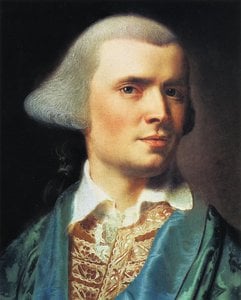
A Portrait of Enlightenment: Reverend Thomas Cary by John Singleton Copley
John Singleton Copley’s “Reverend Thomas Cary,” painted in 1773, is more than just a portrait; it's a meticulously crafted window into the intellectual and artistic currents of the American colonies. This remarkable work, now residing within the hallowed halls of the Museum of Fine Arts in Boston, exemplifies Copley’s mastery of Neo-Classicism – a style that sought to elevate art through order, clarity, and an idealized representation of human virtue. The painting immediately draws the eye to its subject: Reverend Cary himself, presented with a dignified composure that speaks volumes about the era's emphasis on moral leadership and civic responsibility.
Neo-Classical Grandeur and Boston’s Cultural Landscape
Created during a pivotal moment in American history – the Age of Enlightenment – “Reverend Thomas Cary” reflects the profound influence of ancient Greek and Roman art. Copley, deeply immersed in this movement, skillfully employs classical principles of composition and perspective to create a sense of monumental grandeur. The Reverend’s seated pose, reminiscent of depictions of Roman senators, reinforces his authority and intellectual standing. Furthermore, the backdrop – a meticulously arranged bookshelf brimming with volumes – isn't merely decorative; it symbolizes Cary’s erudition and commitment to learning, aligning perfectly with the Enlightenment’s core values of reason and knowledge.
Technical Brilliance: Copley’s Signature Style
- Oil on Canvas: Copley's choice of oil paint allowed for a rich, luminous finish, capturing the subtle textures of Cary’s robe and the reflective quality of the books.
- Realism and Detail: The artist’s dedication to realism is evident in every brushstroke – from the delicate folds of the fabric to the individual details of the Reverend's face. Copley was renowned for his ability to render human features with astonishing accuracy, imbuing his subjects with a palpable sense of life.
- Color Palette: The restrained yet sophisticated color palette – dominated by blues and pinks – contributes significantly to the painting’s overall effect, conveying a sense of solemnity and refinement.
Symbolism and Emotional Resonance
Beyond its formal qualities, “Reverend Thomas Cary” is rich in symbolic meaning. The Reverend's clasped hands suggest piety and devotion, while the bookshelf represents a repository of wisdom and knowledge. Even the clock hanging above him subtly alludes to the passage of time – a constant reminder of mortality and the importance of living a virtuous life. Copley masterfully evokes a sense of quiet contemplation and dignified seriousness, inviting viewers to reflect on themes of faith, intellect, and civic duty.
Owning a Masterpiece: High-Quality Reproductions Available
Experience the timeless beauty and intellectual depth of “Reverend Thomas Cary” with a meticulously crafted oil painting reproduction. Available through WahooArt.com, these reproductions capture every nuance of Copley’s original work, allowing you to bring this iconic portrait into your home or office. A testament to American artistic heritage, this piece is an investment in beauty and history.



 Vorschau anzeigen
 Handgemalte Reproduktion bestellen
 Versenden
 Teilen
 Details anzeigen

 Herunterladen
 Ähnliche Objekte
 Röntgenaufnahme
 Diashow
 Stats
Stats


 Weiterlesen






































 Die Glasoption ist nur für Größen unter 110 cm verfügbar.