Kostenlose Kunstberatung

x
Gemälde kaufen Gemälde kaufenBild kaufen Bild kaufen VersendenVersenden
Details anzeigenDetails anzeigen Zu Favoriten hinzufügen Zu Favoriten hinzufügen HerunterladenHerunterladen Ähnliche ObjekteÄhnliche Objekte RöntgenaufnahmeRöntgenaufnahme Diashow anzeigenDiashow anzeigen

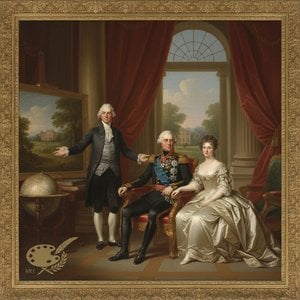
George Boone Roupell

Admire John Singleton Copley’s ‘George Boone Roupell,’ a stunning 1779 portrait capturing elegance and sophistication. Explore colonial art & Copley's masterful realism in this timeless piece.

Entdecken Sie John Singleton Copley (1738-1815), Pionier der anglo-amerikanischen Malerei! Berühmte Porträts & innovative Darstellungen des Alltagslebens.

Giclée / Kunstdruck

Giclée- oder Leinwanddruck in Museumsqualität mit schneller Produktion und flexiblen Veredelungsoptionen.

P118B $10
P118H $10
P118W $10
P438Z $10
P508JH $12
P508YH $12
P805H $10
P805Z $10
P919BZ $10
P919G $10
P919XJ $10
P959ZH $10
P968JZ $12
W106C $8
W218G $10
W218JH $8
W218Y $10
W307PJ $10
W316G $10
W316PJ $8
W316Y $10
W398PJ $8
W4111J $10
W500HY $15
W500JH $15
W692G $12
W849H $8
W940BG $15
W953PJ $8

Standard
custom
CM
INCH

Wählen Sie aus unseren vordefinierten Größen, die den ursprünglichen Proportionen des Kunstwerks entsprechen.

Breite
Höhe

Sie können Ihre eigenen Maße eingeben, um ein bestimmtes Format oder einen speziellen Platz einzupassen. Wenn das von Ihnen gewählte Format nicht den Proportionen des Originalbildes entspricht, werden wir das Kunstwerk entweder beschneiden oder das Bild mit einem gespiegelten oder einfarbigen Rand erweitern. Ein digitaler Entwurf wird Ihnen zur Genehmigung zugesandt, bevor die Produktion beginnt.
Bitte beachten Sie, dass die Vorschau auf dem Bildschirm nicht den tatsächlichen Zuschnitt oder die Erweiterung widerspiegelt. Nur der Entwurf zeigt die endgültige Komposition präzise an.
Obwohl Sondermaße verfügbar sind, empfehlen wir die Auswahl eines Maßes aus der vordefinierten Liste, um die ursprünglichen Proportionen zu bewahren.

Weltweiter Versand () innerhalb von 2 Wochen statt der üblichen 4/5 Wochen. (6 Juli)

why_choose_icon
Kostenloser weltweiter Expressversand
why_choose_icon
Hochwertige Leinenleinwand
why_choose_icon
Umfassender Versicherungsschutz beim Versand
why_choose_icon
Zollsteuer-Rückerstattungsgarantie
why_choose_icon
Garantie für echte Farbtreue
why_choose_icon
60-Tage-Rückgaberecht (nur bei Mängeln)
why_choose_icon
100% Geld-zurück-Garantie
why_choose_icon
Mengenrabatt verfügbar

Gesamtpreis

-

reproduction

George Boone Roupell

Giclée / Kunstdruck

Größe der Reproduktion

-

Endpreis aller Optionen

-

Eckdaten auf einen Blick

  • Notable elements: Detailed portraiture
  • Subject or theme: Portrait of a man
  • Title: George Boone Roupell
  • Year: 1779
  • Medium: Oil on canvas
  • Movement: Neoclassical
  • Location: NMAAHC, Smithsonian

Beschreibung des Sammlerstücks

A Portrait of Dignified Reserve: Unveiling George Boone Roupell

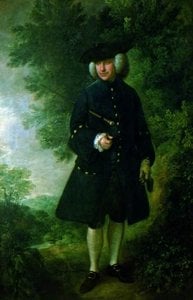
John Singleton Copley’s “George Boone Roupell,” painted in 1779, isn't merely a likeness; it’s a carefully constructed tableau of colonial identity and restrained elegance. The portrait captures a man – George Boone Roupell himself – standing on what appears to be a rocky precipice, a subtle yet powerful landscape serving as the backdrop for his presence. Copley, a pivotal figure bridging the artistic worlds of England and America, masterfully employed his signature technique: an almost photographic realism combined with a keen understanding of light and shadow, creating a sense of palpable depth and immediacy. The painting’s strength lies not just in its accurate depiction of Roupell's features – the crispness of his jawline, the thoughtful cast of his eyes – but also in the subtle suggestion of character conveyed through posture and expression.

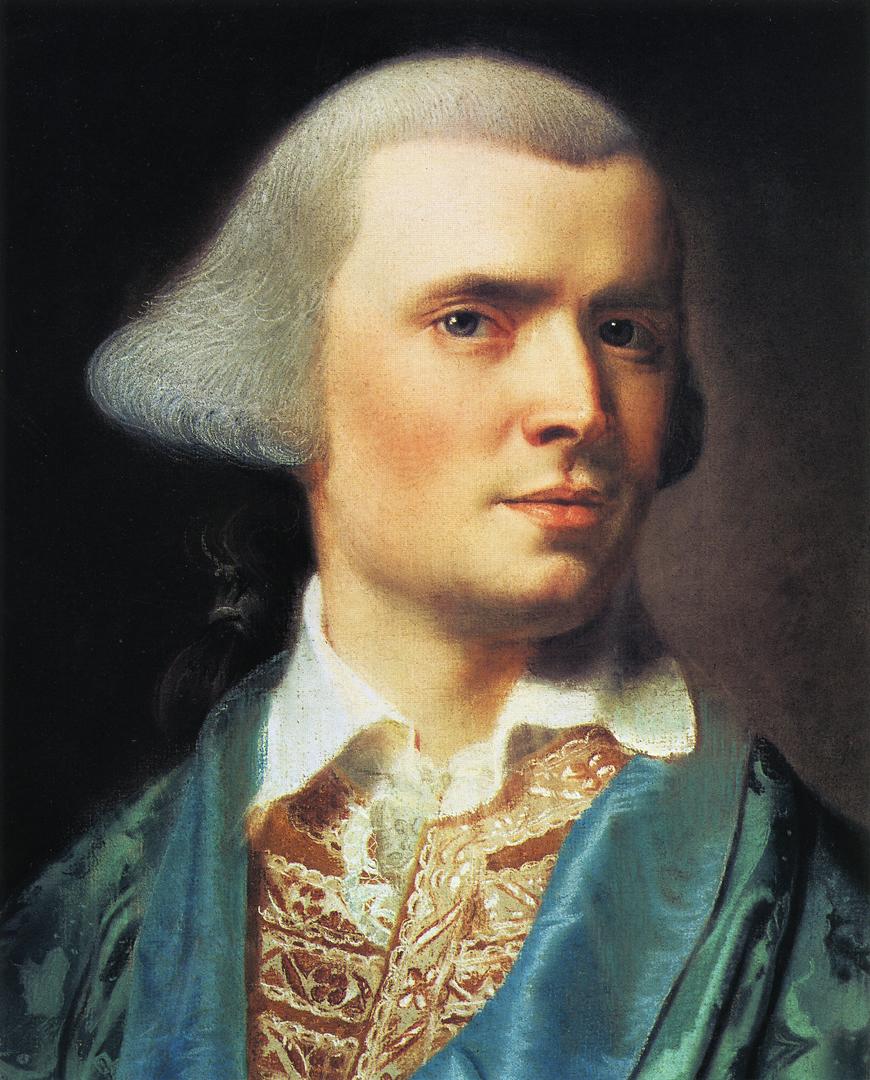
Self-Portrait by John Singleton Copley

The composition itself is meticulously balanced. Roupell’s dark clothing, a rich burgundy hue, anchors the figure against the lighter tones of the rocky terrain and the distant trees. The stark white stockings and black shoes provide a striking contrast, emphasizing his formality and status within colonial society. Notice how Copley uses light to sculpt Roupell's form – highlighting the texture of his coat, the curve of his hand resting on his walking stick, and the subtle shadows that define his face. This attention to detail speaks volumes about Copley’s dedication to capturing not just appearance but also the very essence of his subject.

The Context of Colonial Portraiture

To fully appreciate “George Boone Roupell,” it's essential to understand the broader context of portrait painting during the late 18th century in America. Portraits weren’t simply decorative; they were powerful statements of wealth, status, and social standing. Commissioning a portrait was an investment – a visible declaration of success and a way to secure one’s legacy. Copley, operating within this framework, skillfully navigated the expectations of his wealthy patrons while simultaneously forging a distinctly American artistic style. His work reflects both the influence of European traditions, particularly those of Sir Thomas Lawrence in England, and a growing desire to represent subjects authentically – capturing not just their outward appearance but also their inner character.

The painting’s setting—a rocky hillside—adds another layer of meaning. It suggests a connection to the land, a grounding force amidst the complexities of colonial life. The distant trees hint at the vastness and potential of America, while the rugged terrain speaks to resilience and fortitude – qualities valued in the early settlers.

Symbolism and Emotional Resonance

Beyond its technical brilliance, “George Boone Roupell” resonates with a quiet dignity and understated confidence. Roupell’s gaze is direct yet not confrontational; his posture suggests self-assuredness without arrogance. The walking stick, a common symbol of authority and experience, reinforces this impression. Copley doesn't offer us a dramatic or theatrical portrait; instead, he presents a carefully observed study of a man – a man of his time, embodying the values and aspirations of colonial society.

The painting’s emotional impact is subtle yet profound. It evokes a sense of stability, tradition, and quiet strength—qualities that are often associated with the early American experience. It's a portrait that invites contemplation, prompting us to consider not just the appearance of George Boone Roupell but also the story he represents.

A Legacy in Reproduction

Reproductions of “George Boone Roupell” offer an accessible way to appreciate Copley’s artistry and the historical context of this remarkable portrait. Whether displayed as a fine art print, canvas reproduction, or even incorporated into interior design schemes, this painting continues to captivate viewers with its technical mastery, nuanced symbolism, and enduring appeal. It serves as a poignant reminder of a pivotal moment in American history—a time of transformation, ambition, and the forging of a new national identity.


Biografie des Künstlers

Ein Pionier der anglo-amerikanischen Malerei (1738–1815)

John Singleton Copley, ein renommierter anglo-amerikanischer Maler, hat mit seinen fesselnden Porträts und Landschaftsbildern bleibende Spuren in der Kunstwelt hinterlassen. Geboren in Boston, Massachusetts, für Richard und Mary Singleton Copley, beide englisch-irischer Abstammung, ist Johns künstlerische Reise ein Beweis für sein angeborenes Talent und seine Hingabe.

Frühes Leben und Ausbildung

Obwohl es nur wenige Informationen über Johns formelle Ausbildung gibt, wird angenommen, dass er sich weitgehend autodidaktisch entwickelte und schon in jungen Jahren eine Neigung zur Kunst zeigte. Sein Stiefvater, Peter Pelham, ein Graveur und Maler, mag ihm einige Hinweise gegeben haben, doch der Großteil von Johns künstlerischer Entwicklung ist seinem eigenen Fleiß zuzuschreiben.

Künstlerische Beiträge

John Singleton Copleys Werk zeichnet sich durch Folgendes aus:
  • Porträtmalerei: Seine Porträts wohlhabender und einflussreicher Persönlichkeiten Neuenglands sind für ihre Detailgenauigkeit und die Einbeziehung von Artefakten bekannt, die das Leben der dargestellten Personen widerspiegeln.
  • Innovativer Stil: Copleys Tendenz, bürgerliche Subjekte mit Fokus auf ihren Alltag darzustellen, unterschied sich von der traditionellen Porträtmalerei seiner Zeit.
  • Künstlerische Bandbreite: Von Selbstporträts bis hin zu historischen Szenen demonstriert Johns Werk seine Vielseitigkeit und sein Können, eine breite Palette von Themen einzufangen.

Bemerkenswerte Werke und ihre Bedeutung

Zu John Singleton Copleys bekanntesten Werken gehören:

Vermächtnis und Einfluss

John Singleton Copleys Einfluss auf die Kunstwelt ist unbestreitbar. Sein innovativer Ansatz in der Porträtmalerei und seine Beiträge zur anglo-amerikanischen Malerei haben Generationen von Künstlern beeinflusst. Für ein tieferes Verständnis von Johns Werk und seiner Bedeutung besuchen Sie Wahoos John Singleton Copley Seite, die eine umfangreiche Sammlung seiner Kunstwerke bietet.

Weiterführende Informationen

Für weitere Informationen zur Geschichte der Malerei und ihrer Entwicklung konsultieren Sie bitte Wikipedias Artikel über die Geschichte der Malerei. Um Wahoos umfangreiche Sammlung zu erkunden, einschließlich Werke aus verschiedenen Epochen und Stilen, navigieren Sie durch Wahoos Burghley House (Stamford, USA) – ein verstecktes Juwel der amerikanischen Kunst und die Entdeckung der Kunstwerke des St Hilda’s College, Oxford, Großbritannien.
John Singleton Copley

John Singleton Copley

1738 - 1815 , Vereinigtes Königreich

Kurzinfos

  • Bemerkenswerte Werke:
    • Der Zusammenbruch des Earl of Chatham
    • Herr und Frau Ralph Izard
  • Geburtsdatum: 1738
  • Geburtsort (Stadt Und Land): Boston, Vereinigtes Königreich
  • Künstlerische Bewegung Oder Stil: Porträtmalerei, Realismus
  • Nationalität: Anglo-Amerikanisch
  • Sterbedatum: 1815
  • Vollständiger Name: John Singleton Copley
Entdecken Sie Kunstwerke, die nach Themen, Stilen und Merkmalen sortiert sind.