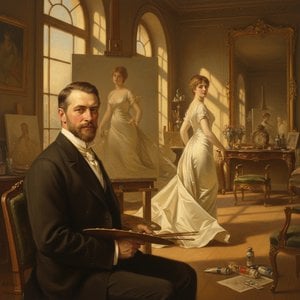
John Singer Sargent: Ein Leben in der Kunst
John Singer Sargent (1856–1925) war ein amerikanischer Expatriate-Künstler, der als “führender Porträtmaler seiner Generation” für die Edwardianische Oberschicht angesehen wurde. Seine Werke vereinen eine einzigartige Mischung aus technischem Brillanz, impressionistischen Einflüssen und psychologischem Verständnis.
Frühes Leben und Ausbildung
Geboren am 12. Januar 1856 in Florenz, Italien, der amerikanischen Eltern Fitzwilliam und Mary Newbold Sargent, erlebte John Singer Sargent ein reisendes Kindheit. Seine Eltern waren Expatriates, die sich häufig zwischen Frankreich, Deutschland, Italien und der Schweiz bewegten. Dieser Lebensstil förderte eine breite kulturelle Sensibilität, aber bedeutete eine weniger konventionelle Ausbildung. Statt einer formellen Schule konzentrierte sich die Ausbildung des jungen Sargent auf den Besuch von Museen und Kirchen in Europa.
Im Jahr 1874 begann Sargent bei dem französischen Porträtkünstler Carolus-Duran in Paris zu studieren. Diese Mentorschaft erwies sich als entscheidend. Duran betonte direktes Malen – eine Technik der Auftragsverarbeitung ohne Vorzeichnungen –, die Sargent’s bemerkenswerte technische Begabung und seine Fähigkeit, Personen mit erstaunlicher Geschwindigkeit und Genauigkeit darzustellen, schärfte.
Künstlerische Karriere und Stil
Sargents künstlerischer Output lässt sich im Allgemeinen in zwei Kategorien einteilen: Auftragsporträts und informelle Studien. Seine formellen Porträts, die oft wohlhabende und prominente Personen seiner Zeit darstellten, hielten an der Tradition des “Grand Manner” fest – wobei Eleganz, Status und psychologische Tiefe betont wurden.
Sargent verfolgte jedoch auch einen persönlicheren Stil in seinen Landschaften und Plein-Air-Studien. Diese Werke zeigen eine deutliche Affinität zum Impressionismus, der durch lockere Pinselstriche, lebendige Farbpaletten und die Betonung des Erfassens flüchtiger Momente von Licht und Atmosphäre gekennzeichnet ist.
Wichtige Werke und Leistungen
- Madame X (1884): Eines von Sargents bekanntesten Werken, dieses Porträt verursachte Kontroversen wegen seiner kühnen Darstellung der Gesellschaftsdame Virginie Amélie Avegno Gautreau.
- El Jaleo (1882): Eine dynamische und farbenfrohe Szene, die einen spanischen Flamenco-Tanz einfängt und Sargents Meisterschaft im Ausdruck von Bewegung und Licht demonstriert.
- Carnation, Lily, Lily, Rose (1886): Ein friedlicher und eindringlicher Gemälde, das zwei junge Mädchen zeigt, die Laternen in einem englischen Garten anzünden.
- A Dinner Table at Night (1882–83): Eine innovative Komposition, die die intime Atmosphäre eines Abendessens mit künstlichem Licht einfängt.
Einflüsse
Sargent war von einer vielfältigen Reihe von Künstlern und Bewegungen beeinflusst:
- Carolus-Duran: Sein Lehrer, der ihm eine direkte Maltechnik vermittelte.
- Diego Velázquez: Sargent bewunderte Velázquez’s meisterhafte Verwendung von Licht und Pinselstrich.
- Impressionismus: Die Betonung der Impressionisten auf das Erfassen flüchtiger Momente und atmosphärischer Effekte hatte einen tiefgreifenden Einfluss auf seine Landschaftsbilder.
Historische Bedeutung und Vermächtnis
Anfangs sah Sargent Kritik für seinen unkonventionellen Ansatz in der Porträtmalerei und seine Bereitschaft, traditionelle künstlerische Normen herauszufordern. Doch bis zum frühen 20. Jahrhundert hatte er sich als einer der führenden Künstler seiner Zeit etabliert.
In den 1980er Jahren gab es eine bedeutende Neubewertung Sargents Werks, insbesondere seiner zuvor übersehenen männlichen Nackte. Diese Wiederentdeckung offenbarte einen komplexeren und nuancierteren Künstler als bisher angenommen. Heute wird John Singer Sargent für seine technische Virtuosität, seine Fähigkeit, den Geist seiner Zeit einzufangen, und seinen nachhaltigen Beitrag zur amerikanischen Kunst gefeiert.
Seine Gemälde bieten ein faszinierendes Fenster in den Luxus und die sozialen Dynamiken der Edwardianischen Ära, während sie gleichzeitig seine eigene persönliche künstlerische Vision widerspiegeln. Seine Werke inspirieren weiterhin Künstler und fesseln das Publikum weltweit.



 Vorschau anzeigen
 Switch to Print
 Versenden
 Teilen
 Details anzeigen

 Herunterladen
 Ähnliche Objekte
 Röntgenaufnahme
 Diashow
 Stats
Stats


 Weiterlesen






































 Die Glasoption ist nur für Größen unter 110 cm verfügbar.