In echtem Maßstab anzeigen In AR an der Wand sehen Zum Druck wechseln Zum digitalen Bild wechseln Versenden als Grußkarte
Details anzeigen Leitfaden öffnen Zu Favoriten hinzufügen Herunterladen Ähnliche Objekte Röntgenaufnahme Diashow Besucherstatistiken

Ca d

A poignant 1845 depiction of the decaying Venetian Casa d'Oro by John Ruskin captures the tragic beauty of Gothic architecture during its restoration, inviting you to explore this evocative piece of history.

Entdecken Sie die Kunst & Schriften von John Ruskin (1819-1900), viktorianischem Universalgelehrten, Kunstkritiker und Sozialdenker! Landschaftsgemälde, Architekturanalysen & Essays über Natur, Schönheit & Gesellschaft.

Handgefertigte Ölreproduktion

Handgemaltes Ölgemälde auf Leinwand in Ihrer Wunschgröße und mit Rahmen, auf Bestellung von unseren Künstlern angefertigt. ( Zum Druck wechseln Zum digitalen Bild wechseln)

Corner sample of the P118B picture frame: formgepresstes Polystyrol, 5 cm wide and 3 cm thick
P118B 10
Corner sample of the P118H picture frame: formgepresstes Polystyrol, 5 cm wide and 3 cm thick
P118H 10
Corner sample of the P118W picture frame: formgepresstes Polystyrol, 5 cm wide and 3 cm thick
P118W 10
Corner sample of the P438Z picture frame: formgepresstes Polystyrol, 5.5 cm wide and 3.5 cm thick
P438Z 10
Corner sample of the P508JH picture frame: formgepresstes Polystyrol, 7 cm wide and 3.5 cm thick
P508JH 12
Corner sample of the P508YH picture frame: formgepresstes Polystyrol, 7 cm wide and 3.5 cm thick
P508YH 12
Corner sample of the P805H picture frame: formgepresstes Polystyrol, 5 cm wide and 3.5 cm thick
P805H 10
Corner sample of the P805Z picture frame: formgepresstes Polystyrol, 5 cm wide and 3.5 cm thick
P805Z 10
Corner sample of the P919BZ picture frame: formgepresstes Polystyrol, 7 cm wide and 3.5 cm thick
P919BZ 10
Corner sample of the P919G picture frame: formgepresstes Polystyrol, 7 cm wide and 3.5 cm thick
P919G 10
Corner sample of the P919XJ picture frame: formgepresstes Polystyrol, 7 cm wide and 3.5 cm thick
P919XJ 10
Corner sample of the P959ZH picture frame: formgepresstes Polystyrol, 5 cm wide and 3 cm thick
P959ZH 10
Corner sample of the P968JZ picture frame: formgepresstes Polystyrol, 6 cm wide and 4 cm thick
P968JZ 12
Corner sample of the W106C picture frame: Massivholz, 5 cm wide and 3 cm thick
W106C 8
Corner sample of the W218G picture frame: Massivholz, 5 cm wide and 3 cm thick
W218G 10
Corner sample of the W218JH picture frame: Massivholz, 5 cm wide and 3 cm thick
W218JH 8
Corner sample of the W218Y picture frame: Massivholz, 5 cm wide and 3 cm thick
W218Y 10
Corner sample of the W307PJ picture frame: Massivholz, 6 cm wide and 3 cm thick
W307PJ 10
Corner sample of the W316G picture frame: Massivholz, 6 cm wide and 3 cm thick
W316G 10
Corner sample of the W316PJ picture frame: Massivholz, 6 cm wide and 3 cm thick
W316PJ 8
Corner sample of the W316Y picture frame: Massivholz, 6 cm wide and 3 cm thick
W316Y 10
Corner sample of the W398PJ picture frame: Massivholz, 5 cm wide and 3 cm thick
W398PJ 8
Corner sample of the W4111J picture frame: Massivholz, 6.5 cm wide and 3.5 cm thick
W4111J 10
Corner sample of the W500HY picture frame: Massivholz, 7 cm wide and 5 cm thick
W500HY 15
Corner sample of the W500JH picture frame: Massivholz, 7 cm wide and 5 cm thick
W500JH 15
Corner sample of the W692G picture frame: Massivholz, 8 cm wide and 4 cm thick
W692G 12
Corner sample of the W849H picture frame: Massivholz, 5 cm wide and 3 cm thick
W849H 8
Corner sample of the W940BG picture frame: Massivholz, 7.5 cm wide and 4.5 cm thick
W940BG 15
Corner sample of the W953PJ picture frame: Massivholz, 6 cm wide and 3.5 cm thick
W953PJ 8

Standardformat
individuell anpassbar
CM
INCH

Wählen Sie aus unseren vordefinierten Formaten, die den ursprünglichen Proportionen des Kunstwerks entsprechen.

Breite
Höhe

Type the width and the height you need, to fit your frame or your wall. This is hand-painted, so for a size with a different shape the artist can paint a bit more around the picture, or cut a bit — you choose. We send you a digital mockup to approve before the painting starts. The picture shown on this page does not show the real result — only the mockup does.

Beispiele für Anpassungsmöglichkeiten: Gesicht durch Kundenfoto ersetzen; Haustier hinzufügen (z. B. Katze durch Hund ersetzen); eine versteckte Nachricht im Hintergrund einfügen; Hintergrundlandschaft oder -elemente ändern.
Nach der Bestellung wird das WahooArt.com-Team dem Kunden Anweisungen per E-Mail zusenden und eine Mockup-Vorschau bereitstellen.

Weltweiter Versand () in nur 3 bis 4 Wochen statt der üblichen 5 Wochen. (14 Oktober). Keine Kompromisse bei der Qualität.

Kostenloser weltweiter Expressversand
Hochwertige Leinenleinwand
Vollständiger Versicherungsschutz beim Versand
Zollgebühren-Rückerstattungsgarantie
Garantie für exakte Farbtreue
100-tägiges Rückgaberecht (nur bei Mängeln)
100% Geld-zurück-Garantie
Angebot für Mengenrabatt

Gesamtpreis

€ 236

Ca d

Reproduktionsmedium

Format der Reproduktion

-

Gesamtpreis

€ 236

Kurzübersicht

  • Title: Ca d
  • Subject or theme: Venetian architecture and decay
  • Dimensions: 33 x 47 cm

A Witness to Vanishing Splendor

In the delicate, precise lines of John Ruskin’s 1845 work, Ca d'Oro, we find more than just a depiction of Venetian architecture; we encounter a poignant eulogy for a fading era. Created during a transformative and turbulent period in Venice, this piece captures the Casa d’Oro at a moment of profound vulnerability. As Ruskin traversed the canals in 1845, he was not merely an observer of beauty but a witness to its systematic dismantling. The painting serves as a hauntingly beautiful record of the building's facade, capturing the intricate Gothic details and the subtle irregularities that spoke of a glorious, yet decaying, past. For the discerning collector, this work offers a rare window into the soul of 19th-century Venice, preserving the very textures that the era’s "restorations" sought to erase.

The composition is anchored by the magnificent, ornate architecture of the palace, where large, numerous windows create a rhythmic sense of grandeur and light. Ruskin’s technique, rooted in his deep commitment to truth in art, allows the viewer to perceive the weight and history of the stone. The prominent clock tower rises with a commanding presence, acting as a sentinel over the bustling scene below. Scattered throughout the foreground, small figures move through the space, providing a sense of scale that emphasizes the monumental nature of the structure. There is a palpable tension in the brushwork—a careful balance between the architectural precision required to document the Gothic carvings and a soft, atmospheric quality that evokes the humid, shimmering air of the Venetian lagoon.

Beyond its technical mastery, the emotional resonance of Ca d'Oro lies in its inherent melancholy. To look upon this piece is to feel the heartache of the artist, who famously lamented seeing the "noble pile" being hammered down by workmen. The painting captures a fleeting moment of existence before the loss of the red marble bases and the legendary interior staircase. For an interior designer or art enthusiast, this work brings a sense of historical depth and intellectual gravity to any space. It is not merely a decorative element but a conversation piece that invites contemplation on the themes of preservation, the passage of time, and the sanctity of original craftsmanship. Owning a reproduction of this masterpiece means hosting a fragment of history—a tribute to the enduring power of beauty even in the face of inevitable decay.

Fragen & Antworten

Welche Größe wird für "Ca d" in einem Living Room empfohlen?

Für einen Living Room wird für „Ca d“ ein Druckformat von Small empfohlen.

Welches Motiv und welche Atmosphäre vereint "Ca d" von John Ruskin?

"Ca d" von John Ruskin stellt architecture, clock tower, windows, people, building facade, ornate details in einer Nostalgic Stimmung dar. Motiv und Atmosphäre beschreiben gemeinsam das Werk.

Für welchen Raum wird "Ca d" von John Ruskin empfohlen?

Eine Reproduktion von „Ca d“ passt hervorragend in ein Living Room.


Biografie des Künstlers

Frühes Leben und Ausbildung

John Ruskin, ein renommierter englischer Universalgelehrter, wurde am 8. Februar 1819 in London, Großbritannien, geboren. Seine Kindheit war geprägt von den gegensätzlichen Einflüssen seines Vaters, John James Ruskin, und seiner Mutter, Margaret Cock. Diese Dualität spiegelte sich später in seinen vielfältigen Interessen und Schreibstilen wider. Ruskins frühe Ausbildung fand zu Hause statt, unter der Anleitung seiner Eltern und Privatlehrer. Später besuchte er das King's College in London, wo er sich auf die Universität Oxford vorbereitete. Dieses akademische Fundament legte den Grundstein für seine zukünftigen Unternehmungen.

Künstlerische und Literarische Tätigkeiten

John Ruskins Schreibstile und literarische Formen waren so vielfältig wie seine Interessen. Er verfasste Essays, Abhandlungen, Gedichte, Vorträge, Reiseführer und sogar ein Märchen. Seine detaillierten Skizzen und Gemälde von Gesteinen, Pflanzen, Vögeln, Landschaften und architektonischen Strukturen zeigten sein künstlerisches Können. Ruskins erstes Hauptwerk, *Moderne Maler* (1843), verteidigte die Arbeit von J.M.W. Turner und betonte die Bedeutung der "Wahrheit zur Natur". Dies markierte den Beginn seiner weiten Anerkennung und seines Einflusses auf Kunst und Literatur des 19. Jahrhunderts.

Bedeutende Werke und Vermächtnis

  • Morgenröte, Coniston (Abbot Hall Art Gallery, Kendal, Großbritannien) – ein Aquarellgemälde, das Ruskins Fähigkeit zeigt, die Schönheit der Natur einzufangen.
  • Fors Clavigera (1871-1884) – eine Reihe von Briefen an die Arbeiter und Tagelöhner Großbritanniens, die seine sozialen und politischen Anliegen hervorheben.
Ruskins Vermächtnis geht über seine künstlerischen Schöpfungen hinaus. Er war Gründungsmitglied der Guild of St George, einer Organisation, die bis heute besteht. Seine Arbeit beeinflusste die Präraffaeliten maßgeblich. Ruskin plädierte für eine Rückkehr zu den Prinzipien des frühen Kunsthandwerks und kritisierte die industrielle Revolution und ihre Auswirkungen auf die Gesellschaft und die Umwelt. Er war ein Verfechter der Handarbeit und des traditionellen Bauens, was sich in seinen Schriften über Architektur und Design widerspiegelt.

Entwicklung und Historische Bedeutung

Ruskin entwickelte seine Ideen im Laufe seines Lebens weiter. Anfangs konzentrierte er sich stark auf die Schönheit der Natur und die Bedeutung der Wahrheit in der Kunst. Später wandte er sich zunehmend sozialen und politischen Fragen zu, wobei er sich für eine gerechtere Gesellschaft einsetzte und die Auswirkungen der Industrialisierung kritisierte. Seine Schriften über Architektur, insbesondere *Die Steine von Venedig*, hatten einen tiefgreifenden Einfluss auf die Denkweise über den Erhalt historischer Gebäude und Stadtlandschaften. Ruskin gilt als einer der wichtigsten Kunstkritiker des 19. Jahrhunderts. Sein Werk trug dazu bei, das Verständnis von Kunstgeschichte zu prägen und neue Wege für die Kunstkritik zu eröffnen.

Relevante Links

Schlussfolgerung

John Ruskins Leben war ein Beweis für seine facettenreiche Natur, die sich in seiner Kunst, seinen Schriften und seinen philanthropischen Unternehmungen widerspiegelte. Sein Einfluss auf das viktorianische Zeitalter und darüber hinaus ist unbestreitbar, was ihn zu einem Universalgelehrten von Weltrang macht.

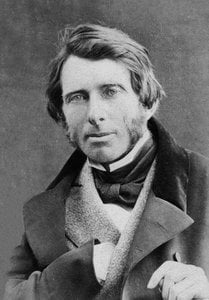
John Ruskin

John Ruskin

1819 - 1900 , Vereinigtes Königreich

Eckdaten zum Künstler

  • Bemerkenswerte Werke:
    • Morgenröte, Coniston
    • Fors Clavigera
  • Geburtsdatum: 8. Februar 1819
  • Geburtsort (Stadt Und Land): London, Vereinigtes Königreich
  • Künstler Oder Bewegungen, Die Von Diesem Künstler Beeinflusst Wurden:
    • Präraffaeliten
    • Viktorianische Kunstkritik
  • Künstler, Die Diesen Künstler Beeinflussten: ['J. M. W. Turner']
  • Künstlerische Bewegung Oder Stil: Viktorianisch, Präraffaeliten
  • Nationalität: Britisch
  • Sterbedatum: 1900
  • Vollständiger Name: John Ruskin