Kostenlose Kunstberatung

x
Gemälde kaufen Gemälde kaufenBild kaufen Bild kaufen VersendenVersenden
DetailsDetails Zu Favoriten hinzufügen Zu Favoriten hinzufügen HerunterladenHerunterladen Ähnliche ObjekteÄhnliche Objekte RöntgenaufnahmeRöntgenaufnahme Diashow anzeigenDiashow anzeigen

Untitled (D2X2SL)

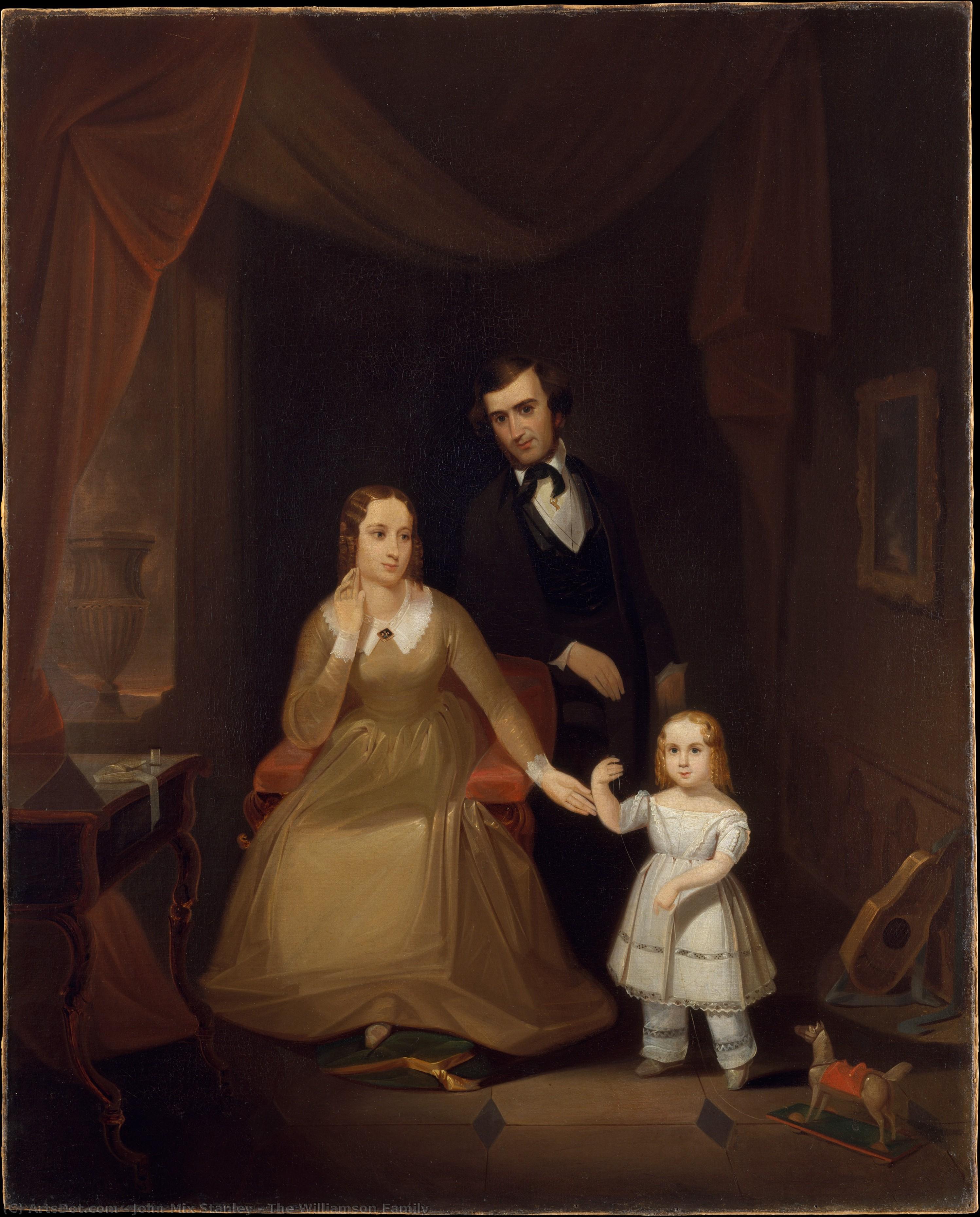
Discover John Mix Stanley’s "Untitled (D2X2SL)", a captivating portrait of the Williamson family from 1841, showcasing formal attire and domestic life amidst Western landscapes. A rare glimpse into 19th-century American society.

Entdecken Sie John Mix Stanley (1814-1872), Pionier der amerikanischen Kunst! Seine Landschaftsbilder & Porträts fangen das Leben indigener Völker im Westen ein – eine faszinierende Reise durch die Geschichte.

Giclée / Kunstdruck

Giclée- oder Leinwanddruck in Museumsqualität mit schneller Produktion und flexiblen Veredelungsoptionen.

P118B $10
P118H $10
P118W $10
P438Z $10
P508JH $12
P508YH $12
P805H $10
P805Z $10
P919BZ $10
P919G $10
P919XJ $10
P959ZH $10
P968JZ $12
W106C $8
W218G $10
W218JH $8
W218Y $10
W307PJ $10
W316G $10
W316PJ $8
W316Y $10
W398PJ $8
W4111J $10
W500HY $15
W500JH $15
W692G $12
W849H $8
W940BG $15
W953PJ $8

Standard
custom
CM
INCH

Wählen Sie aus unseren vordefinierten Größen, die den ursprünglichen Proportionen des Kunstwerks entsprechen.

Breite
Höhe

Sie können Ihre eigenen Maße eingeben, um ein bestimmtes Format oder einen speziellen Platz einzupassen. Wenn das von Ihnen gewählte Format nicht den Proportionen des Originalbildes entspricht, werden wir das Kunstwerk entweder beschneiden oder das Bild mit einem gespiegelten oder einfarbigen Rand erweitern. Ein digitaler Entwurf wird Ihnen zur Genehmigung zugesandt, bevor die Produktion beginnt.
Bitte beachten Sie, dass die Vorschau auf dem Bildschirm nicht den tatsächlichen Zuschnitt oder die Erweiterung widerspiegelt. Nur der Entwurf zeigt die endgültige Komposition präzise an.
Obwohl Sondermaße verfügbar sind, empfehlen wir die Auswahl eines Maßes aus der vordefinierten Liste, um die ursprünglichen Proportionen zu bewahren.

Weltweiter Versand () innerhalb von 2 Wochen statt der üblichen 4/5 Wochen. (3 Juli)

why_choose_icon
Kostenloser weltweiter Expressversand
why_choose_icon
Hochwertige Leinenleinwand
why_choose_icon
Umfassender Versicherungsschutz beim Versand
why_choose_icon
Zollsteuer-Rückerstattungsgarantie
why_choose_icon
Garantie für echte Farbtreue
why_choose_icon
60-Tage-Rückgaberecht (nur bei Mängeln)
why_choose_icon
100% Geld-zurück-Garantie
why_choose_icon
Mengenrabatt verfügbar

Gesamtpreis

-

reproduction

Untitled (D2X2SL)

Giclée / Kunstdruck

Größe der Reproduktion

-

Endpreis aller Optionen

-

Eckdaten auf einen Blick

  • Year: 1841
  • Notable elements: Family portrait, dining table
  • Artistic style: Realism, American West art
  • Subject or theme: Family life, Western scene
  • Influences:
    • Catlin
    • Stanley
  • Dimensions: 69 x 56 cm
  • Location: Metropolitan Museum of Art

Kunst-Quiz

Jede Frage hat nur eine richtige Antwort.

Frage 1:
What is the primary subject of John Mix Stanley’s ‘Untitled (D2X2SL)’?
Frage 2:
According to the description, what formal attire is worn by the figures in the painting?
Frage 3:
What object is prominently displayed on the dining table in the painting?
Frage 4:
In what year was ‘Untitled (D2X2SL)’ painted?
Frage 5:
John Mix Stanley is best known for his depictions of which group of people?

Beschreibung des Sammlerstücks

A Window into Victorian Domesticity: John Mix Stanley’s “Untitled (D2X2SL)”

John Mix Stanley's "Untitled (D2X2SL)" offers a remarkably intimate glimpse into the life of an American family during the mid-19th century. Painted in 1841, this portrait transcends mere documentation; it’s a carefully constructed tableau of Victorian domesticity, imbued with a quiet dignity and understated elegance. The scene unfolds within a modestly furnished room – a dining table bearing a vase of flowers, two chairs strategically placed, and the subtle suggestion of a life lived comfortably within these walls. The composition is remarkably balanced, drawing the eye to the central figures: a man, a woman, and their young child, united in a gesture of tender affection—their hands clasped together, a visual anchor for the entire scene.

Stanley’s skill lies not just in his ability to capture likenesses, but in his nuanced understanding of light and shadow. He employs a soft, diffused lighting that washes over the figures, creating an atmosphere of warmth and intimacy. Notice how he subtly models the fabric of their clothing – the folds of the man's tie, the gentle curve of the woman’s dress—revealing textures with remarkable detail. The muted color palette—earth tones punctuated by touches of crimson and gold—contributes to the painting’s overall sense of quiet refinement. This restrained approach was characteristic of Stanley’s style, prioritizing observation and emotional resonance over flamboyant display.

The Williamson Family: A Portrait of Early American Life

The subject of the portrait is the Williamson family – James Abeel Williamson, his wife, and their son. Research through The Metropolitan Museum of Art reveals that this particular painting was commissioned to document a prominent New York family during a period of significant westward expansion. Williamson’s lineage extends into Wyoming, New Jersey, and beyond, highlighting the interconnectedness of American society at the time. Stanley's decision to portray them in formal attire speaks volumes about their social standing and the importance placed on appearances within Victorian culture. The inclusion of the dog further reinforces this sense of domesticity – a loyal companion integrated seamlessly into family life.

Further research, accessed through the Smithsonian Institution Archives, reveals that Stanley’s collection was tragically lost in the 1865 fire at the Smithsonian. This loss is a poignant reminder of the fragility of artistic legacy and underscores the importance of reproductions like this one. The archival materials detail Stanley's meticulous process – his extensive travels throughout the American West, his dedication to accurately depicting Native American life alongside portraits of settlers, and his ambition to create a comprehensive visual record of the era.

Symbolism and Context: A Window into Victorian Values

Beyond its straightforward depiction of a family gathering, “Untitled (D2X2SL)” is rich in symbolic meaning. The formal attire represents respectability and adherence to social norms—a key value within 19th-century America. The act of holding hands signifies familial love and unity, while the child’s presence embodies hope for the future. The dining table, with its vase of flowers, suggests prosperity and a celebration of domestic harmony. Stanley's inclusion of Native Americans in the background subtly acknowledges the complex relationship between settlers and indigenous populations – a theme prevalent throughout his work.

Considering the context of John Mix Stanley’s life as a pioneer documenting the American West, this painting is more than just a portrait; it’s a testament to his commitment to capturing the realities of frontier life. His meticulous observations and artistic skill offer a valuable window into the social customs, values, and aspirations of a rapidly changing nation. The reproduction offered by WahooArt.com allows you to experience the beauty and emotional depth of this remarkable work firsthand.

Bringing “Untitled (D2X2SL)” Home: A Reproduction for Your Space

WahooArt.com’s hand-painted reproductions faithfully recreate Stanley's original techniques, capturing the subtle nuances of light, color, and texture. This ensures that you receive a piece of art that not only honors the legacy of John Mix Stanley but also seamlessly integrates into your own home décor. The size (69 x 56 cm) is ideal for adding a touch of Victorian elegance to living rooms, studies, or hallways.

Whether you are an art enthusiast, a collector seeking authentic reproductions, or simply someone looking to infuse their space with timeless beauty, “Untitled (D2X2SL)” offers a captivating glimpse into the past—a testament to family, tradition, and the enduring power of American artistry.

Ähnliche Kunstwerke


Biografie des Künstlers

Frühes Leben und Hintergrund

  • Geboren: 17. Januar 1814 in Canandaigua, New York
  • Eltern: Seth und Sally (McKinney) Stanley
  • Wurde im Alter von 12 Jahren verwaist.
  • Mit 14 Jahren an einen Karrenbauer ausgelernt.
  • Selbststudium der Malfähigkeiten.
  • Zog 1832 nach Detroit, Michigan und wurde dort ein wandernder Maler von Schildern und Porträts.

Karriere und künstlerische Entwicklung

  • Frühe Karriere (1830er-1840er): Begann als Schilder- und Porträtmaler in Detroit und Umgebung. Reisen nach Fort Snelling, Galena und Chicago.
  • Südwestliche Erkundung (1842-1845): Begleitete Sumner Dickerman in den amerikanischen Südwesten, um speziell Native Americans zu malen. Siedelte am Fort Gibson im Indian Territory (heute Oklahoma). Dokumentierte das Stammesleben, einschließlich der Teilnahme an einem Rat zwischen Cherokee und Texasern in Tahlequah.
  • Dienst im Mexikanisch-Amerikanischen Krieg (1846): Ernannte zum Zeichner für die Expedition von Colonel Stephen Watts Kearney nach Kalifornien und Oregon Territory. Erstellte Skizzen und Gemälde der Kampagne.
  • Hawaiianische Porträts (1847-1848): Reise nach Hawaii, wo er König Kamehameha III. und seine Familie porträtierte.
  • Ausstellungen und Anerkennung (1850er): Organisierte und stellte große Galerien mit Indianerporträts in verschiedenen Städten aus. Präsentierte 1852 eine Hauptausstellung im Smithsonian Institution, die fast 200 Werke von 43 Stämmen zeigte. Erhielt positive Kritiken, konnte seine Sammlung aber weder an die Regierung noch an das Smithsonian verkaufen.
  • Panorama (1854): Präsentierte ein 42-Szenen-Panorama westlicher Szenen in Washington, D.C., Baltimore, New York und London; diese Arbeit ist heute verloren.
  • Verluste und Niedergang: Ein erheblicher Teil seiner Werke wurde bei einem Brand im Smithsonian Institution im Jahr 1865 zerstört. Dieses Ereignis trug dazu bei, dass Stanleys Ruf lange Zeit sank.

Künstlerischer Stil und Einflüsse

  • Themen: Konzentrierte sich hauptsächlich auf Landschaften, Native American Porträts und Darstellungen des Stammeslebens im amerikanischen Westen und Hawaii.
  • Einflüsse: Inspiriert von der Arbeit von George Catlin, einem Pionier beim Malen von Native Americans.
  • Stil: Obwohl er seine Motive mit Kamera und Bleistift dokumentierte, bevor er sie ausführte, waren Stanleys Gemälde oft in akademischer Weise angeordnet. Einige Kritiker wiesen auf einen Mangel an tiefer Empathie für die Kulturen der Native Americans im Vergleich zu Catlin hin.

  • Dokumentation: Seine Werke werden als historische Dokumente geschätzt, die Einblicke in Begegnungen zwischen europäischen Amerikanern und Native American Stämmen im 19. Jahrhundert geben.

Wichtige Errungenschaften und historische Bedeutung

  • Pionierische Darstellung des Lebens der Native Americans: Stanley war einer der ersten Künstler, der die Kulturen der Native Americans systematisch durch Malerei dokumentierte und damit einen bedeutenden Beitrag zu visuellen Aufzeichnungen dieser Gesellschaften leistete.
  • Umfangreiche Reisen und Dokumentation: Seine Reisen durch den amerikanischen Westen und Hawaii führten zu einem umfangreichen Werk, das verschiedene Landschaften und Völker darstellt.
  • Historisches Zeugnis: Trotz des Verlusts vieler seiner Kunstwerke geben die erhaltenen Gemälde wertvolle Einblicke in das Leben an der Grenze und die Kulturen der Native Americans im 19. Jahrhundert.
  • Wiederentdeckung und Wertschätzung: Stanleys Beiträge zur amerikanischen Kunst wurden in den letzten Jahrzehnten neu bewertet, wobei seine Werke nun von nationalen und regionalen Museen aufbewahrt werden.

Späteres Leben und Tod

  • Kehrte 1863 nach Detroit zurück.
  • Starb am 10. April 1872 in Detroit, Michigan.
  • Sein Vermächtnis wurde zunächst durch den Verlust seiner Kunstwerke überschattet, wird aber seitdem für seinen historischen und künstlerischen Wert anerkannt.
John Mix Stanley

John Mix Stanley

1814 - 1872 , Vereinigte Staaten von Amerika

Kurzinfos

  • Artistic Movement Or Style: Landschaft & Native American Kunst
  • Artists Who Influenced This Artist: ['George Catlin']
  • Date Of Birth: 17. Januar 1814
  • Date Of Death: 10. April 1872
  • Full Name: John Mix Stanley
  • Nationality: Amerikanisch
  • Notable Artworks: ['Der Flussbiegung']
  • Place Of Birth (City And Country): Canandaigua, USA
Entdecken Sie Kunstwerke, die nach Themen, Stilen und Merkmalen sortiert sind.