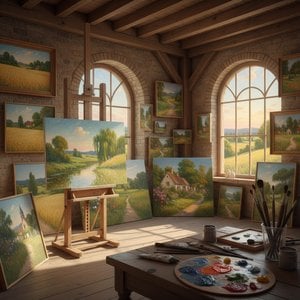
Frühes Leben und künstlerische Entwicklung
John Henry Twachtman, ein amerikanischer Maler, wurde am 4. August 1853 in Cincinnati, Ohio, geboren. Seine künstlerische Reise begann unter der Anleitung von Frank Duveneck in seiner Heimatstadt. Diese grundlegende Ausbildung legte den Grundstein für seine späteren Erkundungen in verschiedenen Kunstrichtungen.
Europäische Studienzeit und künstlerische Entwicklung
Zwischen 1875 und 1877 besuchte Twachtman die Akademie der Schönen Künste in München, wo er seine Fähigkeiten in einer locker gebürsteten, schattigen Technik verfeinerte. Diese Zeit war geprägt von seinem Besuch in Venedig mit William Merritt Chase, wodurch sich seine künstlerischen Horizonte weiter erweiterten. Seine Landschaftsbilder aus dieser Zeit spiegeln die Einflüsse seiner europäischen Ausbildung wider.
Pariser Intermezzo und Tonalismus
Von 1883 bis 1885 studierte Twachtman an der Académie Julian in Paris, was seinen Stil deutlich in einen weichen, grauen und grünen tonalistischen Ansatz verlagerte. Diese Zeit wird oft als der Höhepunkt seiner Karriere angesehen, mit bemerkenswerten Werken wie *Arques-la-Bataille* (in der Sammlung des Metropolitan Museum of Art, New York) und *Frühling* (in der Sammlung des Cincinnati Art Museum).
Amerikanische Rückkehr und Cos Cob Einfluss
Nach seiner Rückkehr in die Vereinigten Staaten ließ sich Twachtman in Connecticut nieder und kaufte einen Bauernhof in Greenwich. Seine Anwesenheit in der Cos Cob Kunstkolonie war entscheidend, sie entfachte den kreativen Geist seiner Freunde und Schüler mit seiner Kunst, seinen Gesprächen und seinem Unterricht.
Vermächtnis und bedeutende Werke
Twachtmans spätere Arbeit ist durch eine hochpersönliche impressionistische Technik gekennzeichnet, die oft schneebedeckte Landschaften seines Bauernhofs und Gartens darstellt. Seine Serie lebendiger Szenen in Gloucester, Massachusetts, kündigte einen moderneren Stil in der amerikanischen Kunst an.
Twachtmans innovativer Ansatz des amerikanischen Impressionismus hat ihre bleibenden Spuren in der Kunstwelt hinterlassen. Sein Vermächtnis kann weiter erforscht werden durch die
Tonalismus Kunstbewegung, einen Stil, dem er maßgeblich bei der Entwicklung half.
Referenzen:



 Vorschau anzeigen
 Handgemalte Reproduktion bestellen
 Versenden
 Teilen
 Details anzeigen

 Herunterladen
 Ähnliche Objekte
 Röntgenaufnahme
 Diashow
 Statistiken


 Weiterlesen






































 Die Glasoption ist nur für Größen unter 110 cm verfügbar.