Kostenlose Kunstberatung

x
Gemälde kaufen Gemälde kaufenBild kaufen Bild kaufen VersendenVersenden
DetailsDetails Zu Favoriten hinzufügen Zu Favoriten hinzufügen HerunterladenHerunterladen Ähnliche ObjekteÄhnliche Objekte RöntgenaufnahmeRöntgenaufnahme Diashow anzeigenDiashow anzeigen

Wheat Field

John Constable (1776-1837) revolutionized landscape painting with his emotive depictions of Dedham Vale, influenced by Claude Lorrain and fueled by his father’s estate. Known for paintings like ‘Wivenhoe Park,’ ‘The Plough,’ and ‘Hay Wain,’ he achieved fame despite financial struggles, becoming a Royal Academician and inspiring the Barbizon school.

Entdecken Sie John Constable (1776-1837), einen britischen Landschaftsmaler, der für seine emotionale Tiefe und natürliche Schönheit bekannt ist. Er war einflussreich auf die Barbizon-Schule und begründete den Romantik mit ikonischen Werken wie 'Netley Abbey'. Erkunden Sie sein Erbe bei WahooArt!

Giclée / Kunstdruck

Giclée- oder Leinwanddruck in Museumsqualität mit schneller Produktion und flexiblen Veredelungsoptionen.

P118B $10
P118H $10
P118W $10
P438Z $10
P508JH $12
P508YH $12
P805H $10
P805Z $10
P919BZ $10
P919G $10
P919XJ $10
P959ZH $10
P968JZ $12
W106C $8
W218G $10
W218JH $8
W218Y $10
W307PJ $10
W316G $10
W316PJ $8
W316Y $10
W398PJ $8
W4111J $10
W500HY $15
W500JH $15
W692G $12
W849H $8
W940BG $15
W953PJ $8

Standard
custom
CM
INCH

Wählen Sie aus unseren vordefinierten Größen, die den ursprünglichen Proportionen des Kunstwerks entsprechen.

Breite
Höhe

Sie können Ihre eigenen Maße eingeben, um ein bestimmtes Format oder einen speziellen Platz einzupassen. Wenn das von Ihnen gewählte Format nicht den Proportionen des Originalbildes entspricht, werden wir das Kunstwerk entweder beschneiden oder das Bild mit einem gespiegelten oder einfarbigen Rand erweitern. Ein digitaler Entwurf wird Ihnen zur Genehmigung zugesandt, bevor die Produktion beginnt.
Bitte beachten Sie, dass die Vorschau auf dem Bildschirm nicht den tatsächlichen Zuschnitt oder die Erweiterung widerspiegelt. Nur der Entwurf zeigt die endgültige Komposition präzise an.
Obwohl Sondermaße verfügbar sind, empfehlen wir die Auswahl eines Maßes aus der vordefinierten Liste, um die ursprünglichen Proportionen zu bewahren.

Weltweiter Versand () innerhalb von 2 Wochen statt der üblichen 4/5 Wochen. (2 Juli)

why_choose_icon
Kostenloser weltweiter Expressversand
why_choose_icon
Hochwertige Leinenleinwand
why_choose_icon
Umfassender Versicherungsschutz beim Versand
why_choose_icon
Zollsteuer-Rückerstattungsgarantie
why_choose_icon
Garantie für echte Farbtreue
why_choose_icon
60-Tage-Rückgaberecht (nur bei Mängeln)
why_choose_icon
100% Geld-zurück-Garantie
why_choose_icon
Mengenrabatt verfügbar

Gesamtpreis

-

reproduction

Wheat Field

Giclée / Kunstdruck

Größe der Reproduktion

-

Endpreis aller Optionen

-

Eckdaten auf einen Blick

  • Movement: Romanticism
  • Influences: Claude Lorrain
  • Artist: John Constable
  • Notable elements or techniques: Atmospheric perspective; Detailed depiction of rural landscape.
  • Title: Wheat Field
  • Artistic style: Emotional realism; Emphasis on capturing the beauty and tranquility of nature.

Kunst-Quiz

Jede Frage hat nur eine richtige Antwort.

Frage 1:
What is the primary subject matter of John Constable’s painting "Wheat Field"?
Frage 2:
Which artistic movement is John Constable associated with?
Frage 3:
The painting showcases a significant element of Constable’s artistic philosophy. What does he express about his approach to painting?
Frage 4:
Where is "Wheat Field" currently housed?
Frage 5:
What inspired Constable's fascination with landscapes and his desire to portray them authentically?

Beschreibung des Sammlerstücks

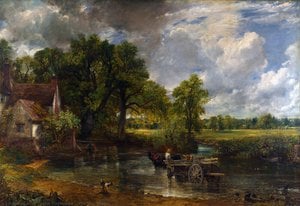
Wheat Field – A Symphony of Light and Labor

The painting “Wheat Field,” attributed to John Constable (1816), transcends mere depiction; it’s an immersive experience of the English countryside captured with unparalleled sensitivity and detail. More than just a landscape, it embodies Constable's profound connection to his surroundings—a connection rooted in his upbringing amidst the fertile Vale of Dedham, where his father owned substantial farmland along the River Stour. This formative influence profoundly shaped Constable’s artistic vision, propelling him toward a style characterized by luminous color palettes and an almost palpable sense of atmosphere.
  • Subject Matter: The scene portrays a quintessential rural tableau – a wheat field bathed in the golden light of late afternoon. Scattered figures engaged in harvesting activities—farmers diligently cutting down stalks and bundling grain—are interwoven seamlessly into the landscape, creating a harmonious blend of human endeavor and natural beauty.
  • Style & Technique: Constable’s approach aligns perfectly with Romantic ideals, prioritizing emotional expression over strict academic conventions. He employed loose brushstrokes and subtle gradations of color to convey the dynamism of the field and the ephemeral quality of light—a technique that distinguishes his work from earlier landscape traditions. The artist meticulously observed the effects of weather conditions on the wheat crop, capturing nuances of shade and illumination with remarkable accuracy.
  • Historical Context: Painted during Constable’s “Established Londoner” phase (1817-1828), "Wheat Field" reflects the broader Romantic movement's fascination with sublime landscapes and its desire to portray nature as both awe-inspiring and emotionally resonant. It stands alongside other iconic works of the era, demonstrating a shared commitment to capturing the spirit of the British countryside during a period of significant social and intellectual change.
  • Symbolism: Beyond its visual splendor, “Wheat Field” carries symbolic weight. The wheat itself represents prosperity, fertility, and sustenance—themes central to rural life and English identity. The figures engaged in labor symbolize resilience, hard work, and the enduring connection between humanity and the natural world. Constable’s deliberate composition aims to evoke feelings of tranquility, contemplation, and appreciation for the simple pleasures of existence.
  • Emotional Impact: Viewing “Wheat Field” evokes a powerful sense of nostalgia for a bygone era—a time when rural communities thrived on agricultural labor and when nature held dominion over human activity. Constable’s masterful rendering captures not only the visual beauty of the landscape but also its emotional depth, inviting viewers to contemplate the sublime grandeur of the natural world and the profound influence it exerts upon the human spirit.

Notable Reproduction Considerations

For those seeking a museum-quality representation of Constable’s masterpiece, WahooArt offers exceptional reproductions crafted by skilled European artists utilizing archival pigments on linen canvas—a process meticulously designed to faithfully reproduce the original artwork's luminosity and textural richness. Consider framing options that complement the painting's serene palette and enhance its visual impact within your interior design scheme.

Biografie des Künstlers

**frühes Leben und Schwierigkeiten**

John Constable, ein renommierter britischer Künstler, wurde am 23. Juni 1776 in East Bergholt, Suffolk, geboren. Sein frühes Leben war geprägt von einer tiefen Verbundenheit mit der Natur, die später das Markenzeichen seines künstlerischen Stils werden sollte. Trotz zahlreicher Herausforderungen auf dem englischen Kunstmarkt ebnete Constable mit seiner unerschütterlichen Hingabe an sein Handwerk den Weg für ein Vermächtnis, das weit über seine Zeit hinausgeht.

**Künstlerischer Stil und Einfluss**

Constables einzigartiger Ansatz in der Landschaftsmalerei, der durch seinen Fokus auf natürliche Schönheit und emotionale Tiefe geprägt war, markierte einen bedeutenden Wandel im Genre. Sein Einfluss war insbesondere in Frankreich tiefgreifend, wo er eine Schlüsselrolle bei der Gestaltung des Barbizon-Malerkollegs spielte. Diese Schule, die sich auf Realismus und Natur konzentrierte, zog direkt Inspiration von Constables Techniken und Themen.
  • Netley Abbey (Öl auf Leinwand), ein Beweis für seine Fähigkeit, den Kern natürlicher Landschaften einzufangen.
  • The Judges Walk, Hampstead (Romantik, Öl), das seine Fähigkeit demonstriert, persönliche Note in seine Arbeit zu legen.
  • A View on the Stour near Dedham (129 x 188 cm, Romantik, Öl auf Leinwand), ein Paradebeispiel für seinen Einfluss auf das Landschaftsgemälde.

**Vermächtnis und Erinnerung**

Heute wird John Constable nicht nur als Landschaftsmaler, sondern auch als Pionier in Erinnerung behalten, der neue Möglichkeiten für emotionale Ausdrucksweise in der Kunst eröffnete. Sein tiefgreifender Einfluss auf die Entwicklung der Landschaftsmalerei im 19. Jahrhundert und darüber hinaus ist unbestreitbar. Wichtige Punkte:** * Beeinflussend bei der Entwicklung des Barbizon-Kollegs in Frankreich * Pionier einer neuen Herangehensweise an die Landschaftsmalerei, mit Fokus auf natürliche Schönheit und emotionale Tiefe * Kämpfte während seines Lebenszeit für Anerkennung

**Fazit**

Das Vermächtnis von John Constable ist ein Beweis für die transformative Kraft der Kunst. Sein Einfluss auf die Landschaftsmalerei, sowohl in seiner Zeit als auch darüber hinaus, erinnert uns daran, wie tiefgreifend ein einzelner Künstler die Welt beeinflussen kann.
John Constable

John Constable

1776 - 1837 , Vereinigtes Königreich

Kurzinfos

  • Beeinflusste Kunstrichtungen: Barbizon-Schule
  • Beeinflusste Künstler:
    • Claude Lorrain
    • Jacob van Ruisdael
  • Bemerkenswerte Werke:
    • Netley Abbey
    • The Judges Walk, Hampstead
    • A View on the Stour
  • Geburtsdatum: 23. Juni 1776
  • Geburtsort: East Bergholt, Vereinigtes Königreich
  • Künstlerischer Stil: Romantik
  • Nationalität: Britisch
  • Sterbedatum: 1837
  • Vollständiger Name: John Constable
Entdecken Sie Kunstwerke, die nach Themen, Stilen und Merkmalen sortiert sind.