Vorschau anzeigen In AR ansehen Zum Druck wechseln Zum digitalen Bild wechseln Versenden
Details anzeigen Leitfaden Zu Favoriten hinzufügen Herunterladen Ähnliche Objekte Röntgenaufnahme Diashow Statistiken

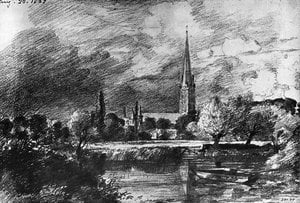
Wasserwiesen bei Salisbury

Erleben Sie John Constables Meisterwerk "Wasserwiesen bei Salisbury". Eine ikonische Landschaftsbildung des Romantikers, die die Schönheit der englischen Natur einfängt und eine einzigartige Perspektive auf die Kunstgeschichte bietet.

Entdecken Sie John Constable (1776-1837), einen britischen Landschaftsmaler, der für seine emotionale Tiefe und natürliche Schönheit bekannt ist. Er war einflussreich auf die Barbizon-Schule und begründete den Romantik mit ikonischen Werken wie 'Netley Abbey'. Erkunden Sie sein Erbe bei WahooArt!

Handgefertigte Ölreproduktion

Handgemaltes Ölgemälde auf Leinwand in Ihrer Wunschgröße und mit Rahmen, auf Bestellung von unseren Künstlern angefertigt. ( Zum Druck wechseln Zum digitalen Bild wechseln)

Corner sample of the P118B picture frame: formgepresstes Polystyrol, 5 cm wide and 3 cm thick
P118B €10
Corner sample of the P118H picture frame: formgepresstes Polystyrol, 5 cm wide and 3 cm thick
P118H €10
Corner sample of the P118W picture frame: formgepresstes Polystyrol, 5 cm wide and 3 cm thick
P118W €10
Corner sample of the P438Z picture frame: formgepresstes Polystyrol, 5.5 cm wide and 3.5 cm thick
P438Z €10
Corner sample of the P508JH picture frame: formgepresstes Polystyrol, 7 cm wide and 3.5 cm thick
P508JH €12
Corner sample of the P508YH picture frame: formgepresstes Polystyrol, 7 cm wide and 3.5 cm thick
P508YH €12
Corner sample of the P805H picture frame: formgepresstes Polystyrol, 5 cm wide and 3.5 cm thick
P805H €10
Corner sample of the P805Z picture frame: formgepresstes Polystyrol, 5 cm wide and 3.5 cm thick
P805Z €10
Corner sample of the P919BZ picture frame: formgepresstes Polystyrol, 7 cm wide and 3.5 cm thick
P919BZ €10
Corner sample of the P919G picture frame: formgepresstes Polystyrol, 7 cm wide and 3.5 cm thick
P919G €10
Corner sample of the P919XJ picture frame: formgepresstes Polystyrol, 7 cm wide and 3.5 cm thick
P919XJ €10
Corner sample of the P959ZH picture frame: formgepresstes Polystyrol, 5 cm wide and 3 cm thick
P959ZH €10
Corner sample of the P968JZ picture frame: formgepresstes Polystyrol, 6 cm wide and 4 cm thick
P968JZ €12
Corner sample of the W106C picture frame: Massivholz, 5 cm wide and 3 cm thick
W106C €8
Corner sample of the W218G picture frame: Massivholz, 5 cm wide and 3 cm thick
W218G €10
Corner sample of the W218JH picture frame: Massivholz, 5 cm wide and 3 cm thick
W218JH €8
Corner sample of the W218Y picture frame: Massivholz, 5 cm wide and 3 cm thick
W218Y €10
Corner sample of the W307PJ picture frame: Massivholz, 6 cm wide and 3 cm thick
W307PJ €10
Corner sample of the W316G picture frame: Massivholz, 6 cm wide and 3 cm thick
W316G €10
Corner sample of the W316PJ picture frame: Massivholz, 6 cm wide and 3 cm thick
W316PJ €8
Corner sample of the W316Y picture frame: Massivholz, 6 cm wide and 3 cm thick
W316Y €10
Corner sample of the W398PJ picture frame: Massivholz, 5 cm wide and 3 cm thick
W398PJ €8
Corner sample of the W4111J picture frame: Massivholz, 6.5 cm wide and 3.5 cm thick
W4111J €10
Corner sample of the W500HY picture frame: Massivholz, 7 cm wide and 5 cm thick
W500HY €15
Corner sample of the W500JH picture frame: Massivholz, 7 cm wide and 5 cm thick
W500JH €15
Corner sample of the W692G picture frame: Massivholz, 8 cm wide and 4 cm thick
W692G €12
Corner sample of the W849H picture frame: Massivholz, 5 cm wide and 3 cm thick
W849H €8
Corner sample of the W940BG picture frame: Massivholz, 7.5 cm wide and 4.5 cm thick
W940BG €15
Corner sample of the W953PJ picture frame: Massivholz, 6 cm wide and 3.5 cm thick
W953PJ €8

Standardformat
individuell anpassbar
CM
INCH

Wählen Sie aus unseren vordefinierten Formaten, die den ursprünglichen Proportionen des Kunstwerks entsprechen.

Breite
Höhe

Geben Sie die Breite und die Höhe an, die Sie für Ihren Rahmen oder Ihre Wand benötigen. Da dieses Werk handgemalt ist, kann der Künstler bei einer anderen Form etwas mehr um das Bild herum malen oder etwas abschneiden – Sie entscheiden. Wir senden Ihnen ein digitales Mockup zur Freigabe, bevor mit dem Malen begonnen wird. Das auf dieser Seite gezeigte Bild stellt nicht das tatsächliche Ergebnis dar – dies tut nur das Mockup.

Beispiele für Anpassungsmöglichkeiten: Gesicht durch Kundenfoto ersetzen; Haustier hinzufügen (z. B. Katze durch Hund ersetzen); eine versteckte Nachricht im Hintergrund einfügen; Hintergrundlandschaft oder -elemente ändern.
Nach der Bestellung wird das WahooArt.com-Team dem Kunden Anweisungen per E-Mail zusenden und eine Mockup-Vorschau bereitstellen.

Weltweiter Versand () in nur 3 bis 4 Wochen statt der üblichen 5 Wochen. (26 Oktober). Keine Kompromisse bei der Qualität.

Kostenloser weltweiter Expressversand
Hochwertige Leinenleinwand
Umfassender Versicherungsschutz beim Versand
Zollgebühren-Rückerstattungsgarantie
Garantie für exakte Farbtreue
100 Tage Rückgaberecht (nur bei Mängeln)
100% Geld-zurück-Garantie
Mengenrabatt verfügbar

Gesamtpreis

€ 239

Wasserwiesen bei Salisbury

Art der Reproduktion

Format der Reproduktion

-

Endpreis

€ 239

Eckdaten

  • Artistic style: Landschaftsmalerei
  • Notable elements or techniques: Atmosphärische Darstellung, Licht und Schatten
  • Movement: Romantik
  • Dimensions: 50 x 64 cm
  • Influences:
    • Claude Lorrain
    • Jacob van Ruisdael
  • Medium: Öl auf Leinwand

Kunst-Quiz

Jede Frage hat nur eine richtige Antwort.

Frage 1:
¿Quién fue John Constable?
Frage 2:
¿Qué movimiento artístico influyó en la obra de Constable?
Frage 3:
¿Dónde se encuentra principalmente el paisaje representado en "Water Meadows Near Salisbury"?
Frage 4:
¿Cuál fue la característica principal del estilo artístico de Constable?
Frage 5:
¿Cómo inspiró Constable a otros artistas?

Introduction to John Constable and the Romantic Movement

John Constable (1776–1837) was a pivotal figure in 19th-century British art, renowned for his romantic landscapes and dedication to capturing the beauty of the English countryside. His work marked a departure from traditional historical painting, focusing instead on personal observation and emotional connection with nature. “I should paint my own places best,” he wrote to his friend John Fisher in 1821, “painting is but another word for feeling.” He is celebrated for his revolutionary approach to landscape painting, which he imbued with emotional depth and personal affection. His works often depicted scenes from “Constable Country,” the area surrounding his home (John Constable: Flatford Mill from the Tow Path, John Constable: Ann and Mary Constable, John Constable: Tree Trunks). The Romantic movement, which emerged in the late 18th century, emphasized emotion, individualism, and the beauty of nature. It stood in contrast to the Enlightenment’s focus on reason and order (John Robert Cozens: Between Chamonix and Martigny).
  • The Enlightenment vs. Romanticism: The Enlightenment championed rational thought and scientific inquiry, prioritizing order and clarity in artistic representation. Constable’s work actively rejected these conventions, prioritizing subjective experience and capturing the untamed spirit of the natural world.
  • Constable's Inspiration: Constable drew heavily from artists like Claude Lorrain and Jacob van Ruisdael, admiring their masterful use of atmospheric perspective and their ability to convey mood through color and light—techniques that would become hallmarks of his distinctive style.
## Water Meadows Near Salisbury: A Masterpiece of Romanticism Among Constable’s most renowned works is Water Meadows Near Salisbury, a captivating oil painting that embodies the essence of the Romantic movement. This masterpiece, which measures 50 x 64 cm, showcases Constable’s exceptional talent for capturing the beauty and emotion of the natural world. It depicts a serene river winding through lush meadows bathed in soft sunlight—a quintessential scene from Constable Country. The Painting's Significance: Constable’s decision to portray this landscape not as an idealized vision but as it appeared to him, imbued with palpable feeling, was revolutionary for its time. He sought to convey the sublime – a sense of awe and wonder inspired by nature’s grandeur—rather than simply documenting its physical characteristics. ## The Scene: Water Meadows Near Salisbury Set in the picturesque countryside near Salisbury, England, Water Meadows Near Salisbury features a tranquil river meandering through expansive meadows dotted with wildflowers. The composition is carefully balanced, utilizing horizontal bands of water and vegetation to create a feeling of serenity and depth. Constable skillfully employed atmospheric perspective—a technique that diminishes color intensity and detail as objects recede into the distance—to heighten the illusion of space and convey the misty air characteristic of Salisbury’s summers.
  • Atmospheric Perspective: Constable's masterful use of atmospheric perspective is evident in the subtle gradations of color and tone, creating a convincing sense of depth that draws the viewer into the scene.
  • Color Palette: The painting utilizes a muted palette dominated by greens, blues, and browns—colors that reflect the dominant hues of the meadow landscape and contribute to its tranquil mood.
## Constable's Approach: A Personal Touch Constable’s approach to landscape painting was deeply personal. He sought not merely to depict the physical aspects of a scene but also to convey its emotional essence. In Water Meadows Near Salisbury, he achieves this through his meticulous brushwork—loose, expressive strokes that capture the texture of grass and water—and by layering glazes of color to build up luminous surfaces. This technique allowed him to imbue the painting with a sense of immediacy and spontaneity, reflecting his own experience of observing the natural world. Constable's Technique: He achieved this through his meticulous brushwork—loose, expressive strokes that capture the texture of grass and water—and by layering glazes of color to build up luminous surfaces. This technique allowed him to imbue the painting with a sense of immediacy and spontaneity, reflecting his own experience of observing the natural world. ## The Legacy of John Constable and Water Meadows Near Salisbury Constable’s work has had a lasting impact on the art world. His innovative approach to landscape painting inspired future generations of artists, including the Barbizon school in France. Today, Water Meadows Near Salisbury remains a cherished example of Romanticism and a testament to Constable’s extraordinary talent—a painting that continues to captivate viewers with its beauty and emotional resonance. Why It Matters: Constable's enduring influence stems from his ability to capture the sublime – a feeling of awe and wonder inspired by nature’s grandeur—and to convey this emotion through masterful technique and composition. He elevated landscape painting beyond mere representation, transforming it into an expression of human experience.

Fragen & Antworten

Wer ist der Künstler hinter "Wasserwiesen bei Salisbury"?

"Wasserwiesen bei Salisbury" wird John Constable zugeschrieben.

Wer hat "Wasserwiesen bei Salisbury" geschaffen und in welchem Stil ist es gehalten?

"Wasserwiesen bei Salisbury" wurde von John Constable im Stil der Romanticismus geschaffen. Künstler und Epoche bestimmen die Tradition des Werkes.

Wie verbinden sich Medium und Bewegung in "Wasserwiesen bei Salisbury"?

"Wasserwiesen bei Salisbury" von John Constable verbindet die Technik der Öl auf Leinwand mit dem Stil der Romanticismus. Technik und Epoche beschreiben die Herstellung sowie die künstlerische Ausrichtung des Werkes.


Künstlerbiografie

**frühes Leben und Schwierigkeiten**

John Constable, ein renommierter britischer Künstler, wurde am 23. Juni 1776 in East Bergholt, Suffolk, geboren. Sein frühes Leben war geprägt von einer tiefen Verbundenheit mit der Natur, die später das Markenzeichen seines künstlerischen Stils werden sollte. Trotz zahlreicher Herausforderungen auf dem englischen Kunstmarkt ebnete Constable mit seiner unerschütterlichen Hingabe an sein Handwerk den Weg für ein Vermächtnis, das weit über seine Zeit hinausgeht.

**Künstlerischer Stil und Einfluss**

Constables einzigartiger Ansatz in der Landschaftsmalerei, der durch seinen Fokus auf natürliche Schönheit und emotionale Tiefe geprägt war, markierte einen bedeutenden Wandel im Genre. Sein Einfluss war insbesondere in Frankreich tiefgreifend, wo er eine Schlüsselrolle bei der Gestaltung des Barbizon-Malerkollegs spielte. Diese Schule, die sich auf Realismus und Natur konzentrierte, zog direkt Inspiration von Constables Techniken und Themen.
  • Netley Abbey (Öl auf Leinwand), ein Beweis für seine Fähigkeit, den Kern natürlicher Landschaften einzufangen.
  • The Judges Walk, Hampstead (Romantik, Öl), das seine Fähigkeit demonstriert, persönliche Note in seine Arbeit zu legen.
  • A View on the Stour near Dedham (129 x 188 cm, Romantik, Öl auf Leinwand), ein Paradebeispiel für seinen Einfluss auf das Landschaftsgemälde.

**Vermächtnis und Erinnerung**

Heute wird John Constable nicht nur als Landschaftsmaler, sondern auch als Pionier in Erinnerung behalten, der neue Möglichkeiten für emotionale Ausdrucksweise in der Kunst eröffnete. Sein tiefgreifender Einfluss auf die Entwicklung der Landschaftsmalerei im 19. Jahrhundert und darüber hinaus ist unbestreitbar. Wichtige Punkte:** * Beeinflussend bei der Entwicklung des Barbizon-Kollegs in Frankreich * Pionier einer neuen Herangehensweise an die Landschaftsmalerei, mit Fokus auf natürliche Schönheit und emotionale Tiefe * Kämpfte während seines Lebenszeit für Anerkennung

**Fazit**

Das Vermächtnis von John Constable ist ein Beweis für die transformative Kraft der Kunst. Sein Einfluss auf die Landschaftsmalerei, sowohl in seiner Zeit als auch darüber hinaus, erinnert uns daran, wie tiefgreifend ein einzelner Künstler die Welt beeinflussen kann.
John Constable

John Constable

1776 - 1837 , Vereinigtes Königreich

Kurzinfos

  • Beeinflusste Kunstrichtungen: Barbizon-Schule
  • Beeinflusste Künstler:
    • Claude Lorrain
    • Jacob van Ruisdael
  • Bemerkenswerte Werke:
    • Netley Abbey
    • The Judges Walk, Hampstead
    • A View on the Stour
  • Geburtsdatum: 23. Juni 1776
  • Geburtsort: East Bergholt, Vereinigtes Königreich
  • Künstlerischer Stil: Romantik
  • Nationalität: Britisch
  • Sterbedatum: 1837
  • Vollständiger Name: John Constable
Entdecken Sie Kunstwerke, die nach Themen, Stilen und Merkmalen sortiert sind.