Oil On CanvasWallArtRomantic Landscape Painting
 1811
1811 24.0 x 29.0 cm
Handgemaltes Ölgemälde auf Leinwand in Ihrer Wunschgröße und mit Rahmen, auf Bestellung von unseren Künstlern angefertigt. ( Druck bestellen Bild kaufen)





























Wählen Sie aus unseren vordefinierten Formaten, die den ursprünglichen Proportionen des Kunstwerks entsprechen.

Sie können Ihre eigenen Maße eingeben, um einen bestimmten Rahmen oder Platz auszufüllen. Wenn die gewählte Größe nicht den Proportionen des Originalbildes entspricht, werden wir das Kunstwerk entweder beschneiden oder das Gemälde durch zusätzliche, handgemalte Elemente erweitern. Ein digitales Mockup wird Ihnen zur Genehmigung zugesandt, bevor die Produktion beginnt.
Bitte beachten Sie, dass die Bildschirmvorschau nicht die tatsächliche Beschneidung oder Erweiterung widerspiegelt. Nur das Mockup zeigt die endgültige Komposition exakt an.
Obwohl Sondermaße verfügbar sind, empfehlen wir, eine Größe aus der vordefinierten Liste zu wählen, um die ursprünglichen Proportionen beizubehalten.
Weltweiter Versand () in nur 3 bis 4 Wochen statt der üblichen 5 Wochen. (7 September). Keine Kompromisse bei der Qualität.


Flatford Mill from a Lock on the Stour
Format der Reproduktion
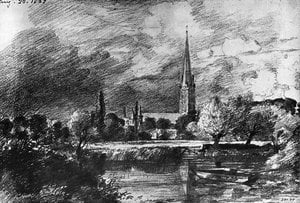
John Constable’s “Flatford Mill from a Lock on the Stour,” painted in 1811, is more than just a picturesque depiction of rural England; it's a profound meditation on light, landscape, and the very essence of human experience. This intimate scene, measuring 24 x 29 cm, captures a fleeting moment along the River Stour near Flatford Mill, a location that would become synonymous with Constable’s artistic vision. The painting immediately draws the viewer into a world of tranquil beauty – a small village nestled beside the water's edge, punctuated by the gentle flow of the river and the subtle play of light on its surface. It is a scene brimming with quiet industry and timeless serenity.
Painted during the height of the Romantic movement, “Flatford Mill” embodies the core tenets of this artistic sensibility. Unlike the rigid formality of Neoclassical art, Constable sought to capture the raw emotion and subjective experience of nature. His approach was deeply rooted in observation – he spent countless hours sketching and studying the landscape around Dedham Vale, meticulously recording the nuances of light and shadow. This dedication is evident in the painting’s masterful use of color and brushwork, creating a shimmering effect on the water that seems to ripple with life. Constable's work wasn't simply about representing what he saw; it was about conveying how he *felt* about what he saw – a deep connection to the land and its rhythms.
Constable’s technique is characterized by loose, expressive brushstrokes, particularly noticeable in the depiction of the water. He employed a ‘broken colour’ method, applying small dabs of paint side-by-side rather than blending them, to create a vibrant, luminous effect. The composition itself is carefully balanced, drawing the eye from the foreground figures – likely members of the local community engaged in daily tasks – towards the distant mill and the hazy backdrop of trees. The strategic placement of these elements creates a sense of depth and perspective, further enhancing the painting’s immersive quality. The use of atmospheric perspective—the subtle blurring of details in the distance—is particularly effective in conveying the vastness of the landscape.
“Flatford Mill” holds significant historical context within Constable's life and career. The painting was inspired by a real incident – a storm that briefly obscured the mill, prompting Constable to quickly capture the scene before the light changed. This event underscored his commitment to immediate observation and the fleeting nature of beauty. Beyond its immediate subject matter, the painting reflects the growing interest in rural life during the early 19th century, a period marked by industrialization and urbanization. The depiction of a traditional mill represents a connection to England’s agricultural heritage – a heritage that Constable sought to preserve through his art. It's a poignant reminder of a simpler time, imbued with a sense of nostalgia and reverence for the natural world.


1776 - 1837 , Vereinigtes Königreich

Explore the profound legacy of John Constable. Discover how his mastery of light, atmosphere, and the English landscape redefined Romanticism through timeless, museum-quality oil reproductions for discerning collectors.

Explore the profound emotional power of Romantic landscape art. Discover how masters like Friedrich captured the sublime through breathtaking nature, and learn to curate these evocative masterpieces for your luxury interior collection.

 Vorschau anzeigen
 Versenden
 Teilen
 Details anzeigen

 Herunterladen
 Ähnliche Objekte
 Röntgenaufnahme
 Diashow
 Weiterlesen







 Die Glasoption ist nur für Größen unter 110 cm verfügbar.