A Glimpse into Rococo Splendor
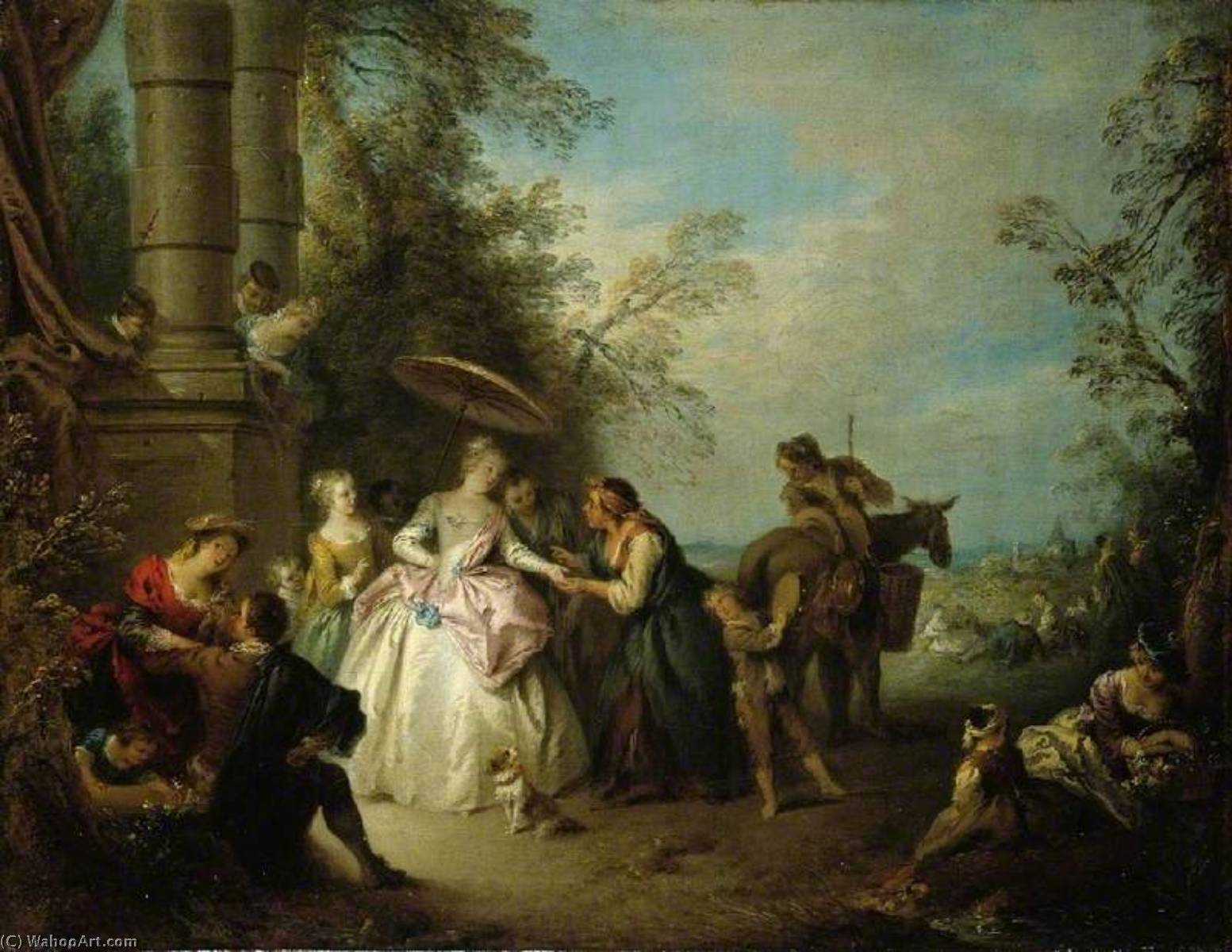
In the delicate dance of light and shadow that defines Jean-Baptiste Pater’s The Fortune Teller, we find ourselves transported to the heart of an era defined by grace, leisure, and the pursuit of pleasure. As the most notable pupil of Antoine Watteau, Pater did more than merely inherit a technique; he breathed life into the fête galante tradition, creating scenes that feel less like static paintings and more like captured whispers of aristocratic life. This particular work invites the viewer to step into a lush, sun-drenched landscape where the boundaries between reality and enchantment seem to blur. The composition is a masterful arrangement of social intimacy, pulling us into a crowded yet harmonious gathering where every figure contributes to a larger tapestry of refined merriment.
The painting serves as a window into the Rococo spirit, an age that favored the soft over the sharp and the whimsical over the monumental. Through his brush, Pater captures the essence of a rendezvous, where the air is thick with the scent of summer gardens and the quiet thrill of social intrigue. For the discerning collector or interior designer, this piece offers more than just aesthetic beauty; it provides a sense of historical continuity and an atmosphere of timeless elegance that can anchor a room with sophistication and warmth.
Mastery of Light and Texture
Technically, The Fortune Teller is a triumph of the Rococo palette. Pater employs a luminous range of tones, utilizing the soft, blended edges characteristic of sfumato to create an atmospheric haze that suggests the heat of a summer afternoon. The color story is one of exquisite balance, where warm earth tones—rich ochres, deep browns, and romantic reds—are set against the cooling whispers of distant blues and verdant greens in the background landscape. This interplay of temperature creates a profound sense of depth, drawing the eye from the immediate, tactile details of the foreground figures toward the hazy, dreamlike silhouette of a distant town.
The artist’s hand is visible in the fluid, organic lines that define the flowing drapery of the noble figures and the soft contours of the natural world. There is a rhythmic quality to his brushwork; it is smooth yet energetic, capturing the shimmering texture of fine silks and the delicate skin tones of the participants. This mastery of oil on canvas allows for a multidimensional experience, where the light appears to catch the folds of fabric and the leaves of trees, making the scene feel vibrantly alive. Such technical prowess ensures that a high-quality reproduction remains a captivating focal point, retaining the subtle nuances that make the original so enchanting.
Symbolism and Emotional Resonance
Beyond its surface beauty, the painting is layered with the symbolic language of the 18th century. The very subject of fortune-telling suggests themes of destiny, curiosity, and the fleeting nature of time—concepts that were deeply embedded in the consciousness of the French aristocracy. Within this social tableau, small details act as silent narrators: an umbrella serves as a symbol of both status and protection from the elements, while the presence of a dog introduces motifs of loyalty and companionship amidst the transient nature of human encounters. These elements weave a narrative of courtship and social maneuvering that resonates with a sense of playful mystery.
The emotional impact of the work is one of lightheartedness tempered by a gentle nostalgia. It captures a moment of perfect, unburdened leisure, yet there is an underlying awareness of the ephemeral beauty of such gatherings. For those looking to infuse their living spaces with a sense of cultured tranquility, The Fortune Teller offers an unparalleled emotional depth. It is a piece that does not merely decorate a wall; it invites conversation, evokes memory, and brings the storied elegance of the French Rococo into the modern home.


 In echtem Maßstab anzeigen
 Zum Druck wechseln
 Versenden als Grußkarte
 Teilen
 Details anzeigen
 Leitfaden

 Herunterladen
 Ähnliche Objekte
 Röntgenaufnahme
 Diashow
 Besucherstatistiken


 Mehr anzeigen