Jan van Goyen’s “Winter”: A Frozen Moment of Dutch Resilience
Jan van Goyen's "Winter" – a painting that immediately evokes the stark beauty and quiet dignity of the Dutch landscape – is more than just a depiction of a wintry scene; it’s a profound meditation on light, atmosphere, and the enduring spirit of the Netherlands. Completed in 1645, this oil-on-panel masterpiece, currently residing within the esteemed halls of the Hermitage Museum in St. Petersburg, offers a captivating glimpse into the artistic sensibilities of the Dutch Golden Age. Van Goyen, a master of capturing the subtle nuances of light and shadow, doesn’t simply portray winter; he *feels* it – translating its melancholic beauty onto canvas with remarkable precision.
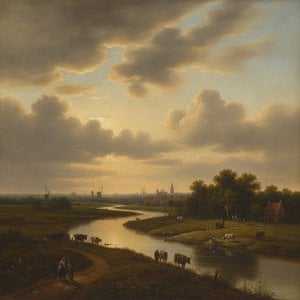
The composition is deceptively simple yet powerfully effective. A small group of figures, bundled in heavy coats and hats characteristic of 17th-century Dutch attire, gathers around a rudimentary tent on the left side of the panel. Their activities – tending to tools, conversing, or simply observing – hint at a life lived close to the land, resilient against the elements. The background landscape, shrouded beneath a cloudy sky, establishes an immediate sense of somber mood, while the distant body of water—likely a river or lake—adds depth and perspective. Van Goyen’s masterful use of earth tones – browns, greys, and muted greens – dominates the palette, creating a visual harmony that reinforces the painting's wintry atmosphere and imbues it with a subtle sense of coziness despite the prevailing cold.
The Language of Light: Van Goyen’s Technique
What truly distinguishes “Winter” is Van Goyen’s extraordinary command of light. He doesn’t employ dramatic contrasts; instead, he builds up layers of translucent color to create a sense of atmospheric depth and luminosity. This technique—a hallmark of Dutch landscape painting—allows the light to seem to emanate from within the scene itself, bathing the figures and the landscape in a soft, diffused glow. The artist meticulously renders the subtle variations in tone, capturing the way light reflects off snow-covered surfaces and penetrates through the clouds. Notice how he uses loose brushstrokes, particularly in depicting the clothing and distant elements, to suggest movement and texture without resorting to overly detailed rendering – a deliberate choice that contributes to the painting’s overall sense of immediacy and realism.
Symbolism and Context: A Portrait of Dutch Life
“Winter” offers more than just a visual experience; it provides a window into 17th-century Dutch society. The scene depicts a group engaged in everyday activities, suggesting a life deeply connected to agriculture and trade. The tent itself could represent shelter from the harsh winter weather, but also symbolizes community and shared resilience. The clothing worn by the figures—heavy coats, hats, and boots—are not merely decorative; they are practical necessities for surviving the cold climate. This painting is a testament to the Dutch people’s ability to thrive in challenging conditions, embodying the spirit of pragmatism and fortitude that defined the era.
A Legacy of Atmospheric Realism
Jan van Goyen's influence on subsequent generations of landscape painters is undeniable. His pioneering approach—emphasizing atmospheric perspective, subtle tonal variations, and a restrained palette—laid the foundation for much of what followed in Dutch art. Works like “Winter” demonstrate his ability to capture not just the appearance of a scene but also its emotional essence. The painting’s enduring appeal lies in its quiet beauty, its evocative atmosphere, and its timeless portrayal of human resilience against the forces of nature. Reproductions of this iconic artwork offer a remarkable opportunity to bring this piece of Dutch Golden Age history into your home, allowing you to appreciate Van Goyen's genius for years to come.



 Vorschau anzeigen
 Switch to Print
 Versenden
 Teilen
 Details anzeigen

 Herunterladen
 Ähnliche Objekte
 Röntgenaufnahme
 Diashow
 Stats
Stats


 Weiterlesen






































 Die Glasoption ist nur für Größen unter 110 cm verfügbar.