In echtem Maßstab anzeigen In AR an der Wand sehen Zum Druck wechseln Zum digitalen Bild wechseln Versenden als Grußkarte
Details anzeigen Leitfaden öffnen Zu Favoriten hinzufügen Herunterladen Ähnliche Objekte Röntgenaufnahme Diashow Besucherstatistiken

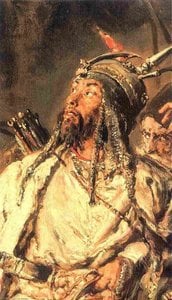
Self-portrait

A profound sense of introspection defines this 1892 Romanticism self-portrait by Jan Matejko, capturing the Polish master in a moment of quiet contemplation that you can bring to your collection via WahooArt.

Entdecken Sie Jan Matejko (1838-1893), Polens Nationalmaler! Seine dramatischen historischen Gemälde wie 'Grunwald' & 'Lubliner Union' zeigen den polnischen Geist.

Handgefertigte Ölreproduktion

Handgemaltes Ölgemälde auf Leinwand in Ihrer Wunschgröße und mit Rahmen, auf Bestellung von unseren Künstlern angefertigt. ( Zum Druck wechseln Zum digitalen Bild wechseln)

Corner sample of the P118B picture frame: formgepresstes Polystyrol, 5 cm wide and 3 cm thick
P118B 10
Corner sample of the P118H picture frame: formgepresstes Polystyrol, 5 cm wide and 3 cm thick
P118H 10
Corner sample of the P118W picture frame: formgepresstes Polystyrol, 5 cm wide and 3 cm thick
P118W 10
Corner sample of the P438Z picture frame: formgepresstes Polystyrol, 5.5 cm wide and 3.5 cm thick
P438Z 10
Corner sample of the P508JH picture frame: formgepresstes Polystyrol, 7 cm wide and 3.5 cm thick
P508JH 12
Corner sample of the P508YH picture frame: formgepresstes Polystyrol, 7 cm wide and 3.5 cm thick
P508YH 12
Corner sample of the P805H picture frame: formgepresstes Polystyrol, 5 cm wide and 3.5 cm thick
P805H 10
Corner sample of the P805Z picture frame: formgepresstes Polystyrol, 5 cm wide and 3.5 cm thick
P805Z 10
Corner sample of the P919BZ picture frame: formgepresstes Polystyrol, 7 cm wide and 3.5 cm thick
P919BZ 10
Corner sample of the P919G picture frame: formgepresstes Polystyrol, 7 cm wide and 3.5 cm thick
P919G 10
Corner sample of the P919XJ picture frame: formgepresstes Polystyrol, 7 cm wide and 3.5 cm thick
P919XJ 10
Corner sample of the P959ZH picture frame: formgepresstes Polystyrol, 5 cm wide and 3 cm thick
P959ZH 10
Corner sample of the P968JZ picture frame: formgepresstes Polystyrol, 6 cm wide and 4 cm thick
P968JZ 12
Corner sample of the W106C picture frame: Massivholz, 5 cm wide and 3 cm thick
W106C 8
Corner sample of the W218G picture frame: Massivholz, 5 cm wide and 3 cm thick
W218G 10
Corner sample of the W218JH picture frame: Massivholz, 5 cm wide and 3 cm thick
W218JH 8
Corner sample of the W218Y picture frame: Massivholz, 5 cm wide and 3 cm thick
W218Y 10
Corner sample of the W307PJ picture frame: Massivholz, 6 cm wide and 3 cm thick
W307PJ 10
Corner sample of the W316G picture frame: Massivholz, 6 cm wide and 3 cm thick
W316G 10
Corner sample of the W316PJ picture frame: Massivholz, 6 cm wide and 3 cm thick
W316PJ 8
Corner sample of the W316Y picture frame: Massivholz, 6 cm wide and 3 cm thick
W316Y 10
Corner sample of the W398PJ picture frame: Massivholz, 5 cm wide and 3 cm thick
W398PJ 8
Corner sample of the W4111J picture frame: Massivholz, 6.5 cm wide and 3.5 cm thick
W4111J 10
Corner sample of the W500HY picture frame: Massivholz, 7 cm wide and 5 cm thick
W500HY 15
Corner sample of the W500JH picture frame: Massivholz, 7 cm wide and 5 cm thick
W500JH 15
Corner sample of the W692G picture frame: Massivholz, 8 cm wide and 4 cm thick
W692G 12
Corner sample of the W849H picture frame: Massivholz, 5 cm wide and 3 cm thick
W849H 8
Corner sample of the W940BG picture frame: Massivholz, 7.5 cm wide and 4.5 cm thick
W940BG 15
Corner sample of the W953PJ picture frame: Massivholz, 6 cm wide and 3.5 cm thick
W953PJ 8

Standardformat
individuell anpassbar
CM
INCH

Wählen Sie aus unseren vordefinierten Formaten, die den ursprünglichen Proportionen des Kunstwerks entsprechen.

Breite
Höhe

Geben Sie die Breite und die Höhe an, die Sie für Ihren Rahmen oder Ihre Wand benötigen. Da dieses Werk handgemalt ist, kann der Künstler bei einer anderen Form etwas mehr um das Bild herum malen oder etwas abschneiden – Sie entscheiden. Wir senden Ihnen ein digitales Mockup zur Freigabe, bevor mit dem Malen begonnen wird. Das auf dieser Seite gezeigte Bild stellt nicht das tatsächliche Ergebnis dar – dies tut nur das Mockup.

Beispiele für Anpassungsmöglichkeiten: Gesicht durch Kundenfoto ersetzen; Haustier hinzufügen (z. B. Katze durch Hund ersetzen); eine versteckte Nachricht im Hintergrund einfügen; Hintergrundlandschaft oder -elemente ändern.
Nach der Bestellung wird das WahooArt.com-Team dem Kunden Anweisungen per E-Mail zusenden und eine Mockup-Vorschau bereitstellen.

Weltweiter Versand () in nur 3 bis 4 Wochen statt der üblichen 5 Wochen. (22 Oktober). Keine Kompromisse bei der Qualität.

Kostenloser weltweiter Expressversand
Hochwertige Leinenleinwand
Vollständiger Versicherungsschutz beim Versand
Zollgebühren-Rückerstattungsgarantie
Garantie für exakte Farbtreue
100-tägiges Rückgaberecht (nur bei Mängeln)
100% Geld-zurück-Garantie
Angebot für Mengenrabatt

Gesamtpreis

€ 239

Self-portrait

Reproduktionsmedium

Format der Reproduktion

-

Gesamtpreis

€ 239

An Intimate Encounter with a Master

In the vast canon of nineteenth-century European art, few figures loom as large in the national consciousness of Poland as Jan Matejko. While he is most celebrated for his monumental, sweeping historical canvases that capture the epic triumphs and tragedies of the Polish spirit, his Self-portrait of 1892 offers a profound departure from the grandiosity of the battlefield. This intimate oil on canvas invites us into the private sanctuary of the artist’s mind, presenting a moment of quietude that stands in stark contrast to the turbulent political histories he so famously documented. Here, the brushwork does not strive for the chaotic energy of war, but rather settles into a contemplative stillness, capturing an older, wiser gentleman lost in the depths of his own thoughts.

The composition is masterfully structured to evoke a sense of psychological depth. Seated in a rich, red chair that anchors the lower portion of the frame, Matejko presents himself with arms crossed—a posture that suggests both a defensive enclosure and a profound state of introspection. The artist’s face, framed by a dignified beard, becomes the emotional epicenter of the work. Through a sophisticated interplay of light and shadow, the painter utilizes the hallmarks of Romanticism to breathe life into the scene; the warm, enveloping tones of his attire and the velvet textures of the chair are set against a more muted, cooler background, creating a chiaroscical effect that pulls the viewer toward his gaze. This technique does more than just define form; it creates an atmosphere of heavy, thoughtful silence.

Symbolism and the Weight of Legacy

Beyond the mere depiction of a man in a room, every element within this self-portrait serves as a subtle nod to the intellectual life of the creator. The presence of books, strategically placed within the composition, speaks to the scholarly rigor and the historical weight that Matejko carried throughout his career. These objects are not merely props but symbols of the knowledge and the heavy burden of history that informed his every stroke. For the collector or the interior designer, this painting offers a sophisticated narrative of wisdom and permanence. It is a piece that does not demand attention through loud colors, but commands respect through its quiet authority and the palpable sense of dignity it radiates.

For those looking to integrate such a masterpiece into a curated space, the Self-portrait acts as a soulful anchor. Whether placed in a private library, a formal study, or an elegant living area, the painting brings with it a legacy of European Romanticism. The deep reds and earthy tones provide a luxurious warmth that complements classical decor, while the subject matter provides a conversation piece regarding the nature of identity and the artist's role in society. Owning a high-quality reproduction of this work is an opportunity to possess a fragment of history—a window into the soul of a man who spent his life painting the destiny of a nation.

Fragen & Antworten

Wann wurde "Self-portrait" von Jan Matejko geschaffen und welcher Stil liegt ihm zugrunde?

"Self-portrait" entstand im Jahr 1892 als Werk der Romanticism-Bewegung. Datum und Stilrichtung verankern das Kunstwerk in der Kunstgeschichte.

Wo sollte eine Reproduktion von "Self-portrait" von Jan Matejko aufgehängt werden?

Das Format Portrait von "Self-portrait" von Jan Matejko wird für ein Office empfohlen. Format und Raumgestaltung leiten gemeinsam die Platzierung einer Reproduktion.

Kann ich "Self-portrait" als Vollbild-Diashow ansehen?

Eine Diashow ist verfügbar: die Seite Diashow von "Self-portrait" von Jan Matejko.


Biografie des Künstlers

Frühes Leben und Ausbildung

Jan Alojzy Matejko, ein renommierter polnischer Maler, wurde am 24. Juni 1838 in Krakau, Polen, geboren. Sein Vater, Franciszek Ksawery Matejko, war ein tschechisch-stämmiger Tutor und Musiklehrer. Jans frühes Leben war geprägt von der Krakauer Revolution von 1846 und der Belagerung von Krakau durch die Österreicher im Jahr 1848 – Ereignisse, die später seine künstlerischen Themen beeinflussen sollten. Matejko besuchte das St.-Annen-Gymnasium, verließ es aber 1851 aufgrund schlechter Noten. Er zeigte jedoch schon in jungen Jahren außergewöhnliches Talent für Kunst. Von 1852 bis 1858 studierte er an der Kunstakademie in Krakau und spezialisierte sich unter der Anleitung von Wojciech Korneli Stattler und Władysław Łuszczkiewicz auf historische Malerei.

Künstlerische Karriere

Matejkos erstes bedeutendes Werk, Zaren Schujiski vor Zygmunt III, wurde 1853 fertiggestellt. Er begann, seine historischen Gemälde ab 1855 bei der Gesellschaft der Freunde der Künste in Krakau auszustellen. Zu seinen bemerkenswertesten Werken gehören:
  • Rejtan (1866): Eine großformatige Öl-auf-Leinwand-Malerei, die einen entscheidenden Moment in der polnischen Geschichte darstellt.
  • Union von Lublin (1869): Ein bedeutendes Werk, das Matejkos Fähigkeit zeigt, historische Ereignisse einzufangen.
  • Schlacht von Grunwald (1878): Ein Meisterwerk, das seine Fähigkeit hervorhebt, die Intensität von Schlachtbildern darzustellen.

Einflüsse und Entwicklung

Matejko wurde stark von der polnischen Geschichte und dem Wunsch beeinflusst, diese für ein breites Publikum zugänglich zu machen. Er studierte sorgfältig historische Dokumente und recherchierte akribisch Details über Kleidung, Waffen und Architektur seiner Zeit. Sein Stil entwickelte sich im Laufe seiner Karriere hin zu einer realistischeren Darstellung, wobei er jedoch immer die dramatische Erzählung und die emotionale Wirkung in den Vordergrund stellte. Die Romantik des 19. Jahrhunderts prägte seine Werke, insbesondere durch die Betonung von Heldentum, Patriotismus und dem Kampf für nationale Unabhängigkeit.

Museologische Beiträge und Vermächtnis

Matejko verbrachte den Großteil seines Lebens in Krakau und wurde schließlich Direktor an der Jan Matejko Akademie der Bildenden Künste, ehemals Krakauer Akademie der Bildenden Künste. Zu seinen Schülern gehörten bedeutende Maler wie Maurycy Gottlieb, Jacek Malczewski, Józef Mehoffer und Stanisław Wyspiański. Bemerkenswerte Werke auf WahooArt: Weitere Werke von Jan Matejko finden Sie auf WahooArt: Jan Matejko | 203 Kunstwerke Matejko verstarb am 1. November 1893 und hinterließ ein Vermächtnis als Polens berühmtester Maler und der "Nationalmaler" Polens. Seine Beiträge zur historischen Malerei inspirieren weiterhin Künstler und Kunstliebhaber gleichermaßen.

Referenzen:

Entdeckung der Meisterwerke des Muzeum Narodowe in Krakau, Polen (wikipedia.org)
Jan Matejko

Jan Matejko

1838 - 1893 , Polen

Eckdaten zum Künstler

  • Andere Namen: Jan Alojzy Matejko
  • Beeinflusste Künstler:
    • Maurycy Gottlieb
    • Jacek Malczewski
    • Stanisław Wyspiański
  • Bemerkenswerte Werke:
    • Rejtan (1866)
    • Union of Lublin (1869)
    • Schlacht von Grunwald (1878)
  • Einflussreiche Künstler:
    • Wojciech Korneli Stattler
    • Władysław Łuszczkiewicz
  • Geburtsdatum: 24. Juni 1838
  • Geburtsort: Kraków, Polen
  • Künstlerische Bewegung: Romantik
  • Nationalität: Polnisch
  • Sterbedatum: 1. November 1893
  • Vollständiger Name: Jan Matejko
Entdecken Sie Kunstwerke, die nach Themen, Stilen und Merkmalen sortiert sind.