Jetzt verkaufen
x
Vorschau anzeigenVorschau anzeigen In AR erlebenIn AR erleben Druck bestellen Druck bestellenBild kaufen Bild kaufen VersendenVersenden
Details anzeigenDetails anzeigen Zu Favoriten hinzufügen Zu Favoriten hinzufügen HerunterladenHerunterladen Ähnliche ObjekteÄhnliche Objekte RöntgenaufnahmeRöntgenaufnahme DiashowDiashow

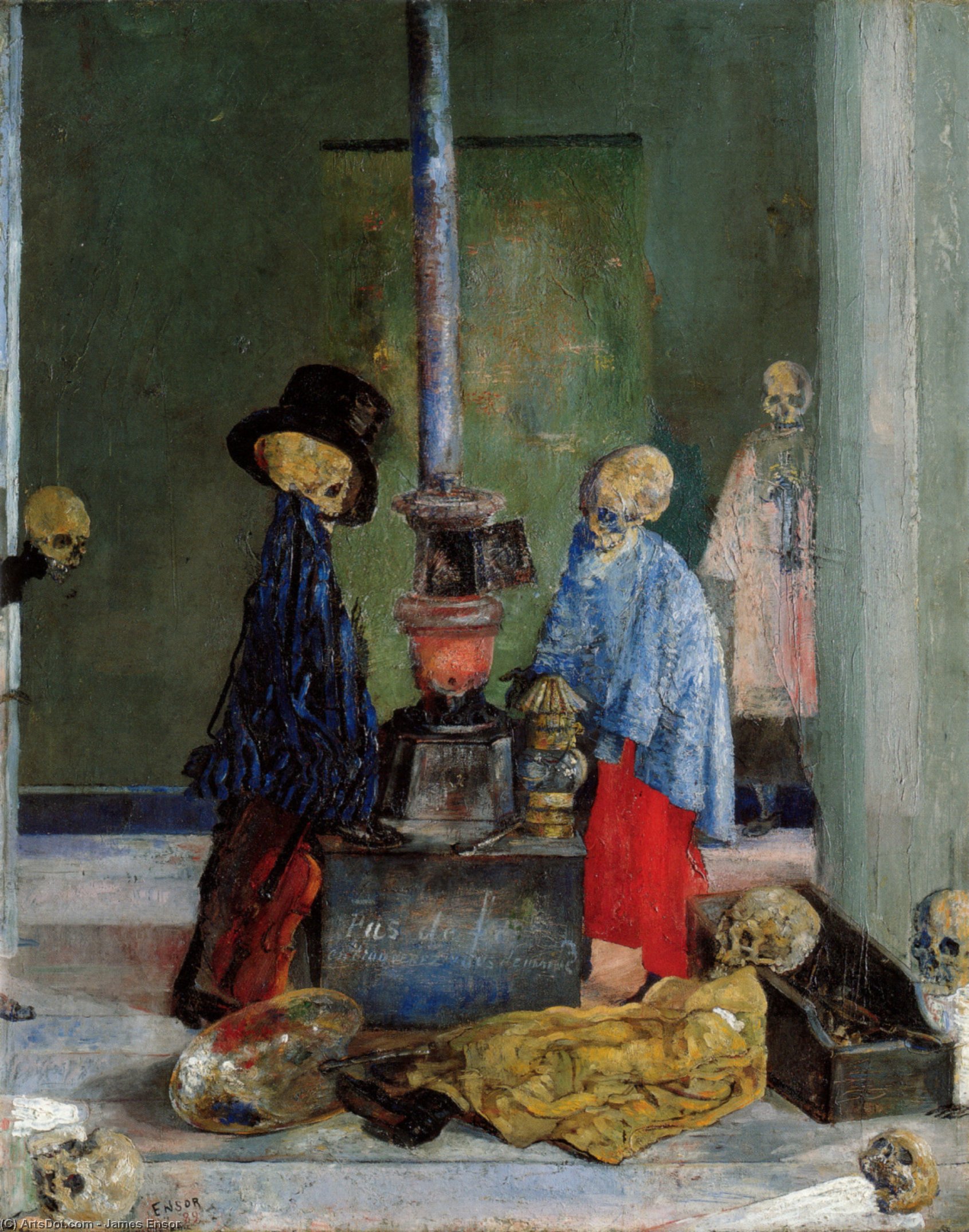
Skeletons Trying to Warm Themselves

James Ensor's 'Skeletons Trying to Warm Themselves' (1889) is a haunting black-and-white depiction of skeletal figures seeking warmth, reflecting the artist’s fascination with masks and unsettling themes. Explore this iconic work through a WahooArt reproduction.

Entdecken Sie James Ensor (1860-1949), einen bahnbrechenden belgischen Maler und Grafiker. Erkunden Sie seine verstörenden, traumhaften Szenen von Masken, Karnevalen und Skeletten, die Expressionismus und Surrealismus nachhaltig beeinflussten. #JamesEnsor #Expressionismus #Surrealismus #Bel

Handgefertigte Ölreproduktion

Handgemaltes Ölgemälde auf Leinwand in Ihrer Wunschgröße und mit Rahmen, auf Bestellung von unseren Künstlern angefertigt. (Druck bestellen Druck bestellenBild kaufen Bild kaufen)

P118B $10
P118H $10
P118W $10
P438Z $10
P508JH $12
P508YH $12
P805H $10
P805Z $10
P919BZ $10
P919G $10
P919XJ $10
P959ZH $10
P968JZ $12
W106C $8
W218G $10
W218JH $8
W218Y $10
W307PJ $10
W316G $10
W316PJ $8
W316Y $10
W398PJ $8
W4111J $10
W500HY $15
W500JH $15
W692G $12
W849H $8
W940BG $15
W953PJ $8

Standard
custom
CM
INCH

Wählen Sie aus unseren vordefinierten Formaten, die den ursprünglichen Proportionen des Kunstwerks entsprechen.

Breite
Höhe

Sie können Ihre eigenen Maße eingeben, um einen bestimmten Rahmen oder Platz auszufüllen. Wenn die gewählte Größe nicht den Proportionen des Originalbildes entspricht, werden wir das Kunstwerk entweder beschneiden oder das Gemälde durch zusätzliche, handgemalte Elemente erweitern. Ein digitales Mockup wird Ihnen zur Genehmigung zugesandt, bevor die Produktion beginnt.
Bitte beachten Sie, dass die Bildschirmvorschau nicht die tatsächliche Beschneidung oder Erweiterung widerspiegelt. Nur das Mockup zeigt die endgültige Komposition exakt an.
Obwohl Sondermaße verfügbar sind, empfehlen wir, eine Größe aus der vordefinierten Liste zu wählen, um die ursprünglichen Proportionen beizubehalten.

Beispiele für Anpassungsmöglichkeiten: Gesicht durch Kundenfoto ersetzen; Haustier hinzufügen (z. B. Katze durch Hund ersetzen); eine versteckte Nachricht im Hintergrund einfügen; Hintergrundlandschaft oder -elemente ändern.
Nach der Bestellung wird das WahooArt.com-Team dem Kunden Anweisungen per E-Mail zusenden und eine Mockup-Vorschau bereitstellen.

Weltweiter Versand () in nur 3 bis 4 Wochen statt der üblichen 5 Wochen. (24 August). Keine Kompromisse bei der Qualität.

why_choose_icon
Kostenloser weltweiter Expressversand
why_choose_icon
Hochwertige Leinenleinwand
why_choose_icon
Umfassender Versicherungsschutz beim Versand
why_choose_icon
Zollgebühren-Rückerstattungsgarantie
why_choose_icon
Garantie für exakte Farbtreue
why_choose_icon
60 Tage Rückgaberecht (nur bei Mängeln)
why_choose_icon
100% Geld-zurück-Garantie
why_choose_icon
Mengenrabatt verfügbar

Gesamtpreis

$ 272

reproduction

Skeletons Trying to Warm Themselves

Art der Reproduktion

Format der Reproduktion

-

Gesamtpreis

$ 272

Eckdaten

  • Notable elements or techniques: Masks, skeletons
  • Medium: Paintings
  • Artist: James Ensor
  • Location: Private Collection
  • Title: Skeletons Trying to Warm Themselves
  • Artistic style: Grotesque, Symbolic
  • Influences:
    • Carnival
    • masks

Kunst-Quiz

Jede Frage hat nur eine richtige Antwort.

Frage 1:
What is the primary atmosphere conveyed by James Ensor’s ‘Skeletons Trying to Warm Themselves’?
Frage 2:
The presence of masks in the painting is most likely referencing which aspect of James Ensor’s artistic practice?
Frage 3:
James Ensor is considered a pioneer of which artistic movements?

Beschreibung des Kunstwerks

A Descent Into Shadow: James Ensor’s “Skeletons Trying to Warm Themselves”

James Ensor's "Skeletons Trying to Warm Themselves," painted in 1889, isn’t merely a depiction of morbid curiosity; it’s a profoundly unsettling exploration of mortality, social anxiety, and the desperate yearning for connection. This black-and-white image, born from the artist’s unique upbringing amidst the vibrant chaos of Ostend's seaside resort, immediately plunges the viewer into an atmosphere thick with unease. The scene unfolds within a sparsely furnished room dominated by a cold fireplace – a stark symbol of both warmth and oblivion. Skeletons, rendered in meticulous detail yet imbued with a palpable sense of vulnerability, are clustered around this meager source of heat, their bony fingers outstretched as if grasping for solace. Scattered skulls litter the floor and surfaces, further emphasizing the painting’s preoccupation with death and decay. Yet, amidst this grim tableau, a solitary figure stands observing – perhaps even participating in – this macabre ritual, adding an element of unsettling human presence to the scene. The overall effect is less a straightforward horror story and more a carefully constructed meditation on the fragility of existence and the universal desire for warmth, both physical and emotional, in the face of inevitable decline.

The Artist’s Crucible: Ensor's Unique Vision

James Ensor’s artistic journey was anything but conventional. Born in Ostend, Belgium, to an English father and a Belgian mother—a lineage that instilled within him a unique perspective on cultural duality—Ensor rejected the rigid constraints of academic art training early on. He found himself drawn instead to the vibrant, often unsettling world of carnivals and curiosities, experiences profoundly shaped by his parents’ souvenir shop brimming with masks, shells, and other peculiar objects. This childhood immersion in the theatrical and the bizarre would become a cornerstone of his artistic language. He initially enrolled at the Académie Royale des Beaux-Arts in Brussels, but quickly recognized that its prescribed methods stifled his burgeoning vision. Instead, he forged his own path, developing a highly personal style characterized by bold colors, distorted forms, and a deliberate rejection of traditional realism. This independent spirit is powerfully evident in “Skeletons Trying to Warm Themselves,” where Ensor abandons conventional representation in favor of a deeply symbolic and emotionally charged image.

Symbolism and the Language of Decay

The painting’s power lies not just in its unsettling subject matter, but also in the rich symbolism woven throughout the composition. The skeletons themselves represent mortality, of course, but their attempt to warm themselves speaks volumes about the human condition. They are desperately seeking comfort, connection, and a reprieve from the cold reality of death – desires that resonate deeply with viewers regardless of their beliefs. The scattered skulls serve as constant reminders of this inevitable fate, while the solitary observer introduces an element of judgment or perhaps even complicity in this ritualistic scene. The stark black-and-white palette further amplifies the painting’s emotional impact, stripping away any potential distractions and focusing attention on the raw, unsettling details. The use of light and shadow is particularly effective, highlighting the skeletal figures and creating a sense of claustrophobia within the confined space. Ensor masterfully employs these elements to evoke a profound feeling of melancholy and existential dread.

A Legacy of Innovation: Ensor’s Influence

“Skeletons Trying to Warm Themselves” stands as a pivotal work in James Ensor's oeuvre, and a significant precursor to both Expressionism and Surrealism. His willingness to challenge artistic conventions, his embrace of the grotesque, and his exploration of psychological themes paved the way for future generations of artists. Ensor’s influence can be seen in the works of artists like Edvard Munch and Max Ernst, who similarly sought to express inner turmoil through distorted imagery and symbolic representation. The painting's unsettling atmosphere and its focus on mortality continue to resonate with viewers today, cementing Ensor’s place as a visionary artist whose work remains both profoundly disturbing and undeniably captivating. WahooArt offers exceptional hand-painted reproductions of this iconic piece, allowing you to experience the full power and emotional depth of Ensor’s masterpiece in stunning detail.

Über den Künstler

frühes Leben und künstlerische Reise

James Sidney Edward, Baron Ensor, ein prominenter belgischer Maler und Grafiker, wurde am 13. April 1860 in Ostend, Belgien, geboren. Sein frühes Leben war von einem vielfältigen kulturellen Hintergrund geprägt, mit einem englischen Vater, James Frederic Ensor, und einer belgischen Mutter, Maria Catherina Haegheman. Ensor zeigte wenig Interesse an traditionellen akademischen Studien und verließ die Schule mit fünfzehn Jahren, um sich der Kunst zu widmen, zunächst bei lokalen Malern und später am Académie Royale des Beaux-Arts in Brüssel.

Künstlerischer Stil und Themen

Ensor's künstlerischer Stil war durch seine Auseinandersetzung mit dem Unterbewusstsein und traumhaften Bildern gekennzeichnet, der die Expressionismus und Surrealismus maßgeblich beeinflusste. Seine Gemälde zeigten oft bizarre Motive, darunter Karnevale, Masken, Puppenspiel, Skelette und fantastische Allegorien. Bekannte Werke sind Die Schändlichen Masken (1883) und Skelette kämpfen um eine gehängte Person (1891), die seine einzigartige Mischung aus Groteskem und Fantasievollem zeigen.

Anerkennung und Vermächtnis

Trotz anfänglicher Ablehnung gewann Ensor's Werk allmählich Anerkennung und Anklang. Bis 1920 war er das Thema bedeutender Ausstellungen; im Jahr 1929 wurde er zum Baron durch König Albert ernannt, und 1933 erhielt er die Légion d’honneur. Sein Vermächtnis als Pionier der modernen Kunst ist in seinem Einfluss auf nachfolgende künstlerische Bewegungen, einschließlich Expressionismus und Surrealismus, erkennbar.

Wichtige Werke und Ausstellungen

* Die Intrige (90 x 150 cm, Koninklijk Museum voor Schone Kunsten, Antwerpen, Belgien) * Die Qualen des Heiligen Antonius (1887, heute im Besitz der Sammlung des Museum of Modern Art, New York) Ensor's innovativer Stil und sein mutiger Ansatz für die Kunst haben einen unauslöschlichen Eindruck in der Welt der modernen Kunst hinterlassen.
James Ensor

James Ensor

1860 - 1949 , Belgien

Kurzinfos

  • Beeinflusste Künstler:
    • Pieter Bruegel der Ältere
    • Francisco Goya
  • Bemerkenswerte Werke:
    • Die Schmählichen Masken
    • Christus in Brüssel
    • Tribulationen des Heiligen Antonius
  • Geburtsdatum: 1860-04-13
  • Geburtsort: Ostende, Belgien
  • Künstlerische Richtung: Expressionismus, Symbolismus
  • Nationalität: Belgisch
  • Todatum: 1949-11-19
  • Vollständiger Name: James Ensor
  • Von Künstlern Beeinflusst: ['']
Entdecken Sie Kunstwerke, die nach Themen, Stilen und Merkmalen sortiert sind.