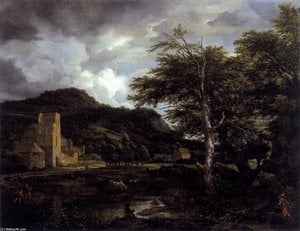
Wheat Fields (1670) by Jacob van Ruisdael, hand-painted oil painting reproduction by a master artist
Vorschau anzeigen In AR ansehen Zum Druck wechseln Zum digitalen Bild wechseln Versenden
Details anzeigen Leitfaden Zu Favoriten hinzufügen Herunterladen Ähnliche Objekte Röntgenaufnahme Diashow Q&A Statistiken

Wheat Fields Hand-painted oil painting reproduction

Abmessungen
100.0 x 130.0 cm

Explore the life & work of Jacob van Ruisdael, the preeminent Dutch landscape painter. Discover his technical brilliance, symbolic depth, and lasting influence on art history. Learn about collecting Ruisdael's masterpieces.

"meta_description": "Jacob van Ruisdael (1628-1682) war der bedeutendste niederländische Landschaftsmaler des Goldenen Zeitalters. Seine Dramatik und Weite prägen Werke wie Wasserfälle, Stadtansichten und idyllische Landschaften. Inspiriert die Romantik."

Handgefertigte Ölreproduktion

Handgemaltes Ölgemälde auf Leinwand in Ihrer Wunschgröße und mit Rahmen, auf Bestellung von unseren Künstlern angefertigt. ( Zum Druck wechseln Zum digitalen Bild wechseln)

Corner sample of the P118B picture frame: formgepresstes Polystyrol, 5 cm wide and 3 cm thick
P118B €10
Corner sample of the P118H picture frame: formgepresstes Polystyrol, 5 cm wide and 3 cm thick
P118H €10
Corner sample of the P118W picture frame: formgepresstes Polystyrol, 5 cm wide and 3 cm thick
P118W €10
Corner sample of the P438Z picture frame: formgepresstes Polystyrol, 5.5 cm wide and 3.5 cm thick
P438Z €10
Corner sample of the P508JH picture frame: formgepresstes Polystyrol, 7 cm wide and 3.5 cm thick
P508JH €12
Corner sample of the P508YH picture frame: formgepresstes Polystyrol, 7 cm wide and 3.5 cm thick
P508YH €12
Corner sample of the P805H picture frame: formgepresstes Polystyrol, 5 cm wide and 3.5 cm thick
P805H €10
Corner sample of the P805Z picture frame: formgepresstes Polystyrol, 5 cm wide and 3.5 cm thick
P805Z €10
Corner sample of the P919BZ picture frame: formgepresstes Polystyrol, 7 cm wide and 3.5 cm thick
P919BZ €10
Corner sample of the P919G picture frame: formgepresstes Polystyrol, 7 cm wide and 3.5 cm thick
P919G €10
Corner sample of the P919XJ picture frame: formgepresstes Polystyrol, 7 cm wide and 3.5 cm thick
P919XJ €10
Corner sample of the P959ZH picture frame: formgepresstes Polystyrol, 5 cm wide and 3 cm thick
P959ZH €10
Corner sample of the P968JZ picture frame: formgepresstes Polystyrol, 6 cm wide and 4 cm thick
P968JZ €12
Corner sample of the W106C picture frame: Massivholz, 5 cm wide and 3 cm thick
W106C €8
Corner sample of the W218G picture frame: Massivholz, 5 cm wide and 3 cm thick
W218G €10
Corner sample of the W218JH picture frame: Massivholz, 5 cm wide and 3 cm thick
W218JH €8
Corner sample of the W218Y picture frame: Massivholz, 5 cm wide and 3 cm thick
W218Y €10
Corner sample of the W307PJ picture frame: Massivholz, 6 cm wide and 3 cm thick
W307PJ €10
Corner sample of the W316G picture frame: Massivholz, 6 cm wide and 3 cm thick
W316G €10
Corner sample of the W316PJ picture frame: Massivholz, 6 cm wide and 3 cm thick
W316PJ €8
Corner sample of the W316Y picture frame: Massivholz, 6 cm wide and 3 cm thick
W316Y €10
Corner sample of the W398PJ picture frame: Massivholz, 5 cm wide and 3 cm thick
W398PJ €8
Corner sample of the W4111J picture frame: Massivholz, 6.5 cm wide and 3.5 cm thick
W4111J €10
Corner sample of the W500HY picture frame: Massivholz, 7 cm wide and 5 cm thick
W500HY €15
Corner sample of the W500JH picture frame: Massivholz, 7 cm wide and 5 cm thick
W500JH €15
Corner sample of the W692G picture frame: Massivholz, 8 cm wide and 4 cm thick
W692G €12
Corner sample of the W849H picture frame: Massivholz, 5 cm wide and 3 cm thick
W849H €8
Corner sample of the W940BG picture frame: Massivholz, 7.5 cm wide and 4.5 cm thick
W940BG €15
Corner sample of the W953PJ picture frame: Massivholz, 6 cm wide and 3.5 cm thick
W953PJ €8

Standardformat
individuell anpassbar
CM
INCH

Wählen Sie aus unseren vordefinierten Formaten, die den ursprünglichen Proportionen des Kunstwerks entsprechen.

Breite
Höhe

Geben Sie die Breite und die Höhe an, die Sie für Ihren Rahmen oder Ihre Wand benötigen. Da dieses Werk handgemalt ist, kann der Künstler bei einer anderen Form etwas mehr um das Bild herum malen oder etwas abschneiden – Sie entscheiden. Wir senden Ihnen ein digitales Mockup zur Freigabe, bevor mit dem Malen begonnen wird. Das auf dieser Seite gezeigte Bild stellt nicht das tatsächliche Ergebnis dar – dies tut nur das Mockup.

Beispiele für Anpassungsmöglichkeiten: Gesicht durch Kundenfoto ersetzen; Haustier hinzufügen (z. B. Katze durch Hund ersetzen); eine versteckte Nachricht im Hintergrund einfügen; Hintergrundlandschaft oder -elemente ändern.
Nach der Bestellung wird das WahooArt.com-Team dem Kunden Anweisungen per E-Mail zusenden und eine Mockup-Vorschau bereitstellen.

Weltweiter Versand () in nur 3 bis 4 Wochen statt der üblichen 5 Wochen. (1 November). Keine Kompromisse bei der Qualität.

Kostenloser weltweiter Expressversand
Hochwertige Leinenleinwand
Umfassender Versicherungsschutz beim Versand
Zollgebühren-Rückerstattungsgarantie
Garantie für exakte Farbtreue
100 Tage Rückgaberecht (nur bei Mängeln)
100% Geld-zurück-Garantie
Mengenrabatt verfügbar

Gesamtpreis

€ 242

Wheat Fields

Art der Reproduktion

Format der Reproduktion

-

Endpreis

€ 242

Jacob van Ruisdael’s “Wheat Fields”: A Symphony of Light and Landscape

“Wheat Fields,” painted circa 1670 by Jacob Jansz van Ruisdael, stands as arguably the most arresting depiction of Dutch pastoralism from the Golden Age. More than just a scenic vista, it's a masterful orchestration of atmospheric perspective and compositional dynamism—a painting that continues to resonate with viewers centuries later. Examining its intricacies reveals not only Van Ruisdael’s technical prowess but also his profound understanding of conveying emotion through visual language.

A Masterclass in Atmospheric Perspective

Van Ruisdael's signature style is characterized by a deliberate flattening of depth, achieved through subtle gradations of color and tonal variation. The distant wheat field recedes into hazy blues and greens—a technique known as atmospheric perspective—creating an illusion of vastness and conveying the serenity of rural life. Unlike many contemporaries who prioritized detailed realism, Ruisdael prioritized capturing the essence of a landscape rather than meticulously recreating every blade of grass. This approach aligns perfectly with the prevailing philosophical currents of the time, where contemplation and reflection on nature held considerable sway. The artist skillfully uses light—particularly diffused sunlight filtering through clouds—to sculpt the forms of the field and its inhabitants, imbuing the scene with an ethereal quality.

Compositional Drama: Figures Amidst Vastness

The inclusion of two figures—a man carrying a bag and a woman accompanied by a child—adds a crucial element of narrative complexity to the landscape. Their placement at the forefront draws the eye inward, anchoring the viewer’s gaze amidst the expansive expanse of wheat and sky. The figures aren't merely decorative additions; they serve as symbols of human presence within the natural world, prompting contemplation about our relationship with the environment. Furthermore, Van Ruisdael employs a dynamic diagonal line that bisects the canvas, guiding the eye across the scene and enhancing its visual impact. This compositional device contributes to the painting’s dramatic tension—the subtle interplay between light and shadow emphasizing the contours of the landscape and the figures alike.

Symbolism Rooted in Dutch Identity

“Wheat Fields” embodies the spirit of the Dutch Golden Age, reflecting a fascination with idealized representations of national identity. The wheat field itself symbolizes fertility and prosperity—themes central to Dutch agricultural traditions and economic success during this period. The inclusion of livestock reinforces these associations, grounding the scene in tangible realities while simultaneously elevating it to a realm of symbolic significance. Van Ruisdael’s depiction of the sky—dominated by swirling clouds illuminated by sunlight—suggests both beauty and vulnerability—a motif that resonates with broader anxieties about the unpredictable forces of nature.

Emotional Resonance: Tranquility and Reflection

Ultimately, “Wheat Fields” succeeds in evoking a profound sense of tranquility and contemplation. The muted palette—primarily blues, greens, and browns—creates an atmosphere of calm repose, inviting viewers to immerse themselves in the stillness of the countryside. Yet, beneath this surface serenity lies a subtle undercurrent of drama—the interplay of light and shadow hinting at hidden complexities. As Gavin Finney eloquently describes it, Ruisdael “picks the moment you’d want to press the shutter on a camera,” capturing not just what is seen but also what is felt—a testament to Van Ruisdael's ability to transform visual observation into emotionally resonant art.
  • Artist: Jacob Jansz van Ruisdael
  • Date: Circa 1670
  • Medium: Oil on Canvas
  • Dimensions: 39 3/8 x 51 1/4 in. (100 x 130.2 cm)
Provenance: Bequest of Benjamin Altman, 1913 Location: The Metropolitan Museum of Art

Fragen & Antworten

Wie hoch ist der Kontrast von "Wheat Fields" von Jacob van Ruisdael?

"Wheat Fields" von Jacob van Ruisdael zeigt einen Aussagekraft Kontrast zwischen hellen und dunklen Bereichen.

Welche Atmosphäre verleiht "Wheat Fields" von Jacob van Ruisdael einem Raum?

Die Serenität Atmosphäre von "Wheat Fields" von Jacob van Ruisdael passt perfekt zu dem empfohlenen Ort: einem Wohnbereich.

Ist "Wheat Fields" von Jacob van Ruisdael gemeinfrei, und warum?

Der Urheberrechtsstatus von "Wheat Fields" – gemeinfrei – das Urheberrecht ist abgelaufen – ergibt sich aus dem Todesjahr des Künstlers im Jahr 1682.


Künstlerbiografie

early life and career

Jacob Isaackszoon van Ruisdael, eine herausragende Figur der niederländischen Malerei des 17. Jahrhunderts, erblickte das Licht der Welt um 1628 in Haarlem. Seine künstlerische Ausbildung erhielt er vermutlich im Schatten seines Vaters, Isaak van Ruisdael, ein Maler und Rahmenbauer, sowie seines Onkels, dem ebenfalls bekannten Landschaftsmaler Salomon van Ruysdael – eine Verbindung, die sich in seinem Künstlernamen widerspiegelt. Haarlem, eine florierende Stadt des 17. Jahrhunderts mit einer blühenden Bier- und Textilindustrie, bot damals ideale Voraussetzungen für junge Künstler. Ruisdaels frühe Werke, die bereits ab 1646 datiert sind, zeugen von einem beeindruckenden Talent und legen den Grundstein für seine spätere Entwicklung.

In dieser Zeit begann er, die Landschaftsmalerei zu entwickeln, eine Gattung, die sich unter Einflüssen von Künstlern wie Adam Elsheimer und Paul Bril etabliert hatte. Die niederländische Malerei zeichnete sich durch ihre Detailgenauigkeit und ihren Fokus auf die Natur aus. Ruisdael verbrachte seine Jugend in Haarlem und lernte das Handwerk seines Vaters, wobei er sich jedoch schnell von dessen Stil abgrenzte und seinen eigenen Weg suchte.

artistic style and contributions

Ruisdaels künstlerischer Stil ist geprägt von einer bemerkenswerten Vielseitigkeit und einer enormen Produktivität. Er schuf eine breite Palette an Landschaftsstudien, die von idyllischen Dörfern bis hin zu dramatischen Waldlandschaften reichten. Nach seiner Reise nach Deutschland im Jahr 1650 erweiterte er sein Repertoire um heroische Darstellungen der niederländischen Landschaft. Besonders hervorzuheben ist seine spätere Arbeit in Amsterdam, wo er Stadtpanoramen und Seelandschafen schuf – oft mit dem Himmel, der den Großteil des Bildraumes einnimmt.

Ein zentrales Element seines Stils ist die meisterhafte Lichtführung, die er einsetzte, um eine dramatische Atmosphäre zu schaffen. Seine Werke sind bekannt für ihre kraftvollen Motive und die differenzierte Wiedergabe von Naturformen. Ruisdael beobachtete die Natur genau und versuchte, sie in ihren vielfältigen Facetten einzufangen. Er war ein Pionier der atmosphärischen Perspektive und nutzte oft verschwommene Hintergründe, um Tiefe und Raumillusion zu erzeugen.

museums and collections

Ruisdaels Werke befinden sich heute in bedeutenden Museen und privaten Sammlungen auf der ganzen Welt. Zu den wichtigsten Ansammlungen gehören:

  • Die Nationalgalerie in London
  • Das Rijksmuseum in Amsterdam
  • Das Hermitage Museum in St. Petersburg

influence and legacy

Ruisdaels Einfluss auf die Traditionen der Landschaftsmalerei ist immens. Er prägte die englische Romantik, die Barbizon-Schule in Frankreich und die Hudson River School in den USA. Seine Werke dienten als Inspiration für zahlreiche nachfolgende niederländische Landschaftsgestalter. Seine Fähigkeit, Dramatik und Atmosphäre in seine Landschaften zu bringen, hat Generationen von Künstlern beeinflusst.

Bekannte Werke:

artist's profile on WahooArt

Jacob Isaackszoon van Ruisdael – ein Meister der niederländischen Landschaftsmalerei. Entdecken Sie seine beeindruckende Sammlung von Gemälden, darunter dramatische Landschaften, ruhige Dörfer und atemberaubende Seeweisen. Ein wichtiger Einfluss auf die Kunstgeschichte.

Jacob van Ruisdael

Jacob van Ruisdael

1628 - 1682 , Niederlande

Kurzinfos

  • Artistic Movement Or Style: Niederländische Barockzeit
  • Artists Or Movements Influenced By This Artist:
    • Englische Romantik
    • Barbizon Schule
  • Artists Who Influenced This Artist: ['Hendrik Vroom']
  • Date Of Birth: c. 1628/29, Haarlem
  • Date Of Death: 1682, Amsterdam
  • Full Name: Jacob Isaackszoon van Ruisdael
  • Nationality: Niederländer
  • Notable Artworks:
    • Ansicht von Haarlem
    • Wasserfalllandschaft
    • Ansicht der Dam und Damrak
  • Place Of Birth: Haarlem, Niederlande
Entdecken Sie Kunstwerke, die nach Themen, Stilen und Merkmalen sortiert sind.