Frühes Leben und die Keime der Innovation
Paul Jackson Pollock, geboren 1912 in Cody, Wyoming, war von Beginn an ein rastloser Geist. Sein frühes Leben war geprägt von häufigen Ortswechseln, da sein Vater als Landvermesser in den weiten Landschaften des amerikanischen Westens arbeitete. Diese wandernde Existenz vermittelte dem jungen Pollock eine tiefe Verbindung zur natürlichen Welt und machte ihn mit vielfältigen Kulturen vertraut – insbesondere durch Begegnungen mit der Kunst der amerikanischen Ureinwohner während jener Vermessungsreisen, Eindrücke, die seine künstlerische Vision im späteren Leben subtil durchdringen sollten. Obwohl er indigene Stile nie explizit imitierte, hinterließen die rohe Energie und die spirituelle Resonanz dieser frühen Erfahrungen zweifellos ihre Spuren.
Pollocks formale künstlerische Ausbildung begann an der Manual Arts High School in Los Angeles, gefolgt von Studien an der Art Students League in New York unter der Anleitung von Thomas Hart Benton. Benton, eine prominente Figur der Regionalismus-Bewegung, legte Wert auf rhythmische Komposition und narrative Themen, die im amerikanischen Leben verwurzelt waren. Während Pollock diese Lektionen anfangs verinnerlichte, neigte seine angeborene Veranlagung zu abstrakteren Erkundungen. Er wurde auch tief von mexikanischen Muralisten wie José Clemente Orozco beeinflusst, deren kraftvolle Darstellungen des sozialen Kampfes bei ihm tiefen Widerhall fanden. Diese frühen Einflüsse legten ein Fundament, doch es war die aufstrebende Welt des Surrealismus, die Pollocks künstlerisches Potenzial wahrhaftig entfesselte.
Die Geburtsstunde des Action Painting und eine revolutionäre Technik
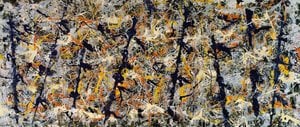
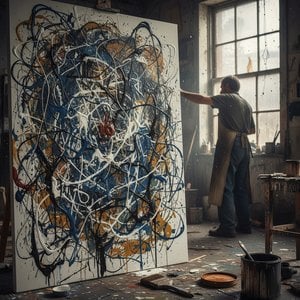
In den 1930er Jahren experimentierte Pollock mit verschiedenen Techniken und suchte nach Alternativen zum traditionellen Pinselstrich. Er begann, Farbe zu gießen, und erforschte deren Fließfähigkeit und unvorhersehbare Natur. Um das Jahr 1947 jedoch erfuhr seine künstlerische Laufbahn eine radikale Transformation. Indem er die Stafflei gänzlich aufgab, legte Pollock die Leinwände direkt auf den Boden und initiierte das, was als seine „Drip-Technik“ bekannt werden sollte. Er begann, Farbe von oben auf die Leinwand zu tropfen, zu spritzen und zu schleudern, wodurch er einen dynamischen Tanz zwischen Künstler, Medium und Oberfläche orchestrierte.
Dabei ging es nicht bloß um das Auftragen von Farbe; es ging darum, den Akt des Erschaffens selbst zu verkörpern. Pollocks Leinwände wurden zu Arenen physischen Ausdrucks, die die Unmittelbarkeit seiner Gesten und Emotionen einfingen. Die resultierenden Gemälde zeichnen sich durch ihre „All-over“-Komposition aus – ein Mangel an zentralem Fokus, der den Betrachter dazu einlädt, die gesamte Oberfläche als ein einheitliches Energiefeld zu erkunden. Komplexe Netzwerke aus Linien und Farben verflechten sich und schaffen eine visuelle Komplexität, die zugleich fesselnd und herausfordernd ist. Er verwendete unkonventionelle Werkzeuge – Stöcke, Messer, sogar Spritzen –, um die Farbe auf unvorhersehbare Weise zu manipulieren, was die spontane Natur seines Prozesses weiter unterstrich.
Dieser innovative Ansatz positionierte Pollock als zentrale Figur der aufstrebenden Abstrakten Expressionismus-Bewegung, die im New York der Nachkriegszeit entstand. Der Abstrakte Expressionismus priorisierte die spontane Geste, das monumentale Format und die nicht-gegenständliche Bildsprache und spiegelte einen breiteren kulturellen Wandel weg von traditionellen künstlerischen Konventionen wider. Auch seine Ehe mit der Mitkünstlerin Lee Krasner war entscheidend; sie bot ihm unerschütterliche emotionale Unterstützung und förderte aktiv seine künstlerische Entwicklung, da sie das bahnbrechende Wesen seiner Arbeit erkannte.
Ikonische Werke und ein bleibendes Vermächtnis
Pollocks berühmteste Werke – wie Number 1, 1950 (Lavender Mist), One: Number 31, 1950, Blue Poles: Number 11, 1952 und Convergence – sind Zeugnisse seiner revolutionären Technik. Diese Gemälde sind nicht einfach nur Bilder; sie sind Aufzeichnungen einer Performance, durchdrungen von der physischen Präsenz und emotionalen Intensität des Künstlers. Die dynamische Energie, die von diesen Leinwänden ausgeht, ist greifbar und zieht den Betrachter in eine Welt reiner Abstraktion.
Sein Stil transzendiert reine Ästhetik; er ist eine Untersuchung des Prozesses über das Produkt. Pollock suchte danach, die Unmittelbarkeit seiner Handlungen und Emotionen auf der Leinwand festzuhalten, indem er traditionelle Vorstellungen von Komposition und Repräsentation ablehnte. Er vertiefte sich in die Jungsche Psychologie und erforschte Archetypen sowie das Unterbewusste in seiner Kunst, um universelle Symbole und Urkräfte anzuzapfen.
Pollocks Einfluss auf die Kunstgeschichte ist unermesslich. Er veränderte grundlegend die Art und Weise, wie Künstler der Malerei entgegentraten, indem er sich von staffeleibasierten Methoden befreite und einen performativeren Ansatz wählte. Sein Werk half dabei, die Position New Yorks als globales Zentrum der modernen Kunst zu festigen und verlagerte den Fokus weg von der europäischen Dominanz. Sein Einfluss zeigt sich in den Werken unzähliger nachfolgender Künstler, einschließlich jener, die mit der Color Field Painting-Bewegung und späteren Formen des Abstrakten Expressionismus verbunden sind.
Obwohl er anfangs auf gemischte Kritiken stieß – einige Kritiker taten sein Werk als chaotisch oder handwerklich unzulänglich ab – wuchs Pollocks Ruf nach seinem frühen Tod im Jahr 1956 im Alter von 44 Jahren stetig an. Heute wird er universell als einer der bedeutendsten und einflussreichsten Künstler des 20. Jahrhunderts anerkannt – ein Visionär, der es wagte, Konventionen herauszufordern und die Grenzen des künstlerischen Ausdrucks neu zu definieren. Seine innovativen Techniken und sein expressiver Stil inspirieren und provozieren bis heute und sichern ihm ein unvergängliches Vermächtnis für kommende Generationen.



 In echtem Maßstab anzeigen
 Handgemalte Reproduktion kaufen
 Versenden als Grußkarte
 Teilen
 Details anzeigen
 Leitfaden öffnen

 Herunterladen
 Ähnliche Objekte
 Röntgenaufnahme
 Diashow
 Besucherstatistiken

 Mehr anzeigen






































 Die Glasoption ist nur für Größen unter 110 cm verfügbar.