In echtem Maßstab anzeigen In AR an der Wand sehen Handgemalte Reproduktion kaufen Zum digitalen Bild wechseln Versenden als Grußkarte
Details anzeigen Zu Favoriten hinzufügen Herunterladen Ähnliche Objekte Röntgenaufnahme Diashow Besucherstatistiken

The Republic

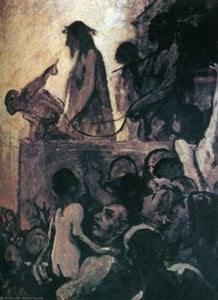
Honoré Daumier's "The Republic" (1848) is a powerful political satire depicting a woman embodying liberty and justice on a boat, reflecting the ideals of the French Revolution. A masterpiece of realism & social commentary.

Entdecken Sie Honoré Daumier (1808-1879), französischen Realisten & Satiriker! Seine Lithografien, Gemälde & Skulpturen kritisieren die Gesellschaft des 19. Jh.

Giclée / Kunstdruck

Giclée- oder Leinwanddruck in Museumsqualität mit schneller Produktion und flexiblen Veredelungsoptionen. ( Handgemalte Reproduktion kaufen Zum digitalen Bild wechseln)

P118B $10
P118H $10
P118W $10
P438Z $10
P508JH $12
P508YH $12
P805H $10
P805Z $10
P919BZ $10
P919G $10
P919XJ $10
P959ZH $10
P968JZ $12
W106C $8
W218G $10
W218JH $8
W218Y $10
W307PJ $10
W316G $10
W316PJ $8
W316Y $10
W398PJ $8
W4111J $10
W500HY $15
W500JH $15
W692G $12
W849H $8
W940BG $15
W953PJ $8

Standardformat
individuell anpassbar
CM
INCH

Wählen Sie aus unseren vordefinierten Formaten, die den ursprünglichen Proportionen des Kunstwerks entsprechen.

Breite
Höhe

Sie können Ihre eigenen Maße eingeben, um ein bestimmtes Format oder einen speziellen Platz einzupassen. Wenn das von Ihnen gewählte Format nicht den Proportionen des Originalbildes entspricht, werden wir das Kunstwerk entweder beschneiden oder das Bild mit einem gespiegelten oder einfarbigen Rand erweitern. Ein digitaler Entwurf wird Ihnen zur Genehmigung zugesandt, bevor die Produktion beginnt.
Bitte beachten Sie, dass die Vorschau auf dem Bildschirm nicht den tatsächlichen Zuschnitt oder die Erweiterung widerspiegelt. Nur der Entwurf zeigt die endgültige Komposition präzise an.
Obwohl Sondermaße verfügbar sind, empfehlen wir die Auswahl eines Maßes aus der vordefinierten Liste, um die ursprünglichen Proportionen zu bewahren.

Weltweiter Versand () innerhalb von 2 Wochen statt der üblichen 4/5 Wochen. (19 September)

why_choose_icon
Kostenloser weltweiter Expressversand
why_choose_icon
Hochwertige Leinenleinwand
why_choose_icon
Vollständiger Versicherungsschutz beim Versand
why_choose_icon
Zollgebühren-Rückerstattungsgarantie
why_choose_icon
Garantie für exakte Farbtreue
why_choose_icon
100-tägiges Rückgaberecht (nur bei Mängeln)
why_choose_icon
100% Geld-zurück-Garantie
why_choose_icon
Angebot für Mengenrabatt

Gesamtpreis

$ 68

reproduction

The Republic

Giclée / Kunstdruck

Format der Reproduktion

-

Gesamtpreis

$ 68

Kurzübersicht

  • Notable elements: Woman nursing children
  • Artist: Honoré Daumier
  • Location: Musée d'Orsay, Paris
  • Medium: Oil on canvas
  • Title: The Republic
  • Dimensions: 73 x 60 cm
  • Artistic style: Realism

Kunst-Quiz

Jede Frage hat nur eine richtige Antwort.

Frage 1:
What is the primary subject depicted in Honoré Daumier’s ‘The Republic’?
Frage 2:
In ‘The Republic’, what symbolic object is prominently held by the central figure?
Frage 3:
The painting ‘The Republic’ was created in which year?
Frage 4:
Honoré Daumier is best known for his work in which artistic medium?
Frage 5:
What social commentary is often associated with Daumier’s art, including ‘The Republic’?

A Portrait of Civic Duty and Social Critique

Honoré Daumier’s “The Republic” (1848) isn't merely a painting; it’s a potent distillation of the anxieties and aspirations swirling within post-revolutionary France. Captured with his signature blend of realism and biting satire, this oil on canvas presents a scene both familiar and profoundly unsettling – a woman, presumably a mother, holding her children close while simultaneously embodying the ideals of republican virtue. The composition immediately draws the eye to her central position; she’s not a regal figure or an idealized Madonna, but a common woman, weathered yet resolute, clutching a flag and a bottle—symbols that speak volumes about the precarious balance between nourishment and civic duty in a nation grappling with its new identity.

Daumier was deeply invested in documenting the social realities of his time. Born in Marseille in 1808, he witnessed firsthand the upheavals of the French Revolution and the subsequent political instability. His art became a relentless critique of the established order – the monarchy, the aristocracy, the Church, and the burgeoning bourgeoisie—all perceived as obstacles to genuine republicanism. “The Republic” is no exception; it’s a pointed commentary on the challenges faced by women in particular during this period of transition. The flag she holds isn't simply a symbol of national pride, but a visual representation of the ideals – liberty, equality, fraternity – that were supposed to underpin the new republic. The bottle, often interpreted as representing sustenance and motherhood, subtly suggests the vital role of family in sustaining these values.

Realism Infused with Dramatic Intensity

Daumier’s technique is characterized by a remarkable directness and emotional intensity. He eschewed the polished surfaces and idealized forms favored by many of his contemporaries, opting instead for a rougher, more immediate style. The brushstrokes are visible, conveying a sense of urgency and immediacy. The palette is muted—earthy browns, ochres, and greys—reflecting the somber mood of the scene and emphasizing the weight of responsibility borne by the central figure. Notice how he uses light and shadow to sculpt her face, highlighting the lines etched by hardship yet radiating an undeniable strength. The background, featuring a simple chair and hinting at a boat, grounds the scene in a domestic setting, further emphasizing the woman’s role as the heart of the family and the embodiment of republican values.

He was heavily influenced by artists like Rubens, particularly in his use of dramatic chiaroscuro – the stark contrast between light and dark—to create a sense of theatricality. This technique amplifies the emotional impact of the painting, drawing attention to the woman’s face and gestures while simultaneously suggesting the turbulent political landscape surrounding her. Daumier's skill lay not just in his technical proficiency but also in his ability to imbue ordinary subjects with extraordinary significance.

Symbolism and Social Commentary

Beyond its immediate depiction, “The Republic” is laden with symbolism. The flag, as mentioned earlier, represents the ideals of the republic, while the bottle speaks to the fundamental needs of family and community. However, the scene isn’t entirely optimistic. The woman's posture suggests a quiet determination rather than triumphant celebration. She’s not basking in victory; she’s enduring—a testament to the ongoing struggle for republican values. Some scholars have suggested that the children represent the future of France, entrusted to this woman’s care as she navigates the complexities of the new political order.

Daumier's work was often controversial during his lifetime, and “The Republic” is no exception. His unflinching critique of social injustice earned him both admirers and enemies. Yet, it remains a powerful and enduring image—a poignant reminder of the challenges inherent in establishing a truly democratic society and the vital role played by ordinary citizens in upholding its ideals.

A Timeless Masterpiece for Reproduction

Reproductions of “The Republic” capture the essence of Daumier’s artistic vision. Available in various sizes, this iconic artwork offers a unique opportunity to bring a touch of historical significance and social commentary into any space. The rich textures and dramatic lighting are faithfully reproduced, allowing you to appreciate the depth and complexity of Daumier's masterful technique. Whether displayed as a statement piece or incorporated into a more subtle interior design scheme, “The Republic” is sure to spark conversation and inspire reflection on the enduring values of liberty, equality, and fraternity.


Biografie des Künstlers

Ein Leben für Kunst und Aktivismus

Honoré-Victorin Daumier, ein französischer Grafiker, Karikaturist, Maler und Bildhauer, hinterließ einen bleibenden Eindruck auf die Kunstszene des 19. Jahrhunderts. Geboren am 26. Februar 1808 in Marseille und gestorben am 10. Februar 1879 in Paris, war Daumiers Leben ein Beweis für sein unermüdliches Engagement, das Wesen der französischen Gesellschaft einzufangen.

Frühes Leben und Einflüsse

Daumiers frühes Leben war geprägt von den literarischen Ambitionen seines Vaters, die die Familie 1814 nach Paris führten. Diese Begegnung mit der pulsierenden Kunstszene der Stadt beeinflusste Daumiers Neigung zur Kunst. Er begann seine Lehre unter Alexandre Lenoir und trat später der Académie Suisse bei.

Künstlerische Laufbahn

Daumiers umfangreiche Karriere umfasste mehrere Medien, darunter Lithografie, Malerei und Bildhauerei. Seine frühen Arbeiten waren durch anonyme Beiträge zu Verlagen gekennzeichnet, die den Stil von Charlet nachahmten und eine lebhafte Begeisterung für die napoleonische Legende zeigten. Nach der Revolution von 1830 wurde Daumiers Kunst offener politisch.
  • Le Charivari, eine Comic-Zeitschrift, die von Charles Philipon gegründet wurde, bot Daumier eine Plattform für seine satirische Arbeit, die den Bourgeoisie und der Regierungsinkompetenz zum Ziel war.
  • Seine Karikaturen von politischen Figuren und Satiren über gesellschaftliches Verhalten brachten ihm sowohl Anerkennung als auch Kontroversen ein, darunter sechs Monate Haft im Jahr 1832.

Bemerkenswerte Werke und Vermächtnis

- **Rue Transnonain, 15. April 1834**: Eine ergreifende Lithografie, die das Massaker in der Rue Transnoin darstellt, Teil der Unruhen vom April 1834 in Paris. - **Les Gens de Justice**: Eine scharfe Satire über den juristischen Beruf, die Daumiers Meisterschaft der Karikatur demonstriert. **Daumiers Einfluss auf die Kunstgeschichte** Daumiers unerschütterliches Engagement für die Erfassung der Wahrheit der französischen Gesellschaft hat Generationen von Künstlern beeinflusst. Seine Werke sind in verschiedenen Museen und Sammlungen zu finden, darunter auch auf WahooArt, das einen umfassenden Überblick über seine künstlerische Arbeit bietet.
  • Erkunden Sie Daumiers Lithografien und Gemälde auf WahooArt.
  • Entdecken Sie mehr über französische Kunstrichtungen, darunter den Realismus, auf Wikipedia.

Schlussfolgerung

Daumiers Leben war ein Beweis für sein unermüdliches Engagement, das Wesen der französischen Gesellschaft einzufangen. Durch seine Kunst inspiriert und provoziert er weiterhin und bietet einen einzigartigen Einblick in Frankreich des 19. Jahrhunderts.

  • Das Musée d'Orsay in Paris beherbergt einige von Daumiers restaurierten ungebrannten Tonfiguren.
  • Erfahren Sie mehr über Daumiers Leben und Werk auf WahooArt.
Honoré Daumier

Honoré Daumier

1808 - 1879 , Frankreich

Eckdaten zum Künstler

  • Beeinflusste Künstler:
    • Camille Pissarro
    • Van Gogh
    • Cézanne
  • Bemerkenswerte Werke:
    • Rue Transnonain, 15. April 1834
    • Les Gens de Justice
  • Einflussreiche Künstler:
    • Alexandre Lenoir
    • Charlet
  • Geburtsdatum: 26. Februar 1808
  • Geburtsort: Marseille, Frankreich
  • Künstlerische Richtung: Realismus, Karikatur
  • Nationalität: Französisch
  • Todatum: 10. Februar 1879
  • Vollständiger Name: Honoré Daumier
Entdecken Sie Kunstwerke, die nach Themen, Stilen und Merkmalen sortiert sind.