Vorschau anzeigenVorschau anzeigen In AR erlebenIn AR erleben Handgemalte Reproduktion bestellen Handgemalte Reproduktion bestellenZum digitalen Bild wechseln Zum digitalen Bild wechseln VersendenVersenden
Details anzeigenDetails anzeigen Zu Favoriten hinzufügen Zu Favoriten hinzufügen HerunterladenHerunterladen Ähnliche ObjekteÄhnliche Objekte RöntgenaufnahmeRöntgenaufnahme DiashowDiashow StatistikenStatistiken

The Drama

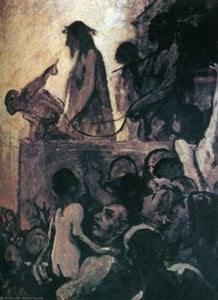
Honoré Daumier's "The Drama" captures a vibrant theatrical scene with intense emotion and dramatic figures. A captivating glimpse into 19th-century performance art, rendered in oil on canvas.

Entdecken Sie Honoré Daumier (1808-1879), französischen Realisten & Satiriker! Seine Lithografien, Gemälde & Skulpturen kritisieren die Gesellschaft des 19. Jh.

Giclée / Kunstdruck

Giclée- oder Leinwanddruck in Museumsqualität mit schneller Produktion und flexiblen Veredelungsoptionen. (Handgemalte Reproduktion bestellen Handgemalte Reproduktion bestellenZum digitalen Bild wechseln Zum digitalen Bild wechseln)

P118B $10
P118H $10
P118W $10
P438Z $10
P508JH $12
P508YH $12
P805H $10
P805Z $10
P919BZ $10
P919G $10
P919XJ $10
P959ZH $10
P968JZ $12
W106C $8
W218G $10
W218JH $8
W218Y $10
W307PJ $10
W316G $10
W316PJ $8
W316Y $10
W398PJ $8
W4111J $10
W500HY $15
W500JH $15
W692G $12
W849H $8
W940BG $15
W953PJ $8

Standardformat
individuell anpassbar
CM
INCH

Wählen Sie aus unseren vordefinierten Formaten, die den ursprünglichen Proportionen des Kunstwerks entsprechen.

Breite
Höhe

Sie können Ihre eigenen Maße eingeben, um ein bestimmtes Format oder einen speziellen Platz einzupassen. Wenn das von Ihnen gewählte Format nicht den Proportionen des Originalbildes entspricht, werden wir das Kunstwerk entweder beschneiden oder das Bild mit einem gespiegelten oder einfarbigen Rand erweitern. Ein digitaler Entwurf wird Ihnen zur Genehmigung zugesandt, bevor die Produktion beginnt.
Bitte beachten Sie, dass die Vorschau auf dem Bildschirm nicht den tatsächlichen Zuschnitt oder die Erweiterung widerspiegelt. Nur der Entwurf zeigt die endgültige Komposition präzise an.
Obwohl Sondermaße verfügbar sind, empfehlen wir die Auswahl eines Maßes aus der vordefinierten Liste, um die ursprünglichen Proportionen zu bewahren.

Weltweiter Versand () innerhalb von 2 Wochen statt der üblichen 4/5 Wochen. (9 September)

why_choose_icon
Kostenloser weltweiter Expressversand
why_choose_icon
Hochwertige Leinenleinwand
why_choose_icon
Umfassender Versicherungsschutz beim Versand
why_choose_icon
Zollgebühren-Rückerstattungsgarantie
why_choose_icon
Garantie für exakte Farbtreue
why_choose_icon
100-Tage-Rückgaberecht (nur bei Mängeln)
why_choose_icon
100% Geld-zurück-Garantie
why_choose_icon
Mengenrabatt verfügbar

Gesamtpreis

$ 68

reproduction

The Drama

Giclée / Kunstdruck

Format der Reproduktion

-

Gesamtpreis

$ 68

Eckdaten

  • Movement: Realism
  • Dimensions: 98 x 90 cm
  • Artist: Honoré Daumier
  • Year: 1860
  • Notable elements: Dramatic scene, crowd
  • Subject or theme: Social unrest, rebellion
  • Title: The Drama

Kunst-Quiz

Jede Frage hat nur eine richtige Antwort.

Frage 1:
What is the primary subject depicted in Honoré Daumier’s ‘The Drama’?
Frage 2:
In what year was Honoré Daumier's ‘The Drama’ painted?
Frage 3:
What historical event is alluded to in the title ‘The Drama’?
Frage 4:
Which artistic movement is most closely associated with Honoré Daumier’s style?
Frage 5:
What does the phrase ‘Behold the Man’ (Ecce Homo) represent in the painting?

A Stage of Emotion: Honoré Daumier’s “The Drama”

Honoré Daumier's "The Drama," painted in 1860, isn’t merely a depiction of a theatrical performance; it’s a visceral exploration of human interaction, power dynamics, and the very essence of spectacle. The painting immediately commands attention with its dynamic composition – a swirling vortex of figures caught in a moment of intense action, frozen mid-gesture as if plucked from the heart of a dramatic scene. It's a work that transcends simple illustration, becoming a potent commentary on social hierarchies and the performative nature of life itself.

Daumier’s style is instantly recognizable: a masterful blend of realism and expressive draftsmanship. He eschews idealized forms in favor of capturing the raw energy and emotional truth of his subjects. The figures are rendered with quick, confident brushstrokes, conveying a sense of immediacy and urgency. Notice how he utilizes chiaroscuro – the dramatic contrast between light and shadow – to heighten the theatricality of the scene, drawing our eyes to key moments of interaction and creating an atmosphere of suspense and intrigue. The palette is rich and earthy, dominated by browns, ochres, and deep reds, lending a sense of both drama and groundedness to the composition.

A Glimpse into 19th-Century Parisian Life

To fully appreciate “The Drama,” it’s crucial to understand its historical context. Painted during the tumultuous years following the French Revolution, Daumier was a keen observer of social and political life in Paris. He used his art as a powerful tool for satire and critique, exposing the corruption and hypocrisy he witnessed within the established order. This particular scene likely depicts a performance at the Théâtre Français, a prominent venue during that era, reflecting the vibrant yet often fraught cultural landscape of the city.

The painting’s subject matter – a man dramatically lifting a woman from the stage – speaks volumes about the power dynamics at play. The central figure, bathed in light, embodies authority and control, while the woman, caught mid-fall, represents vulnerability and perhaps even resistance. The surrounding figures, some watching with detached amusement, others actively participating in the performance, further underscore this complex interplay of roles and relationships. Daumier wasn’t simply documenting a theatrical event; he was dissecting the social rituals and power structures that shaped Parisian society.

Symbolism and Theatricality

Beyond its immediate narrative, “The Drama” is laden with symbolic meaning. The stage itself becomes a metaphor for life – a constructed space where roles are played, identities are performed, and power is asserted. The act of lifting the woman can be interpreted as both an act of dominance and a gesture of care (though the ambiguity leaves room for interpretation). The overall composition evokes the conventions of melodrama, with its heightened emotions, dramatic gestures, and focus on spectacle. Daumier was acutely aware of these theatrical tropes and skillfully employed them to convey his critical message.

The inclusion of a diverse audience – some observing passively, others actively engaged – highlights the role of spectatorship in shaping social reality. We are invited to consider our own position within this scene, questioning our complicity in the performance and reflecting on the power dynamics that govern our interactions with one another.

A Timeless Masterpiece: Reproduction Possibilities

“The Drama” remains a remarkably powerful and enduring work of art. Its dramatic intensity, evocative composition, and insightful social commentary continue to resonate with viewers today. Reproductions offer an accessible way to bring this masterpiece into your home or office, allowing you to experience its captivating beauty and thought-provoking themes firsthand. When selecting a reproduction, consider the quality of materials used – a fine art print on archival paper will ensure that the colors and details remain vibrant for years to come. This painting is more than just an image; it’s a window into a bygone era and a timeless meditation on the complexities of human experience.


Über den Künstler

Ein Leben für Kunst und Aktivismus

Honoré-Victorin Daumier, ein französischer Grafiker, Karikaturist, Maler und Bildhauer, hinterließ einen bleibenden Eindruck auf die Kunstszene des 19. Jahrhunderts. Geboren am 26. Februar 1808 in Marseille und gestorben am 10. Februar 1879 in Paris, war Daumiers Leben ein Beweis für sein unermüdliches Engagement, das Wesen der französischen Gesellschaft einzufangen.

Frühes Leben und Einflüsse

Daumiers frühes Leben war geprägt von den literarischen Ambitionen seines Vaters, die die Familie 1814 nach Paris führten. Diese Begegnung mit der pulsierenden Kunstszene der Stadt beeinflusste Daumiers Neigung zur Kunst. Er begann seine Lehre unter Alexandre Lenoir und trat später der Académie Suisse bei.

Künstlerische Laufbahn

Daumiers umfangreiche Karriere umfasste mehrere Medien, darunter Lithografie, Malerei und Bildhauerei. Seine frühen Arbeiten waren durch anonyme Beiträge zu Verlagen gekennzeichnet, die den Stil von Charlet nachahmten und eine lebhafte Begeisterung für die napoleonische Legende zeigten. Nach der Revolution von 1830 wurde Daumiers Kunst offener politisch.
  • Le Charivari, eine Comic-Zeitschrift, die von Charles Philipon gegründet wurde, bot Daumier eine Plattform für seine satirische Arbeit, die den Bourgeoisie und der Regierungsinkompetenz zum Ziel war.
  • Seine Karikaturen von politischen Figuren und Satiren über gesellschaftliches Verhalten brachten ihm sowohl Anerkennung als auch Kontroversen ein, darunter sechs Monate Haft im Jahr 1832.

Bemerkenswerte Werke und Vermächtnis

- **Rue Transnonain, 15. April 1834**: Eine ergreifende Lithografie, die das Massaker in der Rue Transnoin darstellt, Teil der Unruhen vom April 1834 in Paris. - **Les Gens de Justice**: Eine scharfe Satire über den juristischen Beruf, die Daumiers Meisterschaft der Karikatur demonstriert. **Daumiers Einfluss auf die Kunstgeschichte** Daumiers unerschütterliches Engagement für die Erfassung der Wahrheit der französischen Gesellschaft hat Generationen von Künstlern beeinflusst. Seine Werke sind in verschiedenen Museen und Sammlungen zu finden, darunter auch auf WahooArt, das einen umfassenden Überblick über seine künstlerische Arbeit bietet.
  • Erkunden Sie Daumiers Lithografien und Gemälde auf WahooArt.
  • Entdecken Sie mehr über französische Kunstrichtungen, darunter den Realismus, auf Wikipedia.

Schlussfolgerung

Daumiers Leben war ein Beweis für sein unermüdliches Engagement, das Wesen der französischen Gesellschaft einzufangen. Durch seine Kunst inspiriert und provoziert er weiterhin und bietet einen einzigartigen Einblick in Frankreich des 19. Jahrhunderts.
  • Das Musée d'Orsay in Paris beherbergt einige von Daumiers restaurierten ungebrannten Tonfiguren.
  • Erfahren Sie mehr über Daumiers Leben und Werk auf WahooArt.
Honoré Daumier

Honoré Daumier

1808 - 1879 , Frankreich

Kurzinfos

  • Beeinflusste Künstler:
    • Camille Pissarro
    • Van Gogh
    • Cézanne
  • Bemerkenswerte Werke:
    • Rue Transnonain, 15. April 1834
    • Les Gens de Justice
  • Einflussreiche Künstler:
    • Alexandre Lenoir
    • Charlet
  • Geburtsdatum: 26. Februar 1808
  • Geburtsort: Marseille, Frankreich
  • Künstlerische Richtung: Realismus, Karikatur
  • Nationalität: Französisch
  • Todatum: 10. Februar 1879
  • Vollständiger Name: Honoré Daumier
Entdecken Sie Kunstwerke, die nach Themen, Stilen und Merkmalen sortiert sind.