Vorschau anzeigen In AR ansehen Handgemalte Reproduktion bestellen Zum digitalen Bild wechseln Versenden
Details anzeigen Leitfaden Zu Favoriten hinzufügen Herunterladen Ähnliche Objekte Röntgenaufnahme Diashow Statistiken

Under Boots

A man in distress lies on the ground in this evocative 1928 painting by Hermann Erneste Abeking that captures a somber atmosphere through expressive early 20th-century German artistry, perfect for your private collection.

Entdecken Sie die fesselnden Werke von Hermann Ernst Abeking, einem deutschen Maler & Illustrator, bekannt für Karikaturen, Buchillustrationen und Ausdrucksformen der Kunst des frühen 20. Jahrhunderts.

Giclée / Kunstdruck

Giclée- oder Leinwanddruck in Museumsqualität mit schneller Produktion und flexiblen Veredelungsoptionen. ( Handgemalte Reproduktion bestellen Zum digitalen Bild wechseln)

Corner sample of the P118B picture frame: formgepresstes Polystyrol, 5 cm wide and 3 cm thick
P118B €10
Corner sample of the P118H picture frame: formgepresstes Polystyrol, 5 cm wide and 3 cm thick
P118H €10
Corner sample of the P118W picture frame: formgepresstes Polystyrol, 5 cm wide and 3 cm thick
P118W €10
Corner sample of the P438Z picture frame: formgepresstes Polystyrol, 5.5 cm wide and 3.5 cm thick
P438Z €10
Corner sample of the P508JH picture frame: formgepresstes Polystyrol, 7 cm wide and 3.5 cm thick
P508JH €12
Corner sample of the P508YH picture frame: formgepresstes Polystyrol, 7 cm wide and 3.5 cm thick
P508YH €12
Corner sample of the P805H picture frame: formgepresstes Polystyrol, 5 cm wide and 3.5 cm thick
P805H €10
Corner sample of the P805Z picture frame: formgepresstes Polystyrol, 5 cm wide and 3.5 cm thick
P805Z €10
Corner sample of the P919BZ picture frame: formgepresstes Polystyrol, 7 cm wide and 3.5 cm thick
P919BZ €10
Corner sample of the P919G picture frame: formgepresstes Polystyrol, 7 cm wide and 3.5 cm thick
P919G €10
Corner sample of the P919XJ picture frame: formgepresstes Polystyrol, 7 cm wide and 3.5 cm thick
P919XJ €10
Corner sample of the P959ZH picture frame: formgepresstes Polystyrol, 5 cm wide and 3 cm thick
P959ZH €10
Corner sample of the P968JZ picture frame: formgepresstes Polystyrol, 6 cm wide and 4 cm thick
P968JZ €12
Corner sample of the W106C picture frame: Massivholz, 5 cm wide and 3 cm thick
W106C €8
Corner sample of the W218G picture frame: Massivholz, 5 cm wide and 3 cm thick
W218G €10
Corner sample of the W218JH picture frame: Massivholz, 5 cm wide and 3 cm thick
W218JH €8
Corner sample of the W218Y picture frame: Massivholz, 5 cm wide and 3 cm thick
W218Y €10
Corner sample of the W307PJ picture frame: Massivholz, 6 cm wide and 3 cm thick
W307PJ €10
Corner sample of the W316G picture frame: Massivholz, 6 cm wide and 3 cm thick
W316G €10
Corner sample of the W316PJ picture frame: Massivholz, 6 cm wide and 3 cm thick
W316PJ €8
Corner sample of the W316Y picture frame: Massivholz, 6 cm wide and 3 cm thick
W316Y €10
Corner sample of the W398PJ picture frame: Massivholz, 5 cm wide and 3 cm thick
W398PJ €8
Corner sample of the W4111J picture frame: Massivholz, 6.5 cm wide and 3.5 cm thick
W4111J €10
Corner sample of the W500HY picture frame: Massivholz, 7 cm wide and 5 cm thick
W500HY €15
Corner sample of the W500JH picture frame: Massivholz, 7 cm wide and 5 cm thick
W500JH €15
Corner sample of the W692G picture frame: Massivholz, 8 cm wide and 4 cm thick
W692G €12
Corner sample of the W849H picture frame: Massivholz, 5 cm wide and 3 cm thick
W849H €8
Corner sample of the W940BG picture frame: Massivholz, 7.5 cm wide and 4.5 cm thick
W940BG €15
Corner sample of the W953PJ picture frame: Massivholz, 6 cm wide and 3.5 cm thick
W953PJ €8

Standardformat
individuell anpassbar
CM
INCH

Wählen Sie aus unseren vordefinierten Formaten, die den ursprünglichen Proportionen des Kunstwerks entsprechen.

Breite
Höhe

Geben Sie die benötigte Breite und Höhe an, damit der Druck perfekt in Ihren Rahmen oder an Ihre Wand passt. Ein Druck kann nur beschnitten, aber niemals größer als das Originalbild angefertigt werden; daher verliert ein Format mit anderen Proportionen einen Teil des Bildes. Wir senden Ihnen ein digitales Mockup zur Freigabe, bevor wir den Druck ausführen. Das auf dieser Seite gezeigte Bild zeigt nicht den tatsächlichen Beschnitt – dies ist nur im Mockup ersichtlich.

Weltweiter Versand () innerhalb von 2 Wochen statt der üblichen 4/5 Wochen. (26 Oktober)

Kostenloser weltweiter Expressversand
Hochwertige Leinenleinwand
Umfassender Versicherungsschutz beim Versand
Zollgebühren-Rückerstattungsgarantie
Garantie für exakte Farbtreue
100 Tage Rückgaberecht (nur bei Mängeln)
100% Geld-zurück-Garantie
Mengenrabatt verfügbar

Gesamtpreis

€ 60

Under Boots

Giclée / Kunstdruck

Format der Reproduktion

-

Endpreis

€ 60

Eckdaten

  • Artist: Hermann Erneste Abeking
  • Year: 1928
  • Title: Under Boots

A Study in Solitude: The Haunting Depths of Under Boots

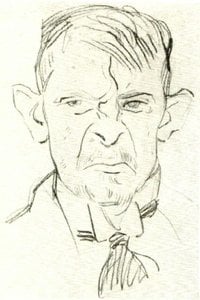
In the evocative realm of early 20th-century German art, few works capture the psychological tension of the era as poignantly as Hermann Abeking’s 1928 masterpiece, Under Boots. At first glance, the viewer is drawn into a somber, shadowed interior where the weight of existence seems to press down upon the canvas. The painting depicts a solitary figure reclined on the ground, his head buried in his hands in a gesture of profound despair or perhaps deep introspection. Clad in striking yellow trousers that pierce through the surrounding gloom, the man becomes a focal point of vulnerability amidst a dark, claustrophobic setting. The presence of indistinct figures in the background and the suggestion of heavy boots looming near the subject create an atmosphere of palpable discomfort, as if the very air is thick with the anxiety of a world on the brink of transformation.

Abeking, a versatile talent who moved fluidly between the worlds of fine art and commercial illustration, brings a unique graphic sensibility to this piece. His training in the prestigious academies of Dresden and Berlin allowed him to master a technique that balances representational clarity with an expressive, almost theatrical use of light and shadow. In Under Boots, the interplay of darkness and sudden bursts of color serves not just to define form, but to direct the emotional narrative. The heavy, somber tones evoke the influence of German Expressionism—a movement that sought to strip away academic pretension to reveal the raw, unadulterated truths of human suffering and isolation. Every brushstroke contributes to a sense of mounting pressure, making the viewer feel like an intruder in this private moment of distress.

Historical Resonance and Symbolic Depth

To understand the profound impact of this work, one must consider the historical landscape of 1928 Germany. This was a period of intense social upheaval and psychological fragmentation. Abeking, while deeply connected to the vibrant publishing scene in Berlin, often infused his work with a sense of the existential. The title itself, Under Boots, serves as a powerful metaphor for the crushing weight of societal expectations, political instability, or perhaps the inescapable march of time and authority. The figure’s posture—collapsed and retreating into himself—mirrors the collective fatigue of a generation navigating the turbulent waters between the memory of the Great War and the approaching shadows of another global conflict.

For the discerning collector or interior designer, this painting offers more than mere decoration; it provides a profound conversational centerpiece. The composition’s ability to command attention through its dramatic chiaroscuro makes it an ideal acquisition for spaces that value depth, intellect, and emotional resonance. Whether placed in a quiet study or a contemporary gallery setting, a high-quality reproduction of this work invites contemplation. It serves as a window into a pivotal moment in art history, where the boundaries between illustration and fine art blurred to create something deeply human, hauntingly beautiful, and eternally relevant.

Fragen & Antworten

In welcher Ausrichtung liegt "Under Boots" von Hermann Ernst Abeking vor?

"Under Boots" von Hermann Ernst Abeking hat ein Landscape-Format. Das Format beschreibt die Proportionen der Komposition.

Welche Stimmung und welche Emotionen vereinen sich in "Under Boots"?

"Under Boots" von Hermann Ernst Abeking vermittelt ein Somber Gefühl innerhalb einer insgesamt Dramatic Stimmung.

Wie stellt "Under Boots" von Hermann Ernst Abeking eine Verbindung zwischen Expressionism und dem Heimatland des Künstlers her?

"Under Boots" verbindet die Expressionism-Bewegung durch den Geburtsort ihres Schöpfers mit Deutschland.


Künstlerbiografie

Ein deutscher Maler, Grafiker und Illustrator im Werden

Hermann Erneste Abeking, eine bedeutende Gestalt der deutschen Kunst des frühen 20. Jahrhunderts, hinterließ einen unvergesslichen Eindruck in der Welt der Malerei, der Grafik und der Illustration. Geboren 1882 in Berlin als zweiter Sohn von Hermann George Louis Abeking und Clara Dinglinger, war er bereits von Kindheit an für künstlerische Größe bestimmt.

Frühes Leben und Ausbildung

Die prägenden Jahre Abekings verbrachte er mit dem Studium an den angesehenen Kunstakademien in Dresden und Berlin, wo er seine Fähigkeiten an der Seite einiger der talentiertesten Künstler seiner Zeit verfeinerung konnte. Diese fundamentale Epoche formte nicht nur seine Technik, sondern pflanzte auch eine tiefe Wertschätzung für die vielfältigen künstlerischen Stile in ihm ein, die sein späteres Werk maßgeblich beeinflussen sollten.

Künstlerische Laufbahn

  • Hugdietrichs Brautfahrt, ein Buch, mit dessen Illustration er bereits im Alter von zwanzig Jahren beauftragt wurde, katapultierte Abeking als erfolgreichen Karikaturisten ins Rampenlicht.
  • Seine Verbindung zum Brücke-Museum Berlin beeinflusste, obwohl er kein Mitglied war, sein Frühwerk und spiegelte die Betonung von Expressionismus und Primitivismus der „Die Brücke“-Bewegung wider.
  • Als Buchillustrator für den Ullstein Verlag wurde Abekings Vielseitigkeit als Künstler eindrucksvoll unter Beweis gestellt.
  • Seine Karikaturen in den Lustigen Blättern, dem True Jacob und Lachen Links demonstrieren seine Fähigkeit, Humor mit künstlerischer Integrität zu vereinen.
  • Die Mitgliedschaft im Verband deutscher Illustratoren festigte seine Position innerhalb der deutschen Kunstgemeinschaft.

Privatleben und spätere Jahre

Im Jahr 1903 heiratete Abeking Elly Grube, eine selbst als Malerin tätige Künstlerin. Der 1904 erworbene Sommersitz des Paares in Althagen auf dem Fischland diente als ruhige Kulisse für ihr Familienleben, das durch die Geburt der beiden Kinder Ortrud (1904) und Thomas (1g09) bereichert wurde. Nach der Teilnahme am Ersten Weltkrieg widmete sich Abeking ganz der Malerei und hinterließ ein Vermächtnis vielfältiger künstlerischer Ausdrucksformen. Sein Ableben in Berlin im Jahr 1939 markierte das Ende einer Ära, sicherte ihm jedoch zugleich seinen Platz in den Annalen der deutschen Kunstgeschichte. Heute findet man sein Werk in verschiedenen Sammlungen und Museen, darunter auch auf der Hermann Erneste Abeking Seite von WahooArt, ein Zeugnis seines fortwährenden Einflusses. Entdecken Sie mehr über das Leben und die Werke von Hermann Ernste Abeking durch die umfangreiche Sammlung von WahooArt: Erkunden Sie den Malprozess bei WahooArt Akademie der bildenden Künste Wien (Wien, Österreich) – Ein umfassender Leitfaden
Hermann Ernst Abeking

Hermann Ernst Abeking

1882 - 1939 , Deutschland