In echtem Maßstab anzeigen In AR an der Wand sehen Zum Druck wechseln Zum digitalen Bild wechseln Versenden als Grußkarte
Details anzeigen Leitfaden öffnen Zu Favoriten hinzufügen Herunterladen Ähnliche Objekte Röntgenaufnahme Diashow Besucherstatistiken

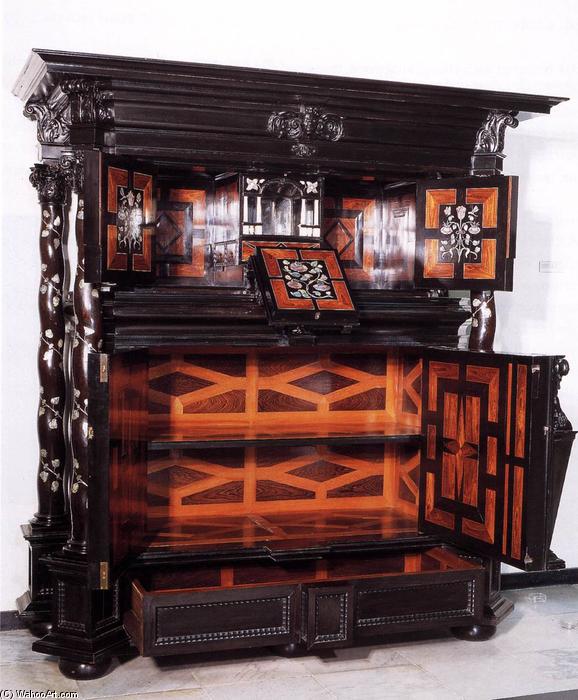
Cupboard (interior)

Marvel at Herman Doomer's 'Cupboard (Interior)' – a stunning 17th-century masterpiece showcasing intricate ebony, mother-of-pearl, and vibrant wood details from the Rijksmuseum. A true Dutch golden age treasure!

Ein bedeutender Kunsthandwerker des Goldenen Zeitalters der Niederlande, bekannt für seine exquisiten Ebenholzfurnier-Möbel und den berühmten Schrank (Interieur) – entdecken Sie die kunstvolle Meisterschaft einer Ära voller Opulenz.

Handgefertigte Ölreproduktion

Handgemaltes Ölgemälde auf Leinwand in Ihrer Wunschgröße und mit Rahmen, auf Bestellung von unseren Künstlern angefertigt. ( Zum Druck wechseln Zum digitalen Bild wechseln)

Corner sample of the P118B picture frame: formgepresstes Polystyrol, 5 cm wide and 3 cm thick
P118B €10
Corner sample of the P118H picture frame: formgepresstes Polystyrol, 5 cm wide and 3 cm thick
P118H €10
Corner sample of the P118W picture frame: formgepresstes Polystyrol, 5 cm wide and 3 cm thick
P118W €10
Corner sample of the P438Z picture frame: formgepresstes Polystyrol, 5.5 cm wide and 3.5 cm thick
P438Z €10
Corner sample of the P508JH picture frame: formgepresstes Polystyrol, 7 cm wide and 3.5 cm thick
P508JH €12
Corner sample of the P508YH picture frame: formgepresstes Polystyrol, 7 cm wide and 3.5 cm thick
P508YH €12
Corner sample of the P805H picture frame: formgepresstes Polystyrol, 5 cm wide and 3.5 cm thick
P805H €10
Corner sample of the P805Z picture frame: formgepresstes Polystyrol, 5 cm wide and 3.5 cm thick
P805Z €10
Corner sample of the P919BZ picture frame: formgepresstes Polystyrol, 7 cm wide and 3.5 cm thick
P919BZ €10
Corner sample of the P919G picture frame: formgepresstes Polystyrol, 7 cm wide and 3.5 cm thick
P919G €10
Corner sample of the P919XJ picture frame: formgepresstes Polystyrol, 7 cm wide and 3.5 cm thick
P919XJ €10
Corner sample of the P959ZH picture frame: formgepresstes Polystyrol, 5 cm wide and 3 cm thick
P959ZH €10
Corner sample of the P968JZ picture frame: formgepresstes Polystyrol, 6 cm wide and 4 cm thick
P968JZ €12
Corner sample of the W106C picture frame: Massivholz, 5 cm wide and 3 cm thick
W106C €8
Corner sample of the W218G picture frame: Massivholz, 5 cm wide and 3 cm thick
W218G €10
Corner sample of the W218JH picture frame: Massivholz, 5 cm wide and 3 cm thick
W218JH €8
Corner sample of the W218Y picture frame: Massivholz, 5 cm wide and 3 cm thick
W218Y €10
Corner sample of the W307PJ picture frame: Massivholz, 6 cm wide and 3 cm thick
W307PJ €10
Corner sample of the W316G picture frame: Massivholz, 6 cm wide and 3 cm thick
W316G €10
Corner sample of the W316PJ picture frame: Massivholz, 6 cm wide and 3 cm thick
W316PJ €8
Corner sample of the W316Y picture frame: Massivholz, 6 cm wide and 3 cm thick
W316Y €10
Corner sample of the W398PJ picture frame: Massivholz, 5 cm wide and 3 cm thick
W398PJ €8
Corner sample of the W4111J picture frame: Massivholz, 6.5 cm wide and 3.5 cm thick
W4111J €10
Corner sample of the W500HY picture frame: Massivholz, 7 cm wide and 5 cm thick
W500HY €15
Corner sample of the W500JH picture frame: Massivholz, 7 cm wide and 5 cm thick
W500JH €15
Corner sample of the W692G picture frame: Massivholz, 8 cm wide and 4 cm thick
W692G €12
Corner sample of the W849H picture frame: Massivholz, 5 cm wide and 3 cm thick
W849H €8
Corner sample of the W940BG picture frame: Massivholz, 7.5 cm wide and 4.5 cm thick
W940BG €15
Corner sample of the W953PJ picture frame: Massivholz, 6 cm wide and 3.5 cm thick
W953PJ €8

Standardformat
individuell anpassbar
CM
INCH

Wählen Sie aus unseren vordefinierten Formaten, die den ursprünglichen Proportionen des Kunstwerks entsprechen.

Breite
Höhe

Geben Sie die Breite und die Höhe an, die Sie für Ihren Rahmen oder Ihre Wand benötigen. Da dieses Werk handgemalt ist, kann der Künstler bei einer anderen Form etwas mehr um das Bild herum malen oder etwas abschneiden – Sie entscheiden. Wir senden Ihnen ein digitales Mockup zur Freigabe, bevor mit dem Malen begonnen wird. Das auf dieser Seite gezeigte Bild stellt nicht das tatsächliche Ergebnis dar – dies tut nur das Mockup.

Beispiele für Anpassungsmöglichkeiten: Gesicht durch Kundenfoto ersetzen; Haustier hinzufügen (z. B. Katze durch Hund ersetzen); eine versteckte Nachricht im Hintergrund einfügen; Hintergrundlandschaft oder -elemente ändern.
Nach der Bestellung wird das WahooArt.com-Team dem Kunden Anweisungen per E-Mail zusenden und eine Mockup-Vorschau bereitstellen.

Weltweiter Versand () in nur 3 bis 4 Wochen statt der üblichen 5 Wochen. (22 Oktober). Keine Kompromisse bei der Qualität.

Kostenloser weltweiter Expressversand
Hochwertige Leinenleinwand
Vollständiger Versicherungsschutz beim Versand
Zollgebühren-Rückerstattungsgarantie
Garantie für exakte Farbtreue
100-tägiges Rückgaberecht (nur bei Mängeln)
100% Geld-zurück-Garantie
Angebot für Mengenrabatt

Gesamtpreis

€ 239

Cupboard (interior)

Reproduktionsmedium

Format der Reproduktion

-

Gesamtpreis

€ 239

Kurzübersicht

  • Dimensions: 218x196x84cm
  • Year: 1640
  • Influences: Rembrandt
  • Location: Rijksmuseum, Amsterdam
  • Medium: Oak & Ebony

A Glimpse into Dutch Opulence: The Cupboard (Interior) by Herman Doomer

Herman Doomer’s “Cupboard (Interior),” a remarkable piece housed within the hallowed halls of the Rijksmuseum in Amsterdam, is more than just a display case; it's a meticulously crafted window into 17th-century Dutch artistry and the lavish tastes of its wealthy patrons. Completed around 1640, this cupboard offers a breathtaking immersion into a world of intricate detail, vibrant color, and masterful craftsmanship – a testament to Doomer’s exceptional skill as a cabinetmaker and his profound understanding of materials and design.

The piece immediately captivates with its scale—measuring an impressive 218 x 196 cm. Constructed primarily from oak veneered with ebony, kingwood, and rosewood, the cupboard’s exterior speaks to a sophisticated appreciation for exotic woods, reflecting the burgeoning trade routes that connected Europe with distant lands. However, it is the interior that truly commands attention. The use of contrasting materials—the dark, rich tones of ebony juxtaposed against the warmer hues of rosewood and the shimmering accents of mother-of-pearl—creates a dramatic visual interplay, drawing the eye deeper into its depths.

A Symphony of Materials: Technique and Craftsmanship

Doomer’s mastery lies not only in his selection of materials but also in the techniques he employed to transform them. The intricate marquetry, painstakingly inlaid with mother-of-pearl and ivory, is a marvel of precision. Each tiny piece is carefully positioned to create delicate floral patterns and geometric designs—a testament to the artist's patience and skill. The use of baleen, a material derived from whalebone, adds another layer of textural complexity, demonstrating Doomer’s innovative approach to ornamentation. The cabinetmaker skillfully combined these materials, creating a harmonious blend of textures and colors that elevates the piece beyond mere functionality.

Furthermore, the cupboard's construction reveals a deep understanding of woodworking principles. The use of dovetail joints—a hallmark of fine craftsmanship—ensures structural integrity while allowing for seamless assembly. The subtle curves and flowing lines of the design contribute to its overall elegance and grace, reflecting the prevailing aesthetic sensibilities of the period.

Symbolism and Context: A Reflection of Status

To fully appreciate “Cupboard (Interior),” it’s crucial to understand the historical context in which it was created. The Dutch Golden Age—the 17th century—witnessed an unprecedented flourishing of art, commerce, and culture. Wealthy merchants and aristocrats sought to demonstrate their status through opulent furnishings like this cupboard, a symbol of prosperity and refined taste. The use of exotic woods and precious materials underscored the owner’s connections to global trade networks and his ability to afford luxury goods.

The cabinet itself served as more than just storage; it was a statement piece—a focal point within a grand interior, designed to impress guests and reflect the homeowner's position in society. The intricate details and lavish ornamentation were intended to evoke admiration and convey a sense of wealth and sophistication.

A Legacy Enduring: Doomer’s Influence

Herman Doomer’s work profoundly influenced the development of Dutch furniture making, establishing him as one of the era's most celebrated cabinetmakers. His innovative use of materials, combined with his impeccable craftsmanship and artistic vision, set a new standard for quality and design. The portrait by Rembrandt, painted around the same time, further cemented Doomer’s place in art history, capturing not only the artist’s likeness but also the essence of his character and creative spirit.

Today, “Cupboard (Interior)” stands as a remarkable example of 17th-century Dutch artistry—a captivating blend of technical skill, aesthetic beauty, and historical significance. It offers a rare glimpse into the world of wealthy merchants and aristocrats, revealing their aspirations, tastes, and values.

Fragen & Antworten

Wie stehen die Farben von "Cupboard (interior)" zueinander?

"Cupboard (interior)" von Herman Doomer zeigt eine Balanced Harmony Farbharmonie.

Ist "Cupboard (interior)" von Herman Doomer ein Gemälde, eine Zeichnung oder ein Druck?

"Cupboard (interior)" ist ein Werk der Art WallArt.

Welche Form und welche Maße hat "Cupboard (interior)" von Herman Doomer?

"Cupboard (interior)" von Herman Doomer hat die Proportionen eines Portrait-Werks mit einer Größe von 218 x 196 cm.


Biografie des Künstlers

Der Kunsthandwerker des Goldenen Zeitalters

Während die Geschichte ihre glanzvollsten Rampenlichter oft jenen Malern vorbehält, die das Licht des niederländischen Goldenen Zeitalters einfingen, bietet die Geschichte von Herman Doomer einen tiefgründigen Einblick in die geschickten Hände, welche genau diese Ära einrahmten und erschufen. Geboren in Anrath, nahe Venlo, war Doomer kein bildender Künstler im traditionellen Sinne, sondern vielmehr ein Meisterhandwerker, dessen Leben durch die haptische Schönheit von Ebenholz und Holz geprägt war. Als erfolgreicher Möbel- und Rahmenmacher lieferte sein Werk das physische Fundament für die aufstrebende Kultur des Amsterdams des 17. Jahrhunderts. Er führte ein florierendes Unternehmen, das auf furnierte Ebenholzmöbel und kunstvolle Rahmen spezialisiert war, und bewegte sich durch die belebten Straßen der Kalverstraat, Gasthuismolensteeg und Hartenstraat mit der Zuversicht eines Mannes, der im Herzen eines globalen Handelszentrums stand.

Handwerkskunst und Verbundenheit

Das Vermächtnis von Herman Doomer ist untrennbar mit den künstlerischen Giganten seiner Zeit verbunden. Seine Meisterschaft im Umgang mit Materialien wie Ebenholz und farbigem Bartenwale ermöglichte es ihm, zur ästhetischen Opulenz der Republik der Sieben Vereinigten Provinzen beizutragen, indem er Stücke schuf, die den Reichtum und den Geschmack eines neuen Bürgertums widerspiegelten. Sein berufliches Netzwerk war tief in den höchsten Kreisen der Amsterdamer Kreativszene verwurzelt; es ist bekannt, dass er mit Persönlichkeiten wie Pieter Quast und Johannes Lutma zusammenarbeitete. Vielleicht am bedeutsamsten war jedoch seine Rolle als Rahmenlieferant, die ihn in direkten Kontakt mit Rembrandt van Rijn brachte. Diese Verbindung führte zu einem der beständigsten Porträts jener Ära, in dem Rembrandt Doomer nicht bloß als Motiv, sondern als würdevolle Fachkraft festhielt und so die stille Stärke des Handwerkers hinter der Leinwand unsterblich machte.

Ein bleibendes materielles Erbe

Obwohl sein Name vielleicht nicht in den Signaturen auf Leinwänden zu finden ist, bleibt Doomers Einfluss durch die dauerhaften physischen Objekte bestehen, die er erschuf. Sein Werk, wie etwa der bemerkenswerte Cupboard (Interior), der im Rijksmuseum aufbewahrt wird, dient als Fenster in den luxuriösen Geschmack und die akribische Kunstfertigkeit jener Epoche. Diese Stücke waren weit mehr als bloße Gebrauchsgegenstände; sie waren Verkörperungen niederländischer Innovation und Geschicklichkeit. Durch sein spezialisiertes Handwerk half Doomer dabei, das visuelle Umfeld des 17. Jahrhunderts mitzugestalten, und hinterließ eine materielle Geschichte, die bis heute von einer Ära erzählt, die durch Wohlstand, komplizierte Details und eine unvergleichliche Hingabe an die Schönheit feinster Handwerkskunst definiert war.
Herman Doomer

Herman Doomer

1595 - 1650 , Italien

Eckdaten zum Künstler

  • Bemerkenswerte Kunstwerke:
    • Schrank (Interieur)
    • Kabinetttisch
  • Geburtsdatum: 1595
  • Geburtsort: Anrath, Deutschland
  • Künstlerische Bewegung Oder Stil: Niederländisches Goldenes Zeitalter
  • Nationalität: Niederländisch
  • Sterbedatum: 1650
  • Vollständiger Name: Herman Doomer