In echtem Maßstab anzeigen In AR an der Wand sehen Handgemalte Reproduktion kaufen Zum digitalen Bild wechseln Versenden als Grußkarte
Details anzeigen Leitfaden öffnen Zu Favoriten hinzufügen Herunterladen Ähnliche Objekte Röntgenaufnahme Diashow Besucherstatistiken

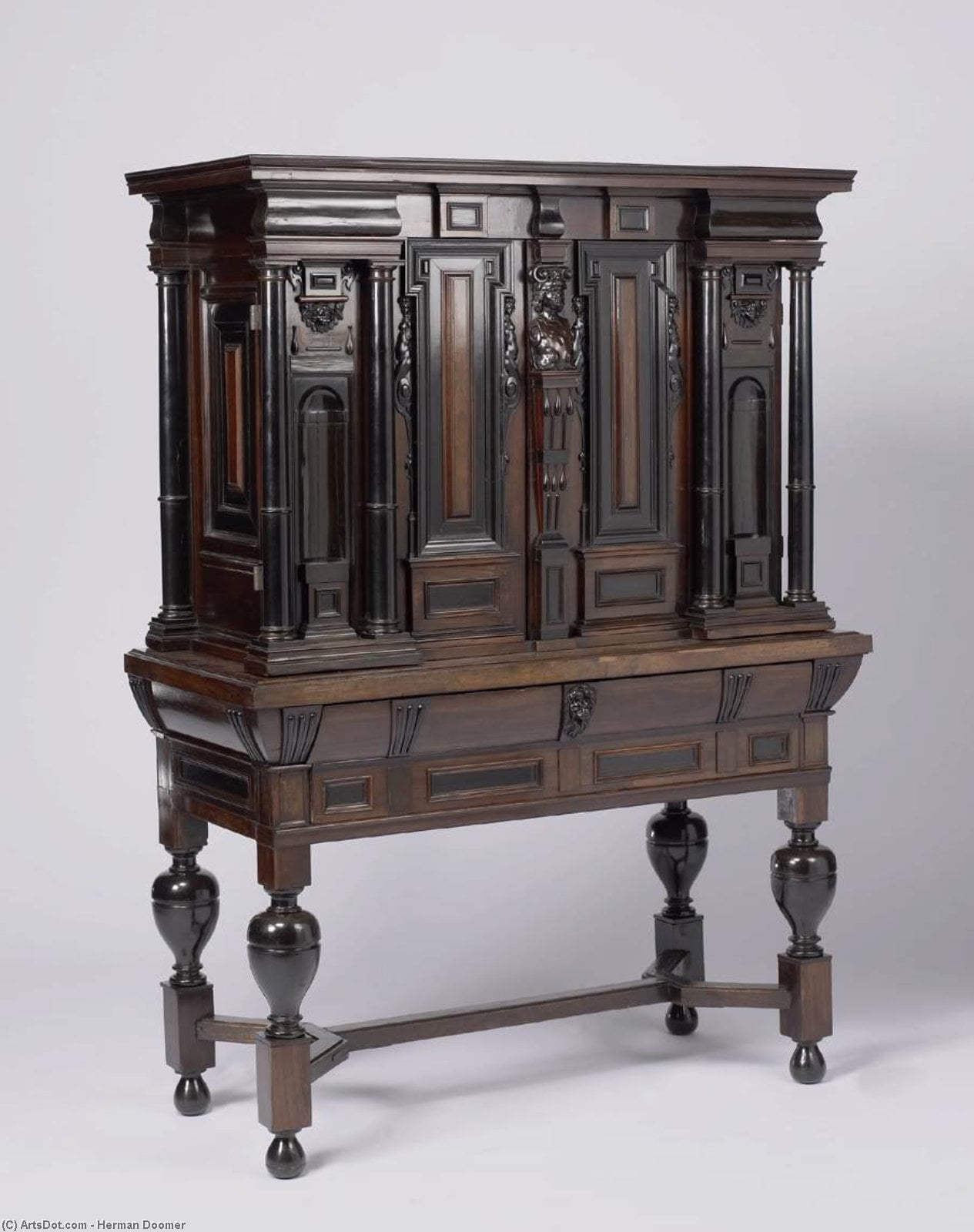
Cabinet table

Marvel at the intricate beauty of 'Cabinet Table' (1635) by Herman Doomer – a stunning German Baroque masterpiece showcasing elaborate wood carvings and masterful craftsmanship from the early 17th century.

Ein bedeutender Kunsthandwerker des Goldenen Zeitalters der Niederlande, bekannt für seine exquisiten Ebenholzfurnier-Möbel und den berühmten Schrank (Interieur) – entdecken Sie die kunstvolle Meisterschaft einer Ära voller Opulenz.

Giclée / Kunstdruck

Giclée- oder Leinwanddruck in Museumsqualität mit schneller Produktion und flexiblen Veredelungsoptionen. ( Handgemalte Reproduktion kaufen Zum digitalen Bild wechseln)

Corner sample of the P118B picture frame: formgepresstes Polystyrol, 5 cm wide and 3 cm thick
P118B €10
Corner sample of the P118H picture frame: formgepresstes Polystyrol, 5 cm wide and 3 cm thick
P118H €10
Corner sample of the P118W picture frame: formgepresstes Polystyrol, 5 cm wide and 3 cm thick
P118W €10
Corner sample of the P438Z picture frame: formgepresstes Polystyrol, 5.5 cm wide and 3.5 cm thick
P438Z €10
Corner sample of the P508JH picture frame: formgepresstes Polystyrol, 7 cm wide and 3.5 cm thick
P508JH €12
Corner sample of the P508YH picture frame: formgepresstes Polystyrol, 7 cm wide and 3.5 cm thick
P508YH €12
Corner sample of the P805H picture frame: formgepresstes Polystyrol, 5 cm wide and 3.5 cm thick
P805H €10
Corner sample of the P805Z picture frame: formgepresstes Polystyrol, 5 cm wide and 3.5 cm thick
P805Z €10
Corner sample of the P919BZ picture frame: formgepresstes Polystyrol, 7 cm wide and 3.5 cm thick
P919BZ €10
Corner sample of the P919G picture frame: formgepresstes Polystyrol, 7 cm wide and 3.5 cm thick
P919G €10
Corner sample of the P919XJ picture frame: formgepresstes Polystyrol, 7 cm wide and 3.5 cm thick
P919XJ €10
Corner sample of the P959ZH picture frame: formgepresstes Polystyrol, 5 cm wide and 3 cm thick
P959ZH €10
Corner sample of the P968JZ picture frame: formgepresstes Polystyrol, 6 cm wide and 4 cm thick
P968JZ €12
Corner sample of the W106C picture frame: Massivholz, 5 cm wide and 3 cm thick
W106C €8
Corner sample of the W218G picture frame: Massivholz, 5 cm wide and 3 cm thick
W218G €10
Corner sample of the W218JH picture frame: Massivholz, 5 cm wide and 3 cm thick
W218JH €8
Corner sample of the W218Y picture frame: Massivholz, 5 cm wide and 3 cm thick
W218Y €10
Corner sample of the W307PJ picture frame: Massivholz, 6 cm wide and 3 cm thick
W307PJ €10
Corner sample of the W316G picture frame: Massivholz, 6 cm wide and 3 cm thick
W316G €10
Corner sample of the W316PJ picture frame: Massivholz, 6 cm wide and 3 cm thick
W316PJ €8
Corner sample of the W316Y picture frame: Massivholz, 6 cm wide and 3 cm thick
W316Y €10
Corner sample of the W398PJ picture frame: Massivholz, 5 cm wide and 3 cm thick
W398PJ €8
Corner sample of the W4111J picture frame: Massivholz, 6.5 cm wide and 3.5 cm thick
W4111J €10
Corner sample of the W500HY picture frame: Massivholz, 7 cm wide and 5 cm thick
W500HY €15
Corner sample of the W500JH picture frame: Massivholz, 7 cm wide and 5 cm thick
W500JH €15
Corner sample of the W692G picture frame: Massivholz, 8 cm wide and 4 cm thick
W692G €12
Corner sample of the W849H picture frame: Massivholz, 5 cm wide and 3 cm thick
W849H €8
Corner sample of the W940BG picture frame: Massivholz, 7.5 cm wide and 4.5 cm thick
W940BG €15
Corner sample of the W953PJ picture frame: Massivholz, 6 cm wide and 3.5 cm thick
W953PJ €8

Standardformat
individuell anpassbar
CM
INCH

Wählen Sie aus unseren vordefinierten Formaten, die den ursprünglichen Proportionen des Kunstwerks entsprechen.

Breite
Höhe

Geben Sie die Breite und die Höhe an, die Sie benötigen, damit der Druck perfekt in Ihren Rahmen oder an Ihre Wand passt. Ein Druck kann nur beschnitten werden und niemals größer als das Originalbild gemacht werden; daher verliert ein Format mit einer anderen Proportion einen Teil des Bildes. Wir senden Ihnen ein digitales Mockup zur Freigabe, bevor wir den Druck ausführen. Das auf dieser Seite gezeigte Bild zeigt nicht den tatsächlichen Beschnitt – dies ist nur im Mockup ersichtlich.

Weltweiter Versand () innerhalb von 2 Wochen statt der üblichen 4/5 Wochen. (23 Oktober)

Kostenloser weltweiter Expressversand
Hochwertige Leinenleinwand
Vollständiger Versicherungsschutz beim Versand
Zollgebühren-Rückerstattungsgarantie
Garantie für exakte Farbtreue
100-tägiges Rückgaberecht (nur bei Mängeln)
100% Geld-zurück-Garantie
Angebot für Mengenrabatt

Gesamtpreis

€ 60

Cabinet table

Giclée / Kunstdruck

Format der Reproduktion

-

Gesamtpreis

€ 60

Kurzübersicht

  • Artist: herman doomer
  • Influences: Caravaggio
  • Year: 1635
  • Dimensions: 176 x 130 cm
  • Medium: Wood carving

Kunst-Quiz

Jede Frage hat nur eine richtige Antwort.

Frage 1:
What is the primary material used to create this cabinet table?
Frage 2:
The date provided (1635) refers to:
Frage 3:
What type of decorative elements are prominently featured on the doors and drawers of the cabinet?
Frage 4:
The style of the image suggests it is primarily intended for:
Frage 5:
The presence of ball-and-claw feet on the table legs is characteristic of:

A Glimpse into the Dutch Golden Age: The Cabinet Table by Herman Doomer

The image before us presents more than just a piece of furniture; it’s a portal into 17th-century Germany, a tangible echo of a period defined by both artistic flourishing and profound social upheaval. This imposing cabinet table, attributed to the hand of Herman Doomer, offers a captivating study in craftsmanship, symbolism, and the evolving aesthetics of the Dutch Golden Age. Doomer’s work, though relatively obscure today, reflects a fascinating confluence of influences – the meticulous detail of Flemish masters, the burgeoning naturalism of Caravaggio, and the distinctly German tradition of intricate wood carving.

The table itself is a testament to the skill of its creator. Constructed from dark-stained oak, it exudes an air of quiet authority, its substantial size suggesting a piece intended for a prominent location within a wealthy household. The multiple doors and drawers are not merely functional; they’re meticulously sculpted with a profusion of floral motifs – roses, lilies, and forget-me-nots – interwoven with scenes depicting figures engaged in everyday life. These aren't idealized portraits but rather glimpses into the realities of the time: a farmer tending his fields, a woman gathering herbs, and even hints of mythological creatures subtly integrated into the decorative scheme. The level of detail is astonishing; one can almost feel the texture of the petals or discern the individual strands of hair on the carved figures.

The Shadowed Influence of Caravaggio

While Doomer’s style ultimately leans towards the restrained elegance favored in Dutch interiors, a clear influence from Michelangelo Merisi da Caravaggio is discernible. Like Caravaggio, Doomer masterfully employs dramatic chiaroscuro – the interplay of light and shadow – to draw attention to specific elements within the carving. Notice how the light catches on the folds of fabric or highlights the intricate details of a face, creating a sense of depth and immediacy. This technique, borrowed from the Italian painter’s signature style, elevates the cabinet table beyond mere decoration, imbuing it with a palpable sense of drama and emotional resonance. The use of strong contrasts also serves to emphasize the richness and texture of the wood itself.

A Window into 17th-Century German Life

The date – 1635 – places this cabinet table firmly within the tumultuous period following the Thirty Years’ War. Germany, ravaged by conflict and political fragmentation, experienced a remarkable cultural resurgence during this era, often referred to as the Dutch Golden Age's sister movement. Furniture from this time reflects both the desire for opulent display and a subtle resistance to the devastation of war – a celebration of beauty amidst hardship. The scenes depicted on the cabinet table offer glimpses into the lives of ordinary people, reminding us that even in times of conflict, life continued, marked by routines, traditions, and a deep connection to the natural world.

Symbolism and the Language of Form

Beyond its decorative elements, the cabinet table is rich with symbolic meaning. The abundance of floral motifs speaks to themes of fertility, prosperity, and the cyclical nature of life. The figures depicted – farmers, women, mythical creatures – represent a complex interplay between earthly concerns and spiritual aspirations. The turned legs and ball-and-claw feet, a common feature in traditional German furniture design, ground the piece firmly in its regional context while adding an element of visual stability and elegance. The overall composition suggests a harmonious balance between order and chaos, restraint and exuberance – reflecting the complexities of the era in which it was created.

A Timeless Piece for the Connoisseur

Reproductions of this cabinet table offer a remarkable opportunity to bring a touch of 17th-century German artistry into any interior space. The intricate carvings, combined with the rich dark wood finish, create a statement piece that is both visually stunning and historically significant. Whether displayed in a grand hall or a more intimate setting, this cabinet table serves as a reminder of the enduring power of craftsmanship and the captivating beauty of a bygone era. Its presence evokes a sense of quiet contemplation, inviting viewers to reflect on the stories embedded within its intricate details.

Fragen & Antworten

Welches Format und welche Größe hat "Cabinet table"?

Das Format von „Cabinet table“ ist Portrait und das Original hat die Maße 176 x 130 cm. Beides ist bei der Planung einer Reproduktion hilfreich.

Für welchen Raum wird "Cabinet table" von Herman Doomer empfohlen?

"Cabinet table" von Herman Doomer wird für ein Living Room empfohlen. Dieser Vorschlag basiert auf dem Motiv, den Farben und der Stimmung des Werkes.

Wer ist der Urheber von "Cabinet table" und welcher Stilrichtung ist das Werk zuzuordnen?

"Cabinet table" wurde von Herman Doomer im Stil der Baroque Painting geschaffen. Künstler und Epoche bestimmen die Tradition des Werkes.


Biografie des Künstlers

Der Kunsthandwerker des Goldenen Zeitalters

Während die Geschichte ihre glanzvollsten Rampenlichter oft jenen Malern vorbehält, die das Licht des niederländischen Goldenen Zeitalters einfingen, bietet die Geschichte von Herman Doomer einen tiefgründigen Einblick in die geschickten Hände, welche genau diese Ära einrahmten und erschufen. Geboren in Anrath, nahe Venlo, war Doomer kein bildender Künstler im traditionellen Sinne, sondern vielmehr ein Meisterhandwerker, dessen Leben durch die haptische Schönheit von Ebenholz und Holz geprägt war. Als erfolgreicher Möbel- und Rahmenmacher lieferte sein Werk das physische Fundament für die aufstrebende Kultur des Amsterdams des 17. Jahrhunderts. Er führte ein florierendes Unternehmen, das auf furnierte Ebenholzmöbel und kunstvolle Rahmen spezialisiert war, und bewegte sich durch die belebten Straßen der Kalverstraat, Gasthuismolensteeg und Hartenstraat mit der Zuversicht eines Mannes, der im Herzen eines globalen Handelszentrums stand.

Handwerkskunst und Verbundenheit

Das Vermächtnis von Herman Doomer ist untrennbar mit den künstlerischen Giganten seiner Zeit verbunden. Seine Meisterschaft im Umgang mit Materialien wie Ebenholz und farbigem Bartenwale ermöglichte es ihm, zur ästhetischen Opulenz der Republik der Sieben Vereinigten Provinzen beizutragen, indem er Stücke schuf, die den Reichtum und den Geschmack eines neuen Bürgertums widerspiegelten. Sein berufliches Netzwerk war tief in den höchsten Kreisen der Amsterdamer Kreativszene verwurzelt; es ist bekannt, dass er mit Persönlichkeiten wie Pieter Quast und Johannes Lutma zusammenarbeitete. Vielleicht am bedeutsamsten war jedoch seine Rolle als Rahmenlieferant, die ihn in direkten Kontakt mit Rembrandt van Rijn brachte. Diese Verbindung führte zu einem der beständigsten Porträts jener Ära, in dem Rembrandt Doomer nicht bloß als Motiv, sondern als würdevolle Fachkraft festhielt und so die stille Stärke des Handwerkers hinter der Leinwand unsterblich machte.

Ein bleibendes materielles Erbe

Obwohl sein Name vielleicht nicht in den Signaturen auf Leinwänden zu finden ist, bleibt Doomers Einfluss durch die dauerhaften physischen Objekte bestehen, die er erschuf. Sein Werk, wie etwa der bemerkenswerte Cupboard (Interior), der im Rijksmuseum aufbewahrt wird, dient als Fenster in den luxuriösen Geschmack und die akribische Kunstfertigkeit jener Epoche. Diese Stücke waren weit mehr als bloße Gebrauchsgegenstände; sie waren Verkörperungen niederländischer Innovation und Geschicklichkeit. Durch sein spezialisiertes Handwerk half Doomer dabei, das visuelle Umfeld des 17. Jahrhunderts mitzugestalten, und hinterließ eine materielle Geschichte, die bis heute von einer Ära erzählt, die durch Wohlstand, komplizierte Details und eine unvergleichliche Hingabe an die Schönheit feinster Handwerkskunst definiert war.
Herman Doomer

Herman Doomer

1595 - 1650 , Italien

Eckdaten zum Künstler

  • Bemerkenswerte Kunstwerke:
    • Schrank (Interieur)
    • Kabinetttisch
  • Geburtsdatum: 1595
  • Geburtsort: Anrath, Deutschland
  • Künstlerische Bewegung Oder Stil: Niederländisches Goldenes Zeitalter
  • Nationalität: Niederländisch
  • Sterbedatum: 1650
  • Vollständiger Name: Herman Doomer