In echtem Maßstab anzeigen In AR an der Wand sehen Zum Druck wechseln Zum digitalen Bild wechseln Versenden als Grußkarte
Details anzeigen Leitfaden öffnen Zu Favoriten hinzufügen Herunterladen Ähnliche Objekte Röntgenaufnahme Diashow Besucherstatistiken

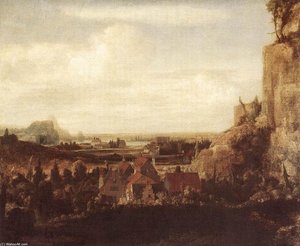
Two Trees

Explore Hercules Seghers' masterpiece 'Two Trees,' a stunning baroque etching depicting two majestic trees against a serene blue sky, housed at the Rijksmuseum in Amsterdam.

Entdecken Sie Hercules Seghers (1590-1638), Maler & Grafiker der holländischen Goldzeit! Erleben Sie seine innovativen Landschaftsdarstellungen, experimentellen Techniken & einzigartigen Visionen.

Handgefertigte Ölreproduktion

Handgemaltes Ölgemälde auf Leinwand in Ihrer Wunschgröße und mit Rahmen, auf Bestellung von unseren Künstlern angefertigt. ( Zum Druck wechseln Zum digitalen Bild wechseln)

Corner sample of the P118B picture frame: formgepresstes Polystyrol, 5 cm wide and 3 cm thick
P118B 10
Corner sample of the P118H picture frame: formgepresstes Polystyrol, 5 cm wide and 3 cm thick
P118H 10
Corner sample of the P118W picture frame: formgepresstes Polystyrol, 5 cm wide and 3 cm thick
P118W 10
Corner sample of the P438Z picture frame: formgepresstes Polystyrol, 5.5 cm wide and 3.5 cm thick
P438Z 10
Corner sample of the P508JH picture frame: formgepresstes Polystyrol, 7 cm wide and 3.5 cm thick
P508JH 12
Corner sample of the P508YH picture frame: formgepresstes Polystyrol, 7 cm wide and 3.5 cm thick
P508YH 12
Corner sample of the P805H picture frame: formgepresstes Polystyrol, 5 cm wide and 3.5 cm thick
P805H 10
Corner sample of the P805Z picture frame: formgepresstes Polystyrol, 5 cm wide and 3.5 cm thick
P805Z 10
Corner sample of the P919BZ picture frame: formgepresstes Polystyrol, 7 cm wide and 3.5 cm thick
P919BZ 10
Corner sample of the P919G picture frame: formgepresstes Polystyrol, 7 cm wide and 3.5 cm thick
P919G 10
Corner sample of the P919XJ picture frame: formgepresstes Polystyrol, 7 cm wide and 3.5 cm thick
P919XJ 10
Corner sample of the P959ZH picture frame: formgepresstes Polystyrol, 5 cm wide and 3 cm thick
P959ZH 10
Corner sample of the P968JZ picture frame: formgepresstes Polystyrol, 6 cm wide and 4 cm thick
P968JZ 12
Corner sample of the W106C picture frame: Massivholz, 5 cm wide and 3 cm thick
W106C 8
Corner sample of the W218G picture frame: Massivholz, 5 cm wide and 3 cm thick
W218G 10
Corner sample of the W218JH picture frame: Massivholz, 5 cm wide and 3 cm thick
W218JH 8
Corner sample of the W218Y picture frame: Massivholz, 5 cm wide and 3 cm thick
W218Y 10
Corner sample of the W307PJ picture frame: Massivholz, 6 cm wide and 3 cm thick
W307PJ 10
Corner sample of the W316G picture frame: Massivholz, 6 cm wide and 3 cm thick
W316G 10
Corner sample of the W316PJ picture frame: Massivholz, 6 cm wide and 3 cm thick
W316PJ 8
Corner sample of the W316Y picture frame: Massivholz, 6 cm wide and 3 cm thick
W316Y 10
Corner sample of the W398PJ picture frame: Massivholz, 5 cm wide and 3 cm thick
W398PJ 8
Corner sample of the W4111J picture frame: Massivholz, 6.5 cm wide and 3.5 cm thick
W4111J 10
Corner sample of the W500HY picture frame: Massivholz, 7 cm wide and 5 cm thick
W500HY 15
Corner sample of the W500JH picture frame: Massivholz, 7 cm wide and 5 cm thick
W500JH 15
Corner sample of the W692G picture frame: Massivholz, 8 cm wide and 4 cm thick
W692G 12
Corner sample of the W849H picture frame: Massivholz, 5 cm wide and 3 cm thick
W849H 8
Corner sample of the W940BG picture frame: Massivholz, 7.5 cm wide and 4.5 cm thick
W940BG 15
Corner sample of the W953PJ picture frame: Massivholz, 6 cm wide and 3.5 cm thick
W953PJ 8

Standardformat
individuell anpassbar
CM
INCH

Wählen Sie aus unseren vordefinierten Formaten, die den ursprünglichen Proportionen des Kunstwerks entsprechen.

Breite
Höhe

Geben Sie die Breite und die Höhe an, die Sie für Ihren Rahmen oder Ihre Wand benötigen. Da dieses Werk handgemalt ist, kann der Künstler bei einer anderen Form etwas mehr um das Bild herum malen oder etwas abschneiden – Sie entscheiden. Wir senden Ihnen ein digitales Mockup zur Freigabe, bevor mit dem Malen begonnen wird. Das auf dieser Seite gezeigte Bild stellt nicht das tatsächliche Ergebnis dar – dies tut nur das Mockup.

Beispiele für Anpassungsmöglichkeiten: Gesicht durch Kundenfoto ersetzen; Haustier hinzufügen (z. B. Katze durch Hund ersetzen); eine versteckte Nachricht im Hintergrund einfügen; Hintergrundlandschaft oder -elemente ändern.
Nach der Bestellung wird das WahooArt.com-Team dem Kunden Anweisungen per E-Mail zusenden und eine Mockup-Vorschau bereitstellen.

Weltweiter Versand () in nur 3 bis 4 Wochen statt der üblichen 5 Wochen. (22 Oktober). Keine Kompromisse bei der Qualität.

Kostenloser weltweiter Expressversand
Hochwertige Leinenleinwand
Vollständiger Versicherungsschutz beim Versand
Zollgebühren-Rückerstattungsgarantie
Garantie für exakte Farbtreue
100-tägiges Rückgaberecht (nur bei Mängeln)
100% Geld-zurück-Garantie
Angebot für Mengenrabatt

Gesamtpreis

€ 239

Two Trees

Reproduktionsmedium

Format der Reproduktion

-

Gesamtpreis

€ 239

Kurzübersicht

  • Year: 1625
  • Notable elements or techniques: Innovative printmaking
  • Location: Rijksmuseum, Amsterdam
  • Subject or theme: Trees and Woods
  • Dimensions: 155 x 173 cm
  • Artistic style: Landscape

Kunst-Quiz

Jede Frage hat nur eine richtige Antwort.

Frage 1:
What artistic movement is Hercules Seghers’s ‘Two Trees’ associated with?
Frage 2:
Where is the painting 'Two Trees' currently housed?
Frage 3:
What technique did Hercules Seghers primarily employ in creating this artwork?
Frage 4:
The etching 'Two Trees' exemplifies a characteristic feature of landscape painting during the Golden Age of Dutch Art. What is that feature?
Frage 5:
Who was Hercules Seghers’s influential teacher in landscape painting?

Hercules Seghers’ Two Trees: A Vision of Tranquility Amidst Alpine Majesty

Hercules Pieterszoon Seghers (1590 – c. 1638) stands as a singular figure in the Dutch Golden Age landscape tradition, celebrated for his audacious experimentation with printmaking and his ability to capture the sublime beauty of mountainous vistas. “Two Trees,” created around 1625, exemplifies this distinctive approach—a masterful etching that transcends mere depiction to convey an atmosphere of profound serenity and spiritual contemplation.

The artwork presents a meticulously rendered scene featuring two trees positioned prominently in the center of the composition. One tree is mature and robust, its branches laden with dense foliage, while the other is younger, displaying delicate twigs emerging from the trunk—a subtle gesture hinting at regeneration and resilience. The trees are set against a backdrop of towering alpine peaks bathed in soft, diffused light, creating an illusion of depth that draws the viewer’s eye upwards into the expansive sky.

Seghers' technique is remarkable for its departure from conventional methods. Unlike many artists of his time who relied solely on black ink to achieve tonal effects, Seghers skillfully employed a combination of etching and aquatint—a process involving multiple plates inked with varying degrees of opacity—to produce nuanced gradations of color. The use of azurite and precipitated yellow lake pigments lends the image an ethereal quality, capturing the subtle hues of twilight and enhancing the overall impression of grandeur.

The etching’s historical context is crucial to understanding its significance. Produced during a period marked by intellectual ferment and artistic innovation—the Baroque era—“Two Trees” reflects the burgeoning interest in exploring themes of spirituality and contemplation within the natural world. Seghers' inspiration drew heavily from Flemish landscape painters like Abraham van Ouhibbee, who had pioneered the depiction of dramatic mountainscapes infused with religious symbolism.

More than just a visual representation of scenery, “Two Trees” embodies a philosophical stance rooted in humanist ideals. The tree imagery—particularly the young sapling—represents hope and renewal, mirroring the broader humanist preoccupation with the cyclical nature of life and the enduring power of beauty to uplift the human spirit. Its placement against the majestic Alps underscores the grandeur of God’s creation and invites viewers to contemplate the sublime.

Currently housed at the Rijksmuseum in Amsterdam, “Two Trees” remains a testament to Seghers' artistic genius—a timeless masterpiece that continues to inspire admiration for its technical virtuosity and emotional resonance. It serves as an enduring reminder of the Dutch Golden Age’s fascination with capturing the sublime beauty of nature and conveying profound spiritual truths.

Fragen & Antworten

Welche Sättigung und Intensität weist "Two Trees" von Hercules Seghers auf?

Die Farbe von "Two Trees" weist eine Sättigung von Balanced Soft und eine Intensität von Vivid auf.

Aus welchen Materialien besteht "Two Trees" und in welchem Stil ist es gehalten?

"Two Trees" ist in Etching im Stil der Baroque-Epoche gefertigt.

Kann ich "Two Trees" von Hercules Seghers unter verschiedenen Lichtverhältnissen sehen?

Die Röntgenansicht von "Two Trees" von Hercules Seghers finden Sie auf der Röntgenaufnahme-Seite des Kunstwerks: eine interaktive Untersuchung des Bildes durch elf optische Schichten.


Biografie des Künstlers

Hercules Seghers: Ein Leben in Landschaft und Grafik

  • Geboren: Haarlem, Niederlande (ca. 1590)
  • Gestorben: ca. 1638

Frühes Leben und Ausbildung

  • Hercules Pieterszoon Seghers wurde in Haarlem als Sohn eines mennonitischen Tuchhändlers geboren, der ursprünglich aus Flandern stammte.
  • Im Jahr 1596 zog seine Familie nach Amsterdam.
  • Er wurde bei Gillis van Coninxloo, einem führenden flämischen Landschaftsmaler, in die Lehre gegeben, doch diese Ausbildung wurde durch den frühen Tod von Coninxloo unterbrochen. Seghers und sein Vater erwarben mehrere Werke von Coninxloo nach dessen Ableben.
  • Nach dem Tod seines Vaters im Jahr 1612 kehrte er nach Haarlem zurück und trat der Gilde St. Lukas in Haarlem bei.

Künstlerische Entwicklung und Stil

  • Seghers gilt als der "am meisten inspirierte, experimentelle und originelle Landschaftsmaler" seiner Zeit, insbesondere bekannt für seine innovativen Grafiktechniken.
  • Seine Gemälde zeigen oft fantastische Bergkompositionen mit einer weiten horizontalen Ansicht, die die Erde über den Himmel betont.

  • Er experimentierte ausgiebig mit dem Radieren und verwendete Kaltnadeltechnik, Aquatinta (einschließlich der "Zuckerbiss"-Technik) und andere Methoden, um einzigartige Texturwirkungen zu erzielen.
  • Seghers’ Grafiken zeichnen sich durch die Verwendung von farbigem Papier oder Stoff, farbigen Tinten und Handkolorierung aus, was oft Miniaturmalereien entstehen lässt.

  • Sein Stil zeigt Einflüsse früherer Künstler wie Joos de Momper und Gillis van Coninxloo.

Wichtige Errungenschaften und Innovationen

  • Innovative Grafik: Seghers’ bedeutendster Beitrag liegt in seinen experimentellen Grafiktechniken, insbesondere der Zuckerbiss-Aquatinta. Diese Technik wurde später in England wiederentdeckt.
  • Einzigartige Landschaften: Seine Landschaften zeichnen sich durch ihre Kargheit, Originalität und oft surreale Qualität aus. Er stellte felsige Formationen dar, die an fremdartiges Terrain erinnerten.
  • Einfluss auf Rembrandt: Rembrandt sammelte Werke von Seghers und übernahm Elemente aus dessen Gemälden und Radierungen in seine eigenen Kompositionen, was den bedeutenden Einfluss von Seghers’ Stil demonstriert.
  • Vielfältige Abzüge: Im Gegensatz zu vielen Druckern seiner Zeit produzierte Seghers mehrere Abzüge jeder Platte, variierte ihre Farbschemata und fügte Handkolorierungen hinzu, um einzigartige Kunstwerke zu schaffen.

Historische Bedeutung

  • Seghers’ Werk wurde zu Lebzeiten hoch geschätzt, obwohl er später im Leben finanzielle Schwierigkeiten hatte.
  • Samuel van Hoogstratens *Inleyding tot de hooge schoole der schilderkonst* idealisierte Seghers als einen missverstandenen Genie und trug so zu seinem posthumen Ruf bei.
  • Er gilt als Pionier der Landschaftsdruckgrafik und als wichtige Figur des Goldenen Zeitalters der Niederlande, bekannt für seine experimentellen Techniken und seine einzigartige künstlerische Vision.
  • Sein Einfluss ist in späteren Künstlern sichtbar, die seine innovativen Druckmethoden übernahmen und seinen unverwechselbaren Stil schätzten.
Hercules Seghers

Hercules Seghers

1590 - 1638 , Niederlande

Eckdaten zum Künstler

  • Beeinflusste Künstler:
    • Joos de Momper
    • Gillis van Coninxloo
  • Bemerkenswerte Werke:
    • Berglandschaft
    • Bergtal mit eingezäunten Feldern
    • Der große Baum
  • Geburtsdatum: ca. 1590
  • Geburtsort: Haarlem, Niederlande
  • Künstlerische Richtung: Niedergeländische Goldene Zeitalter
  • Nationalität: Niederländisch
  • Sterbedatum: ca. 1638
  • Vollständiger Name: Hercules Pieterszoon Seghers
  • Von Künstlern Beeinflusst: ['Rembrandt']