Das Schicksal der Arbeiter: Eine Betrachtung über Courbets „Die Steinhauer“
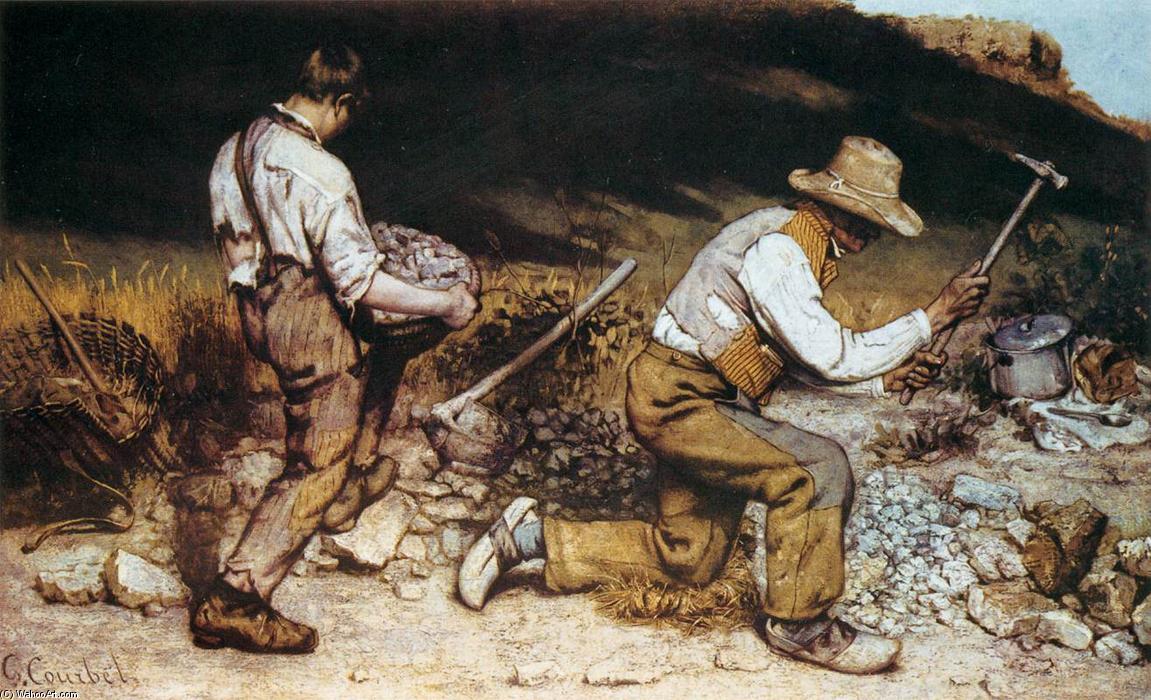
Gustave Courbet’s “Die Steinhauer” (1849) is not merely a depiction of manual labor; it's a profound statement about the realities of rural life and the burgeoning social consciousness of 19th-century France. This monumental canvas, measuring an impressive 165 x 257 cm, immediately confronts the viewer with two figures engaged in backbreaking work – men stripped bare of romantic idealization, their bodies etched with the marks of toil. The scene unfolds within a sunlit field, yet there’s no warmth or beauty to be found; instead, we are presented with an unvarnished portrayal of physical exertion and the relentless demands of agricultural existence.
- The Raw Realism: Courbet's commitment to *Realismus* – a movement he largely spearheaded – is powerfully evident here. He rejected the idealized forms and mythological subjects favored by the established Salon system, choosing instead to depict ordinary people in their everyday lives. The figures are not heroic or noble; they are simply men doing a difficult job.
- A Departure from Tradition: Prior to Courbet, landscape painting often served as a backdrop for historical or allegorical narratives. “Die Steinhauer” flips this convention on its head, placing the focus squarely on the laborers and their arduous task. This shift signaled a radical departure from artistic conventions and paved the way for future generations of realist painters.
Farben und Technik: Ein Blick auf Courbets Malweise
Courbet’s technique is characterized by its deliberate roughness and lack of meticulous detail. He employed a bold, impasto application of paint – thick layers of pigment applied directly to the canvas – creating a tactile surface that invites close inspection. The colors are muted and earthy: browns, ochres, and grays dominate the palette, reflecting the dusty environment and the laborers’ worn clothing. Notice how he uses light not to create beauty but to highlight the physical strain on the men's bodies. There is no dramatic lighting or atmospheric perspective; instead, a flat, almost photographic quality pervades the scene, emphasizing the starkness of their situation.
- The Impasto Technique: The thick application of paint isn’t just decorative; it contributes to the painting's sense of immediacy and physicality. It suggests the texture of the earth, the roughness of the stone, and the sweat on the men’s brows.
- Color as Documentation: Courbet’s restrained color palette serves a documentary purpose, aiming to accurately represent the visual reality of the scene rather than imposing an aesthetic ideal.
Symbolik und Kontext: Mehr als nur Arbeit
Beyond its straightforward depiction of manual labor, “Die Steinhauer” carries significant symbolic weight. The two figures, anonymous and unheroic, represent the vast majority of French society – those who toiled in the fields to sustain the nation. Their relentless work speaks to the social inequalities of the time and the often-overlooked contributions of the working class. The scattered rocks surrounding them aren’t merely props; they symbolize the obstacles and hardships faced by these laborers, mirroring their own struggles against the demands of their labor.
Historical Context: The painting was created during a period of significant social and political upheaval in France – the aftermath of the 1848 Revolution. Courbet’s work reflects this climate of unrest and his desire to challenge the established order. He deliberately chose subjects that were often ignored by the art establishment, asserting the importance of portraying the lives of ordinary people.
Emotionale Wirkung und Interpretation: Ein Spiegel der Gesellschaft
“Die Steinhauer” is a profoundly moving work that transcends its seemingly simple subject matter. It evokes a sense of empathy for the laborers depicted and prompts us to consider the human cost of progress and industrialization. The painting’s stark realism forces viewers to confront uncomfortable truths about social inequality and the often-brutal realities of everyday life. It's not a celebration of labor, but rather an honest and unflinching portrayal of its burdens. As a reproduction, this artwork offers a powerful opportunity to engage with a pivotal moment in art history and reflect on the enduring relevance of Courbet’s social commentary.


 Vorschau anzeigen
 Zu Druck wechseln
 Versenden
 Teilen
 Details anzeigen

 Herunterladen
 Ähnliche Objekte
 Röntgenaufnahme
 Diashow
 Statistiken


 Weiterlesen






































 Die Glasoption ist nur für Größen unter 110 cm verfügbar.