

Giclée- oder Leinwanddruck in Museumsqualität mit schneller Produktion und flexiblen Veredelungsoptionen. ( Handgemalte Reproduktion bestellen Zum digitalen Bild wechseln)





























Wählen Sie aus unseren vordefinierten Formaten, die den ursprünglichen Proportionen des Kunstwerks entsprechen.

Geben Sie die benötigte Breite und Höhe an, damit der Druck perfekt in Ihren Rahmen oder an Ihre Wand passt. Ein Druck kann nur beschnitten, aber niemals größer als das Originalbild angefertigt werden; daher verliert ein Format mit anderen Proportionen einen Teil des Bildes. Wir senden Ihnen ein digitales Mockup zur Freigabe, bevor wir den Druck ausführen. Das auf dieser Seite gezeigte Bild zeigt nicht den tatsächlichen Beschnitt – dies ist nur im Mockup ersichtlich.
Weltweiter Versand () innerhalb von 2 Wochen statt der üblichen 4/5 Wochen. (8 November)
Judith02
Format der Reproduktion
“Judith II (Salome)” was created in 1909 by Gustav Klimt in Art Nouveau (Modern) style. Find more prominent pieces of literary painting at Wikiart.org – best visual art database.
WikiArt explores the world’s treasures and celebrates artistic excellence. Discover captivating stories, detailed analyses, and stunning visuals to enrich your understanding of art history and contemporary creativity.
Gustav Klimt (14 July 1862 – 6 February 1918) was an Austrian symbolist painter and a founding member of the Vienna Secession movement. His work helped define the Art Nouveau style in Europe. Klimt is known for his paintings, murals, sketches, and other objets d'art.
Early in his career, he was a successful painter of architectural decorations in a conventional manner. As he began to develop a more personal style, his work was the subject of controversy that culminated when the paintings he completed around 1900 for the ceiling of the Great Hall of the University of Vienna were criticised as pornographic.
He subsequently accepted no more public commissions, but achieved a new success with the paintings of his “golden phase”, many of which include gold leaf. Klimt's primary subject was the female body, and his works are marked by a frank eroticism.
“Judith II” is a striking example of Klimt’s artistic vision—a masterful blend of symbolism, decorative patterns, and opulent gold leaf application. Created in 1909, this oil painting delves into the biblical tale of Salome and Holofernes, portraying Judith with an arresting gaze and conveying a palpable sense of drama.
The composition is dominated by Judith’s figure—positioned centrally within the frame—and bathed in a fiery orange-red hue that amplifies the painting's emotional intensity. Klimt skillfully guides the viewer’s eye downward from her expressive face to her exposed breasts, emphasizing the sensual allure inherent in the artwork.
The artist employs a meticulous approach to detail, incorporating geometric shapes and vibrant floral motifs into Judith’s dress—a testament to Klimt's dedication to Art Nouveau principles. Furthermore, the shimmering gold leaf adds an ethereal quality to the canvas, elevating it beyond mere representation and transforming it into a symbol of beauty and transcendence.
The painting’s narrative echoes the biblical story of Salome—where Judith dances for Herod—and Holofernes—who grants her wish—to decapitate John the Baptist. Klimt captures this dramatic moment with remarkable precision, conveying the tension and anticipation that characterize the scene.
Klimt’s technique is characterized by a deliberate flattening of perspective—a hallmark of Art Nouveau—which prioritizes decorative effect over realistic depiction. The artist utilizes bold color palettes—particularly orange-red—and intricate patterns—including geometric shapes and floral motifs—to create a visually arresting experience.
The use of gold leaf—a technique pioneered by Klimt—is central to the painting’s aesthetic impact, lending it an aura of grandeur and transforming it into a luminous masterpiece. This masterful application of gold elevates the artwork beyond mere visual stimulation, imbuing it with spiritual significance and reinforcing its status as one of Klimt's most iconic creations.
“Judith II” stands as a testament to Klimt’s artistic genius—a captivating exploration of beauty, eroticism, and biblical narrative that continues to inspire admiration and intrigue audiences worldwide.
Die Seite Besucherzahlen von "Judith02" von Gustav Klimt präsentiert öffentliche Besucherstatistiken: die monatlichen Aufrufe dieses Kunstwerks, einen Vergleich mit den meistbesuchten Werken des Künstlers sowie die Herkunft der Besucher.
Für „Judith02“ steht ein Download zur Verfügung: Die Download-Seite des Kunstwerks bietet hochauflösender digitaler Bild-Download.
Format Großformatig, Ausrichtung Hochformatig: Dies ist die empfohlene Druckeinstellung für "Judith02" von Gustav Klimt.


1862 - 1918 , Österreich

Embark on a sophisticated journey through the splendor of Austrian art. From Gustav Klimt’s golden masterpieces to the elegance of the Viennese Secession, discover the history and symbolism behind Europe's most iconic works for the discerning collector.

Explore the profound impact of the Vienna Secession movement. Discover how visionaries like Gustav Klimt revolutionized modern art through symbolism, gold leaf, and bold ornamentation in this deep dive into the aesthetic revolution that redefined the visual landscape of Europe.
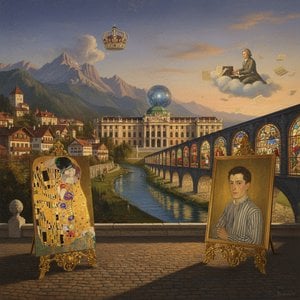
Embark on a sophisticated journey through Austrian art history. Explore the golden brilliance of Gustav Klimt and the elegance of the Vienna Secession through an expert lens, celebrating the enduring soul of Central European masterpieces.

Discover the enchanting world of Art Nouveau. Explore the flowing lines of Alphonse Mucha and learn how to integrate these timeless, organic masterpieces into your collection with expert guidance on fine art appreciation and preservation.

Erfahren Sie alles über die organische Dynamik des Jugendstils und seine Meister. Entdecken Sie die Ästhetik der Belle Époque jetzt.
 Vorschau anzeigen
 Versenden
 Teilen
 Details anzeigen
 Leitfaden

 Herunterladen
 Ähnliche Objekte
 Röntgenaufnahme
 Diashow
 Fragen & Antworten
 Statistiken

 Weiterlesen









 Die Glasoption ist nur für Größen unter 110 cm verfügbar.


