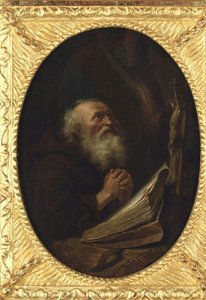
Biografie eines produktiven Malers
Gerrit (Gérard) Dou, eine bedeutende Figur der
niederländischen Malerei des Goldenen Zeitalters, wurde am 7. April 1613 in Leiden, Niederlande, geboren. Er verstarb am 9. Februar 1675 und hinterließ ein beeindruckendes Vermächtnis hochpolierter Gemälde, die Kunstliebhaber auf der ganzen Welt weiterhin in ihren Bann ziehen.
Künstlerischer Stil und Spezialisierung
Gerrit Dous künstlerischer Stil zeichnet sich durch seine minutiöse und elaborierte Ausführung aus, oft mit Genreszenen und Trompe-l'oeil-'Nischen'-Gemälden. Seine Beherrschung des Chiaroscuro ist besonders bemerkenswert, wie man an seinen Kerzenschein-Nachtszenen erkennen kann. Diese einzigartige Kombination von Fähigkeiten hat zu seiner Assoziation mit den Leiden Fijnschilders geführt.
Fijnschilders (Feinmaler) waren eine Gruppe niederländischer Maler des 17. Jahrhunderts, die für ihre extrem detaillierten und realistischen Darstellungen bekannt sind. Dou war einer der bedeutendsten Vertreter dieser Bewegung.
Leben und Wirken
Gerrit Dou wurde in eine Familie von Künstlern hineingeboren. Sein Vater war ebenfalls Maler und sorgte dafür, dass Gerrit frühzeitig künstlerische Fähigkeiten erwarb. Bereits im Alter von 12 Jahren trat Dou in die Gilde der niederländischen Maler ein, was für seine Zeit ungewöhnlich früh war. Er studierte bei Frans Hals, einem bekannten Porträtmaler des Goldenen Zeitalters, und entwickelte schnell seinen eigenen unverwechselbaren Stil. Dous Gemälde zeichnen sich durch ihre außergewöhnliche Detailgenauigkeit aus. Er malte oft Innenräume mit sorgfältig arrangierten Gegenständen wie Musikinstrumenten, Büchern und wissenschaftlichen Geräten. Seine Werke spiegeln den Wohlstand und die intellektuelle Neugier der niederländischen Bürgerschaft im 17. Jahrhundert wider.
Einflüsse und Vermächtnis
Gerrit Dous Einfluss ist in seinen Schülern zu sehen, darunter Frans van Mieris der Ältere und Gabriel Metsu. Er beeinflusste die Entwicklung des Genres der Intérieur-Malerei und trug zur Popularisierung des Stils der Fijnschilders bei. Seine Werke wurden in verschiedenen Museen ausgestellt, wie beispielsweise im
Museum Huis ten Bosch in Den Haag, Niederlande, das eine beeindruckende Sammlung europäischer Kunst vom 16. bis zum 18. Jahrhundert beherbergt.
Empfohlene Lektüre
Fazit
Gerrit (Gérard) Dous bemerkenswerte Beiträge zur niederländischen Malerei des Goldenen Zeitalters haben eine unauslöschliche Spur in der Kunstwelt hinterlassen. Seine fesselnden Gemälde, die sich durch ihre komplizierten Details und die meisterhafte Verwendung von Licht auszeichnen, inspirieren weiterhin Künstler und Kunstliebhaber gleichermaßen. Um mehr über seine Werke und die anderer bedeutender Künstler zu erfahren, besuchen Sie
WahooArt.com.



 In echtem Maßstab anzeigen
 Zum Druck wechseln
 Versenden als Grußkarte
 Teilen
 Details anzeigen
 Leitfaden öffnen

 Herunterladen
 Ähnliche Objekte
 Röntgenaufnahme
 Diashow
 Besucherstatistiken


 Mehr anzeigen






































 Die Glasoption ist nur für Größen unter 110 cm verfügbar.