Kostenlose Kunstberatung

x
Gemälde kaufen Gemälde kaufenBild kaufen Bild kaufen VersendenVersenden
DetailsDetails Zu Favoriten hinzufügen Zu Favoriten hinzufügen HerunterladenHerunterladen Ähnliche ObjekteÄhnliche Objekte X-RayX-Ray Diashow anzeigenDiashow anzeigen

Skull

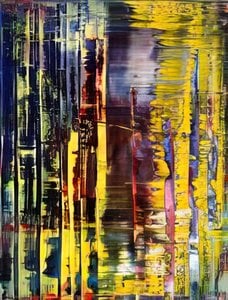
Gerhard Richter's 'Skull' (1983) is a haunting monochrome study of bone, reflecting themes of mortality and memory through subtle brushstrokes. Explore this iconic work’s layered abstraction and Richter’s signature style.

Erkunden Sie die bahnbrechende Kunst von Gerhard Richter (geb. 1932), einem führenden deutschen Künstler, der für seine abstrakten und fotorealistischen Gemälde, 'Kapitalistisches Realismus' und großformatige Farbleisten bekannt ist. Entdecken Sie seine Auktionsrekorde und seinen Einfluss auf die zeitgenössische Kunst.

Giclée / Kunstdruck

Giclée- oder Leinwanddruck in Museumsqualität mit schneller Produktion und flexiblen Veredelungsoptionen.

P118B $10
P118H $10
P118W $10
P438Z $10
P508JH $12
P508YH $12
P805H $10
P805Z $10
P919BZ $10
P919G $10
P919XJ $10
P959ZH $10
P968JZ $12
W106C $8
W218G $10
W218JH $8
W218Y $10
W307PJ $10
W316G $10
W316PJ $8
W316Y $10
W398PJ $8
W4111J $10
W500HY $15
W500JH $15
W692G $12
W849H $8
W940BG $15
W953PJ $8

Standard
custom
CM
INCH

Wählen Sie aus unseren vordefinierten Größen, die den ursprünglichen Proportionen des Kunstwerks entsprechen.

Breite
Höhe

Sie können Ihre eigenen Maße eingeben, um ein bestimmtes Format oder einen speziellen Platz einzupassen. Wenn das von Ihnen gewählte Format nicht den Proportionen des Originalbildes entspricht, werden wir das Kunstwerk entweder beschneiden oder das Bild mit einem gespiegelten oder einfarbigen Rand erweitern. Ein digitaler Entwurf wird Ihnen zur Genehmigung zugesandt, bevor die Produktion beginnt.
Bitte beachten Sie, dass die Vorschau auf dem Bildschirm nicht den tatsächlichen Zuschnitt oder die Erweiterung widerspiegelt. Nur der Entwurf zeigt die endgültige Komposition präzise an.
Obwohl Sondermaße verfügbar sind, empfehlen wir die Auswahl eines Maßes aus der vordefinierten Liste, um die ursprünglichen Proportionen zu bewahren.

Weltweiter Versand () innerhalb von 2 Wochen statt der üblichen 4/5 Wochen. (2 Juli)

why_choose_icon
Kostenloser weltweiter Expressversand
why_choose_icon
Hochwertige Leinenleinwand
why_choose_icon
Umfassender Versicherungsschutz beim Versand
why_choose_icon
Zollsteuer-Rückerstattungsgarantie
why_choose_icon
Garantie für echte Farbtreue
why_choose_icon
60-Tage-Rückgaberecht (nur bei Mängeln)
why_choose_icon
100% Geld-zurück-Garantie
why_choose_icon
Mengenrabatt verfügbar

Gesamtpreis

-

reproduction

Skull

Giclée / Kunstdruck

Größe der Reproduktion

-

Endpreis aller Optionen

-

Eckdaten auf einen Blick

  • Medium: Oil on canvas
  • Artistic style: Photorealism
  • Dimensions: 80 x 65 cm
  • Influences: Dürer sketches
  • Year: 1983
  • Notable elements: Bone/ceramic texture

Kunst-Quiz

Jede Frage hat nur eine richtige Antwort.

Frage 1:
What is the primary material depicted in Gerhard Richter’s ‘Skull’?
Frage 2:
The photograph of the skull appears to be taken in what type of setting?
Frage 3:
Gerhard Richter is primarily known for his work in which of the following styles?
Frage 4:
Considering Richter’s broader body of work, what is a recurring theme often explored in his paintings?
Frage 5:
In ‘Skull’, what technique does Richter employ to create a slightly blurred effect?

Beschreibung des Sammlerstücks

The Stark Beauty of Absence: An Exploration of Richter's 'Skull'

Gerhard Richter’s 1983 painting, “Skull,” isn’t a celebration of death, but rather an intensely contemplative meditation on the fragility of existence and the enduring power of memory. Rendered in oil on canvas with a deceptively simple palette – primarily stark white against muted grays and blues – the work immediately commands attention not through dramatic gesture or vibrant color, but through its profound stillness and unsettling intimacy. The skull itself, presented in close-up, possesses an almost unnerving realism; it’s not idealized or romanticized, but a tangible representation of mortality, stripped bare of any embellishment. Richter's masterful control of texture – achieved through subtle brushstrokes and the layering of paint – creates a surface that is both smooth and subtly tactile, inviting the viewer to reach out and touch (though, of course, it’s impossible). This deliberate ambiguity, this refusal to offer easy answers, is characteristic of much of Richter's oeuvre and contributes significantly to the painting’s enduring power.

The genesis of “Skull” lies within a period of profound personal and historical upheaval for Richter. Born in Dresden in 1932, his childhood was shaped by the escalating tensions of Nazi Germany and the subsequent devastation of World War II. This experience instilled within him a deep-seated sense of uncertainty and a questioning spirit – qualities that would become central to his artistic practice. The skull itself can be interpreted as a visual echo of this trauma; it’s a symbol of loss, displacement, and the inescapable awareness of our own mortality. Richter's decision to photograph the skull before painting it suggests an initial attempt to capture its essence directly, but ultimately, he transforms the image through his artistic process, imbuing it with layers of meaning that extend far beyond mere representation.

The Process of Deconstruction: Technique and Style

Richter’s technique in “Skull” is a fascinating blend of realism and abstraction. He began by projecting a photograph of a human skull onto the canvas, meticulously tracing its outline with graphite. This foundational layer provides a sense of grounding and establishes the image's initial form. However, Richter then proceeded to paint over these lines, not with a single, decisive stroke, but with multiple layers of oil paint – often incorporating subtle variations in color and texture. This layering process is crucial to understanding Richter’s artistic approach; it’s a deliberate act of deconstruction, where the original image is gradually obscured and transformed into something new. The resulting surface is not perfectly smooth or uniform; instead, it exhibits a delicate interplay of textures – areas of subtle glossiness juxtaposed with matte patches, creating a sense of depth and complexity.

The muted color palette—primarily whites, grays, and blues—further contributes to the painting’s somber mood. Richter avoids bright or saturated colors, opting instead for tones that are both understated and evocative. The subtle shifts in hue create a sense of atmospheric perspective, drawing the viewer's eye into the heart of the image. Notably, Richter often employed this technique of overpainting photographs – a practice he termed “photo-paintings” – to explore the relationship between representation and reality. He wasn’t simply replicating images; he was actively engaging with them, transforming them through his own artistic vision.

Symbolism and Emotional Resonance

Beyond its technical merits, "Skull" is rich in symbolic meaning. The skull, of course, is a universal symbol of mortality, but Richter’s painting transcends the purely literal. It speaks to the ephemeral nature of life, the inevitability of death, and the enduring power of memory. The stark simplicity of the image – the skull presented against a blurred background – creates a sense of isolation and vulnerability. The lack of context forces the viewer to confront the subject directly, without any mediating elements. This directness is both unsettling and profoundly moving.

Furthermore, Richter’s deliberate blurring of the background suggests a desire to detach the skull from its original context – perhaps even from time itself. It becomes an archetypal image, stripped of specific historical or personal associations, and presented as a timeless meditation on human existence. The subtle brushstrokes and layered textures contribute to this sense of ambiguity, creating a surface that is both familiar and strangely alien.

A Timeless Masterpiece: Reproduction and Interpretation

WahooArt offers meticulously crafted hand-painted reproductions of Gerhard Richter’s “Skull,” allowing art lovers to experience the painting's profound beauty and complexity in their own homes. Our skilled artists carefully replicate Richter’s nuanced technique, capturing the subtle variations in texture and color that define this iconic work. Each reproduction is created using archival-quality materials, ensuring its longevity and preserving the integrity of the original image. Whether you are a seasoned art collector or simply seeking to add a touch of contemplative beauty to your interior space, a WahooArt reproduction of “Skull” offers a unique opportunity to engage with one of Richter’s most compelling and enduring works.

Ähnliche Kunstwerke


Biografie des Künstlers

**frühes Leben und Ausbildung**

Gerhard Richter, ein renommierter deutscher visueller Künstler, wurde am 9. Februar 1932 in einem Krankenhaus in Dresden-Neustadt, Dresden, Sachsen, geboren. Er wuchs in Reichenau, Niederschlesien (heute Bogatynia, Polen), und Waltersdorf (Zittauer Gebirge) im oberen Lusatianenländischen Land auf. Richards Vater, Horst Richter, war Mathematik- und Physikstudent an der Technischen Hochschule in Dresden.

**Künstlerische Karriere**

Richter begann seine künstlerische Reise als Geselle für einen Schaukunstmaler und studierte später an der Dresdner Kunstakademie. Seine frühen Arbeiten wurden von den Stilen von Picasso und Jean Arp beeinflusst, was sich in seinen abstrakten und fotorealistischen Gemälden zeigt. Im Jahr 1957 arbeitete Richter als Meisterschüler an der Akademie und nahm Aufträge für das damalige Staatliche Gebiet der DDR entgegen.

**Bekannte Werke und Leistungen**

* Abstraktes Bild (2012) erzielte einen Rekordverkaufspreis für ein Gemälde eines lebenden Künstlers von 34 Millionen Dollar (£21 Millionen). * Domplatz, Mailand (Kathedralplatz, Mailand) (1968) wurde in New York für 37,1 Millionen Dollar (£24,4 Millionen) verkauft. * Abstraktes Bild (2015) wurde bei der Sotheby's Contemporary Evening Sale für 44,52 Millionen Dollar (£30,4 Millionen) versteigert.

**Künstlerischer Stil und Bewegung**

Richards Werke zeichnen sich durch ihre Vielseitigkeit aus, die abstrakte und fotorealistische Stile verbindet. Zusammen mit Sigmar Polke führte er den Begriff Kapitalistischer Realismus, einen Anti-Stil der Kunst, der die bildliche Kürze des Werbebildes übernimmt.

**Privatleben**

Richter heiratete Marianne Eufinger im Jahr 1957 und hatte eine Tochter. Später heiratete er Isa Genzken im Jahr 1982 und Sabine Moritz im Jahr 1995, mit der er zwei Söhne und eine Tochter hatte. **Hinweis:** Dieser Artikel basiert auf den bereitgestellten Informationen und ist möglicherweise keine umfassende Biografie. Für detailliertere Informationen besuchen Sie bitte die verlinkten Quellen.
Gerhard Richter

Gerhard Richter

1932 - , Deutschland

Kurzinfos

  • Bemerkenswerte Werke:
    • Abstraktes Bild (2012)
    • Domplatz, Mailand (1968)
    • S. mit Kind (1995)
  • Geburtsdatum: 09. Februar 1932
  • Geburtsort (Stadt, Land): Dresden, Deutschland
  • Künstler Oder Bewegungen, Die Von Diesem Künstler Beeinflusst Wurden: ['Zeitgenössische Maler']
  • Künstler, Die Diesen Künstler Beeinflussten:

    • Pablo Picasso
    • Jean Arp
  • Künstlerische Bewegung/Stil:
    • Abstrakte Kunst
    • Fotorealismus
  • Nationalität: Deutsch
  • Vollständiger Name: Gerhard Richter
Entdecken Sie Kunstwerke, die nach Themen, Stilen und Merkmalen sortiert sind.