Jetzt verkaufen
x
Vorschau anzeigenVorschau anzeigen In AR erlebenIn AR erleben Druck bestellen Druck bestellenBild kaufen Bild kaufen VersendenVersenden
Details anzeigenDetails anzeigen Zu Favoriten hinzufügen Zu Favoriten hinzufügen HerunterladenHerunterladen Ähnliche ObjekteÄhnliche Objekte RöntgenaufnahmeRöntgenaufnahme DiashowDiashow

I.G.

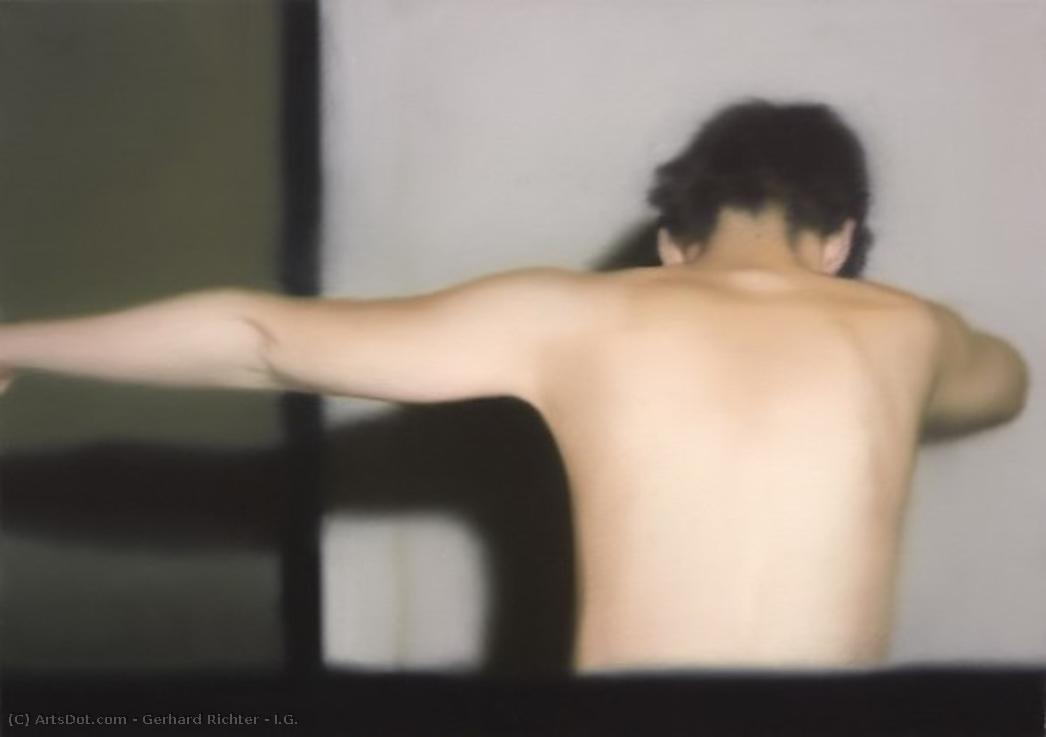
Experience Gerhard Richter's 'I.G.' – a haunting black and white photograph capturing vulnerability through an outstretched figure. Explore the artist’s signature realism & delve into the historical context of IG Farben.

Erkunden Sie die bahnbrechende Kunst von Gerhard Richter (geb. 1932), einem führenden deutschen Künstler, der für seine abstrakten und fotorealistischen Gemälde, 'Kapitalistisches Realismus' und großformatige Farbleisten bekannt ist. Entdecken Sie seine Auktionsrekorde und seinen Einfluss auf die zeitgenössische Kunst.

Handgefertigte Ölreproduktion

Handgemaltes Ölgemälde auf Leinwand in Ihrer Wunschgröße und mit Rahmen, auf Bestellung von unseren Künstlern angefertigt. (Druck bestellen Druck bestellenBild kaufen Bild kaufen)

P118B $10
P118H $10
P118W $10
P438Z $10
P508JH $12
P508YH $12
P805H $10
P805Z $10
P919BZ $10
P919G $10
P919XJ $10
P959ZH $10
P968JZ $12
W106C $8
W218G $10
W218JH $8
W218Y $10
W307PJ $10
W316G $10
W316PJ $8
W316Y $10
W398PJ $8
W4111J $10
W500HY $15
W500JH $15
W692G $12
W849H $8
W940BG $15
W953PJ $8

Standard
custom
CM
INCH

Wählen Sie aus unseren vordefinierten Formaten, die den ursprünglichen Proportionen des Kunstwerks entsprechen.

Breite
Höhe

Sie können Ihre eigenen Maße eingeben, um einen bestimmten Rahmen oder Platz auszufüllen. Wenn die gewählte Größe nicht den Proportionen des Originalbildes entspricht, werden wir das Kunstwerk entweder beschneiden oder das Gemälde durch zusätzliche, handgemalte Elemente erweitern. Ein digitales Mockup wird Ihnen zur Genehmigung zugesandt, bevor die Produktion beginnt.
Bitte beachten Sie, dass die Bildschirmvorschau nicht die tatsächliche Beschneidung oder Erweiterung widerspiegelt. Nur das Mockup zeigt die endgültige Komposition exakt an.
Obwohl Sondermaße verfügbar sind, empfehlen wir, eine Größe aus der vordefinierten Liste zu wählen, um die ursprünglichen Proportionen beizubehalten.

Beispiele für Anpassungsmöglichkeiten: Gesicht durch Kundenfoto ersetzen; Haustier hinzufügen (z. B. Katze durch Hund ersetzen); eine versteckte Nachricht im Hintergrund einfügen; Hintergrundlandschaft oder -elemente ändern.
Nach der Bestellung wird das WahooArt.com-Team dem Kunden Anweisungen per E-Mail zusenden und eine Mockup-Vorschau bereitstellen.

Weltweiter Versand () in nur 3 bis 4 Wochen statt der üblichen 5 Wochen. (16 August). Keine Kompromisse bei der Qualität.

why_choose_icon
Kostenloser weltweiter Expressversand
why_choose_icon
Hochwertige Leinenleinwand
why_choose_icon
Umfassender Versicherungsschutz beim Versand
why_choose_icon
Zollgebühren-Rückerstattungsgarantie
why_choose_icon
Garantie für exakte Farbtreue
why_choose_icon
60 Tage Rückgaberecht (nur bei Mängeln)
why_choose_icon
100% Geld-zurück-Garantie
why_choose_icon
Mengenrabatt verfügbar

Gesamtpreis

$ 272

reproduction

I.G.

Art der Reproduktion

Format der Reproduktion

-

Gesamtpreis

$ 272

Eckdaten

  • Title: I.G.
  • Artist: Gerhard Richter
  • Notable elements: Back view
  • Influences: Richter's work
  • Movement: Contemporary
  • Subject or theme: Figure portrait
  • Medium: Photograph

Kunst-Quiz

Jede Frage hat nur eine richtige Antwort.

Frage 1:
What is the primary subject of Gerhard Richter’s photograph, ‘I.G.’?
Frage 2:
In what year was the photograph ‘I.G.’ created?
Frage 3:
Gerhard Richter is primarily known for his work in which of the following styles?
Frage 4:
The photograph ‘I.G.’ evokes a sense of what emotion or feeling?
Frage 5:
Considering the artist's biography, what historical event significantly shaped Richter’s early artistic development?

Beschreibung des Kunstwerks

The Enigmatic Figure: An Exploration of Gerhard Richter's 1993 Photograph

Gerhard Richter’s 1993 photograph, titled simply “I.G.”, is not a portrait in the traditional sense; it’s an invitation to contemplate absence and vulnerability. The image presents a figure – a man with short hair, turned away from the viewer – rendered in stark black and white. His arms are outstretched, a gesture simultaneously open and exposed, suggesting a profound openness or perhaps a quiet surrender. The photograph's power lies not in detailed representation but in its carefully constructed ambiguity. Richter masterfully utilizes light and shadow to create a sense of depth and mystery, drawing the eye towards the figure’s back and shoulders, areas that inherently hold more weight within the composition. The simplicity of the subject – just a man, alone – amplifies the emotional resonance, prompting viewers to project their own narratives onto the image.

Gerhard Richter I.G.

A Fragment of History: Richter and the Shadow of IG Farben

To fully appreciate “I.G.”, it’s crucial to understand the context surrounding Gerhard Richter's work during this period. The photograph’s title itself is deeply significant; "I.G." refers to the infamous IG Farbenindustrie AG – a German chemical and pharmaceutical conglomerate with a dark and complex history. Founded in 1925 through a merger of six major companies, including BASF, Bayer, and Hoechst, IG Farben played a pivotal role in both Germany’s industrial development and its horrific involvement in World War II and the Holocaust. The company's legacy is inextricably linked to unethical practices, forced labor, and the mass production of Zyklon B – the very gas used in Nazi extermination camps. Richter, born in 1932, grew up during this period of immense social and political upheaval, witnessing firsthand the devastation of war and the rise of a totalitarian regime. His early life was marked by displacement and uncertainty, experiences that undoubtedly shaped his artistic sensibility.

Interestingly, research reveals Richter’s own family history intersected with IG Farben's operations. His father, a schoolteacher, navigated the complexities of life under Nazi rule, while his mother fostered a love for literature and music within the family. The photograph can be interpreted as a subtle meditation on this historical backdrop – a quiet acknowledgement of the shadows that linger beneath the surface of German history. The anonymity of the figure mirrors the collective memory surrounding IG Farben, suggesting a shared experience of trauma and loss.

Richter’s Style: Realism and Abstraction in Dialogue

Gerhard Richter is renowned for his distinctive artistic style, which seamlessly blends realism and abstraction. “I.G.” exemplifies this approach perfectly. While the photograph appears to be a straightforward depiction of a human form, Richter employs techniques characteristic of his oeuvre – subtle gradations of tone, a deliberate lack of sharp detail, and an almost photographic quality. This creates a sense of detachment, as if the image is not merely representing reality but rather capturing a fleeting impression or memory. His work often resists easy interpretation, inviting viewers to engage in a dialogue with the artwork itself. Richter’s use of black and white further enhances this effect, stripping away color and focusing attention on form and texture.

Considering his broader body of work, particularly pieces like ‘Gilbert’ and ‘S. with Child’, we see a consistent exploration of themes related to perception, memory, and the nature of representation. Richter's process often involves layering images – sometimes photographs, sometimes paintings – creating complex compositions that challenge our understanding of reality.

Emotional Resonance: A Portrait of Quiet Contemplation

Ultimately, “I.G.” is a profoundly moving work of art. It’s not a grand statement or a dramatic scene; rather, it's a quiet meditation on the human condition – on vulnerability, uncertainty, and the enduring power of memory. The figure’s averted gaze suggests a sense of introspection, inviting us to consider our own experiences of loss, displacement, and the weight of history. The photograph’s stark simplicity and evocative atmosphere create a powerful emotional impact, leaving viewers with a lingering sense of unease and contemplation. It serves as a poignant reminder that even in the absence of explicit narrative, art can communicate profound truths about ourselves and the world around us.


Über den Künstler

**frühes Leben und Ausbildung**

Gerhard Richter, ein renommierter deutscher visueller Künstler, wurde am 9. Februar 1932 in einem Krankenhaus in Dresden-Neustadt, Dresden, Sachsen, geboren. Er wuchs in Reichenau, Niederschlesien (heute Bogatynia, Polen), und Waltersdorf (Zittauer Gebirge) im oberen Lusatianenländischen Land auf. Richards Vater, Horst Richter, war Mathematik- und Physikstudent an der Technischen Hochschule in Dresden.

**Künstlerische Karriere**

Richter begann seine künstlerische Reise als Geselle für einen Schaukunstmaler und studierte später an der Dresdner Kunstakademie. Seine frühen Arbeiten wurden von den Stilen von Picasso und Jean Arp beeinflusst, was sich in seinen abstrakten und fotorealistischen Gemälden zeigt. Im Jahr 1957 arbeitete Richter als Meisterschüler an der Akademie und nahm Aufträge für das damalige Staatliche Gebiet der DDR entgegen.

**Bekannte Werke und Leistungen**

* Abstraktes Bild (2012) erzielte einen Rekordverkaufspreis für ein Gemälde eines lebenden Künstlers von 34 Millionen Dollar (£21 Millionen). * Domplatz, Mailand (Kathedralplatz, Mailand) (1968) wurde in New York für 37,1 Millionen Dollar (£24,4 Millionen) verkauft. * Abstraktes Bild (2015) wurde bei der Sotheby's Contemporary Evening Sale für 44,52 Millionen Dollar (£30,4 Millionen) versteigert.

**Künstlerischer Stil und Bewegung**

Richards Werke zeichnen sich durch ihre Vielseitigkeit aus, die abstrakte und fotorealistische Stile verbindet. Zusammen mit Sigmar Polke führte er den Begriff Kapitalistischer Realismus, einen Anti-Stil der Kunst, der die bildliche Kürze des Werbebildes übernimmt.

**Privatleben**

Richter heiratete Marianne Eufinger im Jahr 1957 und hatte eine Tochter. Später heiratete er Isa Genzken im Jahr 1982 und Sabine Moritz im Jahr 1995, mit der er zwei Söhne und eine Tochter hatte. **Hinweis:** Dieser Artikel basiert auf den bereitgestellten Informationen und ist möglicherweise keine umfassende Biografie. Für detailliertere Informationen besuchen Sie bitte die verlinkten Quellen.
Gerhard Richter

Gerhard Richter

1932 - , Deutschland

Kurzinfos

  • Bemerkenswerte Werke:
    • Abstraktes Bild (2012)
    • Domplatz, Mailand (1968)
    • S. mit Kind (1995)
  • Geburtsdatum: 09. Februar 1932
  • Geburtsort (Stadt, Land): Dresden, Deutschland
  • Künstler Oder Bewegungen, Die Von Diesem Künstler Beeinflusst Wurden: ['Zeitgenössische Maler']
  • Künstler, Die Diesen Künstler Beeinflussten:

    • Pablo Picasso
    • Jean Arp
  • Künstlerische Bewegung/Stil:
    • Abstrakte Kunst
    • Fotorealismus
  • Nationalität: Deutsch
  • Vollständiger Name: Gerhard Richter
Entdecken Sie Kunstwerke, die nach Themen, Stilen und Merkmalen sortiert sind.